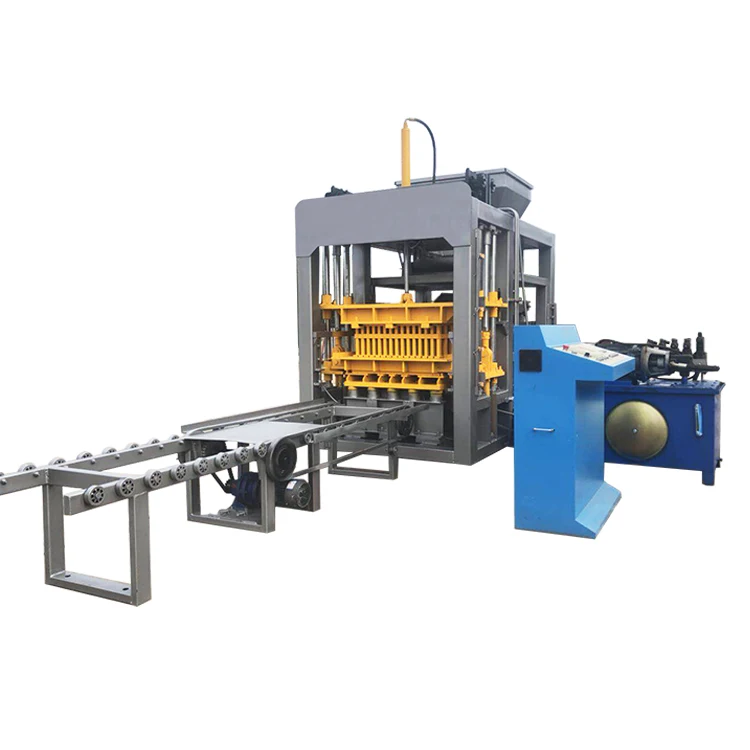
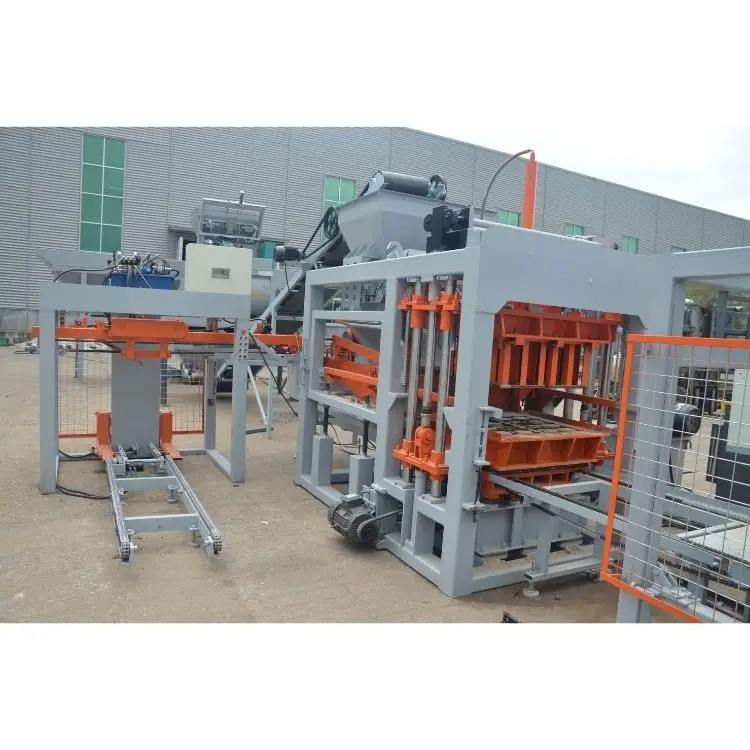
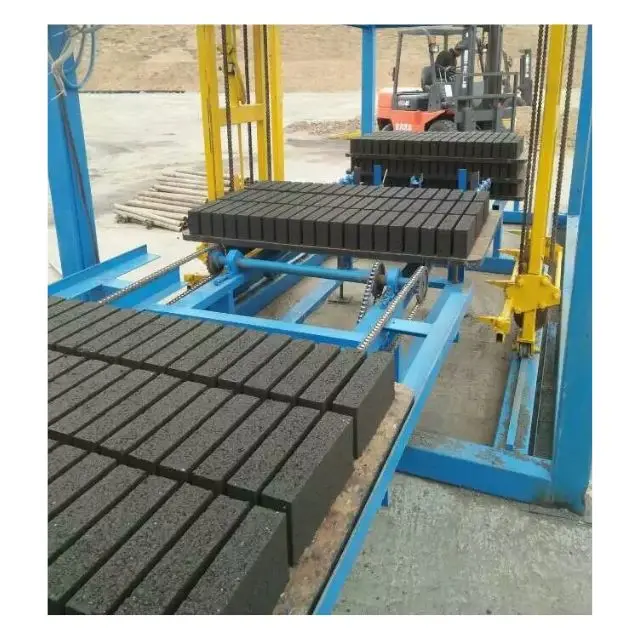
Complete System Match — Every QMY2-45 mobile block machine is specified against the buyer’s target block format, local aggregate properties, and available curing space rather than shipped from a catalogue default.
Technical Specifications
| Parameter |
Value |
| Model |
QMY2-45 |
| Product Type |
Small Mobile Egg-Laying Block Machine |
| Total Power |
1.5 kW |
| Voltage & Frequency |
Customizable to local voltage and frequency |
| Control System |
Manual operation |
| Overall Dimensions (L×W×H) |
1000 x 800 x 1300 mm |
| Net Weight |
215 kg |
| Output Capacity |
Rated at 1000 pcs/day based on a 400×200×200 mm hollow block (basis to be confirmed for other formats) |
| Cycle Time |
45 seconds (basis to be confirmed per block format) |
| Vibration Type |
Mold vibration |
| Block Format per Cycle |
2 pcs per mold (400 x 200 x 200 mm) |
| Automation Level |
Manual / Mobile egg-laying |
| Basic Equipment Included |
JQ350 Mixer |
Application Suitability
| Application |
Material or Output |
| Home-based or small-scale block production |
Local sand, crushed stone, and cement mixes |
| On-site concrete hollow block manufacturing |
Standard concrete hollow blocks 400×200×200 mm |
| Entrepreneur-led first block plant setup |
Low-volume hollow block runs with minimal infrastructure |
| Construction contractor on-site production |
Housing and development project blocks produced locally |
What "1,000 Pieces per Day" Actually Means for a Small Mobile Block Machine
The daily output figure only holds true when the exact block format, mix design, and curing conditions are defined upfront.
I have watched buyers order a small mobile block machine based on a headline capacity number, only to find their real daily volume drops sharply once they switch to a different block size or their local aggregate has a higher clay content than the standard test mix. A 400×200×200 mm hollow block is the reference format here, but many markets sell solid blocks, interlocking pavers, or thinner wall hollow blocks that change the cycle calculation entirely [NEED_CITE: block format impact on cycle time calculations]. Without confirming which format you actually sell, the 1,000-piece figure is just a starting point for conversation, not a production guarantee.

Where the QMY2-45 Sits in the Full Machine Range
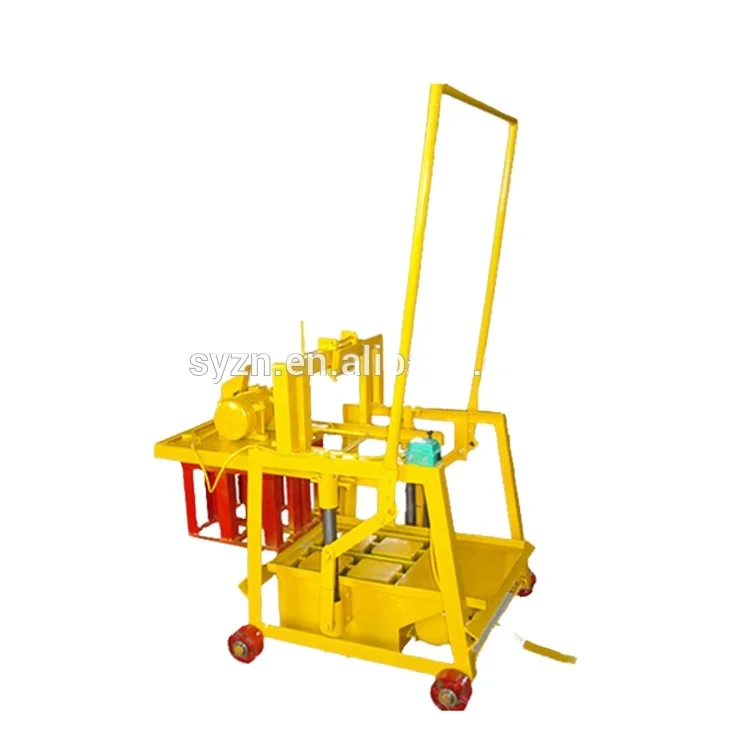
The QMY2-45 occupies the entry tier of the mobile egg-laying range, designed for buyers who need block production without investing in a fixed plant. At 215 kg and with overall dimensions of 1000×800×1300 mm, it moves between production areas on a flat concrete floor. This small mobile block machine targets buyers whose daily volume requirements and capital budgets place them below semi-automatic and fully automatic tiers.
The Mobility Advantage for On-Site Production
Construction contractors producing blocks on their own job site benefit from the egg-laying principle: the machine lays blocks directly on the ground and moves forward, eliminating the need for pallets and curing racks. The included JQ350 mixer keeps the setup self-contained. A contractor working on a housing development can relocate the small mobile block machine as the build progresses, avoiding transport costs for finished blocks [NEED_CITE: on-site block production logistics].
Interpreting the Core Specifications
The 1.5 kW total power draw reflects the mold vibration system and the mixer motor combined, keeping electrical requirements manageable for sites with limited supply capacity. The 45-second cycle time applies to the standard 400×200×200 mm hollow block format; denser solid blocks or thinner interlocking formats will shift this figure. Two blocks per cycle from a single mold cavity means output scales directly with operator pace and mix preparation speed. The manual control system removes PLC complexity and maintenance concerns, which suits first-time operators who need to focus on mix consistency rather than screen navigation.
The Hidden Cost of Skipping the Voltage Conversation
A small mobile block machine arriving at a job site with the wrong voltage or frequency specification faces immediate commissioning delays. The 1.5 kW motor must match the destination market’s electrical standard — a 220V/60Hz region will burn out a 380V/50Hz motor within minutes [NEED_CITE: voltage and frequency standards by export market]. Confirming these details before production begins avoids a situation where the machine sits idle while a replacement motor is sourced internationally.
Why Source the Complete Setup from One Supplier
Block machinery as a single focus means the QMY2-45, its mold, and the JQ350 mixer are specified as a matched system rather than assembled from unrelated suppliers. Configuration is set against the buyer’s actual mix design and local aggregate, not a generic catalogue default. Mould design covers the formats the buyer’s market actually sells, with custom drawings available for non-standard block types. The automation level is selectable, so a buyer can start with this manual egg-laying tier and move to semi-automatic later. Installation support includes operator training focused on mix ratios and cycle rhythm.
Documentation & Verification
- Line layout drawing showing curing area space needed for 1000-piece daily output
- Machine specification sheet confirming 1.5 kW power and customizable voltage
- Mould drawing with format list for 400×200×200 mm and alternative block types
- Voltage and frequency confirmation record before dispatch
- Factory test record on buyer’s specified block format
Installation, Commissioning & Support
- Flat concrete floor required; 1000×800 mm footprint allows placement in confined site areas
- Single-phase or three-phase supply confirmed pre-shipment to match the 1.5 kW motor specification
- Fully assembled nude packing means no field reassembly of the main frame
- First production run supervised to set cycle rhythm against local mix workability
- Mold vibration components and mixer blades identified on the wear parts list
Preparing Your Inquiry
To size the QMY2-45 correctly, share the exact block format your market demands, the daily volume target tied to that specific format, and your local aggregate type with any known clay or moisture characteristics. Confirm your site voltage and frequency so the motor is wound correctly before dispatch.
Frequently Asked Questions
Q: How do I verify the 1,000 pcs/day capacity claim for my specific block format?
A: The 1,000-piece figure assumes a 400×200×200 mm hollow block at a 45-second cycle. If your market requires solid blocks, interlocking pavers, or different dimensions, the cycle time and blocks-per-cycle count change. Request a capacity calculation that states your exact block format and the assumed mix design so the daily output reflects your actual production scenario.
Q: What voltage and frequency options are available for my market?
A: The motor voltage is customizable to match your local electrical supply standard. Before production begins, confirm both voltage and frequency — a mismatch will prevent commissioning on arrival. This confirmation is documented before the machine leaves the factory to avoid idle time on your job site.
Q: Which block formats can the QMY2-45 produce beyond the standard hollow block?
A: The machine accepts mould changes for different block types including solid blocks, interlocking pavers, and other formats your market requires. Each mould change requires a new cavity design matched to the machine’s mold vibration system. Request the mould drawing and format list to see available options and confirm which formats suit your local building codes.
Q: What is included versus what must be sourced separately?
A: The QMY2-45 package includes the egg-laying machine and a JQ350 mixer as basic equipment, providing a self-contained small production setup. Pallets are not required for egg-laying operation. Curing area preparation, water supply, and raw material storage are buyer responsibilities. Confirm whether additional moulds for different block formats are included in your quotation.
Q: How does this mobile egg-laying machine compare to semi-automatic and automatic tiers?
A: The QMY2-45 sits at the entry tier, offering manual operation with mold vibration and no pallet handling system. Semi-automatic tiers add pallet feeding and basic stacking, while automatic tiers include PLC control, automatic stacking, and cubing. The right tier depends on your daily volume target, available labor, and capital budget rather than assuming higher automation is always better.

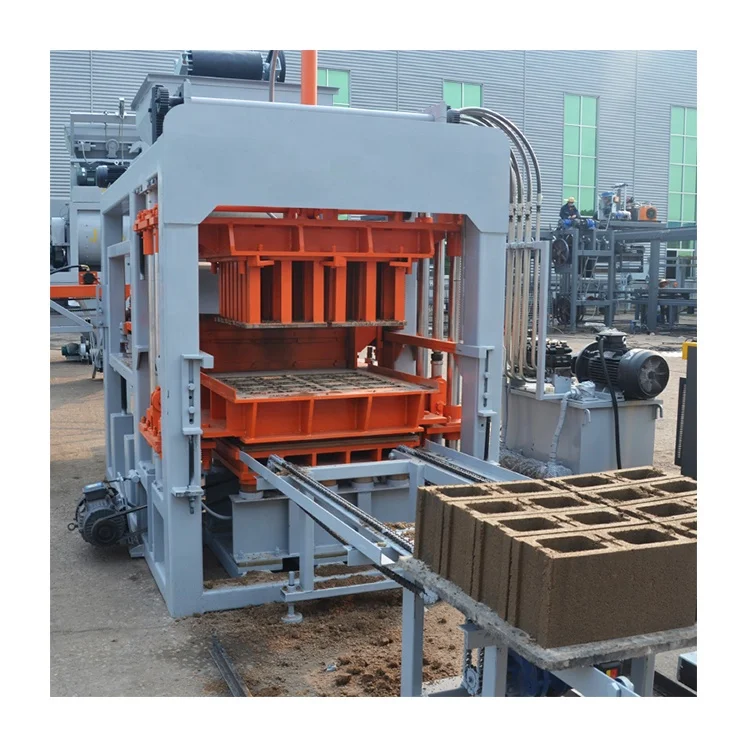 Automatic block machine