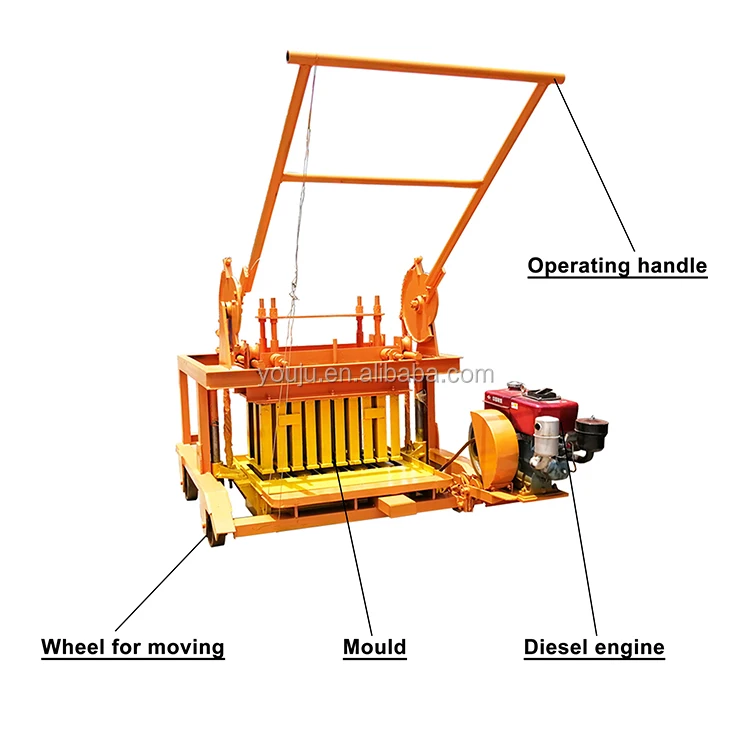
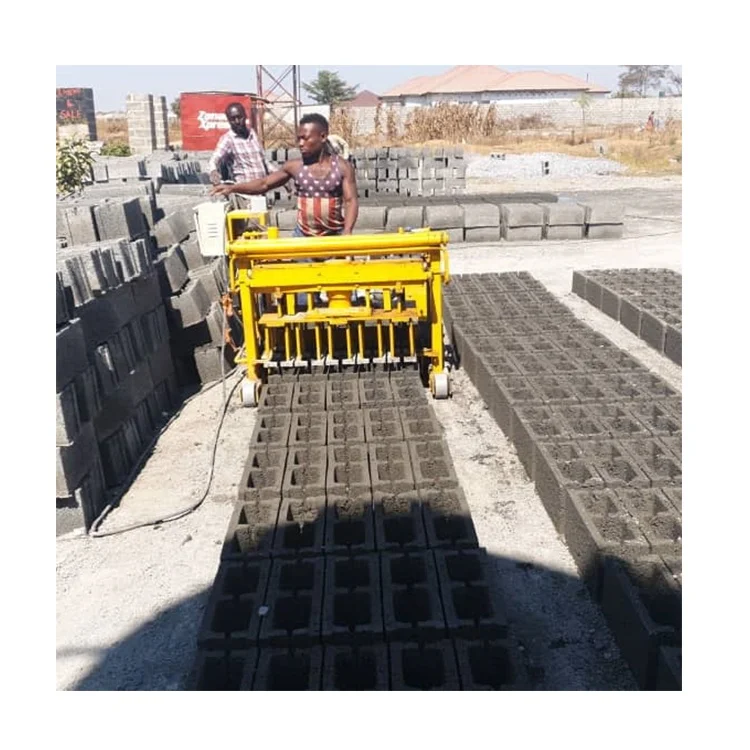
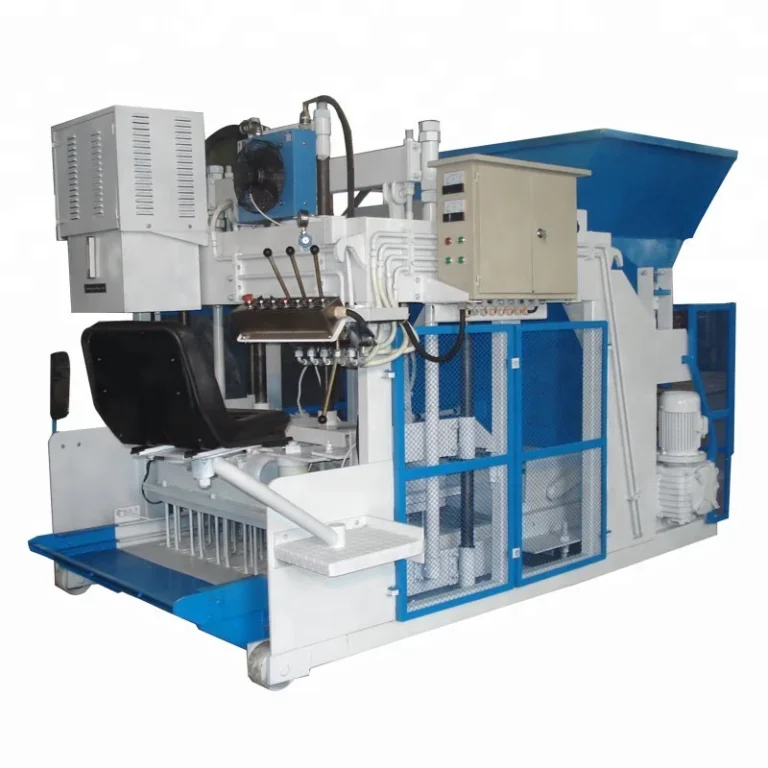
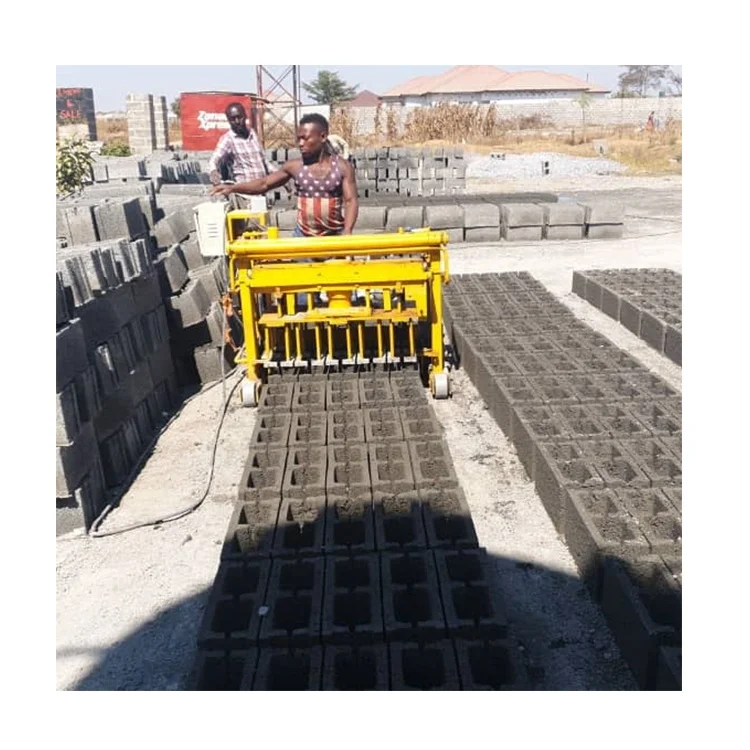
Pallet-Free Block Production — the QMR4-45 lays blocks directly on the ground, removing pallet cost and curing-area handling from your investment equation.
Technical Specifications
| Parameter |
Value |
| Model |
QMR4-45 |
| Product Type |
Mobile Egg-Laying Concrete Block Machine |
| Overall Dimensions (L×W×H) |
2420×1320×1650 mm |
| Net Weight |
810 kg |
| Rated Power |
6 kW |
| Diesel Engine Option |
6 kW or 6–8 HP |
| Voltage & Frequency |
220V / 380V / custom to buyer’s local supply |
| Control System |
Manual / semi-automatic operation |
| Moulding Cycle |
40–45 s |
| Pallet Size |
No pallet required (egg-laying operation) |
| Output Capacity |
3000 pcs/day based on 400×200×200 mm hollow block (4 pcs/mould) |
| Output Capacity (alt.) |
3500 pcs/day based on 400×150×200 mm hollow block (5 pcs/mould) |
| Output Capacity (alt.) |
4500 pcs/day based on 400×120×200 mm hollow block (6 pcs/mould) |
| Mould Format |
Hollow block (multiple sizes); other formats via mould change |
| Automation Level |
Manual pallet-free (egg-laying); semi-automatic hydraulic pressing |
| Stacking Method |
On-ground curing (no pallet) |
| Assembly State |
Fully assembled, mobile on wheels |
| Warranty |
1 year on whole machine |
Application Suitability
| Application |
Material or Output |
| On-site construction block production |
Hollow blocks laid directly on compacted ground at housing or infrastructure sites |
| Small-scale hollow block manufacturing |
400×200×200 mm, 400×150×200 mm, 400×120×200 mm hollow formats from crushed stone, sand and cement |
| Rural or remote brick production |
Diesel-powered operation where grid electricity is unavailable or unreliable |
| Entrepreneur first block plant |
Low-capital hollow and solid block startup without a fixed factory building |
| Paving block and solid block runs |
Format change via mould swap on the same machine chassis |
What "3000 Blocks per Day" Actually Means on a QMR4-45
The daily output figure only holds when the block format, cycle time, shift length and crew size all match the stated assumption.
Many quotations for a mobile block machine for sale quote a single headline capacity without saying which block size it was measured on. A buyer expecting 4500 pieces but running 400×200×200 mm hollow blocks will see output closer to 3000 per day, creating a gap between projected revenue and actual delivery. I once reviewed a competitor quotation for a West African contractor that listed only the highest output tier, and the buyer signed before asking which mould size it assumed. When the 200 mm blocks came off the machine at roughly 40–45 seconds per cycle, the shortfall became obvious only after commissioning [NEED_CITE: block machine capacity calculation standards by format].

Where the QMR4-45 Sits in the Full Range
The QMR4-45 occupies the entry tier of our mobile block machine for sale range. It is built for buyers who need block production without a fixed plant, without pallets, and without the capital outlay of a stationary line. Above it sit semi-automatic machines that add pallet-based stacking and higher vibration force, and above those, fully automatic lines with batching, curing racks and cubing. This machine answers one question clearly: can you produce saleable hollow blocks on a prepared ground surface with minimal infrastructure?
The Diesel Option and Why Fuel Grade Matters
When grid power is unreliable or absent, the 6–8 HP diesel engine option keeps the QMR4-45 running. I supplied a diesel-driven unit to a contractor in West Africa and learned after arrival that local diesel cetane ratings were lower than the engine specification assumed. The engine ran hot during afternoon shifts and shut down repeatedly, cutting output roughly in half while the buyer waited for replacement fuel-injection components [NEED_CITE: diesel fuel grade compatibility for small industrial engines]. Now every diesel quotation I prepare starts with a question about locally available fuel grade and ambient temperature range.
Reading the Specs That Shape Your Daily Output
The 40–45 second moulding cycle determines how many blocks leave the machine per shift. At four blocks per mould on the 400×200×200 mm format, that cycle yields roughly 3000 pieces over a standard working day. Switch the mould to the 400×120×200 mm format and you get six blocks per cycle, lifting the daily figure — but thinner blocks also mean lower per-piece selling price, so the revenue picture shifts even as the count climbs. The 6 kW rated power governs whether your site wiring can sustain continuous vibration and hydraulic pressing without voltage drop. And the 810 kg net weight on wheels means one or two workers can reposition the machine across a site as the curing area fills up.
When the Wrong Configuration Costs You Later
A mobile block machine for sale configured without confirming your local aggregate grading can produce blocks that crumble at the edges or fail compressive-strength tests. I have seen buyers discover after delivery that the mix design the machine was tuned for required a sand fraction unavailable within hauling distance of their site, forcing them to source expensive imported material or accept lower block density [NEED_CITE: aggregate grading requirements for concrete block compressive strength]. Equally, ordering without specifying the voltage and frequency of your local supply delays commissioning — the machine arrives, sits unpowered, and your project deadline slips while replacement motors or transformers are shipped.
Why Buyers Source This Tier from Us
Block machinery is our single focus, so the QMR4-45 is specified together with its moulds, ground preparation guidance and optional diesel engine as one matched package rather than assembled from separate suppliers. We set the configuration against your actual mix design and local aggregate, not a catalogue default. Mould drawings and format lists are confirmed before production, so the hollow block sizes you need for your market are the ones the machine arrives with. Voltage, frequency and any control display language are confirmed in writing before the build begins. Factory test records covering your specified block format are provided before shipment.
Documentation & Verification
- Line layout and capacity calculation stating the block format assumed for the output figure
- Mould drawing and format list confirming every hollow block size included
- Voltage and frequency confirmation sheet signed before production
- Factory test record on your specified block format before dispatch
- Operation and maintenance manual with wear parts list
Installation, Commissioning & Support
- Compacted, level ground surface required for egg-laying operation across the full 2420×1320 mm footprint
- 6 kW electrical supply or diesel fuel matching local cetane rating confirmed before arrival
- Machine ships fully assembled on wheels; no foundation bolts or fixed installation needed
- First-day commissioning covers cycle timing adjustment and mix proportioning for your local aggregate
- Operator training on mould change procedure and hydraulic pressing sequence
- Wear parts list and mould maintenance schedule provided at handover
Before You Request a Quote
Tell us which hollow block formats your market actually sells, the daily volume you need to hit, and the raw materials available within practical hauling distance of your site. Share your local voltage, frequency and whether grid power is stable enough for a 6 kW motor or whether the diesel option is the safer choice. If you already have curing space allocated, let us know the area dimensions so we can confirm whether the egg-laying output footprint will fit your workflow.
Frequently Asked Questions
Q: How is the 3000 pcs/day figure calculated, and which block format does it assume?
A: That figure assumes the 400×200×200 mm hollow block mould producing four blocks per cycle at a 40–45 second cycle time over a standard working day. If your primary product is a different size, the output changes accordingly — 3500 for the 150 mm format, 4500 for the 120 mm format — and we state the revised figure against that specific format in the quotation.
Q: What voltage options are available, and can the machine run on my local supply?
A: The QMR4-45 is configurable for 220V, 380V or a custom voltage matching your local grid. We confirm voltage, frequency and phase in writing before production starts. For sites without reliable grid power, the 6–8 HP diesel engine option removes the electrical dependency entirely.
Q: Which other block formats can this machine produce by changing the mould?
A: Beyond the three standard hollow block sizes listed in the specifications, the machine accepts moulds for solid blocks and paving blocks. We confirm the format list and provide mould drawings before production so you know exactly which products the machine can switch between on-site.
Q: What site conditions does egg-laying operation actually require?
A: The ground surface must be compacted and level enough for blocks to set without distortion. You need curing area extending outward from the machine path as it lays blocks row by row. Labour requirements are modest — typically two to three workers feeding the mixer and guiding the machine — but the curing area grows with each day of production.
Q: Where does the QMR4-45 sit if I later need more output?
A: It is the entry tier of the mobile block machine for sale range. If your volume grows beyond what egg-laying can sustain, the next step is a semi-automatic pallet-based machine with higher vibration force, and above that a fully automatic line with batching and stacking. The QMR4-45 remains useful as a satellite unit for remote site work.

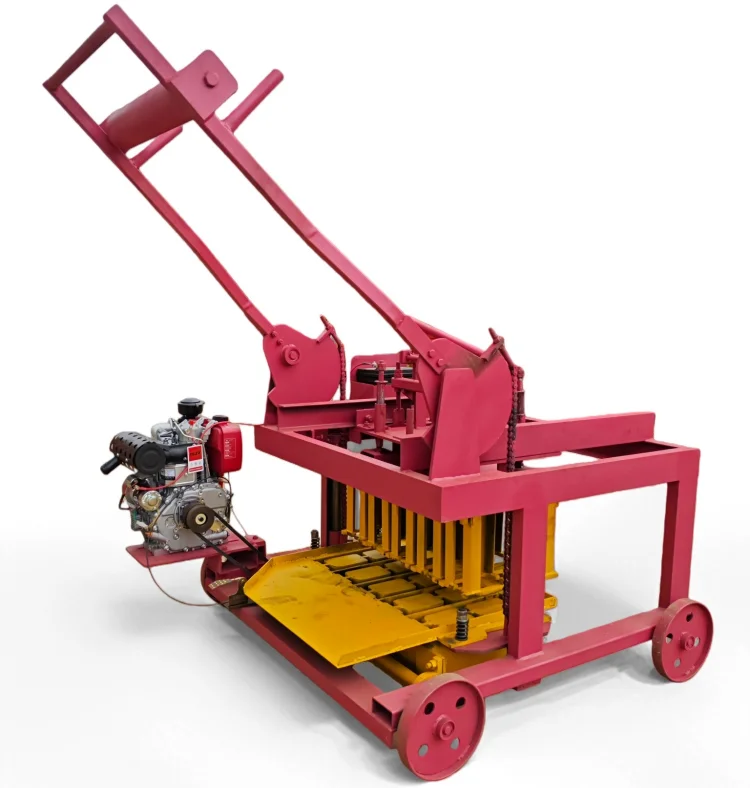
 Mobile block machine