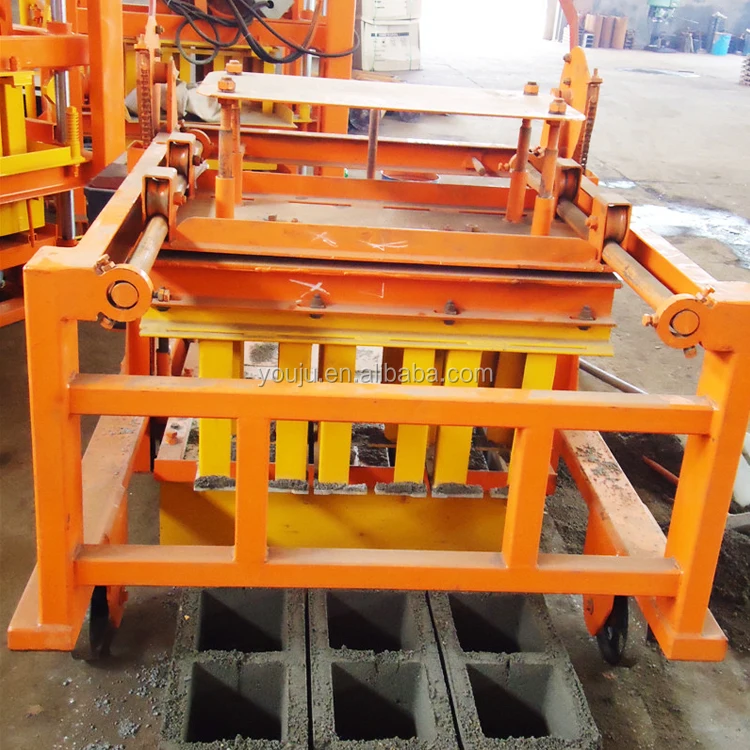
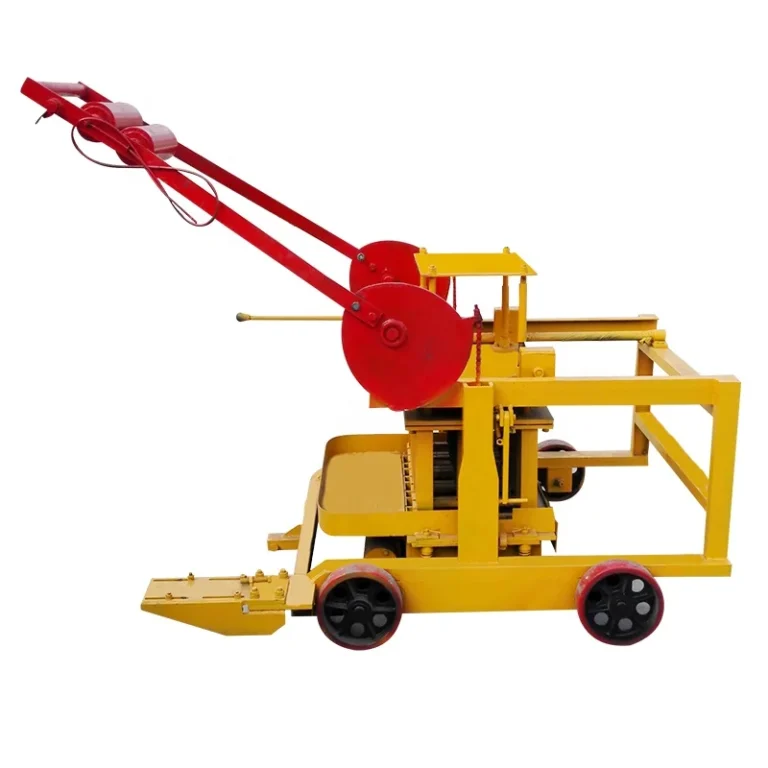
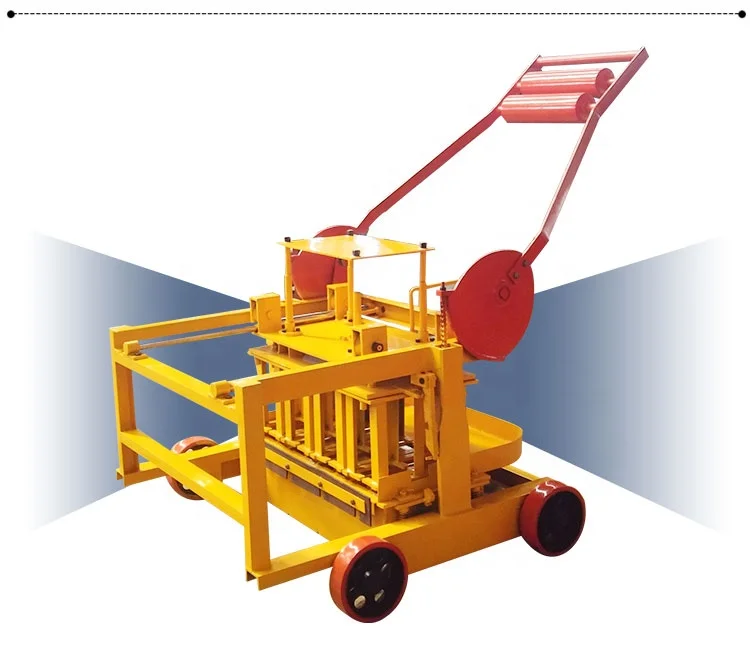
Single-focus machinery scope — the QMY4-30 is specified as one matched unit of press, mould and mobility rather than a catalogue generic, with capacity figures tied to the block format you actually intend to run on site.
Technical Specifications
| Parameter |
Value |
| Model |
QMY4-30 |
| Product Type |
Mobile Hydraulic Block Making Machine |
| Overall Dimensions (L×W×H) |
1300 x 1500 x 1000 mm |
| Total Mass |
950 – 1000 kg |
| Hydraulic Method |
Mold Vibration |
| Exciting Power |
28.6 KN |
| Excitation Frequency |
4500 r/min |
| Total Power |
5.95 kW |
| Molding Cycle |
30 seconds |
| Output Capacity |
3000 pcs/day (8 hours) (basis not stated in source — confirm block format and material) |
| Raw Material |
Concrete, sand, cement, fly ash, lime, stone dust, construction waste, slag, river sand |
| Control System |
Manual / Semi-Automatic (handle operated with vibratory motor and oil pump) |
| Mobility |
Mobile (egg-laying type, moves forward/backward/corner) |
| Mould Format |
Customizable to buyer drawings or market formats |
| Automation Level |
Manual with hydraulic assist |
| Assembly State |
Fully assembled mobile unit |
Application Suitability
| Application |
Material or Output |
| On-site housing project block production |
Hollow and solid blocks from river sand and cement |
| Remote infrastructure block laying |
Pavers and solid blocks from local stone dust and aggregate |
| Small contractor daily output |
Blocks from construction waste and fly ash blends |
| Mountainous or difficult-terrain sites |
Custom formats using locally available crushed stone |
What "3,000 Pieces Per Day" Leaves Out When Sourcing a mobile block machine manufacturer
Capacity numbers mean nothing without the block format stated beside them.
A daily figure quoted without specifying whether it assumes a 400×200×200 mm hollow block or a smaller solid paver will mislead every production plan built on it. I have watched contractors in West Africa receive a mobile egg-laying machine only to find the real output on their specific block size fell far short of the quoted number, because the cycle time and mould configuration were never matched to their actual product. The QMY4-30 completes a molding cycle in 30 seconds, but how many finished blocks that translates to per shift depends entirely on the cavity count of the mould you select. Always ask the mobile block machine manufacturer to state capacity per format, not as a single blanket figure. [NEED_CITE: block output calculation methods based on mould cavity count and cycle time]

Where the Mobile Tier Sits in the Full Range
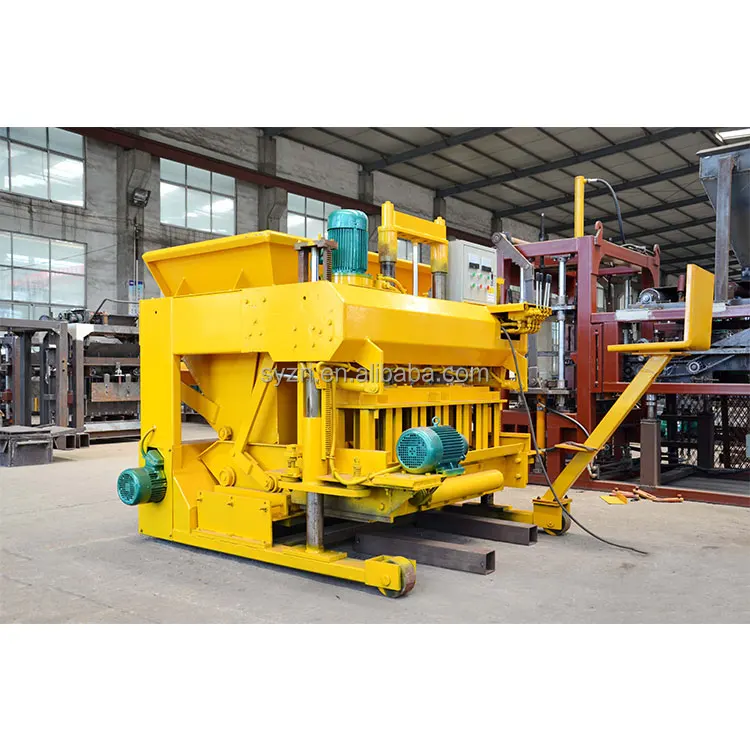
The QMY4-30 occupies the entry tier of mobile block production, designed for buyers who need blocks on the ground without investing in a fixed plant, pallet circulation system, or curing racks. This mobile block machine manufacturer positions it for project-based work where the machine lays a block, moves forward, and repeats — leaving the product to cure in place. It is the right tier when your site changes frequently, your investment budget is constrained, or your terrain makes a fixed installation impractical.
What Egg-Laying Mobility Removes from Your Setup
By producing directly on the ground, the QMY4-30 eliminates the need for pallets, pallet return conveyors, and dedicated curing rack infrastructure. This matters for contractors working across dispersed sites in hilly or coastal terrain where transporting a full pallet system adds significant logistics cost. The trade-off is that output stacking and curing handling remain manual, so your labour plan must account for that. [NEED_CITE: site logistics considerations for mobile versus stationary block plants]
Excitation Force, Cycle Time and What They Mean for Block Density
The 28.6 KN exciting power at 4500 r/min is the vibration specification that directly determines how densely the concrete mix is compacted inside the mould box. Insufficient vibration force against a coarse local aggregate produces blocks with inconsistent strength and surface finish. The 30-second molding cycle is the press time per mould, and it must be matched to your mix workability — a stiff mix with high stone dust content may need the full cycle, while a wetter river sand mix could compact faster. The 5.95 kW total power draw keeps the machine operable on sites with limited generator capacity, which is common in remote infrastructure projects. Pallet size is not applicable in the traditional sense here since the machine lays on the ground, but the footprint of each laid block row determines your curing area layout.
The Cost of Skipping the Local Material Test
Sending your local aggregate sample before the machine is configured is not optional with mobile egg-laying machines. I once spent a week on-site in a laterite region because the vibration parameters had been set for standard river sand, and the red soil mixed with crushed stone the client actually used produced blocks that crumbled under handling. The excitation frequency and mould clearance need adjustment to the specific particle size and moisture behaviour of your material, and that can only be done if the mobile block machine manufacturer tests your sample before final assembly. Skipping this step means paying for a technician visit after the machine arrives. [NEED_CITE: aggregate testing protocols for concrete block mix design]
Why Configuration Matters More Than Catalogue Price
The QMY4-30 is built around block machinery as a single focus, meaning the press, mould, and mobility mechanism are specified together rather than sourced from separate vendors and assembled by the buyer. Configuration is set against your actual mix design, local aggregate, and target block format — not a catalogue default that may not match your market. Mould design and supply covers the formats your buyers actually purchase, including custom drawings when your local market requires non-standard dimensions. The automation level starts at manual with hydraulic assist, and the machine sits at the starting point of a range that can scale to semi-automatic and fully automatic tiers as your operation grows.
Documentation & Verification
- Line layout showing ground area required per block format and curing zone dimensions
- Machine specification sheet confirming excitation force and cycle time against your mould selection
- Mould drawing and format list matching the block sizes your local market sells
- Voltage and control language confirmation document signed before production begins
- Factory test record showing block density and cycle time with your specified aggregate sample
Installation, Commissioning & Support
- Ground surface must be level and compacted to support the 950–1000 kg unit moving under full hydraulic load
- 5.95 kW total power requires a dedicated circuit with correct voltage and frequency confirmed for your site supply
- Machine ships fully assembled and mobile, requiring no foundation pouring or structural installation
- On-site commissioning includes vibration parameter tuning to your local raw material sample
- Operator training covers mould change procedure and manual handle operation sequence
- Wear parts list identifies vibration motor and hydraulic seal replacement intervals
Before You Request a Quotation
Send the specific block format dimensions your market demands, the local aggregate type you plan to use, and your site voltage and frequency. Include a sample of your raw material if possible, so the vibration parameters can be set correctly before the machine leaves the factory. State your target daily output per block format so the capacity calculation can be built around your actual product, not a catalogue assumption.
Frequently Asked Questions
Q: The 3,000 pcs/day capacity is based on which block format and size?
A: That figure requires confirmation against your specific block dimensions and mould cavity count. A 400×200×200 mm hollow block mould with four cavities produces a different hourly output than a solid paver mould. We provide a capacity calculation sheet tied to your chosen format before order confirmation, so your production plan rests on verified numbers rather than a catalogue assumption.
Q: What voltage and frequency options are available for my country?
A: Voltage and frequency are configurable but must be confirmed before production begins. Different markets run on different standards, and a mismatch delays commissioning when the machine arrives on site. We document the agreed electrical specification in writing and verify it on the factory test record before dispatch.
Q: Can I supply my own block design drawing for a custom mould?
A: Yes, custom mould design to buyer drawings is part of the configuration process. If your local market sells a format that is not a standard catalogue option, send the dimensional drawing and we will engineer the mould to fit the QMY4-30 press. The mould drawing is confirmed with you before manufacturing begins.
Q: What local raw materials does the QMY4-30 work with?
A: The machine handles concrete, sand, cement, fly ash, stone dust, construction waste, slag, river sand, and similar aggregates. However, the vibration parameters must be matched to your specific material blend. We ask buyers to send a local aggregate sample so the excitation frequency and mould clearance can be adjusted before the machine ships.
Q: Where does the mobile machine sit compared to semi-automatic and fully automatic tiers?
A: The QMY4-30 is the mobile entry tier, requiring no fixed plant, pallets, or curing racks. Semi-automatic tiers add pallet circulation and higher output for stable-site production, while fully automatic lines include stacking and cubing for high-volume plants. The mobile tier suits project-based work and first-time buyers with minimal infrastructure investment.

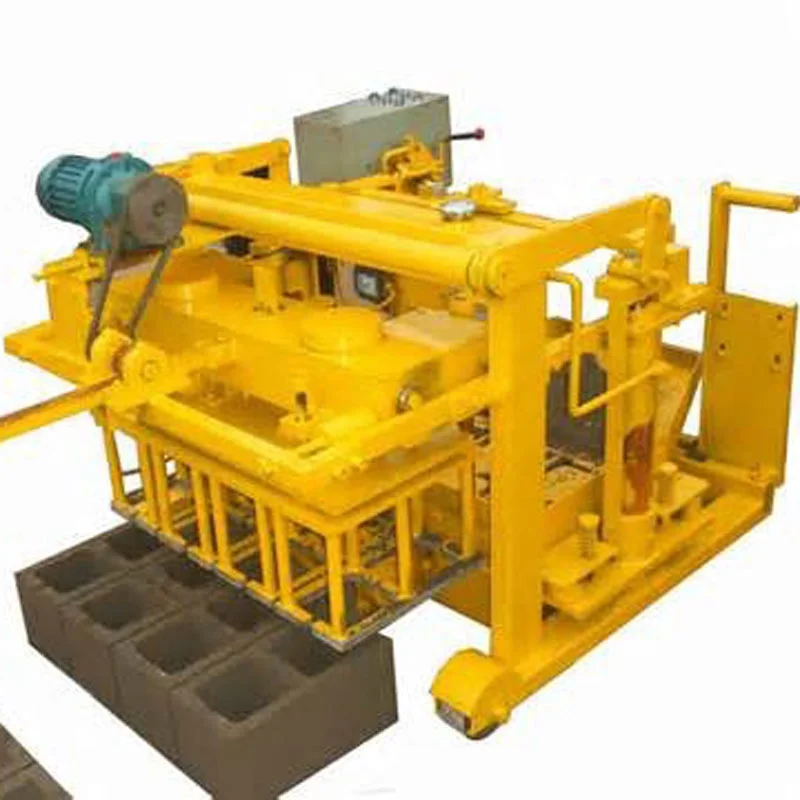
 Mobile block machine