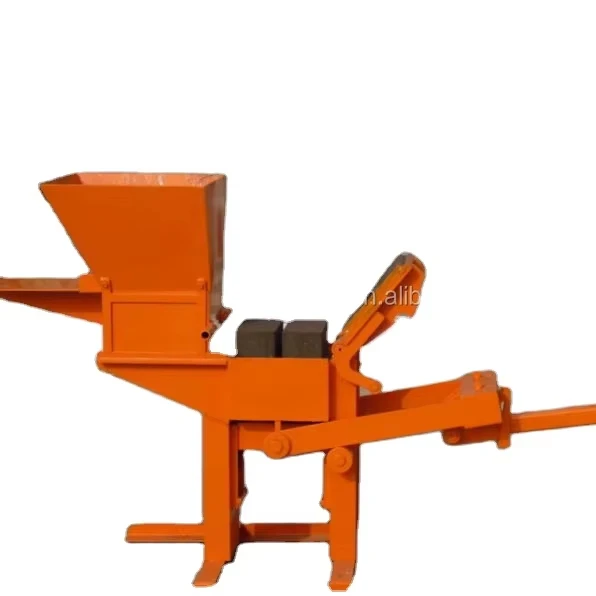
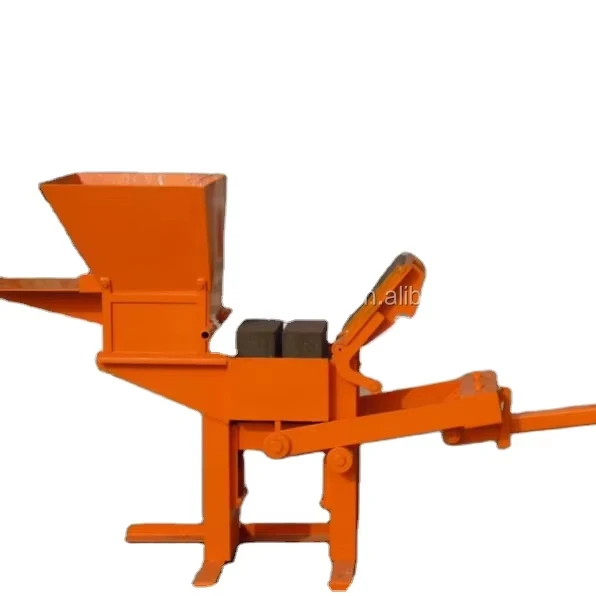
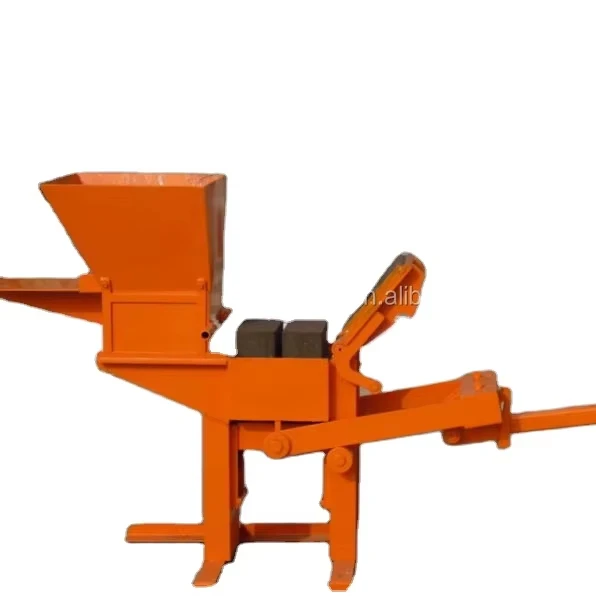
Zero-Power Entry Tier — the LY2-40 anchors the bottom of our block machine range, giving buyers a proven starting point before committing capital to semi-automatic or fully automatic tiers.
Technical Specifications
| Parameter |
Value |
| Model |
LY2-40 |
| Product Type |
Manual Earth Brick Making Machine |
| Total Power |
No Power, Completely Manual |
| Overall Dimensions (L×W×H) |
1600 x 700 x 1200 mm |
| Net Weight |
200–240 kg |
| Molding Cycle |
30–40 s |
| Output Capacity |
400–1000 pcs/day (basis not stated in source — confirm block format / material / thickness) |
| Automation Level |
Completely Manual |
| Lifting System |
Manual |
| Mobility |
Steel wheels |
| Mould Format |
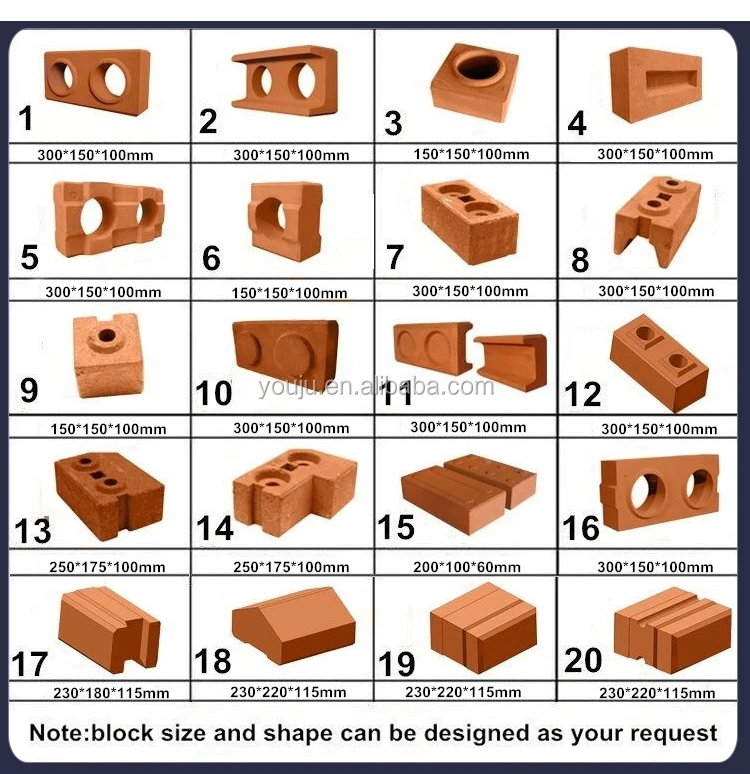
Changeable for various interlocking clay brick profiles |
| Basic Equipment |
JFA-1 Mixer or JQ350 Mixer |
| Warranty |
1 Year |
Application Suitability
| Application |
Material or Output |
| Off-grid clay interlocking brick production |
Local soil blended with cement, no electrical supply required |
| Small-scale earth brick manufacturing |
Housing and community development projects using on-site soil |
| On-site block production by contractors |
Construction sites where transporting finished bricks is impractical |
| Manual brick plants |
Start-up operations using locally sourced clay and manual labor |
What "400 to 1000 Pieces Per Day" Actually Means for the LY2-40
Daily output depends entirely on the block format, soil-cement mix, and how many operators are cycling the press.
Capacity figures on manual earth brick machines are often quoted as a single range without explaining what sits behind it. A thin interlocking paver molded from well-graded sandy loam will cycle faster and release from the mould more cleanly than a thick-walled structural block pressed from heavy clay. The number of workers feeding the mixer, moving the press, and carrying finished bricks to the curing area also determines whether you reach the upper or lower end of that range. When buyers compare manual clay interlocking brick machine for sale options, the missing context is almost always the block format and crew size assumed in the calculation [NEED_CITE: capacity calculation standards for manual block presses].

Where the LY2-40 Sits in the Full Block Machine Range
The LY2-40 occupies the entry tier of our manual earth brick making machine range, positioned below semi-automatic hydraulic presses and fully automatic vibrating lines. Buyers surveying options for a first plant or a remote project site use this model to validate their local soil and market demand before scaling up. Its completely manual operation means zero dependency on electrical infrastructure, which matters for development projects in areas where grid power is unreliable or absent.
Mobility and Positioning Across the Production Area
Steel wheels allow a two-person crew to roll the LY2-40 across compacted ground without a forklift or fixed foundation. This mobility lets contractors move the press closer to stockpiles of raw material or shift it under shelter when weather turns. Unlike stationary hydraulic presses that require a poured concrete slab and dedicated power circuit, the LY2-40 can begin producing interlocking clay bricks on the same day it arrives at site [NEED_CITE: site preparation requirements for mobile block machines].
Reading the Specs That Actually Matter
The 30–40 second molding cycle reflects the time for one operator to fill the mould chamber, pull the compaction lever, and release the formed brick. Cycle consistency depends on the soil-cement mix reaching the right moisture content; too dry and the brick crumbles on release, too wet and it slumps before curing begins. The 200–240 kg net weight provides enough mass to resist tipping during lever actuation while remaining within the range two workers can reposition. Mould interchangeability means a single LY2-40 can produce different interlocking profiles — a buyer can test which format sells in their local market before ordering dedicated moulds for a higher-output machine. The paired JFA-1 or JQ350 mixer handles batch mixing at a pace matched to the manual press cycle, preventing bottlenecks at the feeding stage.
The Cost of Skipping a Soil Sample Before Ordering
I have seen interlocking bricks fail to lock together because the mould profile was designed for sandy loam while the buyer’s site had high-plasticity red clay. The bricks looked acceptable on the pallet but separated at the interlock joint under stacking weight. Sending a soil sample before the mould is machined allows the profile to be adjusted for shrinkage and release characteristics of that specific material. Skipping this step turns a flexible machine into a source of wasted cement and rejected output [NEED_CITE: soil-cement compatibility testing for interlocking block production].
Why Buyers Source the LY2-40 Through This Range
Block machinery is the single focus here, so the LY2-40 is specified as part of a matched system — press, mould, mixer, and pallet dimensions are confirmed together rather than sourced from separate vendors. Configuration starts from the buyer’s actual soil sample and target block format, not a catalogue default. Mould design covers the interlocking profiles that sell in the buyer’s market, including custom drawings when standard formats do not match local building codes. The automation level is selectable across the range, so a buyer who proves demand with the LY2-40 can move to a semi-automatic tier without replacing the entire supporting line. Installation guidance and operator training accompany the machine so that first-day output matches expectations set during the inquiry stage.
Documentation & Verification
- Machine specification sheet confirming dimensions, cycle time, and mould compatibility for your interlocking profile
- Mould drawing and format list so you can verify interlocking geometry against local building standards
- Line layout showing LY2-40 placement alongside mixer, curing area, and pallet staging
- Factory test record using your soil sample or a documented equivalent before dispatch
- Operation and maintenance manual covering lever mechanism lubrication and mould cleaning intervals
Installation, Commissioning & Support
- Level compacted ground is sufficient; no concrete foundation required for the 200–240 kg frame
- No electrical connection needed for the press itself; mixer requires local voltage confirmation
- Machine ships assembled; steel wheels allow immediate positioning on arrival
- First-run commissioning includes mix ratio adjustment based on your soil sample results
- Operator training covers mould change procedure, lever technique, and brick release timing
- Wear parts list identifies mould liner and lever pivot bushings as primary replacement items
- Daily maintenance limited to mould surface cleaning and pivot point lubrication
Before You Send an Inquiry
To match the right mould and mixer combination to your project, share the target interlocking brick dimensions, the soil type available on your site, and the daily output you need to meet your construction schedule. If you already have a curing area or pallets from a previous operation, include those dimensions so the supporting equipment is specified to fit. Let us know whether electrical power is available for the mixer or if a fully manual mixing arrangement is required.
Frequently Asked Questions
Q: How is the 400–1000 pcs/day output calculated, and which block format does it assume?
A: That range depends on the specific interlocking brick thickness, the soil-cement mix workability, and the number of operators cycling the press and moving finished bricks. The lower end typically reflects a thicker structural block with a smaller crew, while the upper end assumes a thinner paver format with a larger team. We provide a capacity calculation tied to your exact block format during the proposal stage.
Q: What soil-cement mix ratio is recommended, and can local aggregate be used?
A: Typical soil-cement ratios for interlocking bricks fall between six and twelve percent cement by weight, but the right figure depends on your soil’s clay content and plasticity. We ask buyers to send a soil sample so the mix can be tested and the mould profile adjusted before production begins, avoiding bricks that crack or fail to interlock.
Q: How long does a mould change take, and what formats are available?
A: A mould change on the LY2-40 involves unbolting the current mould box and fitting the replacement, which a trained operator completes in a short period with basic hand tools. Available formats cover common interlocking profiles, and custom moulds can be machined to buyer drawings when local building codes require specific dimensions or lock geometries.
Q: Where does the LY2-40 sit in the range compared to semi-automatic and mobile egg-laying machines?
A: The LY2-40 is the entry point — fully manual with zero power requirement, suited for off-grid sites and first-time buyers. Semi-automatic tiers add hydraulic compaction and vibration for higher density and output, while mobile egg-laying machines produce blocks directly on the ground without pallets. Each tier serves different investment levels and site conditions.
Q: What supporting equipment is needed to run a complete manual brick line?
A: Beyond the LY2-40 press, you need a mixer such as the JFA-1 or JQ350, flat curing pallets sized to your drying area, and basic hand tools for mould maintenance. A water source for mix preparation and a covered curing space protect output quality. We specify these items together so cycle times match across the line.

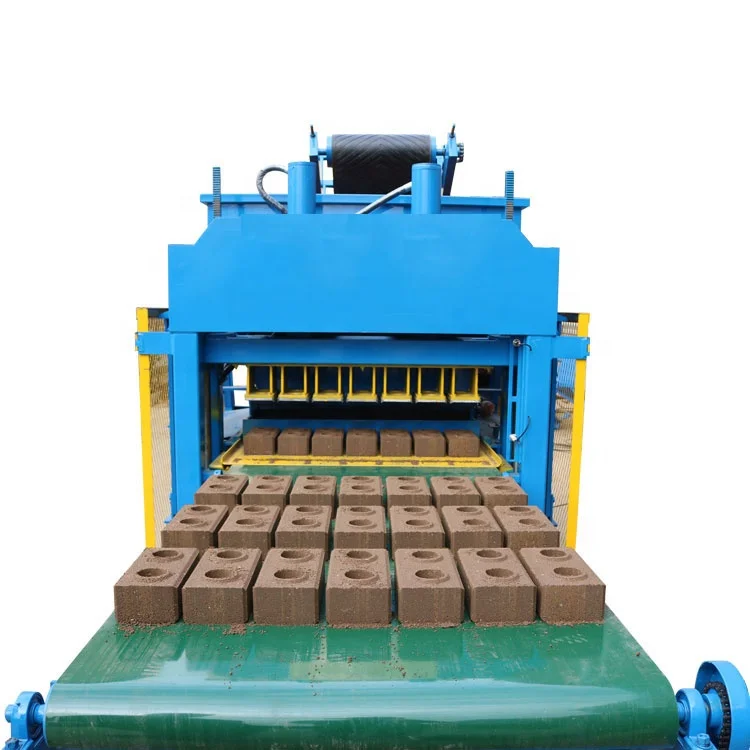 Clay interlocking brick