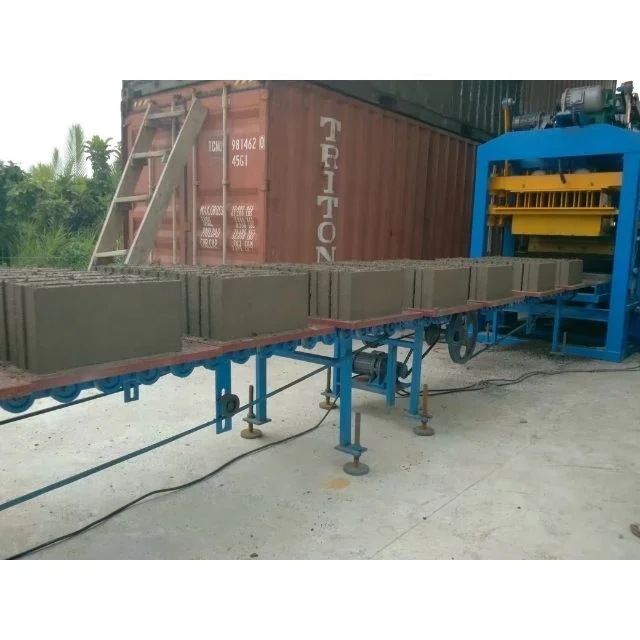
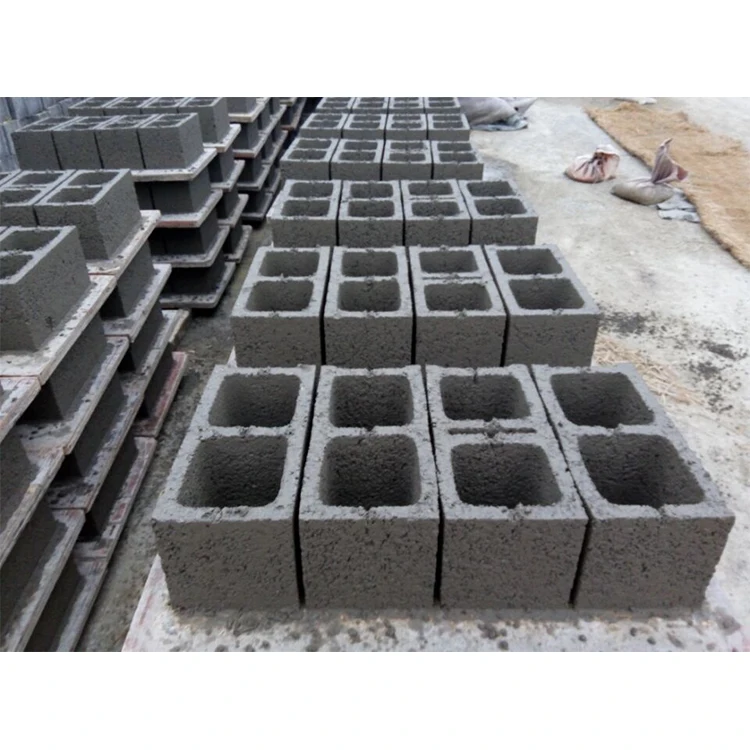
Matched System Approach — The QT4-15 automatic block making machine is specified alongside its moulds, pallets, and handling equipment as one coordinated production unit, eliminating the mismatches that arise when buyers source each component from separate suppliers.
Technical Specifications
| Parameter |
Value |
| Model |
QT4-15A |
| Product Type |
Automatic Concrete Block Making Machine |
| Overall Dimensions |
4100×1600×2600 mm |
| Total Mass |
4 T |
| Rated Hydraulic Pressure |
16–21 MPa |
| Vibration Form |
Platform Vibration |
| Vibration Frequency |
4200 r/min |
| Vibration Force |
55 kN |
| Pallet Size |
880×550 mm |
| Molding Cycle |
25–30 s (basis not stated in source — confirm block format / material / thickness) |
| Overall Power |
18.45 kW |
| Demolding Method |
Hydraulic |
| Factory Area Required |
300 m² |
| Automation Level |
Fully automatic |
| Container Loading |
1×40HQ (basic equipment) |
| Warranty |
1 year (excluding spare parts) |
Application Suitability
| Application |
Material or Output |
| Hollow block production |
Crushed stone, sand, cement, fly ash, gravel |
| Solid block manufacturing |
Cement, dust, slag, sand |
| Paver and interlocking block runs |
Colored concrete mixes, fine aggregate |
| Curbstone forming |
Dense aggregate blends with cement binder |
| On-site contractor block supply |
Locally sourced gravel and sand with cement |
What "Fully Automatic" Actually Means for Your Output
Buyers often receive quotations for an automatic block making machine for sale listing a single cycles-per-hour figure without clarifying which block format or wall thickness that number assumes. The result is a daily throughput that falls well short of the project schedule once production starts. Cycle time only becomes meaningful when tied to a specific block format, local aggregate density, and target compressive strength.
In my time running block plant projects across Southeast Asia, I have watched contractors commit to a machine tier based on a generic output number, only to discover on commissioning day that the cycle stretches considerably longer when running the hollow block format their market actually buys [NEED_CITE: block format impact on cycle time across vibration platforms]. That gap between quoted capacity and real daily production has stalled housing projects and left distributors scrambling for backup supply.

Placing the QT4-15 Within the Automatic Machine Range
The QT4-15 occupies the mid-tier of the fully automatic lineup. For a buyer moving up from a semi-automatic or mobile egg-laying machine, this tier introduces continuous platform vibration paired with hydraulic demolding while keeping the total plant footprint within a 300 m² factory area. It is positioned where output volume justifies the step to full automation, yet the investment remains accessible for a first or second block production line.
Where Semi-Automatic Ends and This Tier Begins
Semi-automatic models still require manual pallet handling between the press and the curing yard. The QT4-15 tier removes that manual pallet transfer step, allowing the press to cycle without waiting for an operator to clear the previous pallet. This distinction matters most when daily volume targets require sustained running through a full shift rather than short production bursts [NEED_CITE: labour requirements across automation tiers in block production].
Reading the Specs That Actually Shape Your Output
The 16–21 MPa rated hydraulic pressure works in concert with the 55 kN vibration force to compact the concrete mix into the mould cavity. If the pressure and vibration are not matched to your local aggregate’s particle shape and moisture content, block density will vary from batch to batch. The 880×550 mm pallet size determines how many block units fit per mould cycle, which sets the ceiling on daily throughput regardless of how fast the press cycles. A 25–30 second molding cycle sounds fast in isolation, but the real output depends entirely on the block format loaded into that mould. The 4200 r/min platform vibration frequency is tuned for standard concrete mixes; if your local sand carries high clay content, the effective compaction changes, and mix adjustment becomes necessary before the cycle time in the spec sheet becomes achievable.
The Cost of Skipping the Configuration Conversation
When a buyer orders an automatic block making machine for sale based solely on a catalogue tier without confirming the mix design, pallet material, and curing yard layout, the consequences surface after arrival. Pallets may not match the forklift tines already on site. The control panel language may differ from what operators can read, stalling commissioning. Voltage and frequency assumptions left unresolved can damage the motor on first startup [NEED_CITE: electrical specification mismatches in exported industrial machinery]. These are not manufacturing defects — they are configuration gaps that a detailed pre-order discussion would have prevented.
Why Source This Machine Through a Single-Focus Supplier
Block machinery is the only product category here, so the QT4-15 is never treated as one line among dozens of unrelated equipment types. Machine, mould, pallet, and handling gear are specified together against your actual block format and site conditions rather than shipped as a default package. The mould design follows the formats your local market sells, including custom drawings when standard options do not match. Automation level is selectable within this tier, so a buyer can begin at a simpler configuration and add stacking or cubing functions later. Installation support extends through commissioning and operator training at the buyer’s facility, and wear parts plus mould replacements remain available through the operational life of the press.
Documentation & Verification
- Line layout showing raw material feed, press position, and pallet flow for the QT4-15
- Capacity calculation sheet stating the specific block format behind every output number
- Mould drawing with format list matched to your target product range
- Pallet specification confirming size, material, and load rating for your curing setup
- Voltage, frequency, and PLC display language confirmation signed before production
- Factory test record run on your specified block format prior to dispatch
Installation, Commissioning & Support
- 300 m² factory area must be level and prepared before the 4 T machine arrives
- 18.45 kW total power requires a dedicated circuit matching your local voltage and frequency
- Basic equipment loads into a single 40HQ container; dismantling and reassembly supervised on site
- First-run commissioning includes mold change practice and cycle timing on your chosen block format
- Operator training covers PLC controls, hydraulic pressure adjustment, and vibration frequency checks
- Wear parts and mould inventory list provided for planning your first replacement order
Before You Request a Quote
To size the QT4-15 correctly for your operation, share the specific block formats you plan to produce, your target daily output per format, and the local aggregate types available near your plant. Include your existing curing yard dimensions, forklift specifications, and the voltage and frequency standard at your facility. If you are running an existing line, note the pallet size and material currently in use so the new press integrates without disrupting your curing workflow.
Frequently Asked Questions
Q: How is daily output calculated for the QT4-15, and which block format does the cycle time assume?
A: The 25–30 second molding cycle is a base figure that shifts depending on block format, wall thickness, and mix density. Daily output is calculated by multiplying blocks per pallet by confirmed cycles per shift, but only after your specific block format and local aggregate are tested. We provide a capacity sheet tied to each format you intend to produce, not a single generic number.
Q: Where does the QT4-15 sit compared to smaller semi-automatic models and larger high-capacity lines?
A: This automatic block making machine for sale sits in the mid-tier, above semi-automatic units that require manual pallet handling and below high-capacity lines designed for continuous three-shift operation. It suits buyers whose daily volume has outgrown manual pallet transfer but who do not yet need the output of a large-scale automatic plant with full cubing systems.
Q: What automation level does this tier include — is stacking and cubing covered?
A: The QT4-15 ships as a fully automatic press with hydraulic demolding and automatic pallet feeding. Stacking and cubing are configurable additions depending on your shift volume and labour availability. If your current setup handles stacking manually, you can start without these modules and add them later as production scales.
Q: Can the machine be upgraded later to a higher automation configuration?
A: Yes. The QT4-15 platform supports upgrades to automatic stacking, cubing, and advanced batching systems. The mechanical base and hydraulic architecture remain compatible, so upgrading means adding modules rather than replacing the press. This path is common for buyers who start with a lower investment and scale as market demand grows.
Q: What plant footprint and utility connections are required for the QT4-15 at full setup?
A: The press itself fits within a 300 m² factory area alongside material storage and pallet circulation space. You need a dedicated electrical circuit at 18.45 kW capacity, voltage and frequency matched to your grid, and a level concrete floor capable of supporting the 4 T machine mass plus dynamic vibration loads during operation.

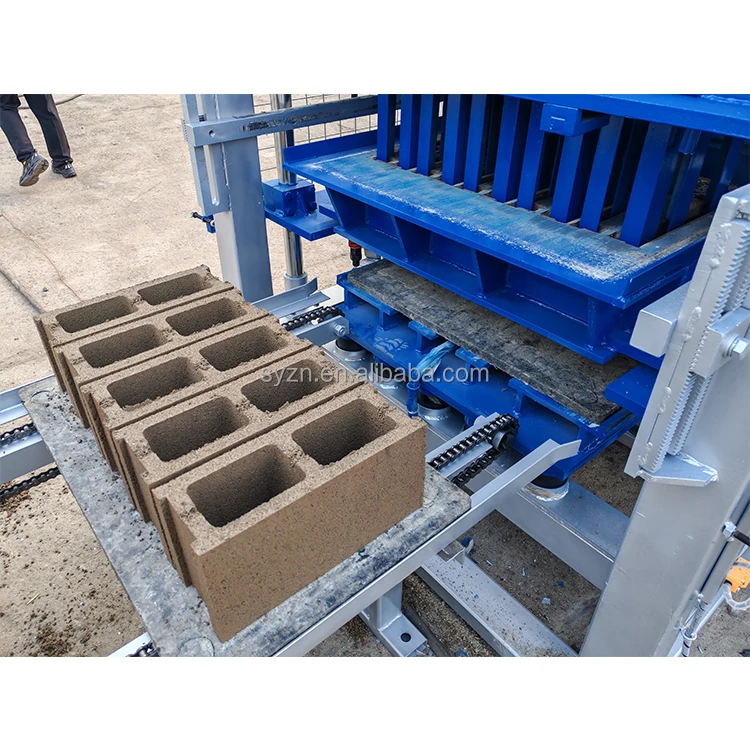
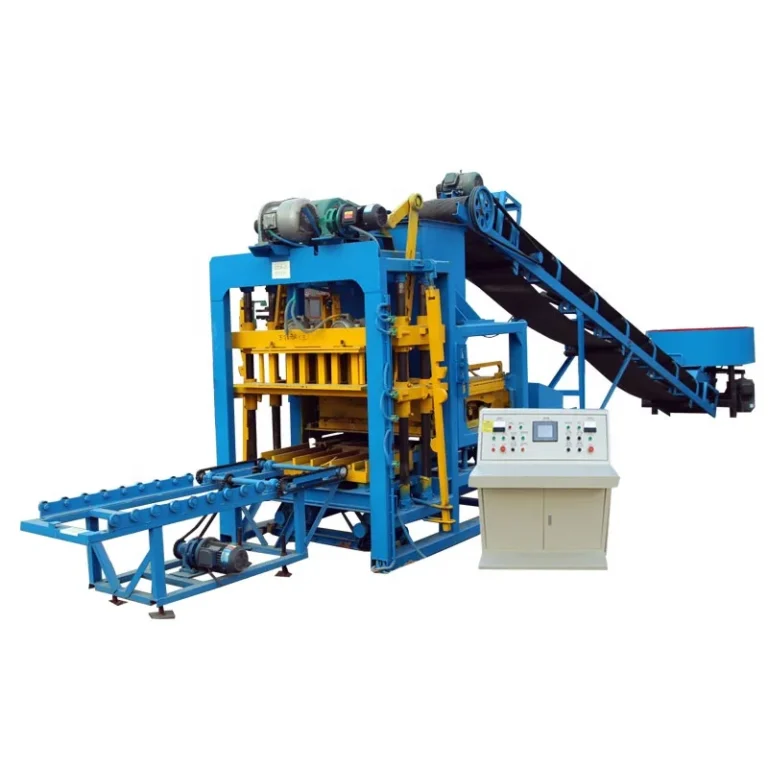 Automatic block machine