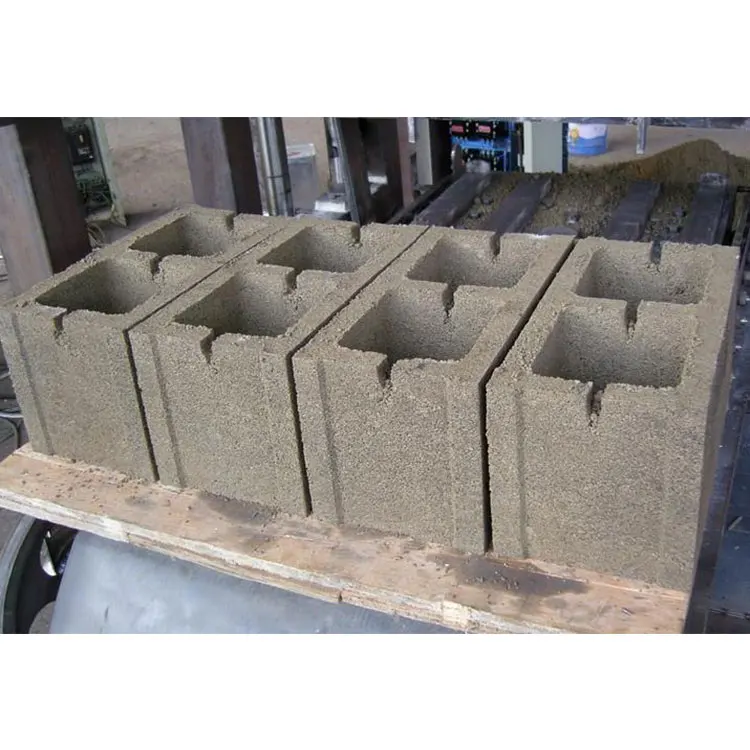
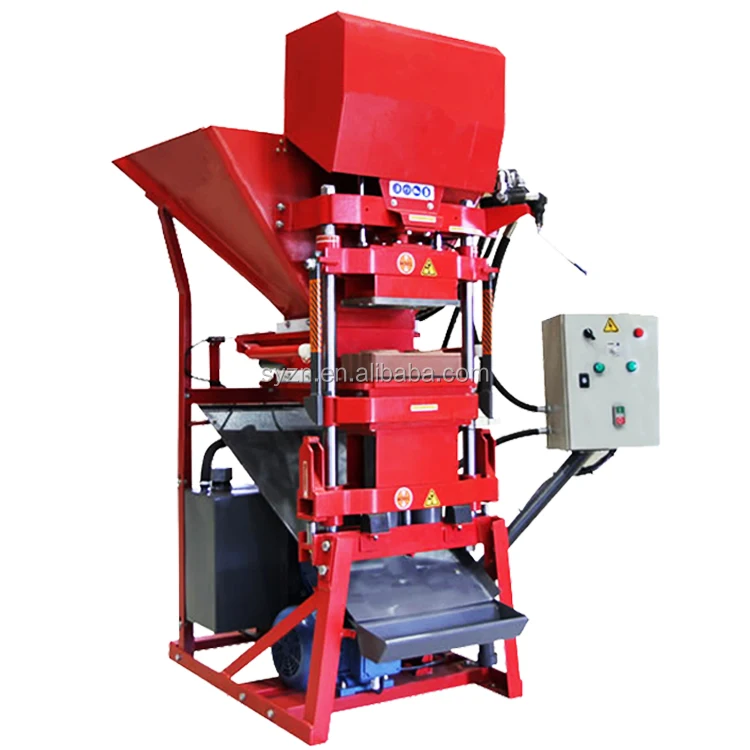
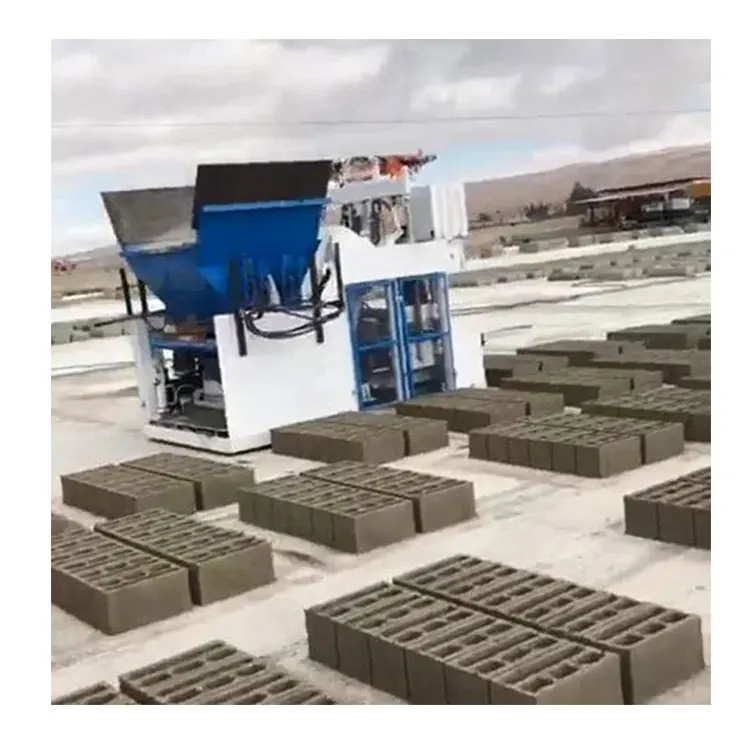
Matched System Sizing — the QTJ4-25 is specified as part of a complete block machine range where press, mould, pallet, and handling are configured together rather than sourced from separate suppliers.
Technical Specifications
| Parameter |
Value |
| Model |
QTJ4-25 |
| Product Type |
Concrete Block Making Machine |
| Overall Dimensions (L×W×H) |
3060×1730×2580 mm |
| Total Mass |
4 T |
| Rated Pressure |
16-21 MPa |
| Vibration Force |
45.5 kN |
| Vibration Frequency |
4200 r/min |
| Main Vibration Form |
Platform Vibration |
| Pallet Size |
850×550 mm |
| Molding Cycle |
25-30 s (basis not stated in source — confirm block format / material / thickness) |
| Overall Power |
14.9 kW |
| Demolding Method |
Vibration |
| Factory Area Requirement |
200 m² |
| Automation Level |
Semi-automatic (manual pallet handling implied) |
| Applied Products |
Hollow/solid blocks, pavers, interlocking blocks, kerbstone |
| Compatible Raw Materials |
Crushed stone, sand, cement, fly ash, gravel, slag |
| Mould Options |
Custom mould design to buyer drawings |
| Warranty |
1 year (excluding spare parts) |
Application Suitability
| Application |
Material or Output |
| Block production plants |
Hollow and solid blocks from crushed stone, sand, and cement |
| On-site construction projects |
Job-site block production using locally available aggregate |
| First-time block plant setup |
Entry-level semi-automatic production for entrepreneurs |
| Existing concrete product manufacturers |
Adding paver or interlocking brick formats to an existing range |
| Paver and kerbstone production |
Colored pavers and curbstones using specialized moulds |
What "25 Seconds per Cycle" Actually Means for Your Daily Output
Cycle time only becomes real capacity when the block format, mix design, and pallet handling are stated alongside it.
I have seen buyers take a cycle time figure and multiply it into an eight-hour shift, then wonder why the QTJ4-25 block machine manufacturer they chose cannot deliver the expected volume. The 25-30 second molding cycle was measured under conditions that may not match your local aggregate or target block format. A 400×200×200 mm hollow block requires different vibration and pressure settings than a 60 mm interlocking paver. [NEED_CITE: how block format and mix design affect actual cycle time] When the mix is too dry or the aggregate too coarse, the machine needs longer to achieve proper compaction, pushing the real cycle well beyond the quoted figure.

Where the QTJ4-25 Sits in the Full Machine Range
The QTJ4-25 occupies the semi-automatic tier of a broader QTJ4-25 block machine manufacturer lineup that extends from small workshop machines to fully automatic production lines. This model handles pallet feeding and block removal manually, keeping initial investment lower while leaving room to move up to higher automation as production volume grows. For buyers setting up a first block plant or contractors needing on-site production, this tier offers a practical entry point without locking you into a fixed configuration.
Matching Machine Tier to Your Actual Production Volume
Choosing the right tier depends on your daily volume target, labour availability, and how many block formats you plan to produce. The semi-automatic configuration of the QTJ4-25 suits operations where pallet handling can be managed by a small crew and where the product range does not require frequent mould changes. [NEED_CITE: block machine automation levels and labour requirements] If your market demands multiple formats with quick changeovers, a higher tier with automatic stacking and PLC-controlled mould systems becomes necessary. The QTJ4-25 block machine manufacturer range allows stepping up without replacing the entire line.
Reading the Specs That Actually Matter on Site
The 45.5 kN vibration force combined with 16-21 MPa rated pressure determines whether your blocks reach the density required for load-bearing applications. Platform vibration at 4200 r/min works through the pallet into the mould cavity, compacting the mix from below. If your local aggregate has high clay content, this vibration profile may need adjustment to avoid inconsistent block strength across a single batch. The 850×550 mm pallet size must align with your curing rack dimensions and the forklift you already have on site. A mismatch here means either buying new handling equipment or losing curing space to inefficient stacking. The 14.9 kW overall power draw determines your electrical supply requirements and should be confirmed against your site voltage and frequency before production begins.
The Cost of Skipping Configuration Before Shipment
When a buyer accepts a standard catalogue configuration without confirming the mix design and local aggregate, the machine arrives and produces blocks that crack during curing or fail compression tests. I have watched an entire production line sit idle for weeks while engineers flew in to recalibrate vibration force and pressure settings to match material the buyer could actually source locally. [NEED_CITE: consequences of unconfirmed mix design on block quality] Voltage mismatches delay commissioning further, and pallet sizes that do not fit the existing curing area force the buyer to rebuild infrastructure that was never part of the budget.
Why This QTJ4-25 Block Machine Manufacturer Approach Differs
Block machinery is the single focus here, so the QTJ4-25 arrives as a matched system — press, mould, pallet, and handling specified together rather than assembled from separate vendors. Configuration is set against your actual mix design and local aggregate, not a catalogue default. Mould design covers the formats your market sells, including custom drawings when standard options do not fit. The automation level is selectable, so you can start semi-automatic and move to higher tiers as demand grows. Installation support includes operator training, and mould and wear parts availability is confirmed before the first replacement cycle is due.
Documentation & Verification
- Line layout and capacity calculation stating the block format assumed for the QTJ4-25 cycle time
- Machine specification sheet with vibration force, pressure, and pallet size confirmed against your mix
- Mould drawing and format list showing all available formats and custom design options
- Voltage, frequency, and control language confirmation record before production starts
- Factory test record on your target block format before dispatch
- Operation and maintenance manual with wear parts and mould replacement schedule
Installation, Commissioning & Support
- Foundation requirements based on 3060×1730 mm footprint and 4 T operating mass
- Electrical supply confirmed for 14.9 kW load with dedicated circuit at your local voltage and frequency
- Machine arrives assembled or partially dismantled based on container loading plan
- On-site commissioning includes vibration and pressure calibration to your specific mix design
- Operator training covers mould change procedure and daily maintenance checkpoints
- Wear parts list and mould replacement schedule provided before first production run
- Pallet handling workflow configured to match your 850×550 mm pallet and curing area layout
What to Prepare Before Requesting a Proposal
To size the QTJ4-25 correctly within the full machine range, provide your target block format and dimensions, expected daily output, and the raw materials available in your area. Confirm your site voltage and frequency, the language needed for controls, and the pallet size that matches your existing curing racks and forklift. If you are comparing this tier against higher automation options, state your labour availability and how many formats you plan to run.
Frequently Asked Questions
Q: How is the QTJ4-25 cycle time verified and what block format is it based on?
A: The 25-30 second molding cycle must be confirmed against the specific block format, mix design, and pallet size you will actually use. A 400 mm hollow block and a 60 mm paver require different vibration profiles, which change the real cycle. Always request a capacity calculation document that states the assumed format before accepting a daily output figure.
Q: Where does the QTJ4-25 sit in the full machine range?
A: This model sits in the semi-automatic tier, suited for first-time plants and contractors producing on-site. Higher tiers add automatic pallet feeding, stacking, and cubing. If your volume grows or you need frequent format changes, stepping up to a more automated configuration within the same range avoids replacing the entire line.
Q: How is the machine configured to match local raw materials?
A: Vibration force and hydraulic pressure are adjusted based on your actual aggregate type, cement ratio, and target block strength. Configuration happens before production, not after arrival. This prevents the situation where a machine set for one mix design cannot handle material sourced in your region.
Q: What voltage and control options are confirmed before shipment?
A: Voltage, frequency, and control display language are confirmed during the proposal stage and locked before production begins. This step prevents commissioning delays that happen when electrical supply at the destination does not match the machine as built.
Q: Can the QTJ4-25 be upgraded to higher automation later?
A: The semi-automatic configuration allows adding automatic pallet feeding, stacking, or cubing as production demand increases. The upgrade path is planned during initial specification so that the press, pallet size, and mould system remain compatible when higher automation modules are introduced.

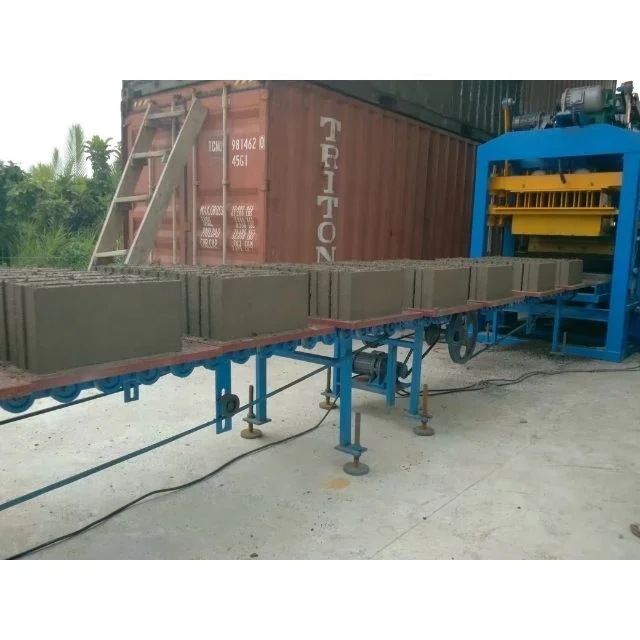
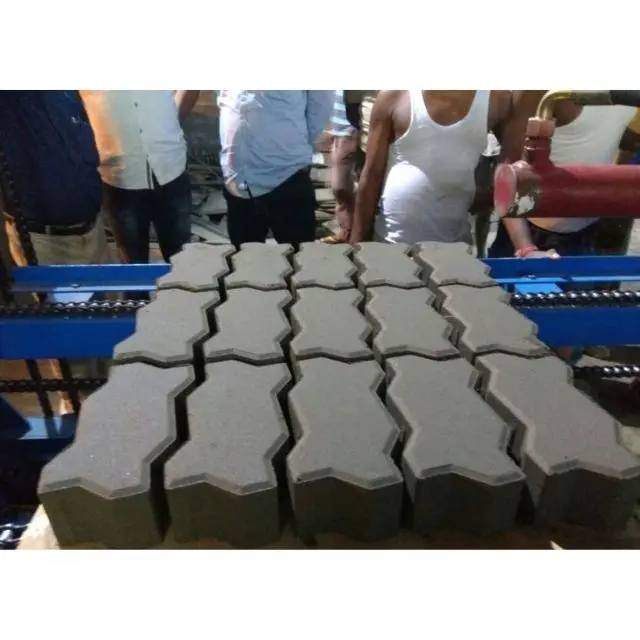 Automatic block machine