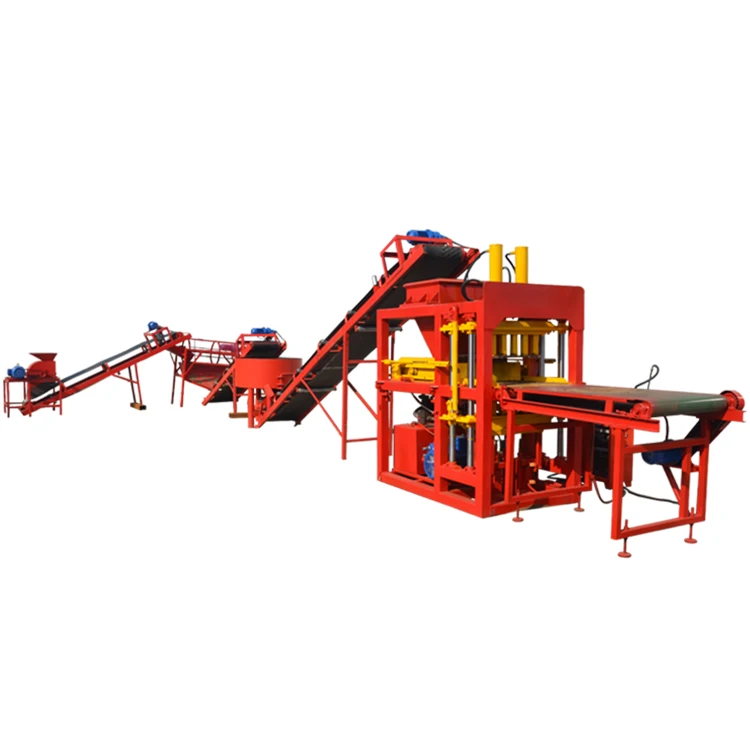
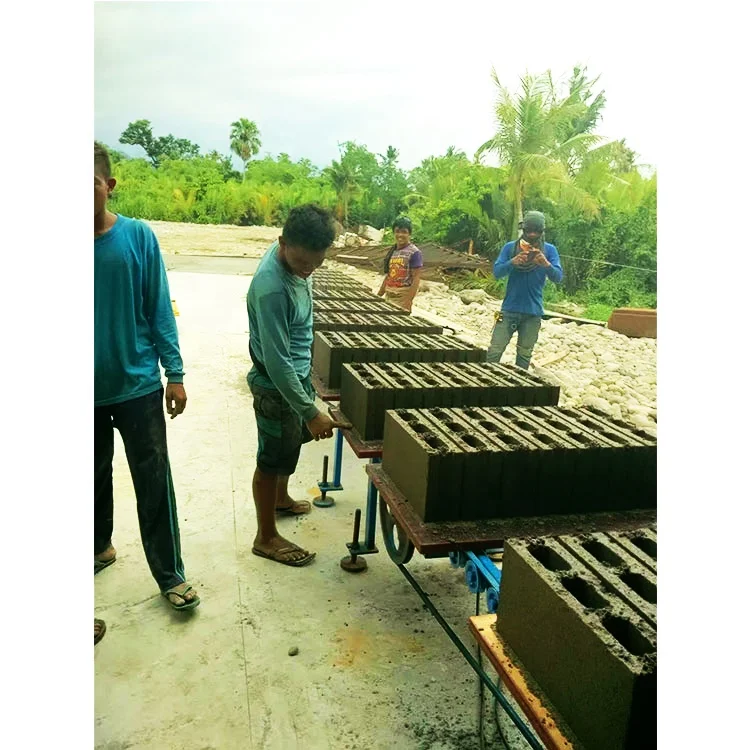
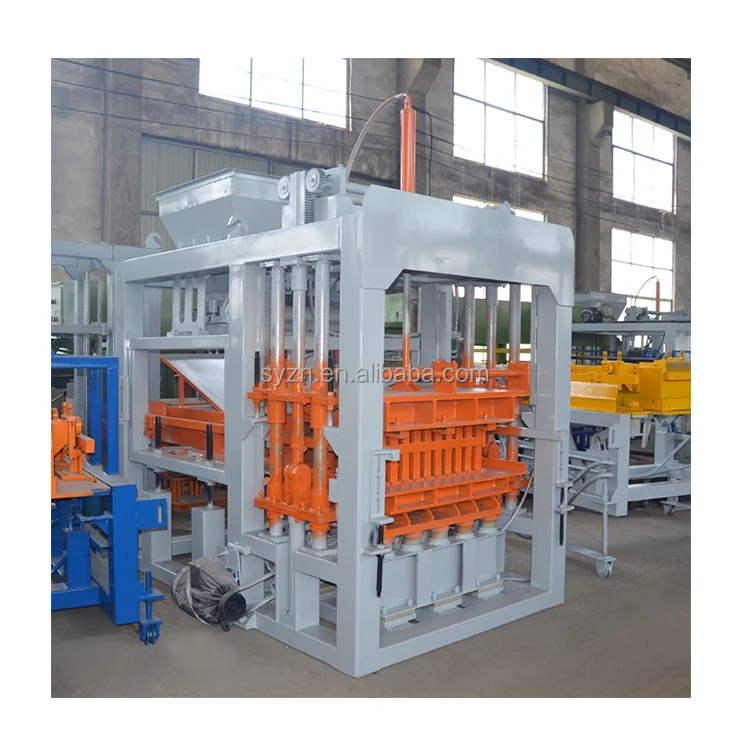
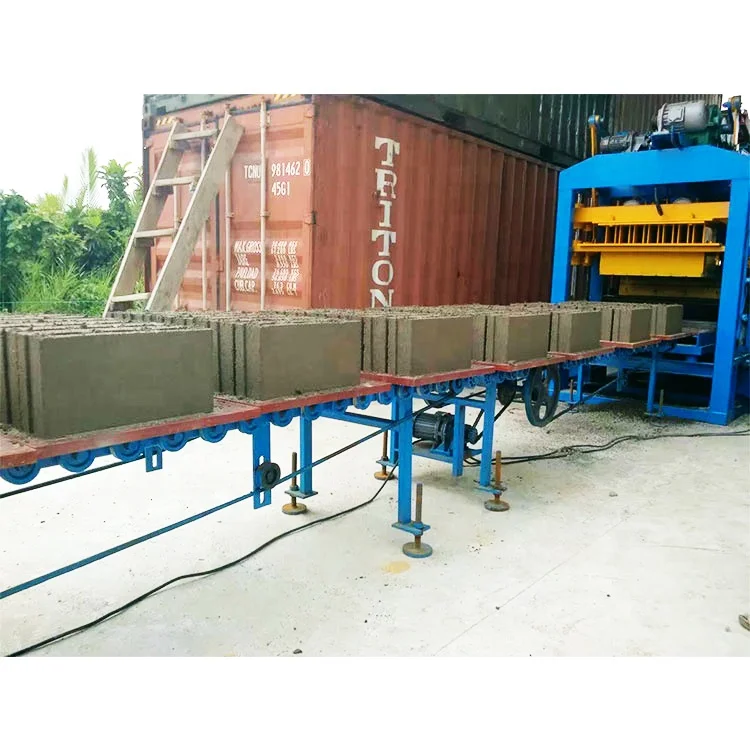
Matched System Configuration — the QT10-15 is specified as a single coordinated unit where the press, hydraulic station, pallet feeder and PLC cabinet are engineered to work together rather than assembled from separate suppliers.
Technical Specifications
| Parameter |
Value |
| Model |
QT10-15 |
| Product Type |
Automatic Block Making Machine |
| Molding Cycle (Standard Blocks) |
15-20s (basis to be confirmed per block format and material) |
| Molding Cycle (Paving Blocks) |
20-25s (basis to be confirmed per block format and material) |
| Output Capacity (400×200×200mm hollow block, 10 pcs/mould) |
1800-2400 pcs/hour |
| Output Capacity (400×150×200mm hollow block, 12 pcs/mould) |
2160-2880 pcs/hour |
| Output Capacity (240×115×53mm solid brick, 62 pcs/mould) |
8928-11160 pcs/hour |
| Output Capacity (200×100×60mm paving block, 27 pcs/mould) |
5184-6480 pcs/hour |
| Output Capacity (225×112.5×60mm paving block, 24 pcs/mould) |
4032-5040 pcs/hour |
| 8-Hour Shift Output (400×200×200mm) |
14400-19200 pcs |
| 8-Hour Shift Output (400×150×200mm) |
17280-23040 pcs |
| 8-Hour Shift Output (240×115×53mm) |
71424-89280 pcs |
| 8-Hour Shift Output (200×100×60mm) |
41472-51840 pcs |
| 8-Hour Shift Output (225×112.5×60mm) |
32256-40320 pcs |
| Control System |
PLC control cabinet |
| Hydraulic System |
Independent integrated hydraulic station |
| Line Components |
Pallet feed machine, block making machine, storage hopper, conveyor, hydraulic unit, PLC control cabinet |
| Mould Change |
Simple replacement of mould to adjust production formats |
| Automation Level |
Automatic |
| Warranty |
1 year for the whole machine (excluding spare parts) |
Application Suitability
| Application |
Material or Output |
| Hollow block production for masonry walls |
Crushed stone, sand, cement and fly ash aggregates |
| Multi-cellular brick manufacturing |
Lightweight aggregate and cement blends |
| Paving block production for roads and walkways |
High-density crushed granite and cement mixes |
| Interlocking brick production |
Soil-cement or sand-cement blends |
| Standard solid brick production |
Clay alternative mixes with sand and cement |
| Building material plants running multiple formats |
Single-line production across hollow, solid and paving formats |
Why the Mould Matters More Than the Motor
The cycle time and output capacity of any automatic block making machine manufacturer will mislead you if the format behind the number is never named.
I spent years quoting machines by their headline cycle speed, only to watch buyers come back frustrated when their real-world daily count fell far short. The QT10-15 produces 1800-2400 hollow blocks per hour, but that figure is based on a 400×200×200mm block with 10 cavities per mould. Switch to a 240×115×53mm solid brick with 62 cavities and the same press yields a completely different hourly count [NEED_CITE: block format impact on daily output planning]. The machine does not change; only the number on your production board does.

Where the QT10-15 Fits in the Shiyue Range
The QT10-15 occupies the high-capacity automatic tier in Shiyue’s block machine lineup, designed for buyers who have outgrown semi-automatic or mobile egg-laying machines and need consistent output across an eight-hour shift. It sits above smaller workshop presses that handle a few thousand blocks daily, and below the largest automatic lines that require dedicated curing kilns and robotic cubing systems. This tier suits production plants that run multiple block formats on a single line without investing in separate presses for each product.
How the Line Components Connect Around the Press
The block making machine itself is only one station. Raw material enters the storage hopper, moves through the conveyor to the mixing zone, and arrives at the press where the independent integrated hydraulic station drives each moulding cycle. The pallet feed machine positions boards beneath the mould, and finished blocks exit on the conveyor for curing. If any station runs slower than the press cycle of 15-20 seconds for standard formats, the press waits idle [NEED_CITE: line bottleneck analysis in block production]. Matching every station to the same cadence is what separates a quoted capacity from an actual shift output.
Reading the Specs That Determine Block Strength
The independent integrated hydraulic station isolates the hydraulic circuit from the vibration generated during moulding, which protects seals and valves from accelerated wear over thousands of cycles. This separation also means the hydraulic pressure remains stable regardless of the vibration force applied to the mould. The PLC control cabinet governs the entire sequence from pallet feed to block ejection, so cycle timing stays consistent whether you are running hollow blocks in the morning and paving blocks after lunch. Mould change is designed as a simple replacement rather than a full teardown, so format switches consume minutes instead of hours. The pallet size must be confirmed against your curing area dimensions and the forklift you already operate, because blocks leave the press on these boards and stay there through curing.
What Happens When the Line Is Not Matched to Your Site
A press configured for a mix design your local quarry cannot supply forces you into costly material imports or constant trial-and-error adjustments that waste cement and produce weak blocks. When pallet size is chosen without checking your curing racks, boards pile up on the floor and blocks cure unevenly. Voltage and frequency left unconfirmed before shipment mean the PLC cabinet cannot communicate with the hydraulic station on arrival, leaving the machine silent while an electrician sources a transformer [NEED_CITE: electrical commissioning delays in exported machinery]. These are not machine faults; they are specification gaps that surface only after the container is opened.
Why Buyers Specify the QT10-15 Through Shiyue
Every configuration starts from the buyer’s actual block format, local aggregate and target daily output rather than a catalogue default. The machine, mould, pallet and handling equipment are specified as one matched system, so no station in the line becomes a bottleneck that drags the others down. Mould design covers the formats the buyer’s market actually sells, and custom mould drawings are available when standard options do not match regional building codes. Automation level is selectable within the tier, so a buyer can begin with manual pallet handling and add automatic stacking later without replacing the press. Installation includes on-site commissioning and operator training, and the one-year warranty covers the whole machine with a separate wear parts and mould list supplied at delivery.
Documentation & Verification
- Line layout and capacity calculation document stating the exact block format behind each output figure
- Machine specification sheet with hydraulic pressure and vibration force confirmed against your mix design
- Voltage, frequency and PLC display language confirmed in writing before production starts
- Mould drawing and format list supplied so day-one production capability is defined
- Factory test record run on your specified block format before container loading
- Packing photographs and customs documentation support included with every shipment
Installation, Commissioning & Support
- Foundation plan accounts for the QT10-15 vibration force and overall line footprint
- Power supply confirmed for the PLC cabinet voltage and frequency before the machine ships
- Line components dismantled for container loading and reassembled under technician supervision on site
- First production run supervised with cycle time and block density verified against specification
- Operator training covers mould change procedure and PLC fault code reading
- Wear parts and mould replacement list provided with recommended stock quantities
What to Share Before Requesting a Quote
To size the QT10-15 accurately, provide the block format and dimensions you sell most, your target daily output per format, and the aggregate materials available from your local quarry. Include your site voltage and frequency, the PLC display language your operators need, and whether your existing curing area uses standard pallet racks. If you are replacing an older press, note its current mould size and any handling equipment you plan to keep in the line.
Frequently Asked Questions
Q: How do I verify the QT10-15’s real daily output for my specific block format?
A: Request the line layout and capacity calculation document, which states the exact block format and dimensions behind every output figure. Cross-reference this with your local aggregate and mix design, because cycle time shifts when material density changes. Shiyue confirms these numbers with a factory test on your specified format before the machine ships.
Q: Where does the QT10-15 sit compared to semi-automatic and mobile tiers?
A: The QT10-15 is the high-capacity automatic tier, suited for full-plant production with matched pallet feeding and conveyor handling. Semi-automatic machines suit smaller plants with lower investment and manual pallet handling. Mobile egg-laying machines produce blocks on-site without a fixed plant, ideal for project contractors who move between locations.
Q: What voltage, frequency and PLC language options are available?
A: Voltage and frequency are confirmed against your site supply before production begins, so the electrical cabinet matches local standards on arrival. The PLC display language is also confirmed in writing at the order stage. This prevents commissioning delays caused by mismatched electrical specifications or unreadable control screens.
Q: Which supporting equipment completes the QT10-15 into a full automatic line?
A: The standard line includes a pallet feed machine, storage hopper, conveyor and the independent integrated hydraulic station. Buyers can add raw material mixing, automatic stacking and curing rack handling to extend automation beyond the press. The configuration depends on your existing equipment and the level of labour reduction you need.
Q: How long is the lead time and what does container loading look like?
A: Lead time depends on mould configuration and current production schedule, typically running several weeks from order confirmation. The line components are dismantled for container loading, and a loading plan with packing photographs is provided before the container seals. Reassembly is supervised on site during commissioning.

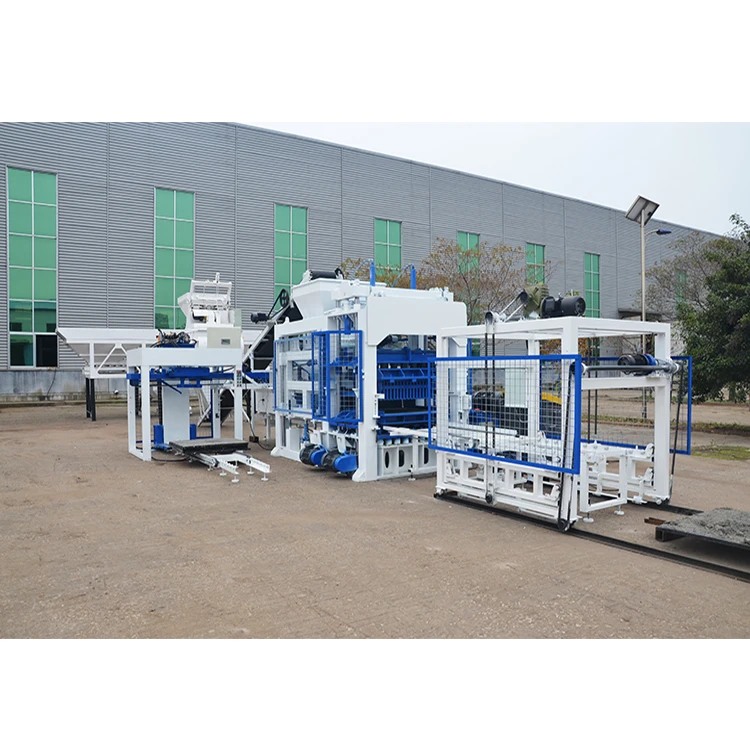
 High quality block machine