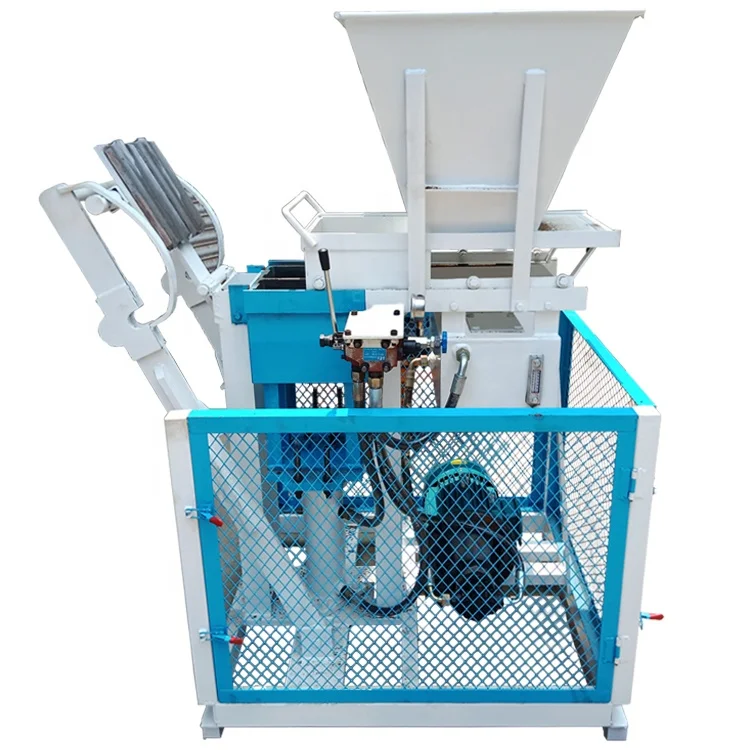
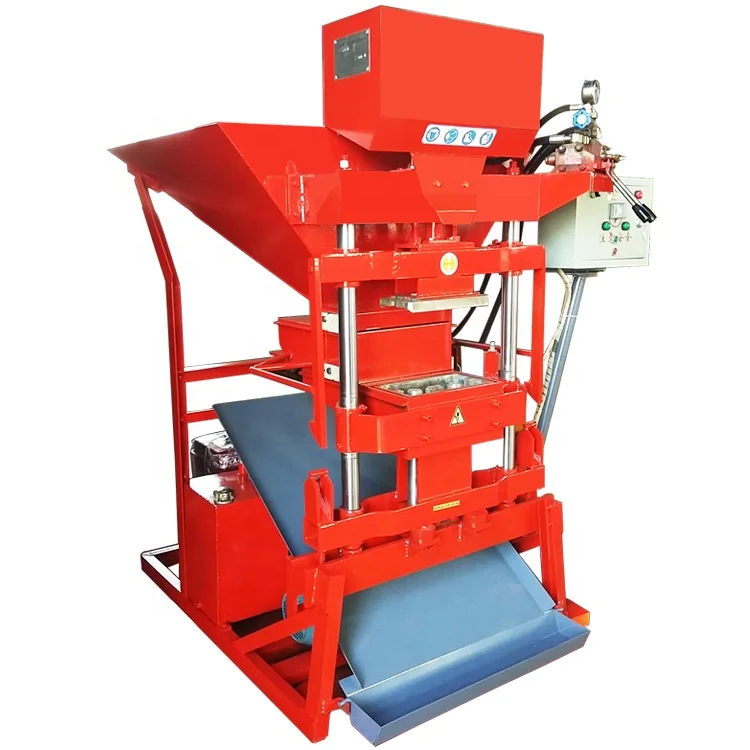
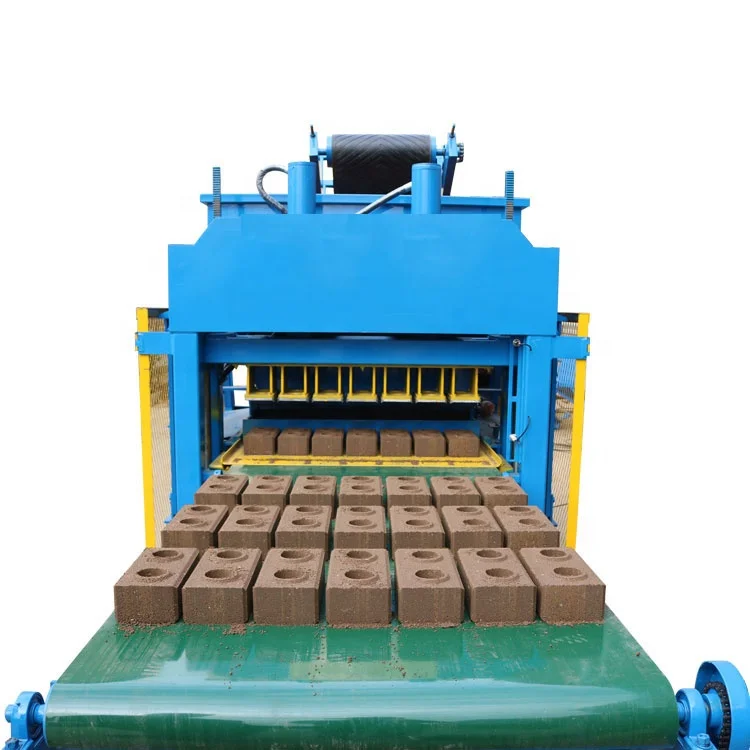
Matched System Sizing — the ECO 2700 and its interlocking mould are specified together against your local clay and daily target, not pulled from separate catalogue pages.
Technical Specifications
| Parameter |
Value |
| Model |
ECO 2700 |
| Product Type |
Clay Interlocking Brick Machine |
| Overall Dimensions (L×W×H) |
1000 × 1000 × 1800 mm |
| Shaping Cycle |
15–20 seconds |
| Rated Power |
5.5 kW |
| Hydraulic Pressure |
16 MPa |
| Net Weight |
1000 kg |
| Voltage & Frequency |
380V, 3-phase, 50Hz (configurable to local supply) |
| Mould Format |
Interlocking brick profile |
| Automation Level |
Manual / small-scale operation |
| Stacking Method |
Manual |
| Warranty |
1 year |
Application Suitability
| Application |
Material or Output |
| Small-scale interlocking brick production |
Local clay and soil mixed with stabiliser |
| On-site brick forming for housing projects |
Clay-soil blends sourced from project excavation |
| Workshop production of interlocking formats |
Low-investment setups adding brick formats to existing ranges |
| Eco-friendly brick manufacturing |
Unfired or lightly stabilised clay and laterite soils |
Why "Pieces per Hour" Is the Wrong Starting Question
Capacity only means something when you know which block format and which soil mix it was measured on.
I have stood on project sites where a clay interlocking brick machine for sale was purchased based on a headline cycle number, only to discover that number assumed a perfectly graded, low-clay soil the buyer could not source locally. The real output dropped sharply, and the contractor ended up hand-stacking half the daily run because the curing area was never planned around the pallet size. When you are comparing machines in this tier, the honest question is what daily volume you can sustain with your actual clay and your actual crew. [NEED_CITE: soil stabilisation requirements for interlocking brick production]

Where the ECO 2700 Sits in the Range
The ECO 2700 occupies the entry tier of the clay interlocking brick machine range. Its 1000 × 1000 mm footprint means it fits inside a standard workshop bay or under a temporary site shelter without a dedicated foundation slab. Buyers at this level are typically producing for a single housing project or testing interlocking brick as a new product line before committing to a higher-capacity press.
Scaling Up When the Project Grows
When daily demand moves beyond what a single manual-loading cycle can sustain, the next tier introduces powered pallet feeding and automatic stacking so the press is not left idle between cycles. The step up is not just about faster cycle times — it is about removing the bottleneck between the press and the curing area. A clay interlocking brick machine for sale at the semi-automatic tier pairs the press with a pallet return conveyor so one operator can keep the cycle running continuously. [NEED_CITE: block plant layout considerations for manual versus semi-automatic lines]
Reading the Numbers That Actually Matter
The 16 MPa hydraulic pressure on the ECO 2700 is the force that compacts the clay-soil mix into a dense interlocking profile. At this tier, vibration is limited or absent, so compaction relies heavily on that hydraulic squeeze combined with the right moisture content in your mix. The 15–20 second shaping cycle is realistic for a manually loaded and unloaded press — faster cycles on paper usually assume powered pallet handling that this tier does not include. The 5.5 kW motor keeps power demand low enough for a portable generator on a remote site, which matters when grid supply is unreliable. Net weight of 1000 kg means the machine can be moved by a standard site forklift when the project relocates.
The Cost of Skipping the Soil Test
I watched a contractor in East Africa lose most of a wet season because the interlocking bricks crumbled during curing. The machine was fine — the local laterite had a sand fraction far higher than the mix the mould was designed for, and no stabiliser adjustment was made before production started. A soil test and a trial batch before the first production run would have caught the problem in a day instead of a month. [NEED_CITE: effects of soil composition on interlocking brick compressive strength]
Why Buyers Source This Range Here
Block machinery is the single focus of this production line, so the ECO 2700 press, its interlocking mould, and the pallet specification are treated as one matched set rather than assembled from separate suppliers. The machine configuration is set against your actual clay sample and target brick profile, not a catalogue default. Mould design covers the interlocking formats your local market actually builds with, including custom profiles if your region uses a non-standard locking geometry. Automation level is selectable, so you can start with the ECO 2700 and step up to semi-automatic pallet handling when volume justifies it. Installation support includes on-site commissioning and operator training so the first production run happens with someone who has set up this exact press before. [NEED_CITE: CE machinery directive compliance for hydraulic brick presses]
Documentation & Verification
- Line layout showing ECO 2700 footprint and manual curing area arrangement
- Specification sheet confirming 16 MPa pressure and 5.5 kW power rating
- Mould drawing and interlocking profile dimensions for your selected format
- Voltage and control language confirmation sheet before shipment
- Factory test record on your clay-soil mix before dispatch
- Operation manual covering mould change and daily maintenance intervals
Installation, Commissioning & Support
- Compact 1000 × 1000 mm base requires only a level concrete pad, no special foundation
- 5.5 kW, 380V three-phase supply needs a dedicated circuit breaker sized to local code
- Machine ships assembled; position with a standard site forklift and connect power
- First-run commissioning includes pressure adjustment to match your clay-soil density
- Operator training covers mould change procedure and 15–20 second cycle pacing
- Wear parts list identifies hydraulic seals and mould liner replacements by part number
What to Send with Your Inquiry
Tell us the interlocking brick profile your market uses — a photo or drawing of a finished brick is enough to start. Share a soil sample description or lab result so we can confirm whether stabiliser is needed and at what ratio. Let us know your site voltage and frequency, and whether you need the control panel in a specific language. If you already have a curing area and pallet racking, send the dimensions so the pallet size can be matched to what you have.
Frequently Asked Questions
Q: Where does the ECO 2700 sit in the full machine range, and when should I step up?
A: The ECO 2700 is the entry tier — manual loading, compact footprint, suited for first plants or on-site project production. When daily volume outpaces what one operator can load and unload, the next tier adds powered pallet feeding and stacking so the press runs continuously without waiting on manual handling between cycles.
Q: How is output capacity verified for my specific interlocking brick format?
A: Output depends on your brick profile depth, clay-soil mix, and whether stabiliser curing time is factored in. We run a factory test on your actual mix and measure the real cycle including load, press, and unload — then quote daily capacity based on that specific format, not a generic catalogue figure.
Q: What voltage and frequency options are available?
A: The standard configuration is 380V three-phase at 50Hz, but the motor and control panel can be set for other voltages and frequencies to match your local grid or generator supply. Confirm the exact rating before production so the machine arrives ready to connect.
Q: What plant footprint does the ECO 2700 need versus higher-tier models?
A: The ECO 2700 needs roughly one standard workshop bay for the press plus adjacent floor space for manual pallet handling and curing rack access. Higher tiers require a longer linear layout to accommodate pallet conveyors, automatic stackers, and cubing stations around the press.
Q: Can I upgrade from the ECO 2700 to a semi-automatic line later?
A: Yes. The press itself can be integrated into a line with powered pallet feeding and automatic stacking when your production volume grows. The upgrade path is planned at the initial inquiry stage so the machine base and pallet size are compatible with future automation additions.

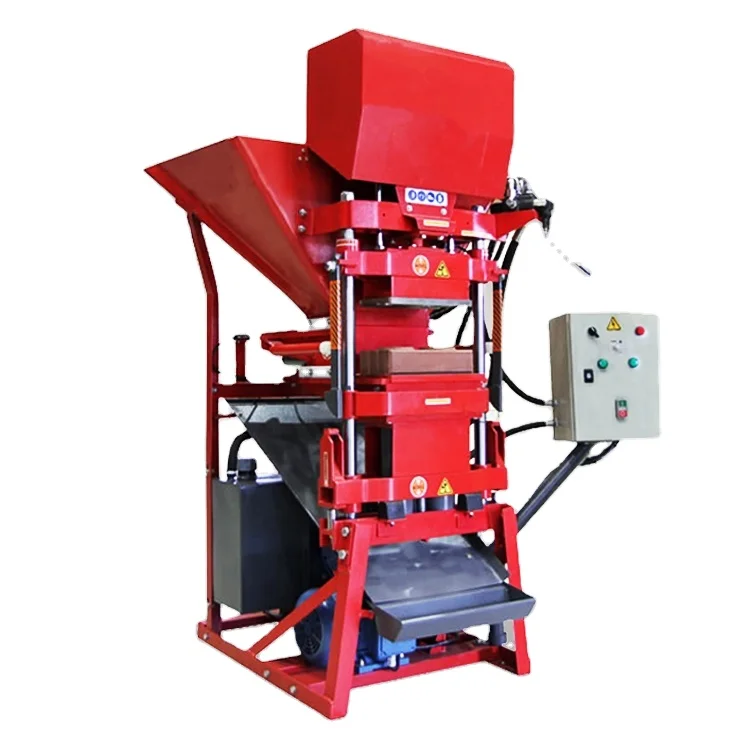
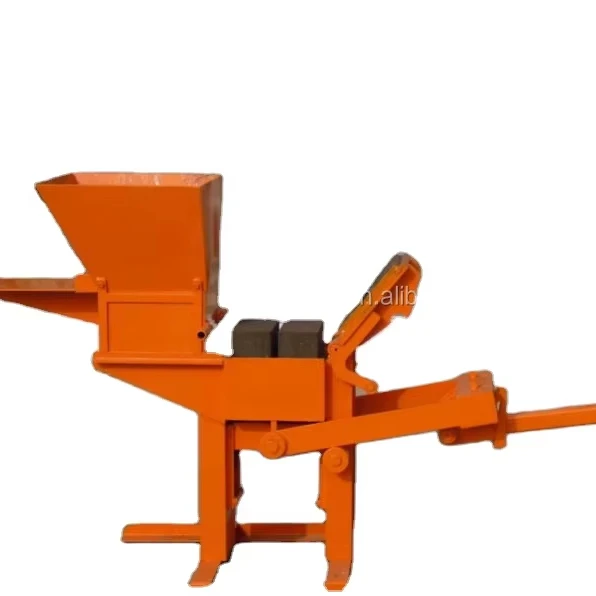 Clay interlocking brick