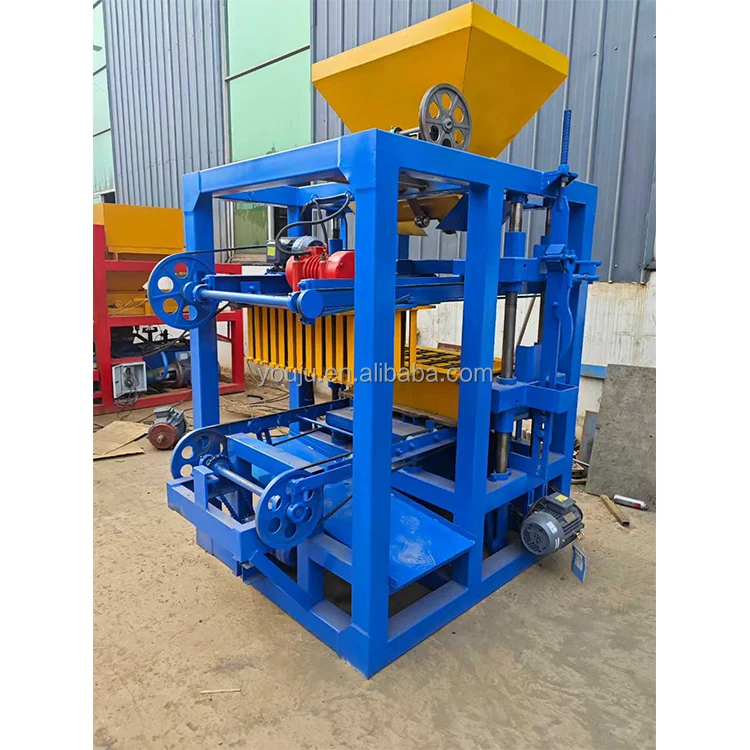
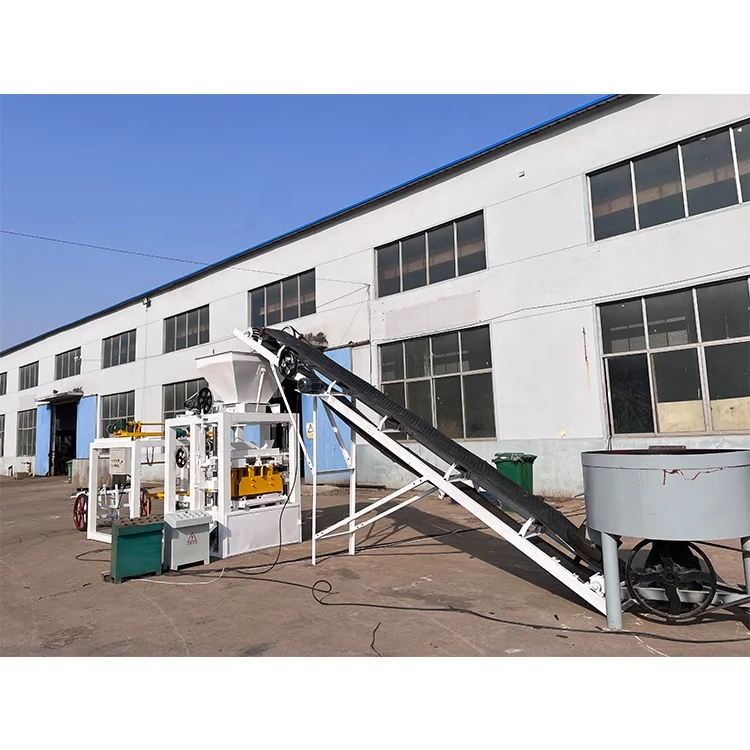
Matched System Design — The QTJ4-24 semi automatic block machine manufacturer delivers a complete small-plant line with mixer, conveyor, and pallet transport specified together, not assembled from separate suppliers after the fact.
Technical Specifications
| Parameter |
Value |
| Model |
QTJ4-24 |
| Product Type |
Semi Automatic Concrete Block Making Machine |
| Molding Type |
Platform Vibration |
| Overall Dimensions (L×W×H) |
3600mm × 1700mm × 2560mm (working state) |
| Total Mass |
1750 kg |
| Pallet Size |
850mm × 450mm |
| Overall Power |
14.25 kW |
| Hollow Block Mould |
390mm × 190mm × 190mm, 4 pcs/mould |
| Solid Brick Mould |
240mm × 115mm × 53mm, 21 pcs/mould |
| Vibration System |
Lower platform vibration (2 × 3 kW motors) + Upper vibration (1.5 kW attached device) |
| Elevating System |
Cone-shape motor with JZQ250 speed reducer |
| Delivery Device |
Cycloidal pin wheel speed reducer with chains and V-belt |
| Machine Frame |
Dragon gate style, super steel construction, four vertical wear-resisting shafts |
| Automation Level |
Semi-automatic (mechanical and electronic combination) |
| Line Configuration |
Pairs with JQ350 pan mixer and 6m belt conveyor |
| Optional Equipment |
Auto stacker (3–6 layers depending on block height) |
| Supporting Equipment |
Trolley for curing yard transport (included) |
| Output Capacity |
(basis to be confirmed — depends on block format and cycle time) |
| Cycle Time |
(basis to be confirmed — varies by mould format) |
| Voltage & Frequency |
(to be confirmed before order) |
| Control System Language |
(to be confirmed before order) |
Application Suitability
| Application |
Material or Output |
| Small-scale hollow block production |
390×190×190mm blocks from crushed stone, sand, and cement |
| Standard solid brick manufacturing |
240×115×53mm bricks from local aggregate and cement |
| On-site block production for contractors |
Hollow and solid formats at construction project locations |
| Entry-level block plant setup |
Complete line with JQ350 mixer and 6m belt conveyor |
| Paving block and kerbstone production |
Interlocking and paving formats with appropriate mould change |
What "4 Pieces per Mould" Actually Means for Your Daily Output
A mould cavity count only becomes a usable number when you know the cycle time and the block format it applies to.
Many semi automatic block machine manufacturer catalogues quote a single hourly figure that assumes an ideal block size and perfect material flow. I have stood on sites in East Africa where the press cycled fine but the mixer could not keep up, leaving the operator waiting between batches. The 4-cavity hollow mould and 21-cavity solid brick mould on this press produce very different volumes per shift, and the real output depends on how fast your team can feed, press, and move pallets to the curing yard [NEED_CITE: typical cycle time variables in semi-automatic block production].

Where the QTJ4-24 Sits in the Full Machine Range
This press occupies the entry tier of stationary block machines. It uses platform vibration rather than hydraulic pressure, which keeps the initial investment lower and maintenance simpler for first-time plant operators. A semi automatic block machine manufacturer typically positions this class for buyers who need a working line without the capital outlay of a fully automatic plant.
Mechanical Simplicity as a Deliberate Choice
The cone-shape motor with JZQ250 speed reducer and the cycloidal pin wheel delivery device are mechanical components that a local workshop can service. On installations in South Asia, I have seen plants keep running through monsoon seasons because the drive train did not depend on sensitive electronics. The four vertical wear-resisting shafts on the dragon gate frame maintain mould alignment through thousands of cycles, which matters more than peak vibration force when you are producing day after day [NEED_CITE: mechanical versus electronic drive reliability in tropical climates].
Reading the Vibration and Frame Specifications
The dual 3 kW lower vibration motors combined with the 1.5 kW upper attachment create compaction from both directions. Lower platform vibration alone tends to leave the top face of hollow blocks less dense, so the upper device addresses that gap. The 850mm × 450mm pallet size determines how many blocks you cure per square metre of yard space — if your existing curing area was laid out for a different pallet dimension, the mismatch will cost you floor space or force you to restack manually. The 14.25 kW total power draw means a standard three-phase supply handles the entire line including the JQ350 pan mixer, but voltage and frequency must be confirmed against your local grid before the machine enters production.
The Cost of Skipping the Pallet and Mixer Conversation
When a buyer orders the press alone without confirming pallet material and mixer capacity, the line arrives unbalanced. The 6m belt conveyor feeds at a fixed rate, and if the pan mixer batch size does not match what the press consumes per cycle, you either starve the hopper or let mixed concrete sit and stiffen. I have seen curing yards paved for a smaller pallet size, forcing the buyer to either return the pallets or rebuild the yard. These are not machine defects — they are specification gaps that surface after the container is unpacked [NEED_CITE: block plant commissioning delays caused by unmatched line components].
Why Source This Machine as a Complete Line
The QTJ4-24 ships with the JQ350 pan mixer and 6m conveyor specified as one system, so capacity calculations account for every station. Mould design covers the hollow, solid, and paving formats your market actually sells, with custom drawings available. The semi-automatic control leaves room to add an auto stacker later when volume justifies it. Voltage, frequency, and PLC display language are confirmed before production starts, not discovered at commissioning. Factory test records document actual cycle times on your chosen block format before the machine leaves the workshop.
Documentation & Verification
- Line layout showing QTJ4-24, JQ350 mixer, and 6m conveyor positions with pallet flow direction
- Capacity calculation per block format stating cycle time assumption for hollow and solid moulds
- Mould drawing with cavity count and dimensions for 390×190×190mm and 240×115×53mm formats
- Pallet specification sheet matched to your curing yard dimensions and forklift capacity
- Voltage, frequency, and control language confirmation signed before production begins
- Factory test record documenting actual press cycles on your selected block format
Installation, Commissioning & Support
- Foundation pad sized for 3600mm × 1700mm footprint with level tolerance for the dragon gate frame
- Three-phase power connection rated for 14.25 kW total draw across press, mixer, and conveyor
- Machine ships partially assembled with upper vibration device and elevating motor pre-mounted
- First-run commissioning includes cycle time measurement on your specific hollow or solid mould
- Operator training covers mould change procedure between 4-cavity hollow and 21-cavity solid formats
- Wear parts list identifies shafts, V-belts, and chain links with reorder part numbers
What to Include in Your Inquiry
Send the block formats your market sells along with the daily volume you need to hit, so the capacity calculation reflects your actual product mix rather than a catalogue default. Confirm your site voltage, frequency, and preferred control language up front. Let us know the curing yard dimensions and forklift you already have, so the pallet specification matches your existing setup instead of creating a mismatch on arrival.
Frequently Asked Questions
Q: How do I verify the daily output for the QTJ4-24?
A: The output depends on which mould is installed and the cycle time for that block format. Request a capacity calculation that states the assumed block dimensions, mould cavity count, and cycle time. A 4-cavity hollow block and a 21-cavity solid brick produce very different daily totals, and the mixer feed rate must sustain whichever format you run most often.
Q: What voltage and control language will the machine ship with?
A: These are confirmed before production begins. Your local grid voltage and frequency must match the motor windings, and the control panel language should be readable by your operators. Specifying both during the inquiry stage prevents commissioning delays after the machine arrives at your site.
Q: How long does a mould change take on this press?
A: Mould change time depends on the format pair you switch between and how familiar your operator is with the procedure. The QTJ4-24 uses a mechanical platform with bolt-on moulds, so expect a manual change rather than a quick-swap system. Factor this into your shift planning if you run multiple block formats in one day.
Q: Can I add an auto stacker to the QTJ4-24 later?
A: Yes, the optional auto stacker handles 3 to 6 layers depending on block height. The semi-automatic configuration lets you start with manual pallet handling and add stacking automation when your daily volume grows enough to justify the investment. The upgrade does not require replacing the press itself.
Q: When should I consider moving to the next machine tier?
A: If your daily volume consistently exceeds what the QTJ4-24 can produce on your primary block format, or if you need multiple formats running simultaneously, the next tier offers higher vibration force, larger pallets, and faster cycle times. The entry tier is the right starting point when capital is limited and you need a working line now.

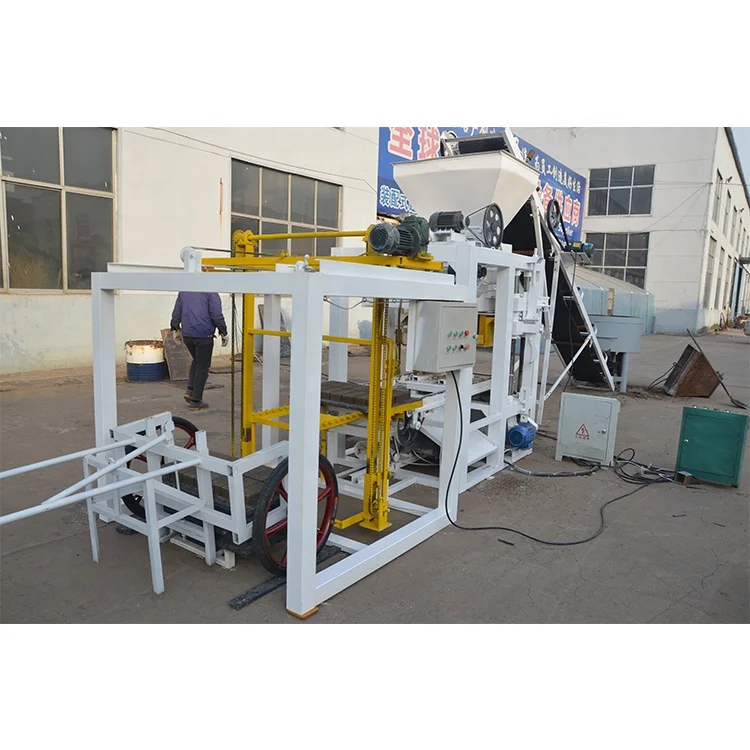
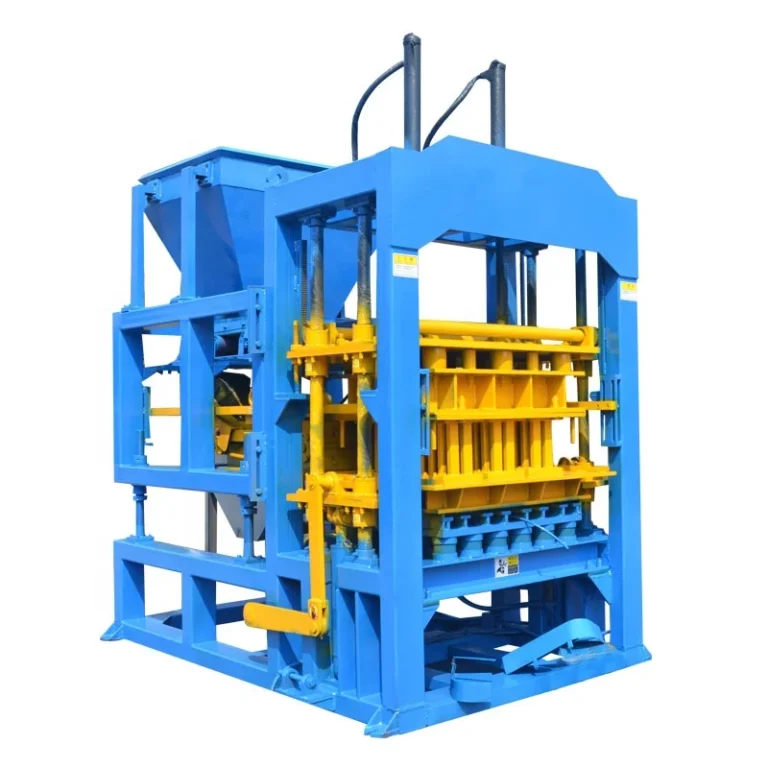
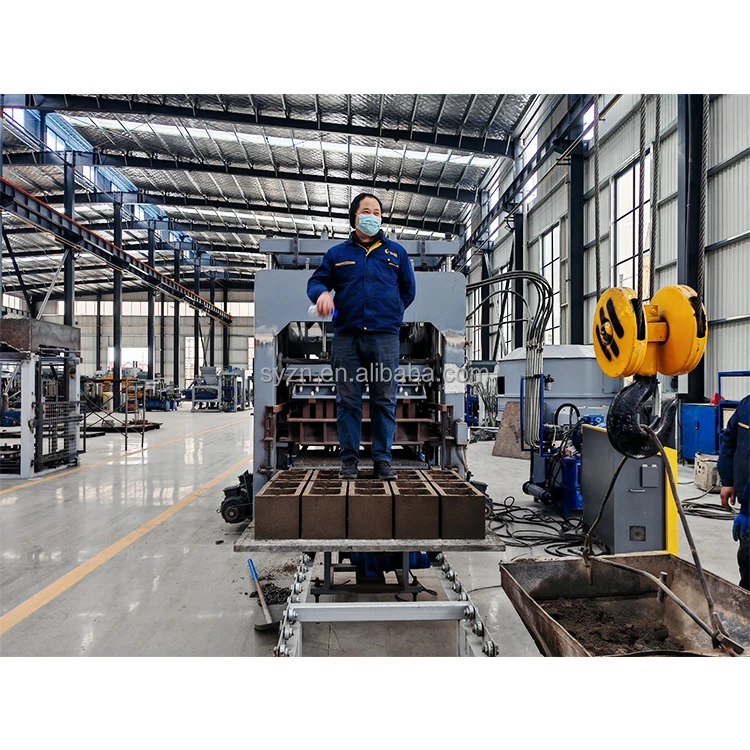 Stationary block machine