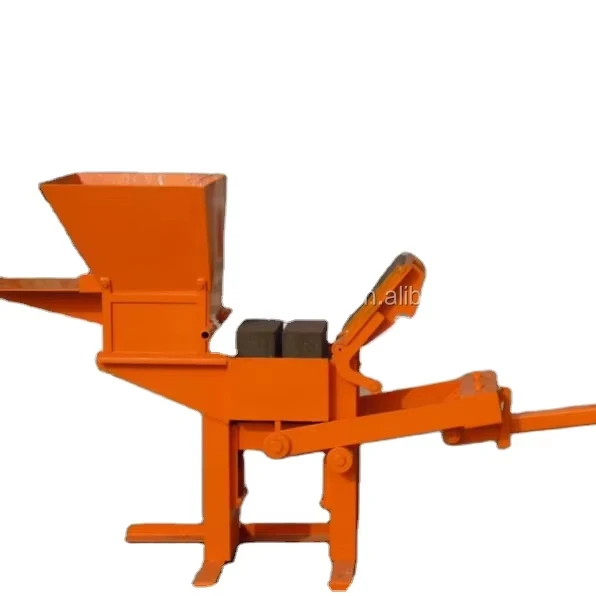
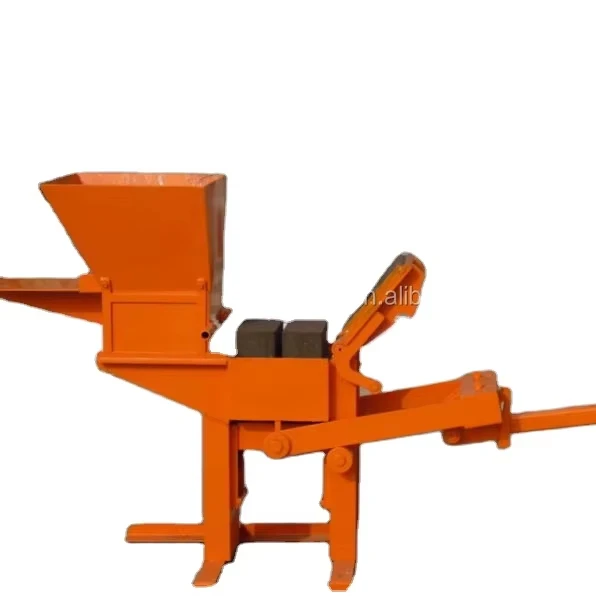
Hydraulic Pressure Tuned to Material — Every ECO BRB we ship is tested with the buyer’s actual soil sample, not a generic mix, so the interlocking bricks leave the press with the density and strength your market requires.
Technical Specifications
| Parameter |
Value |
| Model |
ECO BRB |
| Product Type |
Hydraulic Interlocking Block Making Machine |
| Overall Dimensions (L×W×H) |
1490 × 980 × 1970 mm |
| Pressure Type |
Hydraulic |
| Pallet Requirement |
None (pallet-less operation) |
| Molding Cycle |
15–20 s (basis not stated in source) |
| Rated Power |
4.5 kW |
| Net Weight |
850 kg |
| Daily Capacity |
approx. 3800 pcs/shift (basis not stated in source) |
| Raw Material |
Cement or clay |
| Automation Level |
Manual / semi-automatic (basis to be confirmed) |
| Mould Format |
Interlocking brick, paving brick, solid brick |
| Voltage & Frequency |
Configurable per destination market |
| Control System |
Configurable (basis to be confirmed) |
| Stacking Method |
Manual |
| Warranty |
1 year (excluding wear parts) |
Application Suitability
| Application |
Material or Output |
| Interlocking wall construction |
Local clay blended with cement stabilizer |
| Small-scale paving production |
Crushed aggregate with cement binder |
| On-site solid brick runs |
Laterite or red soil with Portland cement |
| First-plant entrepreneur setup |
Low-capital entry into block manufacturing |
What "3800 Pieces per Shift" Actually Means for Your Project
Output figures only matter when tied to the exact block format and material you plan to run.
When a supplier quotes a daily capacity without specifying which brick size, moisture level, or clay type that number assumes, the real output on your job site can fall noticeably short. I have seen interlocking block machine manufacturer catalogs list a single throughput number that applies only to the smallest paving format under ideal lab conditions. The ECO BRB cycle time of 15–20 seconds varies depending on brick geometry, clay plasticity, and operator rhythm. Before you compare machines, ask every vendor to state capacity per format, per material, and per shift length. [NEED_CITE: block machine capacity calculation standards by format and material]

Where the ECO BRB Sits on the Machine Range
This model occupies the entry tier of the block machine lineup. It is designed for buyers who need a compact footprint, low power draw, and pallet-less hydraulic pressing without the capital outlay of a full automatic line. For a contractor producing interlocking bricks directly on a housing project site, or an entrepreneur launching a first block plant, the ECO BRB gives you a starting point. As your market grows, higher tiers in the same range add automatic pallet feeding, stacking, and cubing to handle volume that manual operation cannot sustain.
Pallet-Free Pressing and What It Changes on Site
Hydraulic interlocking brick production without pallets removes an entire layer of handling. You do not need to invest in hundreds of bamboo or PVC pallets, you do not need a forklift dedicated to pallet cycling, and your curing area shrinks because bricks stack directly on each other. The trade-off is that pallet-less machines depend heavily on the mix holding its shape the instant the mould opens. That is why we test your local clay sample before the ECO BRB leaves the factory — a red laterite from western Kenya behaves differently under pressure than the grey clay we use in Shandong. [NEED_CITE: soil plasticity and moisture content requirements for pallet-less interlocking brick pressing]
Reading the Specs That Actually Affect Your Brick
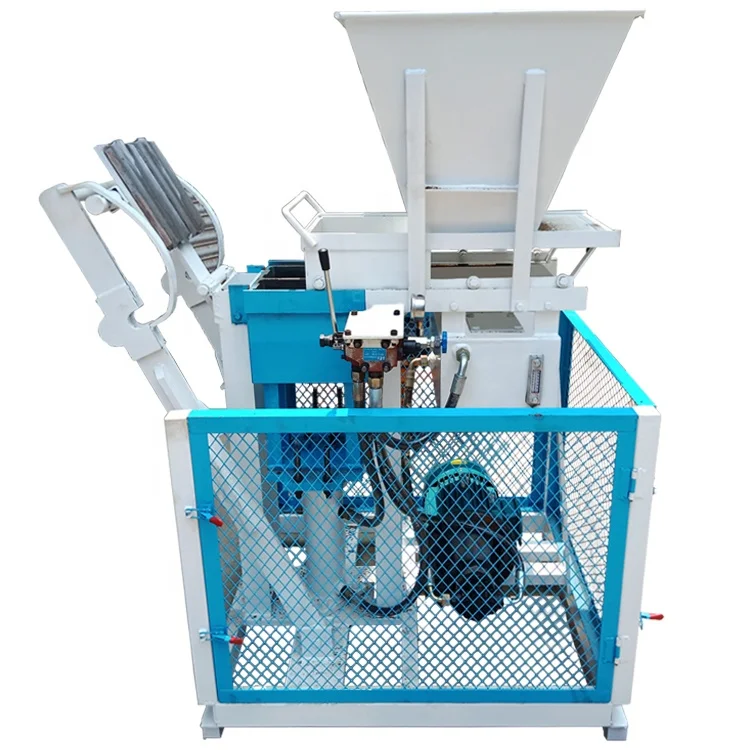
The 4.5 kW rated power keeps the ECO BRB within reach of a portable diesel generator, which matters for remote building sites where grid connections are unreliable. The hydraulic pressure system, combined with vibration, determines how tightly the clay particles compact — insufficient pressure on a high-clay mix produces bricks that crumble at the interlock joint. The machine’s net weight of 850 kg means it can be positioned with a standard forklift and does not require a poured concrete foundation for lighter-duty use. Mould change between interlocking, paving, and solid brick formats lets a single machine serve multiple product lines, though the time required for each swap depends on the specific mould bolt pattern. Voltage and frequency must be confirmed before production starts so the hydraulic pump motor matches your local grid. [NEED_CITE: hydraulic pressure and vibration force matching for clay brick density]
The Hidden Cost of Skipping Material Testing
A buyer once ordered an interlocking block machine based purely on the catalog cycle time, without sending a soil sample. The machine arrived, the operator loaded local red clay, and the first batch cracked along the interlock grooves. The hydraulic pressure and vibration settings that worked perfectly on our standard test soil were wrong for their material’s moisture content and plasticity index. We spent days on-site re-tuning the press to match. That downtime, plus the wasted cement from failed batches, cost more than a simple pre-shipment material trial would have. [NEED_CITE: common causes of interlocking brick cracking related to soil moisture and press settings]
Why Buyers Source This Tier Through Us
Block machinery is our single focus, so the ECO BRB is specified as one matched system — press, mould, and handling — rather than assembled from unrelated suppliers. We configure the hydraulic pressure and vibration profile against the buyer’s actual clay sample and target brick format, not a default setting. Mould design covers the interlocking profile your local construction code requires, including custom drawings when standard formats do not fit. The automation level is selectable, so you can start with manual pallet handling and move to a semi-automatic or higher tier as demand grows. Installation support includes operator training on your specific material, plus a mould and wear parts list so the first replacement does not catch you off guard.
Documentation & Verification
- Line layout drawing showing ECO BRB placement and material flow path
- Capacity calculation sheet stating the brick format and clay type assumed
- Machine specification sheet with confirmed voltage, frequency, and control language
- Mould drawing and format list covering interlocking, paving, and solid brick profiles
- Factory test record run on buyer-supplied clay sample before dispatch
- Operation and maintenance manual with hydraulic schematic
Installation, Commissioning & Support
- Level concrete pad minimum 2000 × 1500 mm to accommodate the 1490 × 980 mm footprint and operator clearance
- Dedicated 4.5 kW circuit at confirmed voltage and frequency for the hydraulic pump motor
- Machine ships fully assembled; position with forklift rated for 850 kg minimum
- First-run commissioning includes hydraulic pressure and vibration adjustment to buyer’s clay sample
- Operator training covers mould change procedure and daily hydraulic fluid inspection
- Wear parts list provided with recommended replacement intervals for seals and mould liners
Before You Request a Quote
Tell us the interlocking brick format your market sells — dimensions, interlock profile, and target compressive strength. Send a representative sample of the clay or soil you plan to use, including moisture content if you have it. Confirm your site voltage, frequency, and preferred control language so the ECO BRB arrives ready to run. If you already have a mixer or curing area, share those details so we can match the line layout to your existing setup.
Frequently Asked Questions
Q: Where does the ECO BRB fit compared to semi-automatic and fully automatic tiers?
A: The ECO BRB sits at the entry tier with manual or semi-automatic operation and pallet-less hydraulic pressing. Semi-automatic tiers add powered pallet feeding and conveyor-assisted output handling. Fully automatic tiers include stacking and cubing. Each step increases daily volume while reducing manual labour. Buyers often start here and move up as market demand justifies the investment.
Q: What daily output can I expect for interlocking bricks versus other formats?
A: Output depends on the specific brick dimensions, clay type, and operator workflow. The published figure of approximately 3800 pieces per shift assumes conditions that may differ from your site. We provide a format-specific capacity calculation once we know your brick size and material, so you can plan around a realistic number rather than a generic estimate.
Q: Can I start with this model and upgrade later?
A: Yes. The automation level is selectable within the machine range. You can begin with manual pallet handling on the ECO BRB and transition to a semi-automatic or higher tier when your production volume warrants it. The mould formats and brick profiles you develop on this machine carry over, so your product line continuity is maintained.
Q: What voltage and frequency options are available?
A: Voltage and frequency are configured to match your destination market before the machine enters production. Common configurations cover 220V through 440V at 50 or 60 Hz. Confirm your local grid specification during the inquiry stage so the hydraulic pump motor and any control components arrive matched to your site supply.
Q: What plant footprint and utility connections do I need?
A: The ECO BRB itself measures 1490 × 980 × 1970 mm and weighs 850 kg. You need a level concrete pad with enough surrounding clearance for material feeding and brick removal. A dedicated electrical circuit at the confirmed voltage is required. No pallet storage area is necessary since the machine operates without pallets, which reduces the overall site footprint compared to pallet-based systems.

 Clay interlocking brick