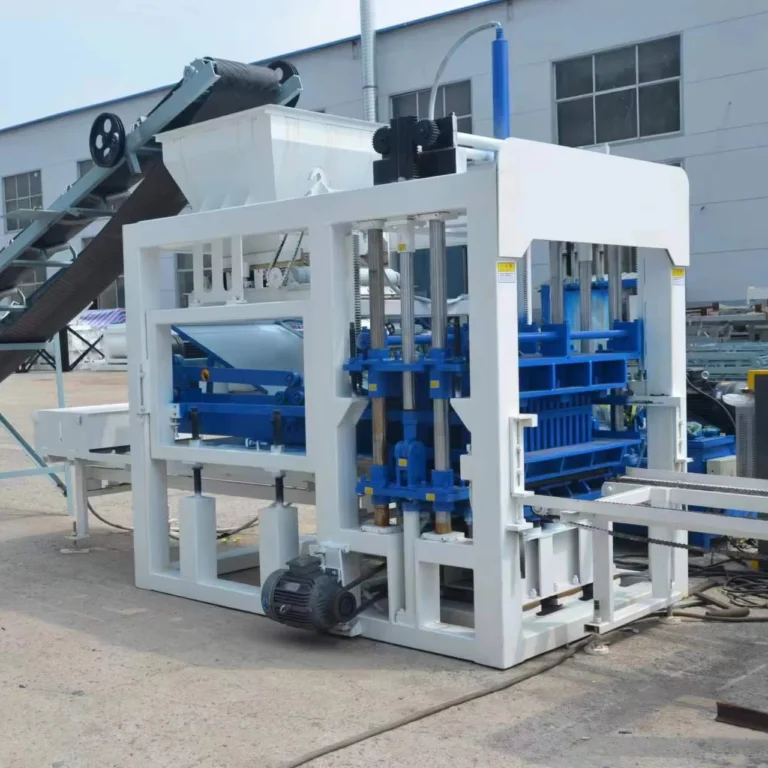
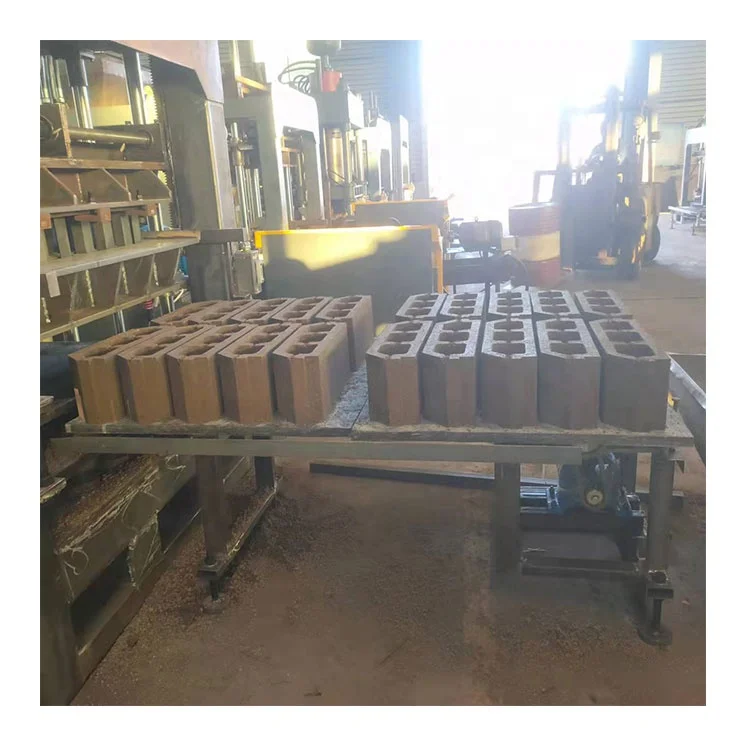
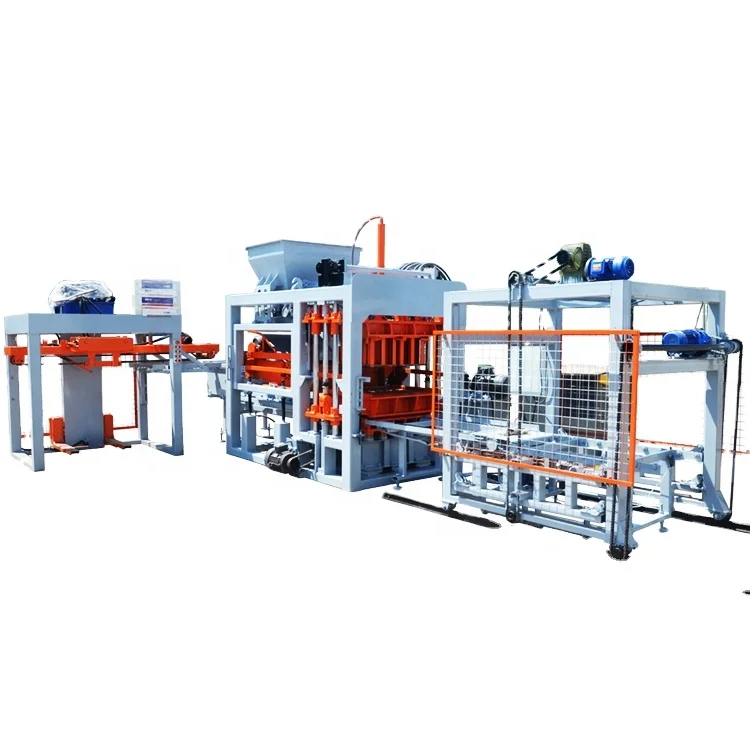
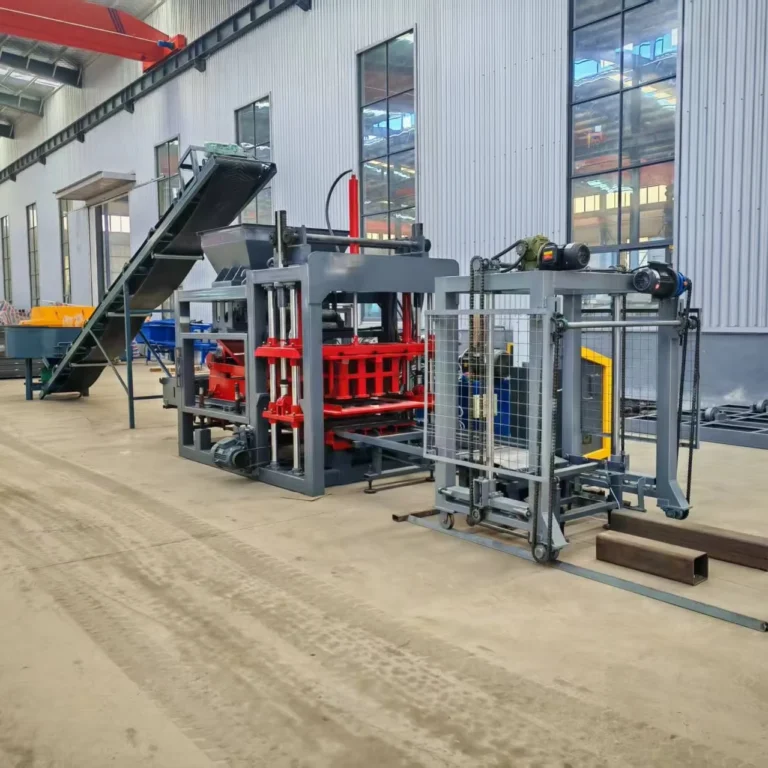
Matched System Configuration — the QT4-15A semi-automatic block machine, mixer, pallet and stacker are specified together against your actual block format and local aggregate, not pulled from a catalogue default.
Technical Specifications
| Parameter |
Value |
| Model |
QT4-15A |
| Product Type |
Concrete Block Making Machine |
| Overall Dimensions (L×W×H) |
7100×1600×2610 mm |
| Moulding Cycle |
15-25s (basis to be confirmed per block format and material) |
| Vibration Frequency |
4600 r/min |
| Vibration Force |
40-50 kN |
| Rated Power |
18.45 kW |
| Mixer Model |
JQ350 |
| Pallet Size |
850×550×25 mm |
| Net Weight |
3T (source value — verify against manufacturer catalog) |
| Vibration System |
Bed mould vertical vibration + upper mould compression vibration |
| Hydraulic Station |
Equipped (high pressure, stable running) |
| Automation Level |
Semi-automatic |
| Stacking Method |
Automatic stacker (included in line configuration) |
Application Suitability
| Application |
Material or Output |
| Hollow block production |
400×200×200 mm, 400×150×200 mm from crushed stone, sand, cement |
| Solid brick production |
240×115×53 mm from cement, sand, fly ash |
| Paver block production |
Interlocking and standard pavers from crushed stone and cement |
| Curbstone production |
Road and pavement curb sections from dense aggregate mixes |
| On-site construction supply |
Project-specific formats using locally available sand, dust and fly ash |
What "408 Pieces per Hour" Leaves Out About Block Machine Output
Output figures mean nothing without the block format they assume.
Capacity numbers quoted by a concrete block making machine manufacturer often omit the most important detail: which block size was used to calculate that figure. A machine running 400×200×200 mm hollow blocks with four cavities per mould produces a very different daily volume than the same press running 240×115×53 mm solid bricks with eighteen cavities per mould. I have seen buyers sign contracts expecting the higher number, only to discover on commissioning day that their target format yields far fewer pieces per shift [NEED_CITE: block format impact on cycle time and daily output]. The QT4-15A addresses this by stating output tied to specific formats: rated at 408 pieces per hour based on a 400×200×200 mm hollow block (4 pcs/mould), 510 pieces per hour based on a 400×150×200 mm hollow block (5 pcs/mould), and 2100 pieces per hour based on a 240×115×53 mm solid brick (18 pcs/mould). Daily outputs over an eight-hour shift follow the same basis: 3264 pieces, 4080 pieces, and approximately 17000 pieces respectively.

Where the QT4-15A Sits in the Full Machine Range
The Shiyue range spans mobile egg-laying machines for on-site production, semi-automatic lines like the QT4-15A for manageable investment, and fully automatic plants with high-capacity output. This model occupies the middle tier, where buyers need consistent daily volume without the capital outlay of a fully automated system. The semi-automatic designation means the press, mixer and pallet feed operate under PLC control while certain handling steps remain manual, keeping the initial footprint and complexity lower for first-time plant owners.
Matching the Tier to Your Actual Production Reality
Choosing between tiers depends less on the highest possible output and more on what your market actually buys. A contractor producing hollow blocks for a housing development may need only the volume the QT4-15A delivers on a 400×200×200 mm format, while a commercial supplier serving multiple construction sites will look toward the automatic tier [NEED_CITE: block plant sizing based on local market demand]. The key question is whether your daily dispatch requirement falls within what this semi-automatic line can sustain over two shifts, and whether your site has space for the curing racks and pallet circulation this configuration requires.
Dual Vibration, Hydraulic Pressure and What They Mean for Block Density
The QT4-15A uses a dual vibration system combining bed mould vertical vibration with upper mould compression vibration at 4600 r/min and 40-50 kN exciting force. This arrangement compacts the concrete mix from both directions, producing blocks with more uniform density throughout the cross-section. The hydraulic station maintains stable pressure during the compression phase, which is critical when running lean mixes with fly ash or fine dust. The 850×550×25 mm pallet size determines how many blocks are formed per cycle and must align with your curing rack dimensions and forklift capacity. Mould versatility allows the same host machine to produce hollow blocks, solid bricks, pavers and curbstones, with the JQ350 mixer preparing the batch and the 18.45 kW total rated power running the full semi-automatic line.
The Cost of Skipping Voltage and Language Confirmation
I once stood in front of a control panel in India watching an operator press buttons at random because the PLC display was in a language nobody on the floor could read. The machine had shipped with a default interface, and three days of production were lost reprogramming the system on site. Voltage mismatch is equally damaging: a concrete block making machine manufacturer may build the electrical cabinet for 380V/50Hz while the buyer’s grid runs at a different standard, leading to motor burnout within the first week [NEED_CITE: voltage and frequency standards by export market]. These problems do not show up in the quotation but they define whether the machine runs or sits idle after arrival.
Why Buyers Source the Full Line From One Point
Block machinery is the single focus here, so the QT4-15A host machine, JQ350 mixer, pallet specification and automatic stacker are configured as one matched system rather than assembled from separate vendors. The machine configuration is set against your actual mix design and local aggregate, not a catalogue default, which means vibration force and hydraulic pressure are adjusted before the machine leaves the factory. Mould design covers the formats your market sells, with custom drawings available when standard options do not match. The automation level is selectable within the range, allowing a buyer to start with the semi-automatic QT4-15A and move to a higher tier as production demand grows.
Documentation & Verification
- Line layout showing pallet circulation and curing rack placement for the QT4-15A footprint
- Capacity calculation sheet stating the block format assumed for each output figure
- Voltage, frequency and PLC display language confirmation form before production
- Mould drawing and format list with cycle time per block type
- Factory test record on your specified mix and block format
- Packing photographs and customs documentation support
Installation, Commissioning & Support
- Foundation plan based on the 7100×1600×2610 mm machine footprint and vibration load
- Dedicated power circuit sized for the 18.45 kW rated load at your confirmed voltage and frequency
- Dismantled shipping configuration with reassembly guidance on arrival
- First-run parameter setting for vibration frequency, hydraulic pressure and moulding cycle
- Operator training covering mould change procedure and daily maintenance checkpoints
- Wear parts list identifying hydraulic seals and vibration components for initial spares stock
What to Include in Your Inquiry
Provide the block format your market buys most, along with the daily volume you need to dispatch. Confirm your local grid voltage and frequency, and specify the language your operators read. If you already have curing racks or forklifts on site, share their dimensions so the pallet size and stacking configuration can be matched before the quotation is finalized.
Frequently Asked Questions
Q: How does the QT4-15A fit within the full block machine range?
A: It sits in the semi-automatic tier between mobile egg-laying machines and fully automatic high-capacity lines. This position suits buyers who need consistent daily output for hollow blocks, solid bricks and pavers without the investment of full automation. The matched system includes mixer, pallet and stacker configured together.
Q: What block formats can the QT4-15A produce, and what is the realistic output for each?
A: The machine produces hollow blocks, solid bricks, pavers and curbstones by changing the mould. Output is rated at 408 pieces per hour based on a 400×200×200 mm hollow block, 510 pieces per hour based on a 400×150×200 mm hollow block, and 2100 pieces per hour based on a 240×115×53 mm solid brick.
Q: Which supporting equipment comes with the line, and what should I source locally?
A: The line includes the JQ350 mixer, pallets sized at 850×550×25 mm and an automatic stacker. Curing racks, forklifts and raw material stockpiles are typically sourced locally. Confirm your existing equipment dimensions so the pallet and stacking layout align with your site.
Q: How do I confirm voltage, frequency and control language before shipment?
A: A confirmation form is sent before production listing your grid specifications and preferred PLC display language. This step prevents commissioning delays caused by electrical mismatch or unreadable control interfaces, issues I have encountered repeatedly on installations across Africa and South Asia.
Q: What is the upgrade path from the QT4-15A to higher automation?
A: The range allows progression from semi-automatic to fully automatic lines with enhanced pallet handling, stacking and cubing systems. The host machine concept remains consistent, so operators trained on the QT4-15A adapt to higher tiers without starting from scratch.

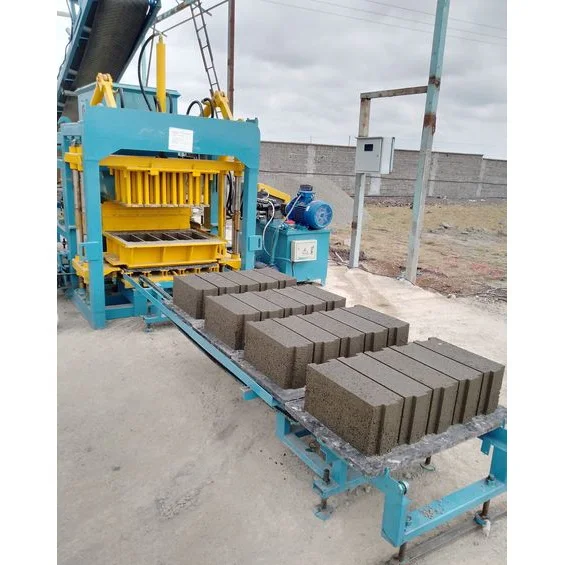
 High quality block machine