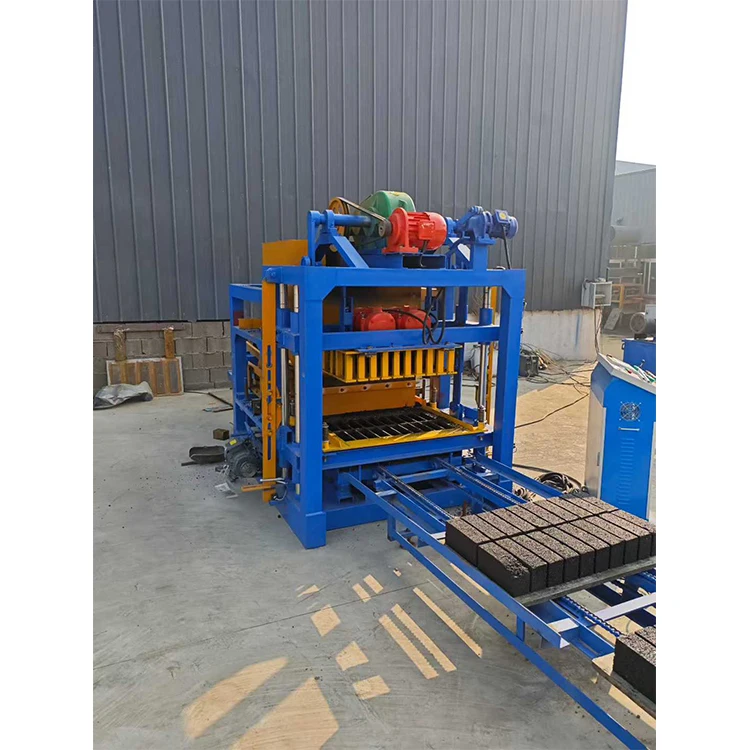
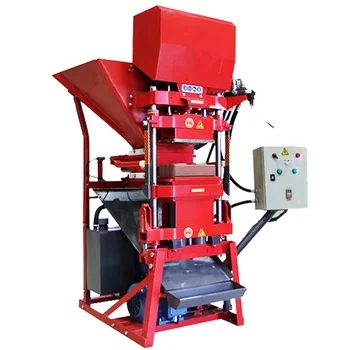
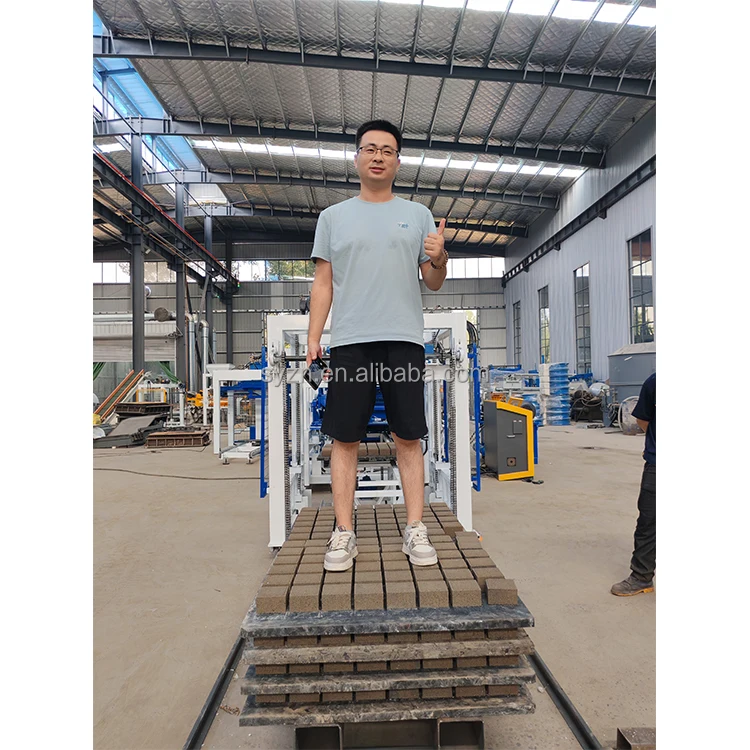
Matched System Design — The QTJ4-25D is specified as a complete press, mould, pallet and stacker set rather than a standalone unit, so cycle times align across stations from raw material feed through to block stacking.
Technical Specifications
| Parameter |
Value |
| Model |
QTJ4-25D |
| Product Type |
Automatic Concrete Hollow Block Making Machine |
| Control System |
PLC controlled fully automatic |
| Machine Power |
16.58 kW |
| Molding Cycle |
25 seconds |
| Capacity |
4600 pcs / 8 hours (basis not stated in source — block format, material and thickness to be confirmed) |
| Machine Weight |
5000 kg |
| Overall Size |
6400 × 1500 × 2700 mm |
| Pallet Size |
850 × 480 mm |
| Voltage |
Configurable to local supply (voltage and frequency to be confirmed before production) |
| Automation Level |
Full automatic with automatic pallet feeding, material feeding and scraping, block stacker |
| Vibration System |
Vibration motor with large vibration box (non-hydraulic pressure) |
| Motor |
Siemens motor |
| Frame |
Thick steel construction |
| Warranty |
One year |
Application Suitability
| Application |
Material or Output |
| Hollow block production for medium-scale block plants |
Concrete, sand, cement, crushed stone, water |
| Solid brick manufacturing for local construction markets |
Fly ash, lime, sand, cement blends |
| Paver stone and interlocking brick runs |
Aggregate-rich concrete mixes with fine grading |
| On-site block production for housing project contractors |
Locally sourced crushed stone and cement |
What "4600 Pieces per Shift" Actually Means for Your Block Format
Capacity figures only matter when the block format behind them is stated.
Most quotations for an Automatic Concrete Block Making Machine manufacturer will list a headline output without telling you whether that number assumes a 400 × 200 × 200 mm hollow block, a smaller solid brick, or a paving stone. I learned this the hard way on the assembly floor when a client ordered based on a brochure number, ran a different format with local aggregate, and watched daily production drop far below what they planned for. The QTJ4-25D quotes 4600 pcs per 8-hour shift, but that figure carries a basis not stated in the source data — meaning your actual output depends entirely on which block format you produce, what your local aggregate looks like, and how your mix design behaves under vibration. [NEED_CITE: block format assumptions behind quoted cycle times]

Where the QTJ4-25D Sits Across the Full Machine Range
The automatic block machine range spans from small workshop semi-automatic units up to high-capacity fully automatic lines. The QTJ4-25D occupies the mid-tier position, aimed at buyers moving beyond manual pallet handling into automatic feeding and stacking. For a buyer surveying options for a first or replacement machine, this model represents the entry point where an Automatic Concrete Block Making Machine manufacturer delivers a complete press-and-stacker system without stepping into the footprint and investment of a high-volume plant.
Comparing Investment Tiers and Plant Footprint
Each tier in the range carries a different plant footprint, labour requirement and auxiliary equipment set. A semi-automatic machine may occupy a smaller curing yard and require manual stacking, while a high-capacity automatic line demands pallet return conveyors, curing rack systems, and cubing stations. The QTJ4-25D’s 6400 × 1500 × 2700 mm frame and integrated automatic stacker place it between these extremes — large enough to handle continuous production runs, compact enough for a medium-sized block yard. Buyers evaluating the range should map their available floor area and curing space against each tier before narrowing down. [NEED_CITE: typical block plant layout and floor space allocation]
Reading the Specs That Shape Daily Output
The 25-second molding cycle governs how many pallets pass through the press per hour, but actual block count per pallet depends on the mould format loaded. A hollow block mould may place three or four blocks per pallet, while a paver mould could fit a dozen smaller units. The 850 × 480 mm pallet size determines the maximum mould footprint — a dimension you must cross-check against your existing curing racks and forklift tine spacing before committing. The vibration motor with large vibration box provides the compaction force in place of hydraulic pressure, meaning block density relies heavily on how well your mix design responds to vibration alone. The 16.58 kW total machine power covers the vibration motor, material feed system, and stacker simultaneously, so confirm your site electrical supply can sustain continuous draw at this level. The thick steel frame and Siemens motor specification target durability across multiple shifts per week, reducing structural fatigue over the machine’s working life.
The Cost of Ordering Without Confirming the Full Line
A common gap appears when the quotation covers the press alone, leaving pallet handling, stacking, and curing as unpriced afterthoughts. The QTJ4-25D includes automatic pallet feeding and a block stacker, but the curing rack system, pallet return conveyors, and raw material batching equipment remain separate decisions. If your pallet size does not match your forklift or curing area dimensions, you end up restacking blocks by hand — cancelling out the automation you paid for. Similarly, if the PLC display language and voltage are not locked in before production, commissioning stalls while panels and control components are reconfigured after arrival. [NEED_CITE: common causes of commissioning delays in exported machinery]
Why Source This Model Through a Single-Focus Block Machinery Supplier
Block machinery as a single focus means the QTJ4-25D is specified alongside its moulds, pallets, and handling equipment as one matched system — not assembled from separate suppliers with mismatched cycle times. The configuration is set against your actual mix design and local aggregate, so the vibration force aligns with the compaction your material requires. Mould design covers the formats your market sells, with custom drawings available for non-standard shapes. The automation level is selectable within the range, letting you start with the QTJ4-25D’s full automatic setup and plan an upgrade path as production scales. Installation and commissioning support includes operator training on the PLC system and molding parameters.
Documentation & Verification
- Line layout and capacity calculation stating which block format the output assumes
- Machine specification sheet with confirmed voltage, frequency, and PLC language
- Mould drawing and format list with cycle time per block type
- Pallet specification matched to curing area and forklift compatibility
- Factory test record on your target block format before dispatch
- Packing photographs and customs documentation for container loading
Installation, Commissioning & Support
- Foundation pad sized for the 6400 × 1500 mm footprint with anchor bolt plan
- Dedicated electrical circuit rated for the 16.58 kW continuous draw at confirmed local voltage
- Machine arrives partially dismantled for container loading; reassembly supervised on site
- First-run commissioning includes PLC parameter tuning for your specific block format and mix
- Operator training covers mould change procedure, pallet feed adjustment, and stacker settings
- Wear parts list and mould inventory provided for first replacement planning
Before You Request a Quotation
To size the QTJ4-25D correctly within the full machine range, share your target block formats and the daily output you need per format. Confirm your local voltage, frequency, and preferred PLC display language so the control system is built to match. Provide details on your available curing area dimensions and the forklift or handling equipment already on site — this determines whether the standard 850 × 480 mm pallet works or needs adjustment.
Frequently Asked Questions
Q: What block formats can the QTJ4-25D produce and what is the realistic daily output per format?
A: The QTJ4-25D can produce hollow blocks, solid bricks, paver stones, and interlocking bricks using interchangeable moulds on the standard 850 × 480 mm pallet. The quoted 4600 pieces per 8-hour shift is based on a block format not stated in the source data. Realistic output per format depends on how many units each mould cavity places per pallet and how your local mix responds to the 25-second cycle.
Q: How does the automation level compare to semi-automatic machines in the range?
A: The QTJ4-25D runs full automatic operation including automatic pallet feeding, material feeding and scraping, and block stacking. Semi-automatic models in the range require manual pallet handling and hand stacking after the press. The step up removes operators from repetitive pallet movement and reduces labour at the stacking station, while keeping the machine footprint suitable for a medium-sized plant.
Q: What voltage and control language options are available for different export markets?
A: Voltage is configurable to your local supply standard, and this must be confirmed along with frequency before production begins. The PLC display language is also set during the build phase to match your operators’ requirements. Locking both specifications in before the machine ships avoids commissioning delays caused by control panel reconfiguration on arrival.
Q: What is included in the automatic system — does it cover pallet feeding, material feeding, and stacking?
A: Yes. The QTJ4-25D automatic system covers automatic pallet feeding into the press, automatic material feeding and scraping across the mould, and an automatic block stacker at the output. Raw material batching equipment, curing rack handling, and pallet return systems are separate line components that must be specified alongside the press to complete the production loop.
Q: Where does this machine sit in the overall block machine range in terms of investment and plant footprint?
A: The QTJ4-25D sits in the mid-tier of the automatic block machine range, positioned above semi-automatic and mobile units but below high-capacity fully automatic lines. Its 6400 × 1500 × 2700 mm frame and integrated stacker suit a medium-sized block yard with continuous production needs. Buyers comparing tiers should weigh floor space, curing area requirements, and auxiliary equipment costs alongside the press investment itself.

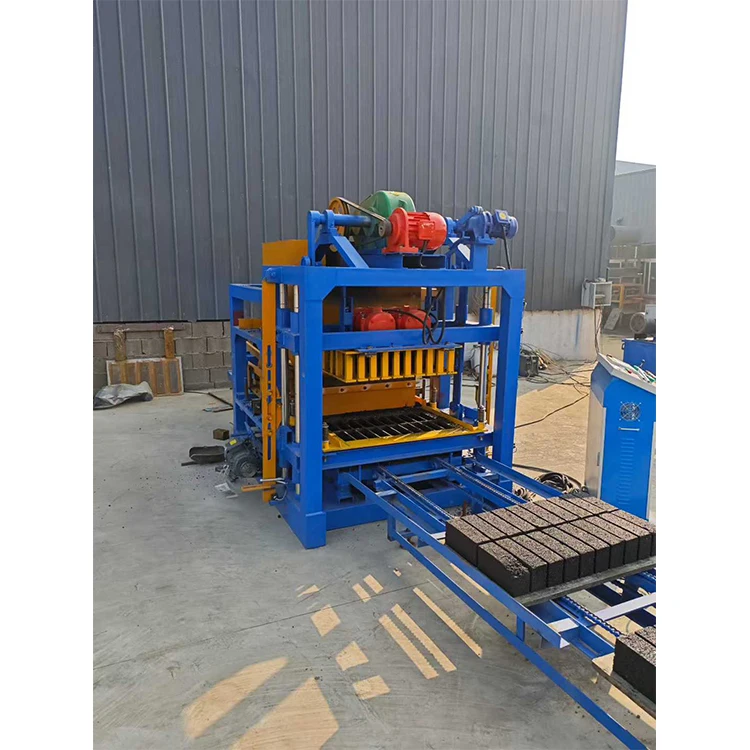
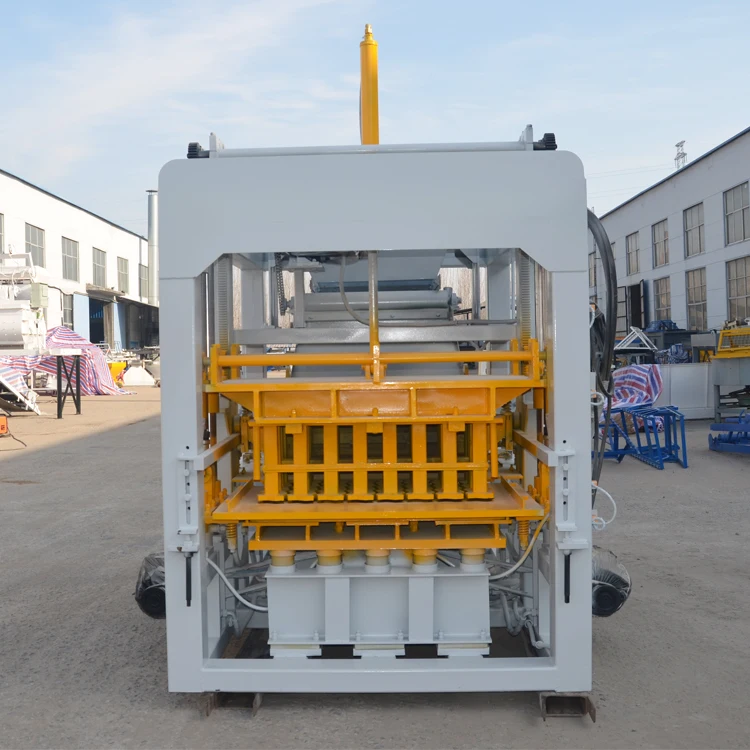 Automatic block machine