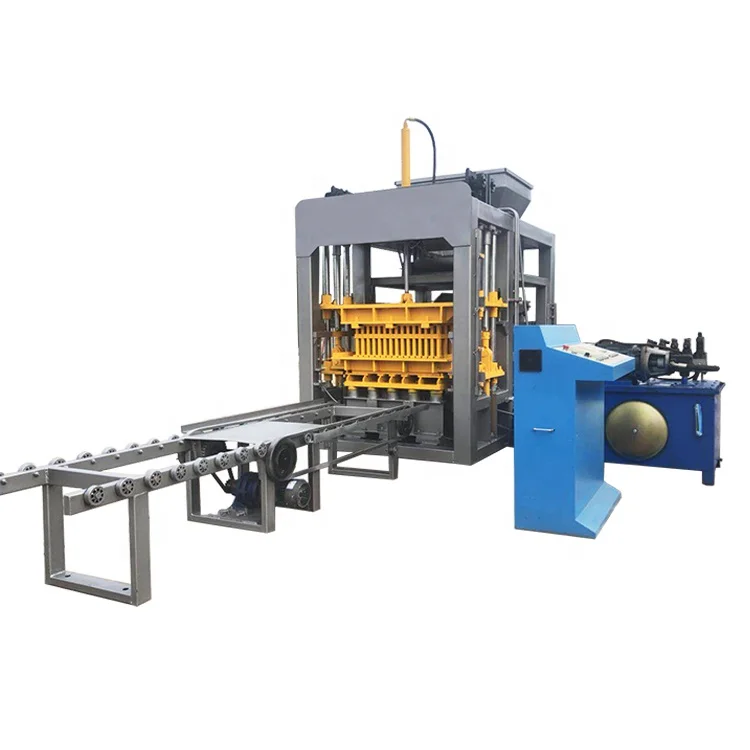
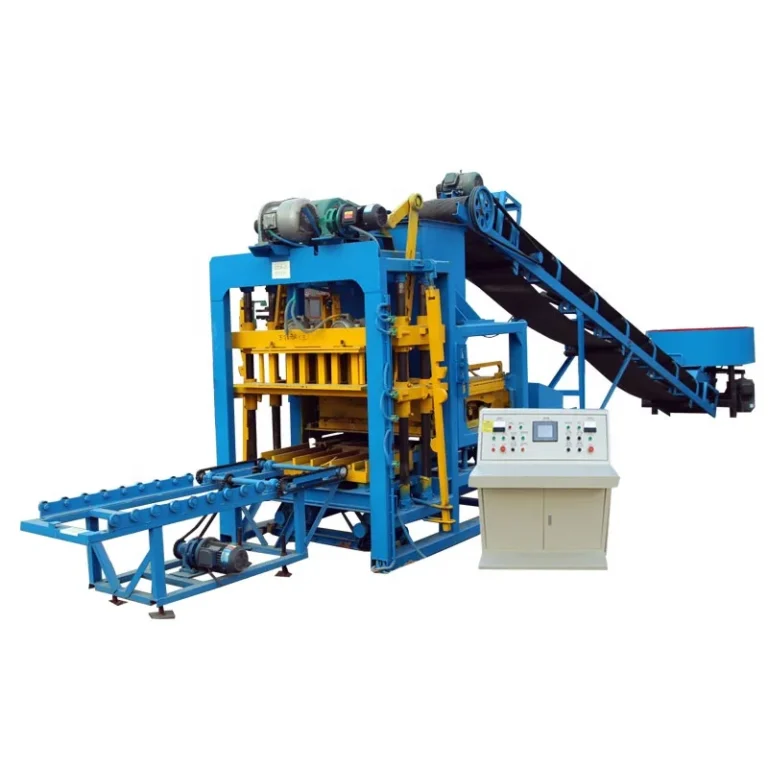
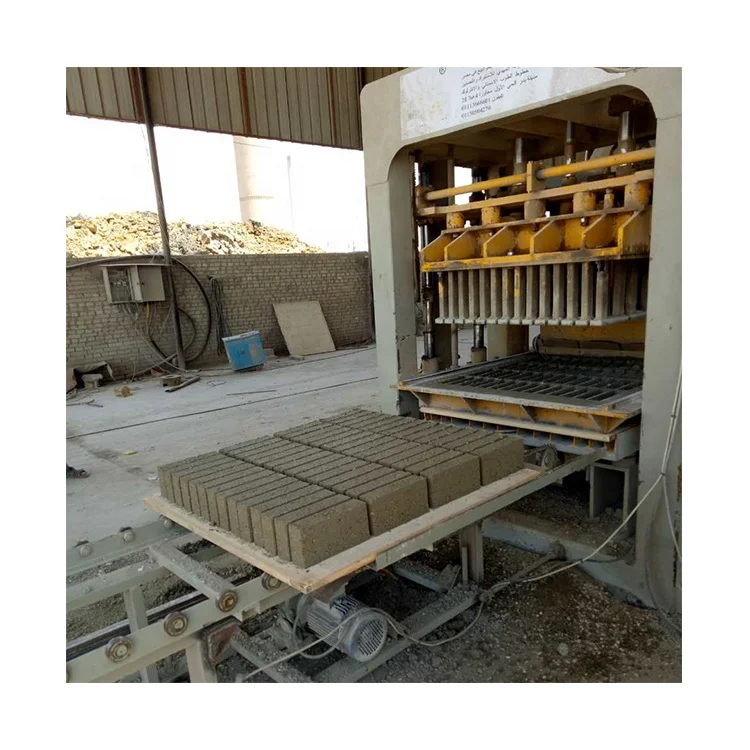
Matched System Configuration — the QT5-15 is specified as one coordinated line of press, batching, mixing, and stacking rather than a collection of standalone units, so cycle times align across stations.
Technical Specifications
| Parameter |
Value |
| Model |
QT5-15 |
| Product Type |
Full Automatic Concrete Block Making Machine |
| Host Machine Dimensions |
5870 × 2220 × 2850 mm |
| Host Machine Weight |
5.5 Tons |
| Molding Area |
1050 × 500 mm |
| Host Machine Power |
31.5 kW |
| Vibration Force |
55 kN |
| Vibration Method |
Hydraulic + Platform Vibration |
| Vibration Frequency |
2800–4500 Times/Minute |
| Pallet Size |
1100 × 550 × 25 mm |
| Molding Period |
15 Seconds (basis not stated in source — confirm block format / material / thickness) |
| Voltage |
220 / 380 / 415 / 440 V (Customized) |
| Control System |
Original Siemens PLC with independently developed control program |
| Motor Brand |
Germany SIEMENS or CE standard brand |
| Travel Switch |
France Schneider / Japan Omron |
| Mould Treatment |
Heat treatment and carburizing (54–58 HRC, life span >100,000 cycles) |
| Welding Standard |
Carbon dioxide protection welding (CE standards) |
| Batching Machine Model |
PLD1200 |
| Batching Hopper Capacity |
1200 L |
| Storage Hopper Capacity |
4 × 2.5 m³ |
| Batching Theoretical Productivity |
56 m³/h (basis to be confirmed — material / density not stated) |
| Batching Ingredient Precision |
±2% |
| Batching Species |
3 |
| Batching Machine Weight |
4500 kg |
| Batching Machine Dimensions |
12000 × 2200 × 2500 mm |
| Mixer Model |
JS500 |
| Mixer Charging Volume |
800 L |
| Mixer Discharging Volume |
500 L |
| Mixer Production Capacity |
25 m³/h (basis to be confirmed — mix design / slump not stated) |
| Mixer Motor Power (Mixing) |
18.5 kW |
| Mixer Motor Power (Windlass) |
5.5 kW |
| Mixer Water Pump Power |
0.75 kW |
| Mixer Maximum Aggregate Size |
60 mm |
| Mixer Weight |
2800 kg |
| Mixer Dimensions |
4490 × 3030 × 5280 mm |
| Stacker Model |
SY-4 |
| Stacker Power |
3 kW |
| Stacker Type |
Mobile pallet stack |
| Stacker Suitable For |
Hollow block and pavers |
| Stacker Weight |
600 kg |
| Assembly State |
Grouped equipment line (Batching + Mixing + Press + Stacker) |
| Standards |
CE (materials and spare parts selected to international CE standards) |
| Warranty |
1 year for the whole machine (without spare parts) |
Application Suitability
| Application |
Material or Output |
| Hollow block production |
Crushed stone, sand, cement, fly ash blends |
| Paving brick production |
Fine aggregate with cement binder for interlocking pavers |
| Solid block production |
Dense aggregate mixes for load-bearing walls |
| Interlocking brick production |
Graded aggregate with cement for dry-stack formats |
| On-site contractor block production |
Locally sourced sand and gravel with Portland cement |
What a "15-Second Cycle" Actually Means for Your Daily Output
The molding cycle number only matters when tied to a specific block format, mix design, and pallet size.
I have watched buyers sign off on an automatic block machine for sale based on a single cycles-per-hour figure, then discover on commissioning day that the quoted rate assumed a small solid brick while their actual product is a 200 mm hollow block requiring longer vibration and curing. The press itself may complete a cycle in 15 seconds, but if the batching station cannot deliver a fresh charge in time or the stacker falls behind, the line stalls and real output drops well short of the brochure number. [NEED_CITE: block format effect on actual cycle time in hydraulic press operations] That is why the first question in any serious quotation should be which exact block format the capacity calculation assumes.

Where the QT5-15 Sits in the Full Machine Range
The QT5-15 occupies the mid-tier of our automatic block machine range. Buyers moving up from a semi-automatic workshop line will find the step change in pallet handling and stacking automation most noticeable — the SY-4 mobile stacker removes manual pallet offloading from the operator’s task list. For those surveying the complete range from semi-auto to high-capacity lines, this model represents the point where grouped equipment — batching, mixing, press, and stacking — arrives as a single matched specification rather than separate purchases.
How Line Stations Connect and Where Cycle Times Must Match
A full automatic block making machine is only as fast as its slowest station. The PLD1200 batching machine feeds three aggregate species into the JS500 mixer, which discharges 500 L per batch into the press hopper. If the mixer cycle runs longer than the press molding period, the press sits idle waiting for material. The 1050 × 500 mm molding area determines how many blocks fit per cycle, and the SY-4 stacker must clear cured pallets fast enough to keep the pallet return loop moving. [NEED_CITE: production line balancing principles in concrete block plants] When we lay out the line, every station’s cycle is calculated against the target block format so no single point bottlenecks the press.
Reading the Specifications That Actually Shape Your Output
The 55 kN vibration force combined with hydraulic pressure determines the density and compressive strength of each block — insufficient force on a high-clay aggregate mix produces blocks that crumble before reaching curing age. The 2800–4500 cycles per minute frequency range allows adjustment across formats: higher frequency for thin pavers, lower amplitude for tall hollow blocks where deep compaction matters more. The 1100 × 550 × 25 mm pallet size must match both the molding area and the curing racks already in your yard; ordering a pallet dimension that your existing forklift cannot handle creates a bottleneck no amount of press speed will fix. Mould carburizing to 54–58 HRC means the cavity surfaces resist abrasive wear from crushed stone aggregates across extended production runs, maintaining dimensional accuracy well beyond the 100,000-cycle threshold.
The Hidden Cost of Specifying Stations Separately
Buyers who source the press from one supplier, the mixer from another, and the stacker from a third often discover interface problems at installation. The pallet dimensions may not match the stacker’s gripper width. The batching discharge height may sit too high for the mixer charging hopper. [NEED_CITE: equipment interface mismatches in multi-vendor block lines] Electrical control systems from different manufacturers rarely communicate without a custom integration panel, adding commissioning time and cost. When the full automatic block machine for sale arrives as a grouped line, these interfaces are resolved at the factory — the PLD1200 discharge chute aligns with the JS500 charging mouth, and the PLC program coordinates press cycling with stacker movement as one sequence.
Why Sourcing This Range Here Makes Sense
Block machinery is our single focus, so the QT5-15 is never quoted as a standalone press — the machine, mould, pallet, and handling equipment are specified together against your actual mix design and local aggregate. We confirm voltage, frequency, and PLC display language before production starts, eliminating the commissioning delays that arise when a control panel arrives with the wrong language pack. [NEED_CITE: pre-shipment voltage and control language confirmation practices] Custom mould design is available to buyer drawings, meaning the formats your market actually sells can be produced from the first week rather than adapted from a catalogue default. Automation level is selectable, so a buyer can start with the grouped line as configured and add curing rack handling or cubing systems later without replacing the press. Installation support includes operator training on the Siemens PLC interface, and a wear parts and mould list ships with every line so the first replacement order can be placed before parts are actually needed.
Documentation & Verification
- Line layout showing station spacing and pallet flow path for the QT5-15 configuration
- Capacity calculation sheet stating the exact block format behind each output figure
- Mould drawing and format list for all cavities within the 1050 × 500 mm molding area
- Hydraulic and electrical schematic matching the shipped voltage and control language
- Factory test record run on your specified block format before dispatch
- CE declaration covering materials and spare parts selection
Installation, Commissioning & Support
- Foundation plan sized to the 5.5-ton host machine footprint and vibration isolation requirements
- Dedicated power circuit rated for 31.5 kW host plus 18.5 kW mixer and auxiliary loads
- Grouped line arrives dismantled for container loading with reassembly guidance on site
- PLC program verified against confirmed voltage and display language during first power-on
- Operator training covers mould change procedure and Siemens PLC parameter adjustment
- Wear parts list identifies hydraulic seals and mould inserts by part number for reorder
What We Need to Build Your Quotation
To size the QT5-15 line correctly, share the block formats you plan to produce, the daily output target per format, and a sample of your local aggregate — including source and typical moisture content. Confirm your site voltage, frequency, and preferred PLC display language so the control system ships ready to run. Let us know your available workshop dimensions and whether existing curing racks or forklifts constrain pallet size selection.
Frequently Asked Questions
Q: How does the QT5-15 compare to semi-automatic and higher-tier automatic models in the range?
A: The QT5-15 sits at the mid-tier, adding full PLC-controlled batching, mixing, and mobile stacking to the press operation. Semi-automatic models below it rely on manual pallet handling and simpler mixing setups. Higher-tier lines above it introduce automatic curing rack handling and cubing systems. The right tier depends on your daily volume target and how much manual labour you want to remove from the production floor.
Q: What block format is assumed for the 15-second molding cycle, and what is realistic daily output?
A: The 15-second period is a machine-level figure that varies with block format, material density, and vibration setting. A small solid brick may achieve that rate, while a 200 mm hollow block requires longer vibration per cycle. We provide a capacity calculation per format with your quotation so the daily output figure reflects the blocks you will actually produce.
Q: What plant footprint does the full QT5-15 grouped line require?
A: The line includes the PLD1200 batching station at 12 metres long, the JS500 mixer at roughly 4.5 metres, the host press, and the SY-4 stacker. Total floor space depends on pallet circulation path and curing rack placement. We provide a scaled line layout with every proposal so you can confirm the arrangement fits your workshop before ordering.
Q: How are voltage, frequency, and PLC language confirmed before shipment?
A: During the quotation stage we collect your site electrical specifications and preferred operator language. These are locked into the production order so the Siemens PLC, motor wiring, and travel switches ship configured for your facility. A factory test runs the full cycle before dispatch to verify all settings.
Q: What is included in the grouped equipment line versus what must be sourced separately?
A: The line includes the PLD1200 batching machine, JS500 mixer, QT5-15 host press, SY-4 stacker, pallets to the specified size, and the mould set for agreed block formats. Curing racks, forklifts, raw material stockpiles, and water supply infrastructure are buyer-provided unless added to the scope during the proposal stage.

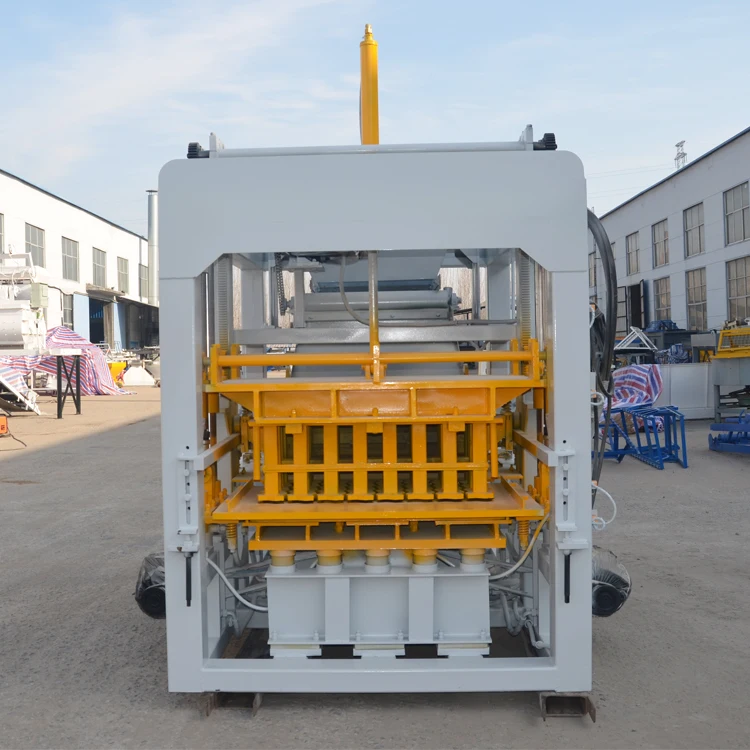
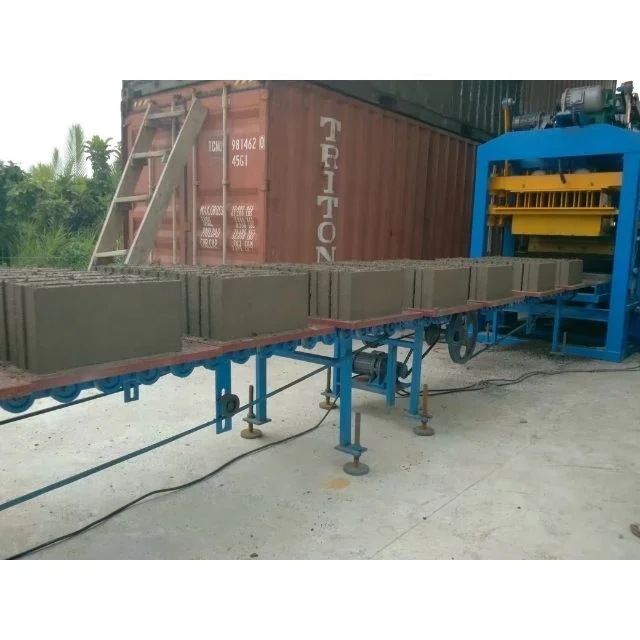 Automatic block machine