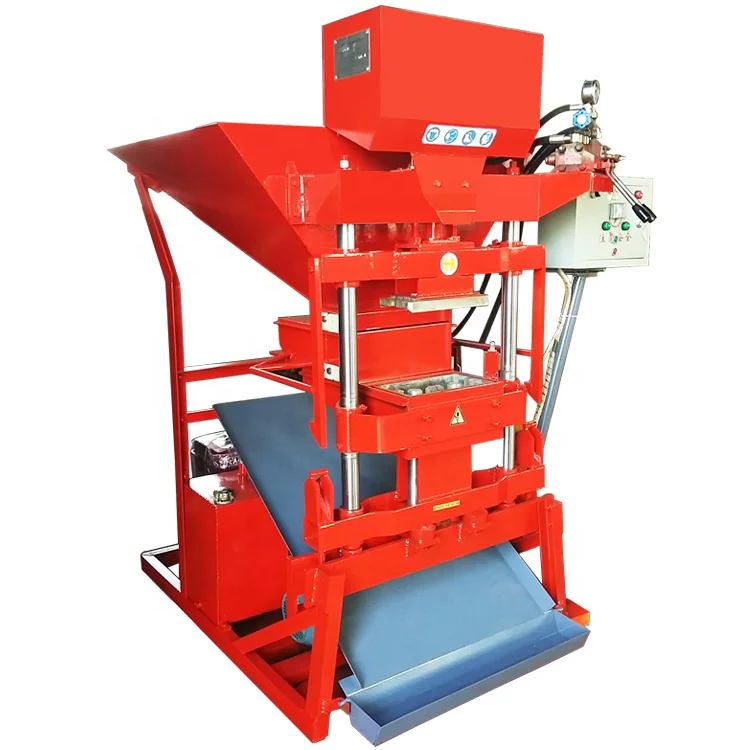
Compact Press Footprint — the ECO 2700 occupies a 1000 × 1000 mm floor space, letting first-time producers fit a block press into an existing workshop without rebuilding the bay.
Technical Specifications
| Parameter |
Value |
| Model |
ECO 2700 |
| Product Type |
Clay Block Making Machine |
| Rated Power |
5.5 kW |
| Voltage & Frequency |
380V, 3-phase, 50Hz (customizable to local voltage) |
| Control System |
Manual / semi-automatic operation |
| Hydraulic Pressure |
16 MPa |
| Cycle Time |
15–20 seconds (basis not stated in source — confirm block format and material) |
| Overall Dimensions (L×W×H) |
1000 × 1000 × 1800 mm |
| Net Weight |
1000 kg |
| Automation Level |
Semi-automatic |
| Stacking Method |
Manual |
| Warranty |
1 year |
| Certification |
CE |
Application Suitability
| Application |
Material or Output |
| Small-scale clay brick production |
Local clay mixed with sand and water |
| On-site block manufacturing for contractors |
Clay and aggregate blends sourced near the build site |
| Low-investment workshop block plant |
Crusher dust, clay, and cement blends for solid bricks |
| Pilot production before scaling |
Test runs with experimental mix proportions |
What "15–20 Seconds per Cycle" Actually Means for Your Daily Output
Cycle time only translates to real daily capacity when the assumed block format is named alongside it.
I once watched a buyer in North Africa unpack a small press that promised a fast cycle, only to discover the number was based on a thin paver while his market bought 200 mm hollow blocks. The same ECO 2700 block machine manufacturer will quote you a cycle figure, but without the block format and material condition tied to it, the number is meaningless for your production plan. Shaping a standard solid clay brick at 16 MPa is a different story from pressing an interlocking paver with a tighter tolerance. [NEED_CITE: relationship between block format and press cycle time in hydraulic block machines]

Where the ECO 2700 Sits in the Block Machine Range
The ECO 2700 block machine manufacturer positions this press at the entry tier, aimed at workshops that need a first machine without committing to a fully automatic line. The semi-automatic configuration keeps the operator in the loop for pallet handling and stacking while the press itself manages the vibration and hydraulic pressing sequence. This tier suits buyers who want to learn block production before investing in higher automation.
Matching the Machine to Your Local Clay and Aggregate
Clay properties vary widely by region — some deposits carry high montmorillonite content that demands more water, while sandy clays drain fast and need different vibration tuning. The 16 MPa hydraulic pressure on the ECO 2700 must be paired with a vibration profile that suits your specific mix, otherwise blocks crack during curing or crumble at the edges. We ask for a sample of your raw material before finalizing the pressure and cycle settings so the press arrives tuned to what you actually feed it. [NEED_CITE: effect of clay mineralogy on block compressive strength]
Reading the Specs That Matter on a Small Block Press
The 5.5 kW rated power keeps electrical demand low, which matters on sites where a transformer upgrade would add weeks and significant cost to the project. The 1000 × 1000 × 1800 mm footprint means the press fits through a standard workshop door and leaves room for a manual pallet staging area beside it. Hydraulic pressure at 16 MPa is sufficient for solid clay bricks and smaller format pavers but would need to be checked against the density requirements of large hollow blocks. The 1000 kg net weight gives the frame enough mass to absorb vibration without walking across the floor during operation, though a level concrete pad is still required. Voltage customization from the default 380V three-phase 50Hz ensures the motor and control panel match the local grid before the machine ships, avoiding the commissioning delays I have seen when a 60Hz site receives a 50Hz panel.
The Hidden Cost of Skipping Configuration Checks
Buyers who order a small press without confirming pallet size often find the curing racks they already own do not match, forcing a second purchase or hand-stacking blocks directly on the ground. Voltage mismatches are another recurring problem — a machine wired for 380V 50Hz sitting on a 440V 60Hz site cannot be commissioned until the motor and transformer are swapped, turning a quick startup into a multi-week delay. [NEED_CITE: common commissioning delays from voltage and frequency mismatches in exported machinery]
Why Source the ECO 2700 Through This Channel
Block machinery is our single focus, so the ECO 2700 arrives as a matched system — press, mould, pallet, and handling specified together rather than assembled from separate suppliers. We set the hydraulic pressure and vibration against your actual mix design and local clay, not a catalogue default. Mould design covers the formats your market sells, and custom moulds can be built to your drawings if standard options do not fit. The semi-automatic configuration lets you start lean and add automation stations later as demand grows. Installation support includes operator training so your team knows the press before the technician leaves the site.
Documentation & Verification
- Line layout showing ECO 2700 placement within your workshop footprint
- Capacity calculation stating the specific block format behind the 15–20 second cycle
- Mould drawing and format list confirming the brick types your market requires
- Voltage and control language confirmation sheet signed before production begins
- Factory test record run on your specified clay mix before dispatch
- Operation and maintenance manual with wear parts list for first replacement planning
Installation, Commissioning & Support
- Level concrete pad required under the 1000 × 1000 mm base to prevent frame drift during vibration cycles
- Dedicated 3-phase circuit rated for the 5.5 kW motor plus starting surge
- Machine ships assembled; only the hopper and control panel need bolting on site
- First-run commissioning includes hydraulic pressure and cycle tuning to your clay sample
- Operator training covers mould change procedure and daily vibration plate inspection
- Wear parts list identifies seals and vibration springs for local sourcing or reorder
What to Share With Your Inquiry
To size the ECO 2700 correctly, send the block format your market buys most — dimensions, weight target, and whether it is solid or hollow. Include a description of your local clay or aggregate so we can match the vibration and pressure settings. Confirm your site voltage, frequency, and preferred control panel language so the machine arrives ready to run.
Frequently Asked Questions
Q: How is the ECO 2700 cycle time calculated, and which block format does it assume?
A: The 15–20 second cycle is a general range. The actual figure depends on block dimensions, wall thickness, and your clay mix density. We calculate a format-specific cycle once you confirm the brick type you plan to produce, then include that number in the capacity layout so your daily output estimate is honest.
Q: What voltage configurations are available, and how is the control language confirmed?
A: The ECO 2700 ships from the factory at 380V three-phase 50Hz but can be configured to match your local grid. We send a voltage and control language confirmation sheet for your sign-off before production begins, so the motor, transformer, and panel labels all arrive correct.
Q: Can I start with the ECO 2700 semi-automatic and add automation later?
A: Yes. The semi-automatic configuration handles pressing and vibration while the operator manages pallet movement. As volume grows, you can add automatic pallet feeding and stacking stations to the same press without replacing the core machine.
Q: What mould formats fit the ECO 2700, and are custom moulds available?
A: Standard moulds cover common solid brick and small paver formats. If your market sells a shape or size outside the standard range, we design and build custom moulds to your drawings and test them on the press before shipment.
Q: How does the ECO 2700 footprint compare to the next tier up?
A: The ECO 2700 occupies roughly one square metre of press floor space. The next tier adds width for larger pallets and an automatic stacker, typically doubling the footprint. This matters when planning your workshop layout for future expansion.

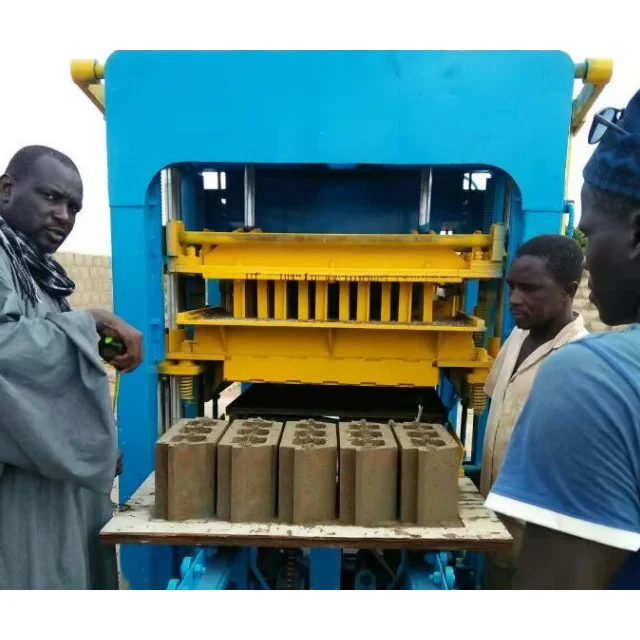 Semi automatic block