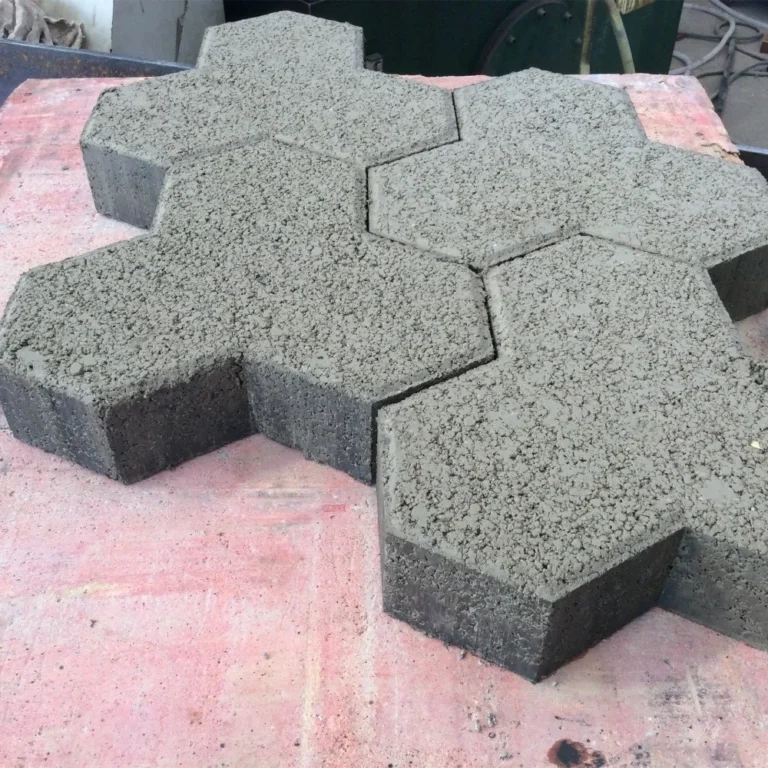
Matched System Supply — the QT4-15A is specified as a complete block line with press, mould, pallet and handling matched to your target format, not assembled from separate suppliers.
Technical Specifications
| Parameter |
Value |
| Model |
QT4-15A |
| Product Type |
Fully Automatic Hydraulic Block Making Machine |
| Overall Dimensions (L×W×H) |
4100×1600×2600 mm |
| Rated Pressure |
16–21 MPa |
| Main Vibration Form |
Platform Vibration |
| Vibration Frequency |
4200 r/min |
| Vibration Force |
55 kN |
| Pallet Size |
880×550 mm |
| Molding Cycle |
25–30 s (basis not stated in source — confirm block format and material) |
| Overall Power |
18.45 kW (source value — verify against manufacturer catalog) |
| Total Mass |
4 T |
| Demolding Method |
Hydraulic |
| Factory Area |
Approx. 300 m² |
| Automation Level |
Fully automatic |
| Container Loading |
1×40HQ (basic equipment) |
Application Suitability
| Application |
Material or Output |
| Hollow and solid block production |
Crushed stone, sand, cement, fly ash, gravel |
| Paver and colored paver runs |
Dust, slag, cement blends |
| Interlocking brick manufacturing |
Sand, crushed stone, cement |
| Curbstone forming |
Gravel, cement, slag mixes |
| On-site housing project supply |
Local aggregate with cement binder |
What "Cycles per Hour" Actually Means for Your Daily Output
Capacity figures only become meaningful when the block format and mix design are stated alongside them.
When a quotation lists cycles per hour without naming the exact block size and wall thickness behind that number, buyers often discover on commissioning day that their real daily output is far below what they planned for. I have watched this happen with machines shipped to West Africa where the local stone dust carried high clay content, slowing the molding cycle well past the catalog default. The QT4-15A automatic block making machine manufacturer specification sheet must always tie each output figure to a named block format and the buyer’s own raw material profile [NEED_CITE: block format and cycle time relationship in concrete block production]. Without that link, capacity is just a number on paper.

Placing the QT4-15A Within the Full Machine Range
The QT4-15A sits in the mid-tier of the Shiyue stationary automatic lineup, positioned between entry-level semi-automatic machines and high-capacity fully automatic lines. Buyers evaluating their first block plant or replacing an aging semi-automatic unit will find this model covers the output bracket where manual pallet handling starts to become a bottleneck. The 880×550 mm pallet and platform vibration system at 4200 r/min place it squarely in the range suited for standard hollow blocks, pavers, and interlocking bricks in moderate daily volumes.
Understanding Where This Tier Ends and the Next Begins
Stepping up from the QT4-15A to a higher-tier automatic line typically means larger pallets, greater vibration force, and integrated stacking and cubing systems that reduce labor further. The decision point is rarely just about raw output — it is about whether your curing area, forklift capacity, and labor budget can absorb a bigger line or whether the 300 m² footprint of this mid-tier QT4-15A automatic block making machine manufacturer configuration already fills your available space [NEED_CITE: stationary block plant layout and footprint planning]. Buyers who are unsure where they sit on the range benefit from comparing the automation and handling requirements tier by tier before committing.
Reading the Core Parameters Against Real Production
The 16–21 MPa rated pressure combined with 55 kN vibration force determines how densely the concrete mix is compacted into each mould cavity, directly influencing block strength and surface finish. Platform vibration at 4200 r/min transmits energy through the pallet rather than the mould walls, which helps maintain mould life over extended production runs. The 880×550 mm pallet size is a mid-range dimension that must align with the curing racks and forklift tines already on your site — ordering a pallet size without checking compatibility can force costly handling changes later. Hydraulic demolding lifts the mould box cleanly from the formed block, reducing edge damage on thin-wall hollow blocks compared to mechanical stripping. The 4 T total mass provides a stable base for vibration damping, keeping energy focused on compaction rather than frame oscillation.
The Hidden Cost of Mismatched Line Configuration
When pallet size is selected without considering the curing area and forklift the buyer already operates, pallets arrive too large for existing racks or too small for stable forklift transport, stalling production before it starts. Voltage and PLC display language left unconfirmed until the machine arrives can delay commissioning by weeks while control panels are re-wired or translated [NEED_CITE: electrical standards and PLC language requirements for export machinery]. A mould change system that takes most of a shift to swap defeats the flexibility the buyer paid for, turning a multi-format line into a single-format machine in practice.
Why Procurement Starts With the Full Line View
Block machinery remains the single focus here, so the QT4-15A press is never quoted in isolation — mould, pallet, and handling equipment are specified together as one matched system. Machine configuration is set against your actual mix design and local aggregate rather than a catalog default, reducing the risk of costly material substitutions after delivery. Mould design covers the formats your market sells, including custom drawings when standard moulds do not match local block dimensions. Automation level is selectable, allowing a buyer to begin with semi-automatic operation and add stacking or cubing later without replacing the press. Factory test records and packing photographs are shared before shipment so you can verify the machine against your order before it leaves the workshop.
Documentation & Verification
- Line layout showing the QT4-15A footprint with capacity stated per block format
- Machine specification sheet confirming voltage, frequency, and PLC language
- Mould drawing and format list matched to your target block dimensions
- Hydraulic and electrical schematic for local maintenance reference
- Factory test record on your raw material mix before dispatch
Installation, Commissioning & Support
- Foundation plan sized to the 4100×1600 mm footprint and 4 T operating mass
- Dedicated power circuit rated for the 18.45 kW overall power draw
- Equipment loaded in 1×40HQ with dismantling points marked for reassembly
- On-site commissioning with cycle time tuned to your block format and mix
- Operator training covering mould change, hydraulic checks, and daily maintenance
- Wear parts and mould replacement list supplied with the machine
What to Include in Your Inquiry
Share the exact block formats you plan to produce, including wall thickness and any interlocking profile requirements. Specify your local raw materials — stone dust, river sand, fly ash — and whether samples can be sent for a test run. Confirm the voltage, frequency, and preferred PLC display language at your site, along with the curing area dimensions and forklift capacity you already have in place.
Frequently Asked Questions
Q: How is the QT4-15A capacity calculated, and which block format does it assume?
A: The 25–30 second molding cycle is a reference range that varies depending on block format, wall thickness, and raw material characteristics. A capacity calculation tied to your specific block size and mix design should be provided in the quotation so daily output reflects your actual product, not a generic catalog figure.
Q: Where does the QT4-15A sit in the Shiyue range?
A: It occupies the mid-tier of the stationary automatic lineup, above semi-automatic workshop models and below high-capacity lines with integrated stacking and cubing. This positioning suits buyers who need consistent automatic cycling but do not yet require the output volume of a large-scale plant.
Q: What plant footprint and investment level should I expect?
A: The basic line requires approximately 300 m² and fits into a single 40HQ container for shipping. Investment level sits between entry-level semi-automatic setups and larger fully automatic lines, making it a common choice for entrepreneurs planning their first stationary block plant.
Q: Can I start semi-automatic and upgrade automation later?
A: Yes. The QT4-15A platform supports a selectable automation level, so buyers can begin with manual pallet handling and add automatic feeding, stacking, or cubing modules later without replacing the core press or moulds.

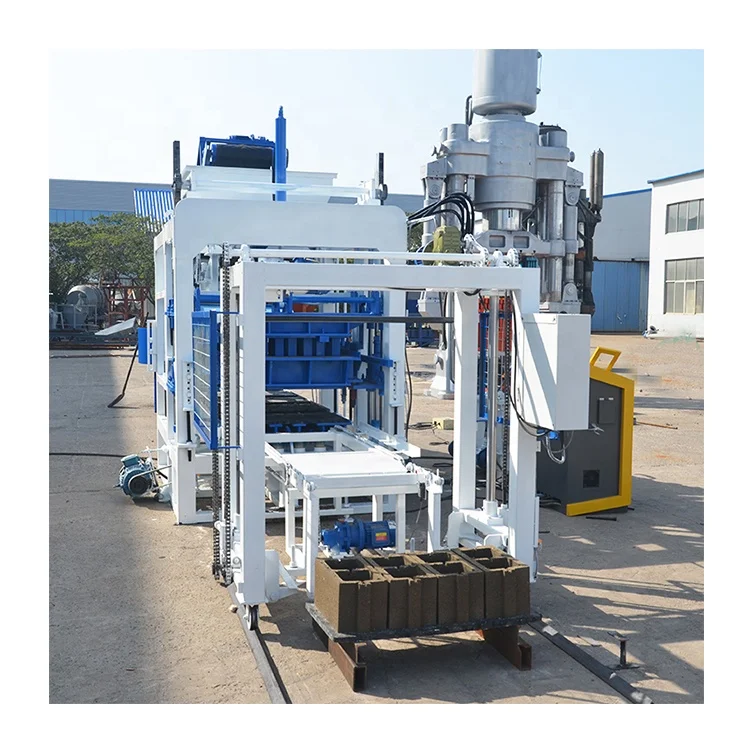
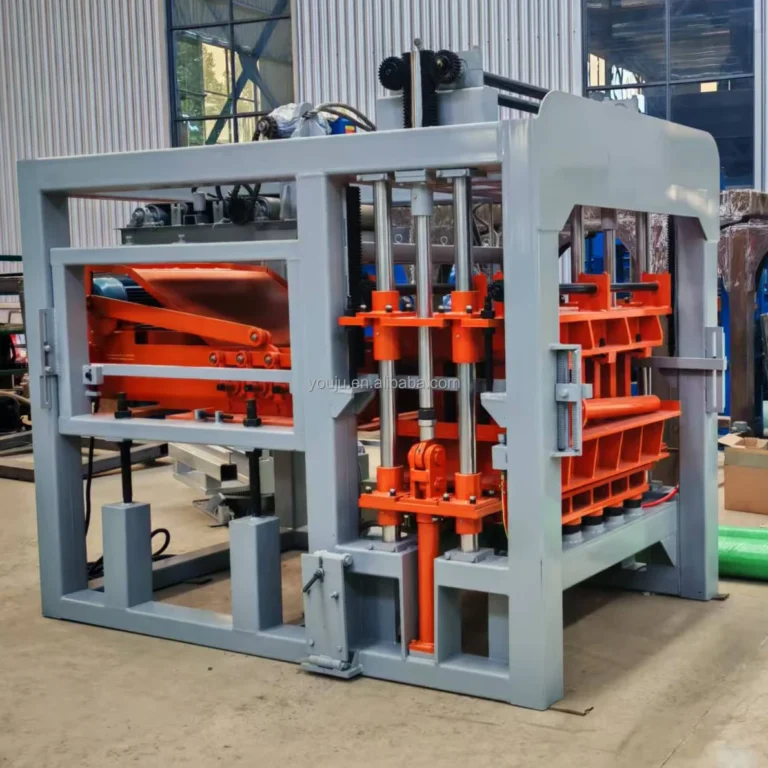 Stationary block machine
![QT18-25 Pallet-free Block Machine | Manufacturer Full Range 记录ID数字之和: 8+0+3+7+0 = 18 18 mod 6 = 0 → 结构0: [品类词] for [应用或物料] – [站点修饰词] 第一层站点角色:全品类目录类 → Manufacturer / Factory Supply / Full Range 第三层修饰词选取:18 mod 3 = 0 → Manufacturer Pallet-free Block Making Machine for Concrete Blocks – Manufacturer 字符数(含空格):69](https://shiyueblockmachine.com/wp-content/uploads/2026/04/Hbf4267631888473ab66c2307a4c79f52J.webp)