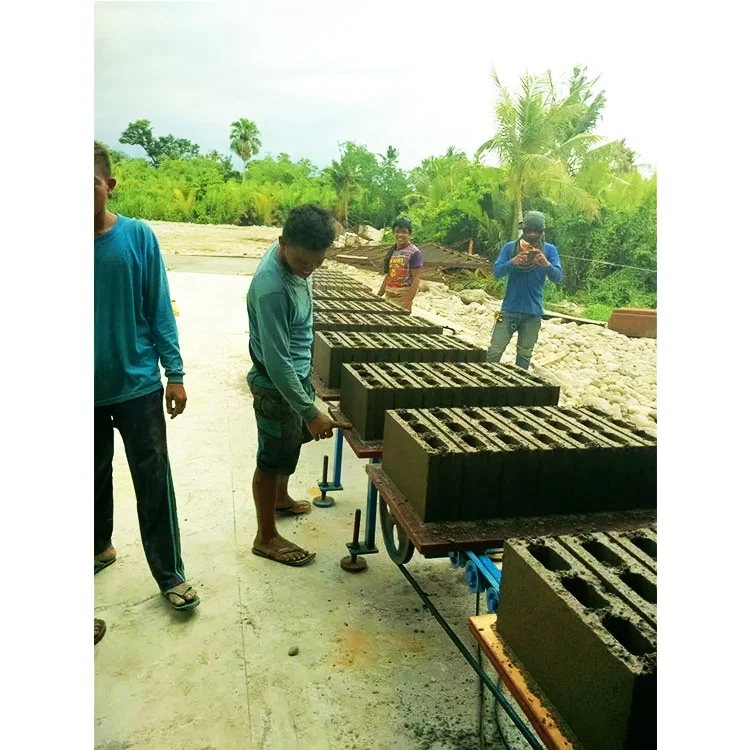
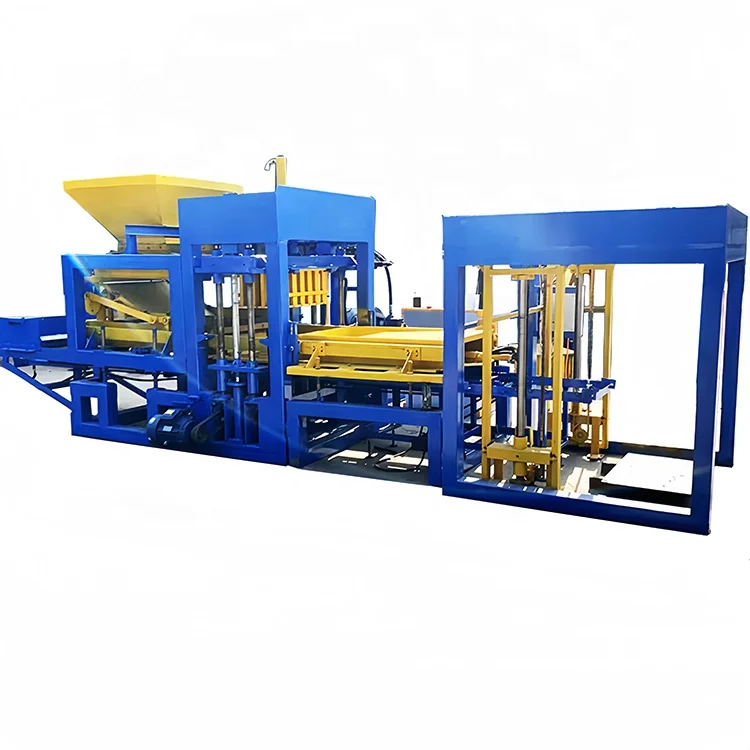
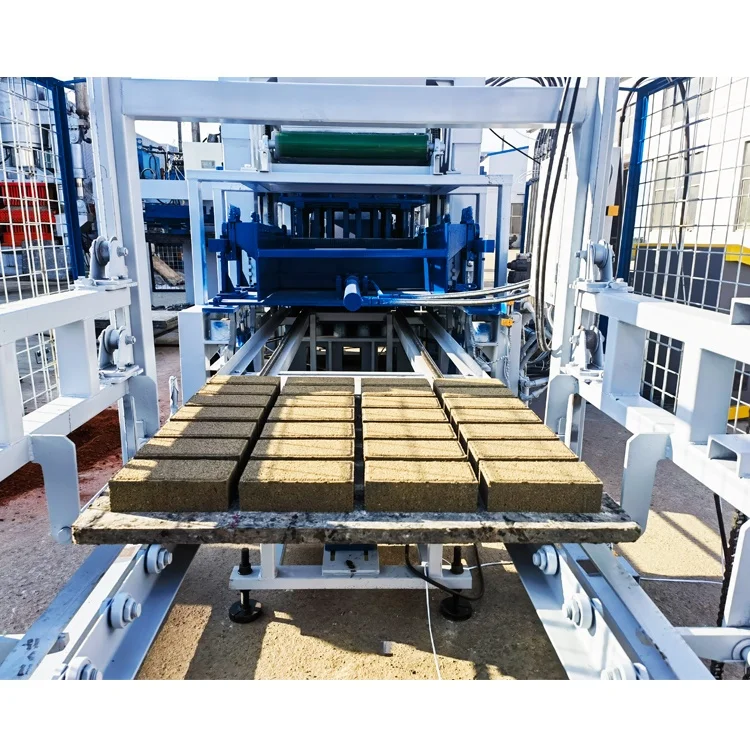
Matched System Configuration — Every QT7-15 block machine ships with pallet, hydraulic and handling equipment specified as one integrated line rather than separate supplier purchases.
Technical Specifications
| Parameter |
Value |
| Model |
QT7-15 |
| Product Type |
Hydraulic Block Making Machine |
| Pallet Size |
1150×700mm |
| Vibration Force |
100kN |
| Vibration Form |
Platform Vibration |
| Vibration Frequency |
0–60Hz (adjustable) |
| Molding Cycle |
15–20s (basis not stated in source — confirm block format / material / thickness) |
| Demolding Method |
Hydraulic |
| Overall Power |
45kW |
| Total Mass |
8T |
| Control System |
PLC with touch screen |
| Automation Level |
Automatic |
| Remote Diagnostics |
Supported via control system |
| Output Capacity (Hollow Block 400×200×200mm) |
1,260–1,680 pcs/hour, 10,080–13,440 pcs/8hr |
| Output Capacity (Hollow Block 400×150×200mm) |
1,440–1,920 pcs/hour, 11,520–15,360 pcs/8hr |
| Output Capacity (Rectangular Paver 200×100×60mm) |
3,888–4,860 pcs/hour, 31,104–38,880 pcs/8hr |
| Mould Change |
Quick replacement supported |
| Warranty |
1 year (excluding spare parts) |
Application Suitability
| Application |
Material or Output |
| Hollow block production |
Standard and partition formats in concrete with local aggregate |
| Solid block production |
Load-bearing walls and foundation courses |
| Rectangular paving brick |
Driveway and pedestrian surface installations |
| Multi-cellular bricks |
Partition and non-load-bearing wall systems |
| On-site block production |
Housing and infrastructure project locations |
Why "Pieces per Hour" Without a Block Format Is Meaningless
Capacity only becomes real when tied to a specific block size, material and cycle time.
The QT7-15 block machine manufacturer quotation often arrives with a single headline number. That figure might assume a small paver running at the fastest cycle, while the buyer actually needs 400×200×200mm hollow blocks with a slower molding rhythm. I once saw a Middle East project stall because the quoted output assumed a lightweight mix, but local volcanic aggregate forced the cycle time nearly double. The daily volume dropped to less than half of expectation before anyone could adjust [NEED_CITE: real-world cycle time deviation due to aggregate density].

Where the QT7-15 Sits in the Full Machine Lineup
The QT7-15 occupies the mid-to-high automatic tier, positioned between entry-level semi-automatic presses and the largest continuous-line models. Buyers stepping up from a manual egg-laying machine will find the PLC touch screen and hydraulic demolding remove most operator-dependent variation. For plants already running semi-automatic equipment, this model introduces platform vibration with adjustable frequency and quick mould change as standard features rather than optional add-ons.
Matching Automation Level to Plant Footprint
A block production setup built around this machine can start with manual pallet handling and add automatic stacking later, keeping initial investment aligned with actual volume growth. The 1150×700mm pallet size must be checked against the curing yard dimensions and the forklift capacity already on site. When pallets arrive at the stacking station out of sync with the press cycle, the machine waits and daily output falls regardless of its rated speed [NEED_CITE: pallet handling bottleneck in block plant layout].
Vibration Force, Hydraulic Pressure and Block Density
The 100kN vibration force working through the platform ensures consistent compaction across the full pallet area, but vibration alone does not guarantee block strength. Hydraulic pressure applied during demolding must match the mix design; too little pressure and the block cracks on release, too much and the mould wears prematurely. The adjustable 0–60Hz frequency range allows the operator to dial in the right setting for each format, from thin pavers to tall hollow blocks. Total machine power of 45kW must be confirmed against the site transformer capacity before installation, as voltage drop under load will slow the hydraulic pump and extend every cycle.
The Hidden Cost of Skipping Pallet and Voltage Confirmation
When pallet material is chosen without considering the curing environment, warping in high humidity shortens pallet life and throws off dimensional accuracy. Likewise, shipping a machine with the wrong voltage or PLC display language delays commissioning by weeks while replacement components are sourced locally. These are not engineering failures; they are specification gaps that surface only after the container arrives [NEED_CITE: commissioning delays caused by unconfirmed electrical specifications].
Why Buyers Source This Machine Here
Block machinery remains the single focus of the production line, so the press, mould, pallet and handling equipment are specified as one matched system. Configuration is set against the buyer’s actual mix design and local aggregate, not a catalogue default. Mould design covers the formats the buyer’s market sells, including custom drawings when standard sizes do not match local demand. Automation level is selectable, allowing a plant to begin semi-automatic and move to full stacking and cubing as volume grows. Installation support includes operator training on the PLC interface and hydraulic maintenance routines.
Documentation & Verification
- Line layout with capacity calculation stating block format for each output figure
- Machine specification sheet confirming voltage, frequency and PLC display language
- Mould drawing and format list showing included block sizes and change procedure
- Pallet specification matched to curing area dimensions and forklift capacity
- Factory test record on buyer’s target block format before dispatch
Installation, Commissioning & Support
- Foundation plan sized for 8T machine mass and platform vibration isolation
- Dedicated 45kW power circuit with correct voltage and frequency confirmed before wiring
- Hydraulic system filled and bled on site with pressure matched to buyer’s mix design
- PLC touch screen language and cycle parameters set during first-day commissioning
- Operator training covering mould change procedure and daily vibration inspection
- Wear parts list with hydraulic seal and mould liner reorder intervals documented
What We Need to Prepare Your Quotation
Send the block formats you actually sell, the daily volume each format requires and the raw materials available locally. Include your site voltage, frequency and preferred PLC display language so electrical and control components are confirmed before production starts. If you already have a curing yard and forklift, share the pallet dimensions and lift capacity so the handling specification matches your existing equipment.
Frequently Asked Questions
Q: How is the QT7-15 output capacity calculated and which block format does each figure assume?
A: Each capacity figure is tied to a specific block size and cycle time. For example, 400×200×200mm hollow blocks run at 15–20 seconds per cycle, yielding 1,260–1,680 pieces per hour. Rectangular pavers at 200×100×60mm produce 3,888–4,860 pieces per hour on the same machine. Actual output depends on your mix design and local aggregate characteristics.
Q: Where does the QT7-15 sit in the full Shiyue machine range and what is the next tier?
A: The QT7-15 sits in the mid-to-high automatic tier. Below it are semi-automatic and mobile models for smaller plants. Above it are larger automatic lines with higher pallet counts and faster cycles. The right tier depends on your target daily volume, available floor space and whether you need continuous stacking and cubing from day one.
Q: What voltage, frequency and PLC language options are confirmed before shipment?
A: Voltage and frequency must match the buyer’s local grid, and PLC display language is set to the operator’s preference. These are confirmed during the quotation stage so that electrical panels, motors and control components are built to specification. Shipping without this confirmation risks weeks of commissioning delay on site.
Q: Which automation level is included and what is the upgrade path?
A: The standard configuration is automatic with PLC control, hydraulic demolding and quick mould change. Pallet handling, stacking and cubing can be added as the plant scales. Buyers often start with manual pallet transfer and upgrade to automatic stacking once daily volume justifies the additional equipment and floor space.

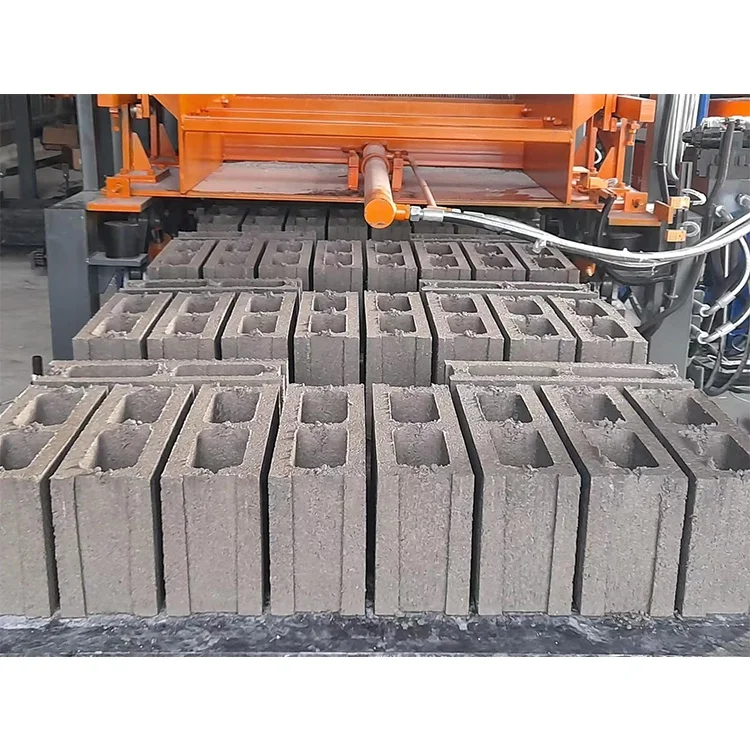
![QT10-15 Cement Block Machine for Hollow Block | Manufacturer8 + 2 + 9 + 4 + 7 = 30 30 mod 6 = 0 → 句式:[品类词] for [应用或物料] – [站点修饰词] 目标站 shiyueblockmachine.com → 全品类目录类角色 → 池:Manufacturer / Factory Supply / Full Range 30 mod 3 = 0 → Manufacturer Cement Block Machine for Hollow Block – Manufacturer (50) → 刚好50字符 Cement Block Machine for Hollow Block – Manufacturer](https://shiyueblockmachine.com/wp-content/uploads/2026/04/Hb41b33f9751e441c8a35b36846992f0bP.webp) High quality block machine
High quality block machine