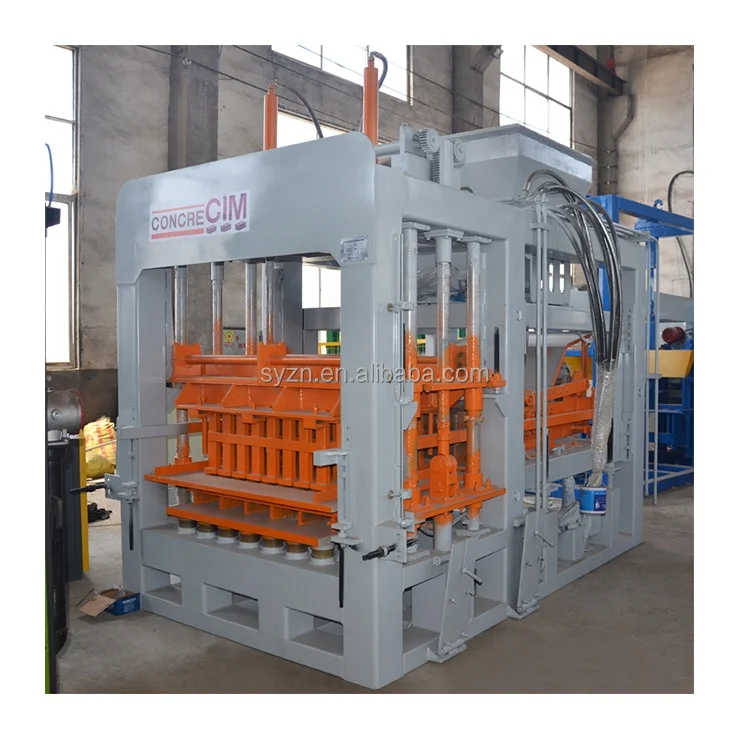
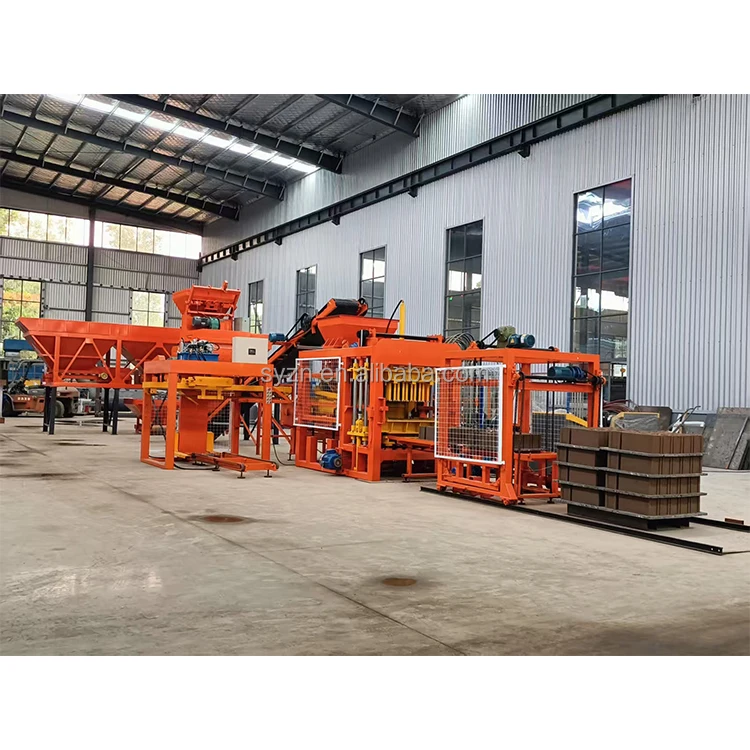
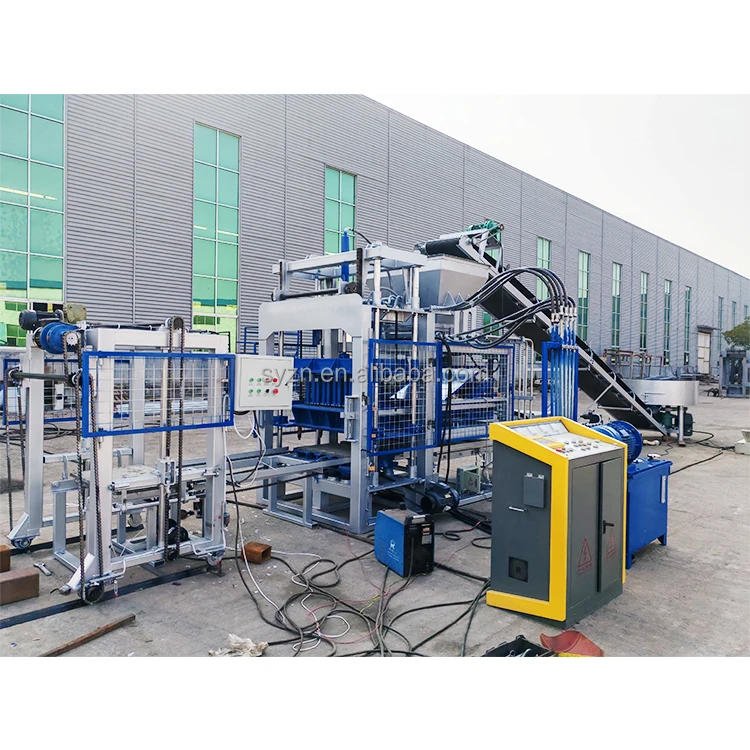
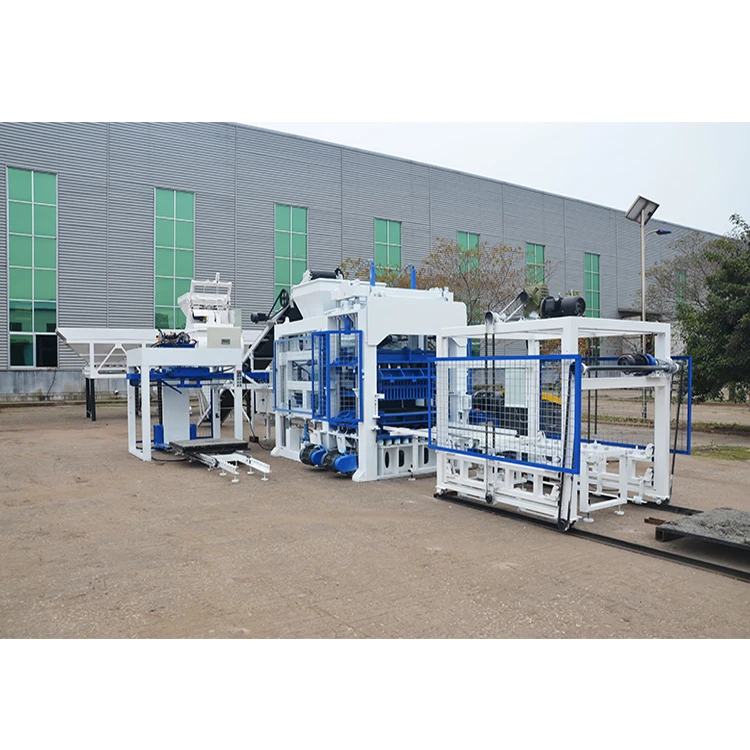
Matched System Specified — Machine, mould, pallet and handling are sized together around your actual interlocking format, so the LY2-10 arrives as a complete working cell rather than a press waiting for the rest of the line.
Technical Specifications
| Parameter |
Value |
| Product Type |
Semi-Automatic Clay Interlocking Block Machine |
| Model |
LY2-10 |
| Rated Power |
7.5 kW |
| Molding Cycle |
10 s |
| Output Capacity |
6000 pcs / 8 h (basis not stated in source — confirm block format) |
| Per-Format Output |
750 pcs/h for 300×150×100 mm interlocking format (1 pc/mould, source value — verify) |
| Raw Materials |
Clay, soil, earth, mud, concrete, cement, fly ash |
| Overall Dimensions |
1300 × 1800 × 2400 mm |
| Automation Level |
Semi-automatic |
| Bricks per Mould |
1 (interlocking format) |
| Stacking Method |
Manual |
| Standards |
CE (company-level declaration; model certificate to be confirmed) |
Application Suitability
| Application |
Material or Output |
| Sidewalk and pathway interlocking paving |
Clay-soil-cement blends, earth-based mixes |
| Residential and community wall construction |
Interlocking soil-cement bricks, fly-ash stabilized earth |
| On-site project brick production |
Locally sourced clay, mud and soil with cement binder |
| First-plant entrepreneur output |
Small-volume interlocking formats for local market entry |
What "6000 Pieces per 8 Hours" Actually Means for a Semi-Automatic Clay Interlocking Block Machine
Capacity only becomes real when tied to the exact block format, mix design and mould cavity count you will run.
Catalogue figures for semi-automatic clay interlocking block machine for sale listings rarely state which brick size was used during the test run. A 300×150×100 mm interlocking block at 1 piece per mould cycles very differently from a smaller 250×125×75 mm unit. Add a local clay mix that is stickier than standard test soil and the demoulding time alone can stretch the cycle well beyond the 10-second rating. I have seen contractors arrive at a job site expecting the brochure number, only to discover their actual daily output sits at roughly half because nobody confirmed the format basis before the machine shipped [NEED_CITE: block machine capacity calculation standards per format].

Where the LY2-10 Sits in the Full Machine Range
The Shiyue line spans mobile egg-laying units, semi-automatic workshop presses and fully automatic high-capacity plants. The LY2-10 occupies the semi-automatic tier, meaning the press itself cycles automatically while pallet feeding and product stacking remain manual operations. This keeps the investment and plant footprint contained for buyers who do not yet need continuous output volumes.
Footprint and Site Planning Before You Commit
At 1300 × 1800 × 2400 mm the LY2-10 fits inside a standard workshop bay or a temporary site shelter, but the machine is only the centre of the cell. You still need raw material staging on one side, a wet-mix preparation area, and a curing zone sized to hold a full shift of interlocking bricks on pallets. Confirming the pallet dimensions before shipment ensures the curing racks you already own — or plan to build — actually accept the output without rehandling [NEED_CITE: curing area sizing for interlocking block production].
Reading the Specs That Matter on the Shop Floor
The 7.5 kW rated power drives both the hydraulic press and the vibration system, so it must cover peak demand when both engage simultaneously during the compaction stroke. The 10-second moulding cycle represents the press stroke itself; total cycle time includes manual pallet placement and product extraction, which adds to the real interval between finished bricks. Because each mould cavity produces one interlocking block, output scales directly with cycle consistency — any mix variation that forces the operator to slow the rhythm immediately reduces daily volume. The raw material range covers clay, soil, mud, cement and fly ash, but each material demands a different moisture window and compaction pressure setting to achieve adequate green strength for manual handling off the press.
What Happens When Configuration Is Skipped
Ordering a semi-automatic clay interlocking block machine for sale without confirming your local aggregate type is one of the most common reasons machines underperform on arrival. A press tuned for clean river sand will struggle with volcanic ash or laterite clay, producing bricks that crumble before curing or stick to the mould walls and jam the cycle. I once saw a Middle East project stall for weeks because the machine arrived set for standard silica sand while the site only had fine volcanic aggregate available — output dropped to less than half the expected volume and the contractor nearly refused delivery. Voltage mismatch is the other silent delay: a 50 Hz motor running on a 60 Hz grid overheats within the first shift [NEED_CITE: industrial motor voltage and frequency mismatch consequences].
Why Source This Tier from Shiyue
Block machinery is the single focus here, so the LY2-10 is specified as a matched press-mould-pallet system rather than assembled from unrelated suppliers. Mould design covers the interlocking formats your local market actually buys, and custom profiles can be drawn from your specifications. The semi-automatic tier is structured so you can add automation stations later without replacing the press. Machine configuration is set against your actual mix design and local aggregate, not a default catalogue recipe. Installation support includes operator training on your specific material so the first production run is not a learning exercise at your expense.
Documentation & Verification
- Line layout drawing with capacity calculation tied to your confirmed interlocking format
- Mould profile drawing and full format list for every interlocking shape included
- Voltage, frequency and control panel language confirmation recorded before production
- Factory test record showing cycle times run on material matching your mix design
- Pallet specification sheet cross-referenced to your existing curing racks and forklift
Installation, Commissioning & Support
- Foundation pad sized to the 1300 × 1800 mm footprint with anchor bolt template provided
- Dedicated 7.5 kW circuit with correct voltage and frequency verified before energizing
- Machine shipped partially assembled with press frame, mould and hydraulic unit pre-matched
- First-run commissioning includes mould alignment and cycle timing on your local clay or soil mix
- Operator training covers mould change procedure, daily lubrication points and manual stacking workflow
- Wear parts list and mould maintenance schedule handed over at commissioning sign-off
Before You Request a Quote
Send the exact interlocking brick dimensions you intend to produce, along with a sample or description of your local clay or soil type and the cement percentage you plan to use. Include your available voltage and frequency, the language you need on the control interface, and whether you already have pallets and curing racks on site. This information lets the proposal specify the right mould, confirm realistic output per format, and avoid the delays that happen when assumptions get discovered after the container arrives.
Frequently Asked Questions
Q: How is output capacity verified and what block format does the figure assume?
A: The 6000-piece figure in source data does not state the assumed format. Before quotation, capacity is recalculated for your specific interlocking dimensions — for example, the 300×150×100 mm format runs at approximately 750 pieces per hour based on source test data. Your actual number depends on mix behaviour and operator rhythm on site.
Q: Which voltage and frequency options are available for my market?
A: The LY2-10 motor and control panel are configured to your local grid before production starts. Confirm your supply voltage, phase count and frequency early so the correct motor winding and electrical components are installed at the factory rather than swapped after arrival.
Q: How do I match the machine to my local clay or soil mix?
A: Provide a material sample or detailed description of your clay, soil or fly-ash source along with your planned cement ratio. The press settings and mould release parameters are then adjusted to suit that specific mix, preventing the sticking and low-strength problems that arise when a machine tuned for standard sand meets unfamiliar local aggregate.
Q: What is the footprint compared with automatic and mobile tiers?
A: At 1300 × 1800 × 2400 mm the LY2-10 requires less floor space than a full automatic line with conveyor and stacker, but more room than a mobile egg-laying unit. Plan additional area for mix preparation, pallet staging and a curing zone that can hold a full shift of interlocking bricks.
Q: Can I start semi-automatic and upgrade to a higher automation level later?
A: The Shiyue range is structured so semi-automatic presses can accept pallet feeders, automatic stackers and conveyor additions as production grows. Starting with the LY2-10 keeps initial investment contained while preserving the option to add automation stations without replacing the core press unit.

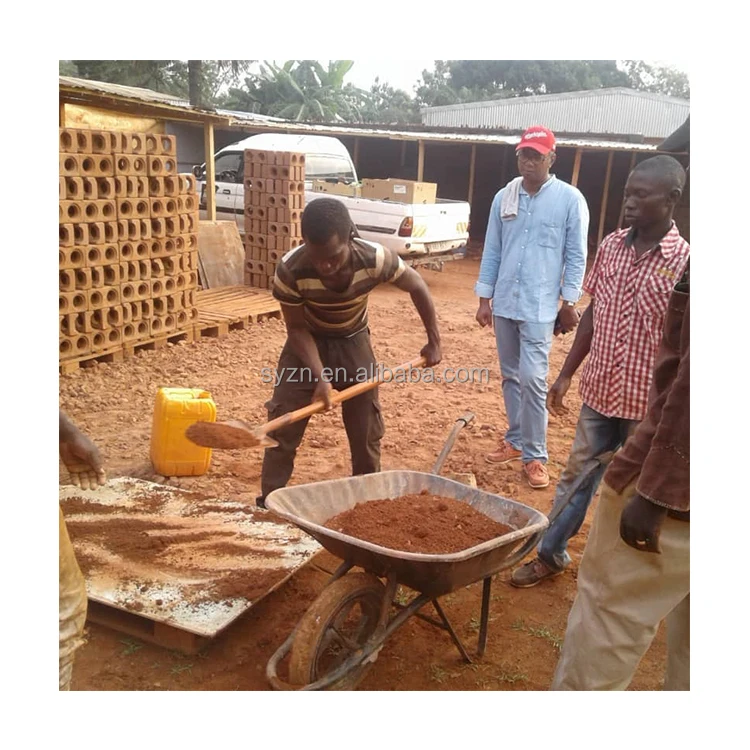
 High quality block machine