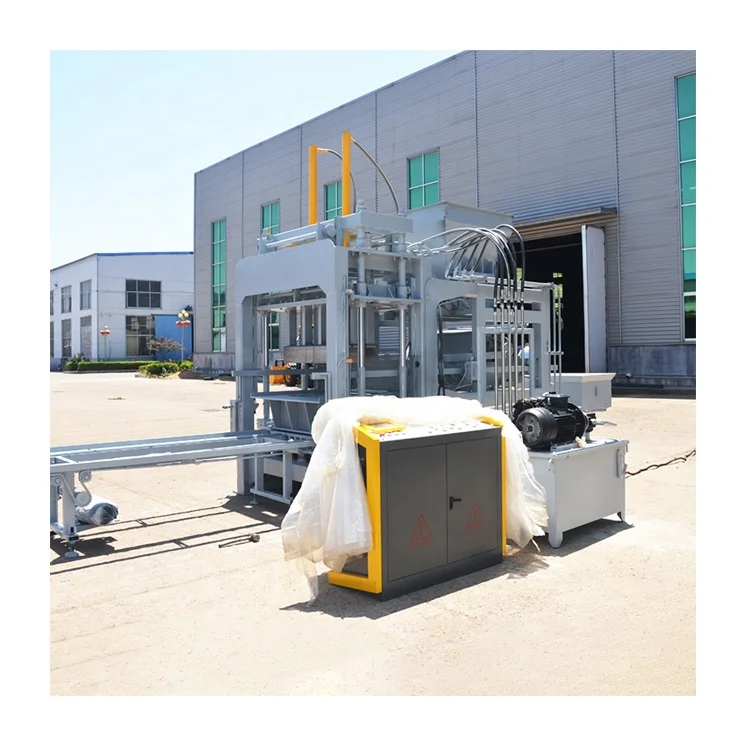
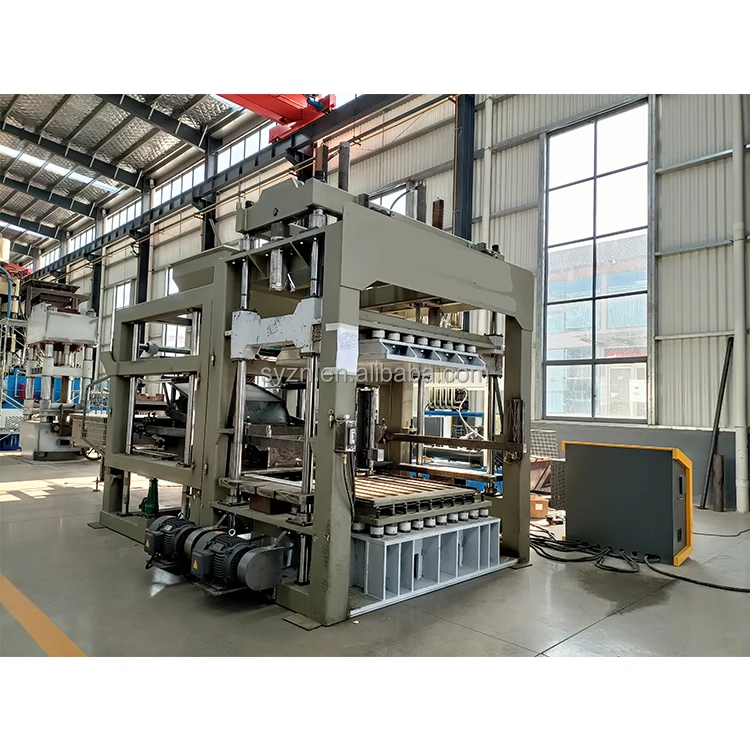
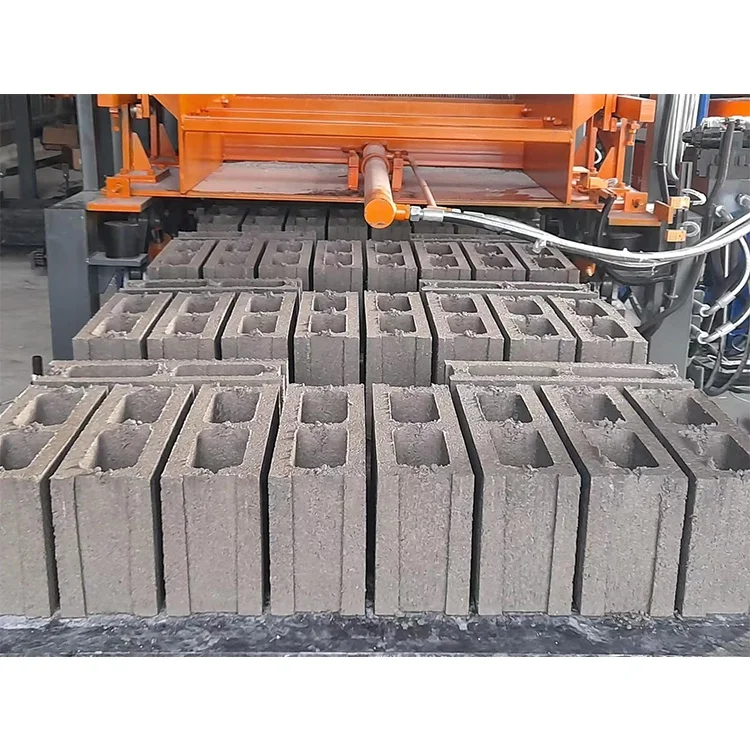
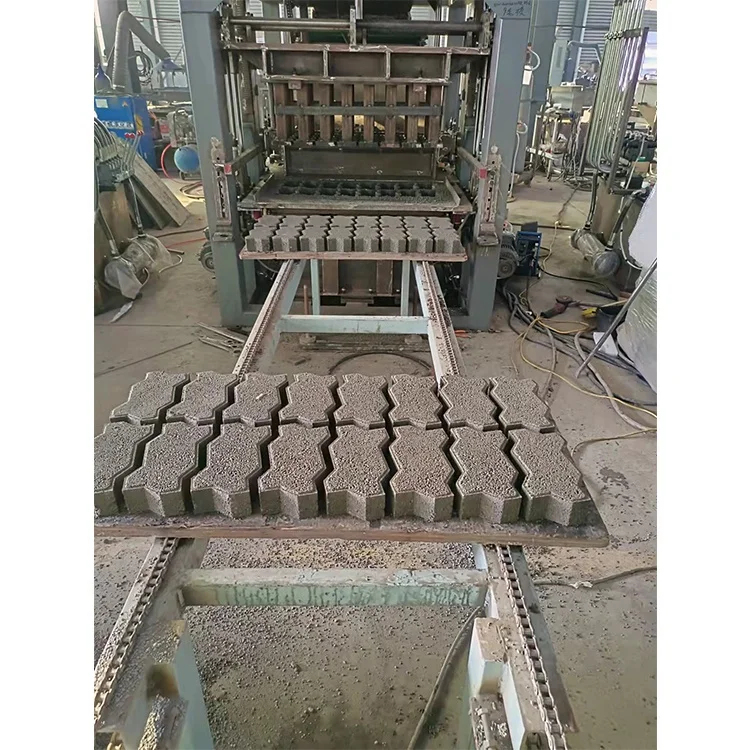
Matched system design — Every component from the QT6-15 press to its pallets and handling gear is specified together so nothing arrives mismatched on site.
Technical Specifications
| Parameter |
Value |
| Model |
QT6-15 |
| Product Type |
Hydraulic Concrete Block Making Machine |
| Overall Dimensions (L×W×H) |
8200×1700×2950 mm |
| Vibration Frequency |
0-60 Hz (adjustable) |
| Vibration Form |
Platform Vibration |
| Vibration Force |
45 kN |
| Moulding Mode |
Automatic loading, vibration moulding |
| Demolding Method |
Hydraulic |
| Pallet Size |
880×850 mm |
| Molding Cycle |
15-20 s (basis not stated in source — confirm block format / material / thickness) |
| Overall Power |
37 kW |
| Total Mass |
7 T |
| Control System |
PLC with touch screen interface |
| Hydraulic System |
Independent integrated hydraulic station |
| Block Compressive Strength |
>15 MPa |
| Output – Hollow Block 400×200×200 mm |
1080-1440 pcs/hour (based on 6 pcs/mould, 15-20s cycle) |
| Output – Hollow Block 400×150×200 mm |
1440-1920 pcs/hour (based on 8 pcs/mould, 15-20s cycle) |
| Output – Solid Brick 240×115×53 mm |
5760-7680 pcs/hour (based on 32 pcs/mould, 15-20s cycle) |
| Output – Rectangular Paver 200×100×60 mm |
2160-2880 pcs/hour (based on 21 pcs/mould, 20-25s cycle) |
| Output – Zigzag Paver 225×112.5×60 mm |
2160-2880 pcs/hour (based on 15 pcs/mould, 20-25s cycle) |
| Recommended Factory Area |
1200 m² |
| Raw Material Adaptability |
Waste ash, slag, and various aggregates |
| Automation Level |
High (PLC controlled, automatic loading and moulding) |
| Warranty |
1 year for whole machine (excluding spare parts) |
Application Suitability
| Application |
Material or Output |
| Hollow block production for residential and commercial walls |
Crushed stone, sand, cement, and waste ash blends |
| Solid brick manufacturing for load-bearing structures |
Local aggregate with reduced cement dosage via slag addition |
| Rectangular and zigzag paver production for driveways and walkways |
Fine aggregate and cement mixes at higher vibration frequency |
| On-site block production for housing project contractors |
Locally sourced volcanic rock, gravel, or recycled demolition aggregate |
| Format diversification for existing concrete product plants |
Multiple mould changes across hollow, solid, and paver formats |
What "1080 Blocks per Hour" Actually Means on the QT6-15 Block Machine Full Range
The cycle time only holds if your aggregate behaves like the one used during factory testing.
Most quotations list a single hourly figure and leave the block format buried in fine print. I once configured a mid-tier automatic machine for a Middle East contractor who was switching from manual production. The quoted cycle assumed standard river sand, but his local quarry supplied porous volcanic aggregate that absorbed water differently. On the first production day the moulding cycle stretched well past the rated window, and daily output dropped to nearly half the expected tally [NEED_CITE: effect of aggregate porosity on concrete block cycle time]. That is why every capacity figure in the QT6-15 block machine full range table above names the exact block format, mould cavity count, and cycle range it depends on. Without those three anchors, an output number is just marketing.

Where the QT6-15 Sits in the Automatic Lineup
The Shiyue range starts with semi-automatic and mobile egg-laying machines for low-investment workshops, then steps through progressively larger automatic presses. The QT6-15 occupies the mid-tier automatic position, offering PLC-controlled operation and hydraulic demoulding without the footprint or capital outlay of a high-capacity line. For a buyer moving off manual pallet handling, this model introduces automatic loading and vibration moulding while keeping the recommended factory area at around 1200 m² — a plot size that fits most first-time plant setups.
Choosing Between Tiers Before You Commit
A smaller semi-automatic machine may show a lower price tag, but it demands continuous manual pallet feeding and hand stacking that caps real daily volume. The QT6-15 block machine full range configuration removes the operator from the loading and moulding loop, which matters once you plan to run multiple shifts. Conversely, jumping straight to a high-capacity model means paying for stacking and cubing automation you may not need until your market justifies a second shift [NEED_CITE: automation tier selection for concrete block plants]. The mid-tier slot lets you start with PLC-controlled automatic pressing and add downstream automation later when volumes demand it.
Vibration Force, Hydraulic Pressure, and What They Mean for Block Density
The 45 kN vibration force operating across an adjustable 0-60 Hz frequency works in tandem with the independent hydraulic station to compact the mix inside the mould cavity. Higher frequency suits fine aggregate mixes used for pavers, while lower frequency with sustained hydraulic pressure drives denser compaction in tall hollow blocks. Because the hydraulic station is isolated from the main machine vibration and dust, seal wear stays lower over long production runs. The 880×850 mm pallet must carry the full moulded weight through curing; if your existing forklift or curing racks were sized for a different pallet format, handling bottlenecks appear before the press itself reaches its rated cycle.
When the Wrong Pallet Size Cancels Your Output Gains
A buyer in North Africa once ordered an automatic press with standard pallets only to discover his curing chamber door clearance was narrower than the pallet width. Every rack had to be re-slotted, and the forklift he owned could not lift a full stack safely [NEED_CITE: pallet and curing area mismatch in block production]. The 880×850 mm pallet specified for the QT6-15 must be checked against your curing area dimensions, rack spacing, and forklift fork width before production starts. If the pallet does not match, the press sits idle while blocks are moved by hand — exactly the situation automation was supposed to eliminate.
Why Buyers Source This Tier Here
Block machinery is our single focus, so the press, mould, pallet, and handling equipment are specified as one matched system rather than assembled from separate suppliers. Every configuration is set against the buyer’s actual mix design, local aggregate, and target block format, not a catalogue default. Mould design covers the formats your market actually sells, including custom drawings when standard cavities do not fit. The automation level is selectable: you can begin with the QT6-15 in its standard PLC-controlled setup and integrate automatic stacking or cubing as demand grows. Factory testing runs your specific mix before dispatch, so the molding cycle is verified against your material — not a generic reference sample.
Documentation & Verification
- Line layout drawing showing QT6-15 footprint within your 1200 m² factory area
- Capacity calculation sheet listing each block format and its assumed cycle time
- Mould drawing and format list for every cavity type in your order
- Pallet specification matched to your curing rack spacing and forklift rating
- Voltage, frequency, and PLC display language confirmation before production begins
- Factory test record using your submitted aggregate sample and mix proportions
Installation, Commissioning & Support
- Foundation plan based on the 8200×1700 mm machine footprint and 7 T operating mass
- Dedicated power circuit sized for the 37 kW total load at your confirmed voltage
- Machine arrives partially dismantled; reassembly supervised on site by our technician
- First-run molding cycle tuned to your local aggregate and target compressive strength
- PLC touch screen configured in your operator’s language before training begins
- Wear parts and mould wear list provided with reorder intervals for continuous production
What We Need Before Quoting
Send us your target block formats with dimensions, the daily output you need for each, and a sample or lab analysis of your local aggregate. Include your available site area, existing curing rack dimensions, and the voltage and frequency at your location. If you already operate forklifts or mixers upstream, share their specifications so the QT6-15 block machine full range proposal aligns with equipment you already own.
Frequently Asked Questions
Q: How is each output figure verified and what block format is it based on?
A: Every capacity number in the QT6-15 specification table lists the exact block dimensions, mould cavity count, and cycle time range it assumes. For example, 1080-1440 hollow blocks per hour is based on a 400×200×200 mm block with 6 cavities and a 15-20 second cycle. We confirm the cycle against your submitted aggregate sample during factory testing before dispatch.
Q: Where does the QT6-15 sit compared to semi-automatic and higher-tier models?
A: It occupies the mid-tier automatic position in the Shiyue range. Below it are semi-automatic and mobile machines requiring manual pallet handling. Above it are high-capacity lines with full stacking and cubing automation. The QT6-15 offers PLC-controlled automatic loading and moulding with a smaller factory footprint, suitable for buyers stepping up from manual production.
Q: What voltage, frequency, and PLC language options are available?
A: Voltage and frequency are configured to match your local power supply before production starts. The PLC touch screen display language is confirmed at the same stage so operators can read fault codes and cycle parameters in their working language. These details are locked in during the quotation phase, not left for arrival.
Q: How does the 880×850 mm pallet relate to my curing area?
A: The pallet dimensions must fit your existing curing rack slots and forklift fork spacing. If your racks were built for a different pallet size, either the racks or the pallets must be adjusted before production begins. We include pallet specification in our proposal so this check happens at the ordering stage rather than after delivery.
Q: Can I add automatic stacking and cubing later?
A: Yes. The QT6-15 is designed with an automation upgrade path. You can start with PLC-controlled automatic loading and moulding, then integrate downstream stacking and cubing stations when your daily volume justifies the investment. The control system and line layout accommodate these additions without replacing the core press.

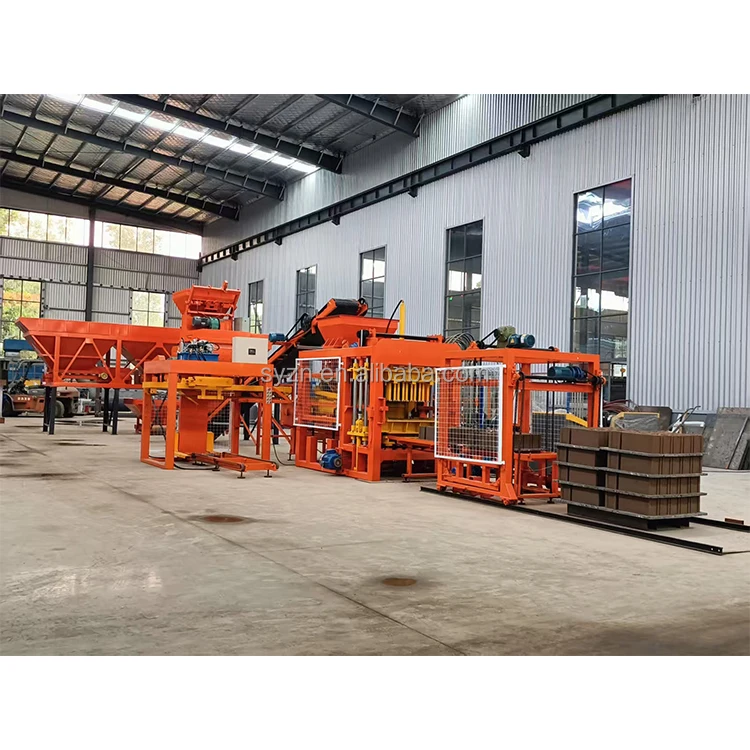
 High quality block machine