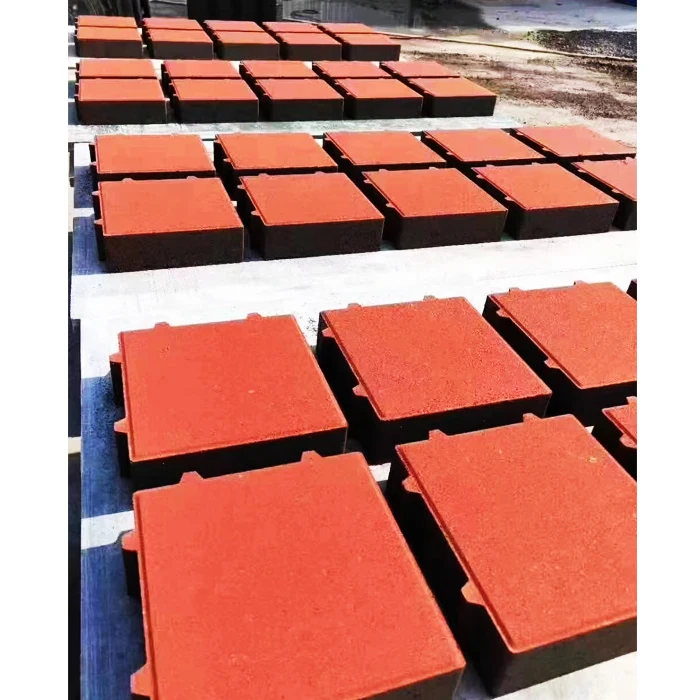
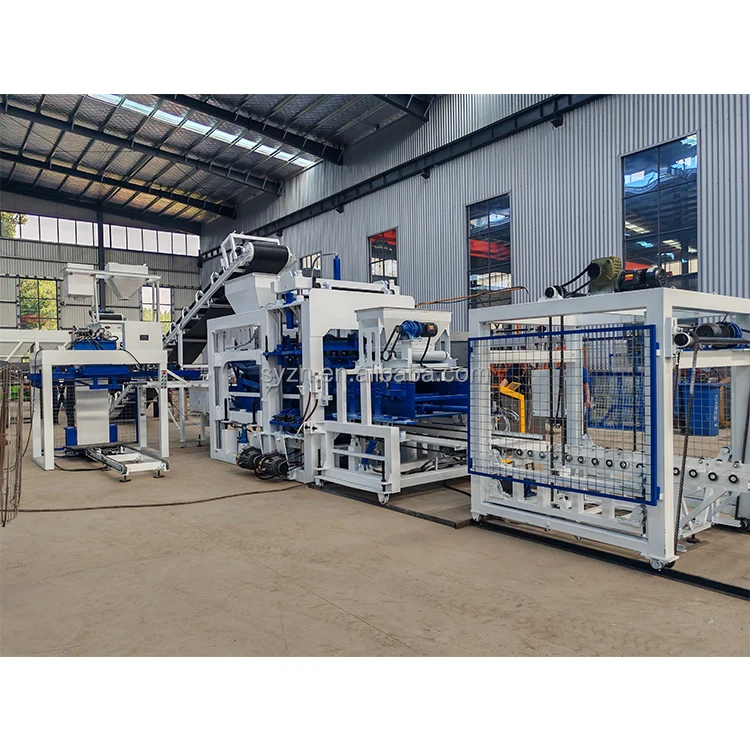
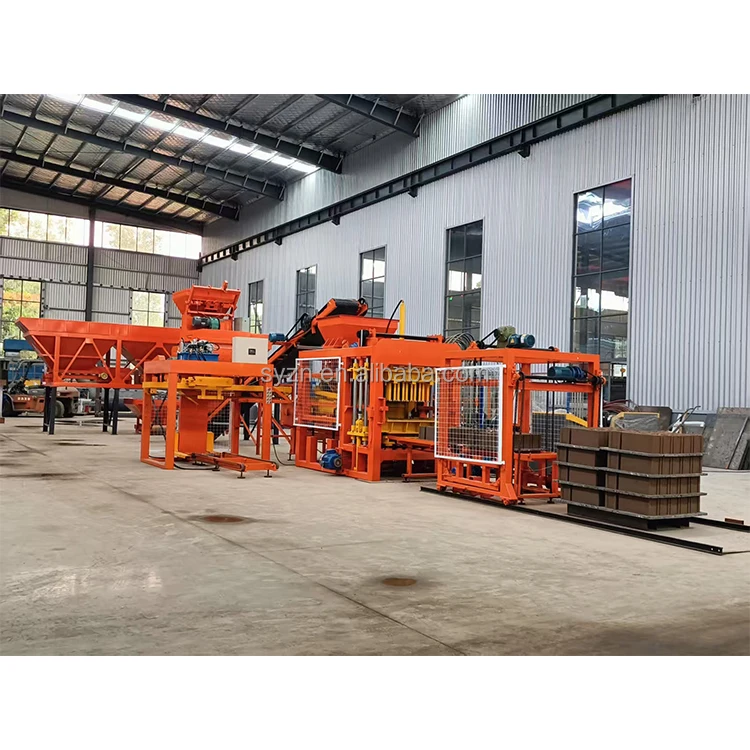
Four-pillar guided mould system — the QTJ4-26 pairs vertical vibration with hydraulic-free pillar alignment, keeping block density consistent across an eight-hour shift without the maintenance overhead of a full hydraulic press.
Technical Specifications
| Parameter |
Value |
| Model |
QTJ4-26 |
| Product Type |
Semi-Automatic Concrete Block Making Machine |
| Overall Dimensions (L×W×H) |
2060×1730×2580 mm |
| Total Weight |
1800 kg |
| Molding Cycle |
26 s |
| Vibration Frequency |
4200 r/min |
| Exciting Force |
35.5 kN |
| Rated Power |
14.25 kW |
| Mixer Model |
JQ350 |
| Pallet Size |
850×450×20 mm |
| Output Capacity (Hollow Block 390×190×190 mm) |
480 pcs/h, 3800 pcs/8h |
| Output Capacity (Hollow Block 400×150×200 mm) |
600 pcs/h, 4800 pcs/8h |
| Output Capacity (Solid Brick 240×115×53 mm) |
2100 pcs/h, 17000 pcs/8h |
| Automation Level |
Semi-automatic with four guide pillars and automatic mould movement |
| Applied Products |
Concrete hollow blocks (8 inch, 6 inch), solid bricks |
| Raw Materials |
Crushed stones, sand, cement, dust, fly ash |
| Voltage & Frequency |
Configurable per destination market (basis to be confirmed) |
| Control System |
Relay logic (basis to be confirmed) |
Application Suitability
| Application |
Material or Output |
| Small-scale hollow block plant |
8-inch and 6-inch hollow blocks from crushed stone, sand and cement |
| On-site contractor production |
Solid bricks for masonry walls using locally available aggregate |
| First-time block entrepreneur |
Mixed hollow block and solid brick output at moderate daily volume |
| Fly ash brick production |
Bricks incorporating fly ash and cement dust as partial binder |
Why "Pieces per Hour" Alone Is a Trap for QTJ4-26 Concrete Block Making Machine for Sale Buyers
Output numbers mean nothing unless the block format is named alongside them.
I have watched buyers sign a purchase order based on a single capacity figure, then discover on day one that the number assumed a solid brick they never planned to sell. The QTJ4-26 concrete block making machine for sale lists 3800 pieces per eight-hour shift for 390×190×190 mm hollow blocks, yet 4800 pieces for the 400×150×200 mm hollow block — a noticeable gap that changes your pallet count, curing space and daily labour plan entirely. [NEED_CITE: block format impact on real daily throughput in semi-automatic presses]

Where the QTJ4-26 Sits in the Full Machine Range
The QTJ4-26 occupies the semi-automatic tier, bridging mobile egg-laying machines and fully automatic hydraulic lines. Buyers who have outgrown a mobile unit but are not ready to invest in automatic stacking and cubing find this model a practical midpoint. It still requires manual pallet handling, so your crew moves wet blocks to the curing area by hand or with a simple trolley.
Footprint and Investment Compared to Other Tiers
A fully automatic line needs a larger building, deeper foundation and three-phase power at higher amperage. The QTJ4-26 runs at 14.25 kW total, fitting inside a modest workshop with a standard concrete floor. For a first-time plant owner, that lower infrastructure spend leaves budget for raw material stock and a curing rack system. [NEED_CITE: typical workshop power and floor requirements for semi-automatic block plants]
What the 35.5 kN Exciting Force and 4200 r/min Mean for Block Density
Vibration frequency and exciting force work together to compact the mix. At 4200 r/min, the dual vibrating motors under the mould settle fine aggregate into voids, while 35.5 kN of exciting force drives the larger stones downward. If your local sand carries high silt, that energy may not be enough to fully compact the mix, resulting in weaker blocks — which is why sending a raw material sample before order confirmation matters more than the spec sheet alone.
Pallet Size Compatibility with Your Curing Area
The 850×450×20 mm pallet must match the curing racks and forklifts you already own. Order pallets that are too thick and your rack slots will not accept them; choose a material that warps under sun exposure and blocks will crack during early curing. Confirm pallet material — bamboo, PVC or steel — against your local climate before the machine ships.
The Cost of Skipping the Voltage Question
A machine wired for 380 V / 50 Hz arriving at a site running 440 V / 60 Hz will burn out motors within days. Rewinding a motor overseas costs more than the motor itself and adds weeks of downtime. [NEED_CITE: motor damage statistics from voltage mismatch in exported industrial machinery] Always confirm your site voltage and frequency before production begins, and request a control panel in your operator’s language so error codes are readable during a fault.
Why Buyers Specify With Us
Block machinery is our only product line, so the press, mould, pallet and mixer are sized as a single system rather than sourced from separate vendors. We configure the QTJ4-26 against your actual mix design and target block format, not a catalogue default. Moulds are designed and manufactured in-house for the hollow block and solid brick sizes your market demands, including custom drawings when standard formats do not apply. Automation is selectable — start semi-automatic and add a pallet return conveyor later if volumes grow. Installation support includes operator training on your raw materials so the crew is producing acceptable blocks before the technician leaves site.
Documentation & Verification
- Line layout drawing showing QTJ4-26 placement with pallet flow direction and curing area clearance
- Capacity calculation sheet listing output separately for each block format you plan to produce
- Mould drawing and format list confirming cavity count per block size
- Pallet specification sheet covering dimensions, material grade and load rating
- Factory test record on your raw material mix before dispatch
- Voltage, frequency and control language confirmation signed before production
Installation, Commissioning & Support
- Concrete floor minimum 150 mm thick to handle 1800 kg static load plus vibration
- Dedicated 25 A circuit at confirmed voltage for the 14.25 kW total draw
- Machine shipped as a single skid; four-pillar frame requires no field welding
- JQ350 mixer positioned within 3 m of the hopper for belt or manual feed
- Operator training on mould change procedure using the four-pillar guide system
- Wear parts list covering vibration motor mounts and mould liner plates
What We Need From You to Quote Accurately
Tell us which block formats sell in your market and the daily volume you must hit. Share your local aggregate type, cement brand and any fly ash or dust you plan to use. Confirm your site voltage, frequency and the language your operators read on a control panel.
Frequently Asked Questions
Q: What block formats can the QTJ4-26 produce, and what is the realistic daily output for each?
A: The machine handles 390×190×190 mm and 400×150×200 mm hollow blocks plus 240×115×53 mm solid bricks. Realistic eight-hour output is 3800, 4800 and 17000 pieces respectively, based on the stated molding cycle and assuming uninterrupted pallet supply and mix feeding.
Q: Where does the QTJ4-26 sit in Shiyue’s full machine range?
A: It occupies the semi-automatic tier between mobile egg-laying units and fully automatic hydraulic lines. Buyers who need higher output than a mobile machine but are not ready to invest in automatic stacking find this model a practical step.
Q: Is the pallet size fixed, and what pallet materials are available?
A: Pallet size is 850×450×20 mm. Bamboo, PVC and steel options exist, each suited to different curing climates. We match the pallet material to your local temperature and humidity to avoid warping that leads to block cracking.
Q: What voltage configurations are available, and can the control display use my local language?
A: Voltage and frequency are built to match your site supply, confirmed before production begins. Control panel labels and fault messages are printed in the language your operators read, avoiding confusion during commissioning.
Q: Does the standard shipment include pallets, the JQ350 mixer and moulds?
A: Yes. The package covers the press, one set of moulds for your chosen format, the JQ350 pan mixer and an initial set of pallets. Additional moulds and pallets can be added to the same shipment to reduce freight cost per unit.

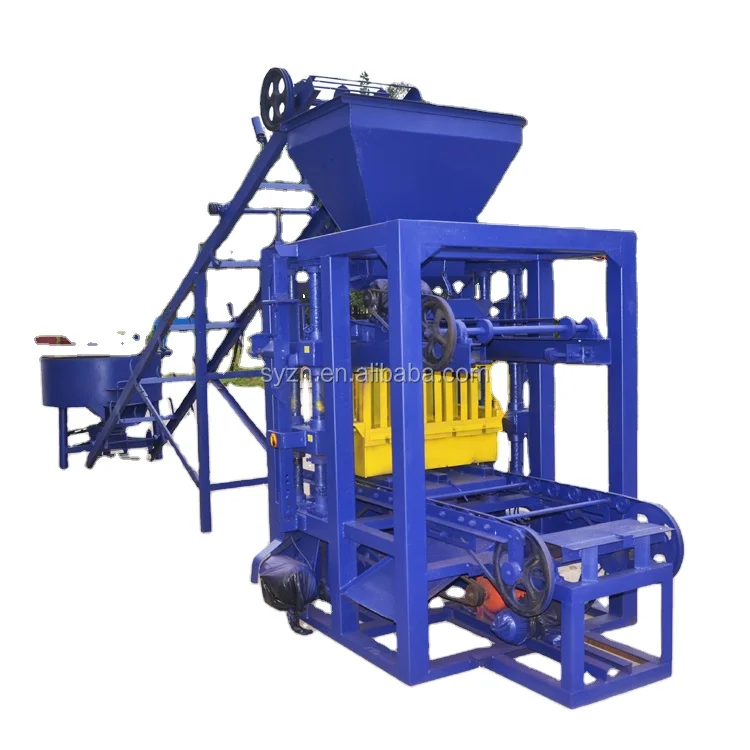
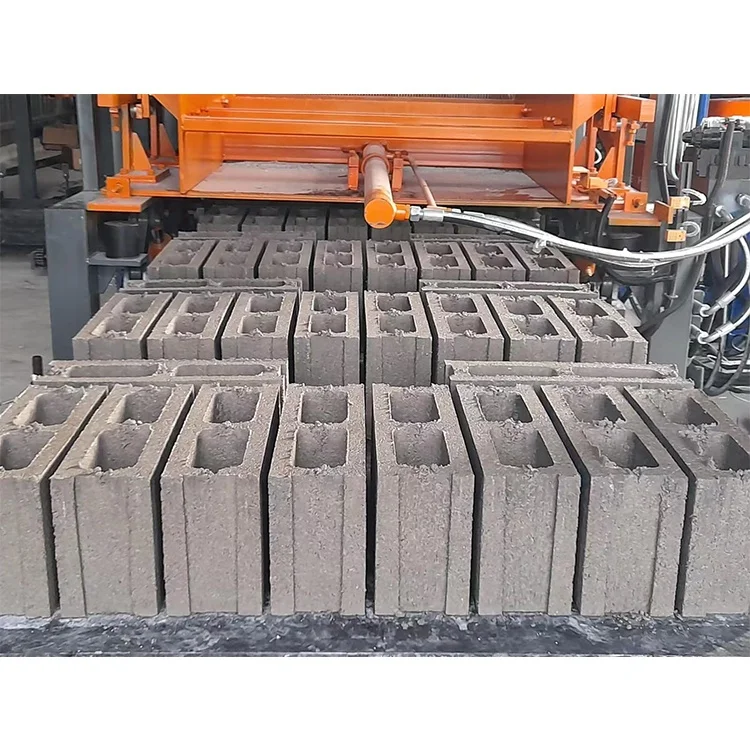 High quality block machine