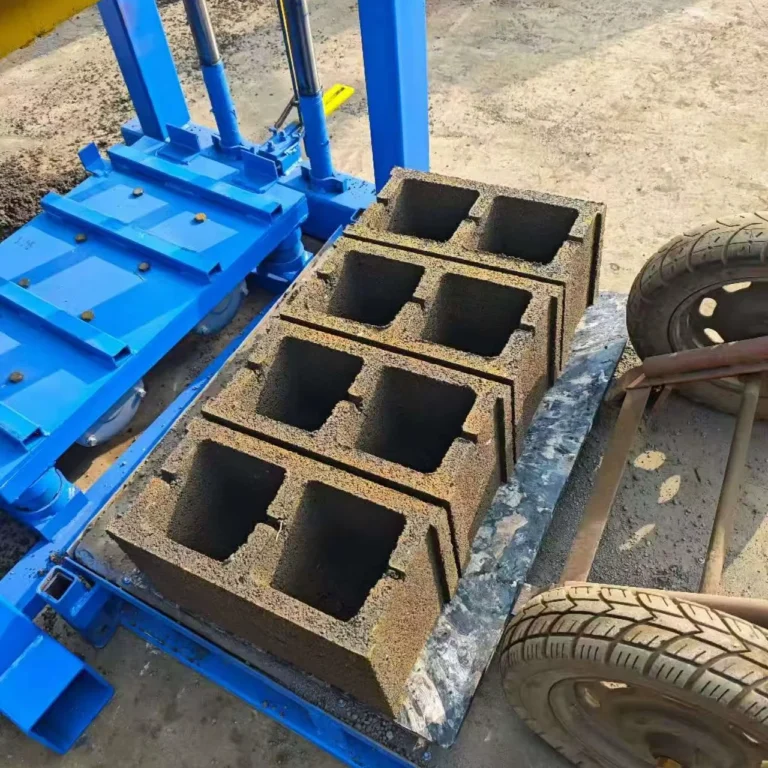
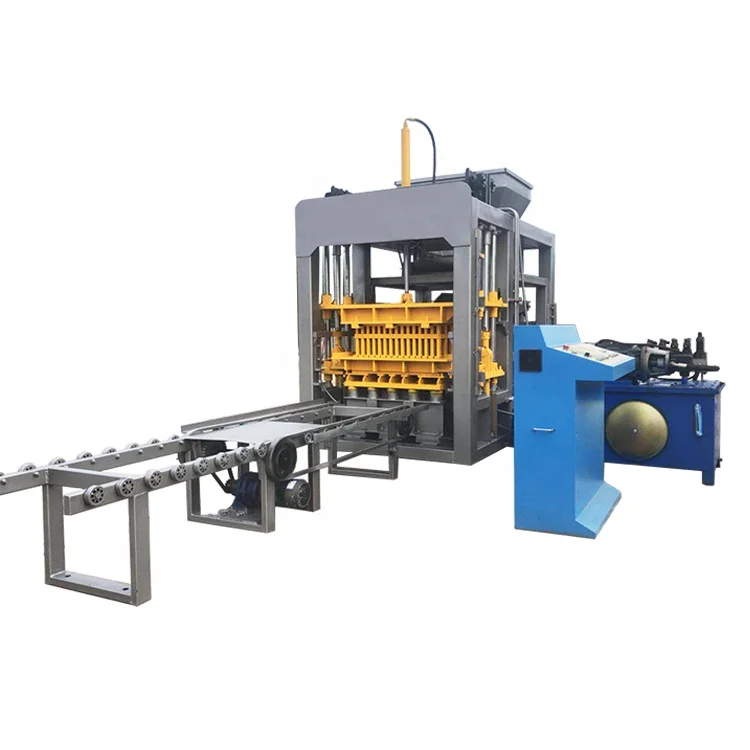
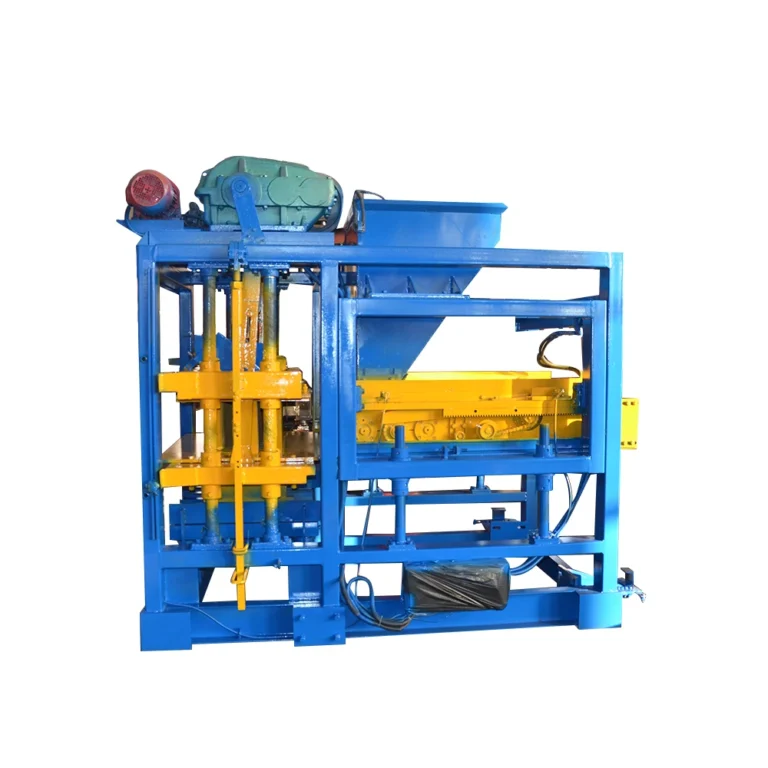
Stationary block machine configured as one matched system — the QTF3-20 press, moulds, pallets, and handling equipment are specified together against your local aggregate and target format, so nothing arrives mismatched.
Technical Specifications
| Parameter |
Value |
| Model |
QTF3-20 |
| Product Type |
Stationary Block Machine |
| Overall Dimensions (L×W×H) |
4000 × 3500 × 2300 mm |
| Net Weight |
2870 kg |
| Total Power |
17.5 kW |
| Control System |
Semi-Automatic |
| Vibration Form |
Platform Vibration |
| Output Capacity |
4320 pcs/day (basis to be confirmed — depends on block format, material, and thickness) |
| Hydraulic System |
Applied (components from Germany or Chinese established brands) |
| Feeding System |
Double-layer (raw material and color surface material) |
| Host Machine Frame |
#12 U-bar welded overall frame structure |
| Proximity Switch |
Non-contact type |
| Line Configuration |
Forms simple line with JQ350 mixer and 8-meter conveyor belt |
| Electrical Components |
From Germany or Chinese established brands |
| Mould Formats Supported |
Hollow brick, interlock brick, color pavers, park grass brick, porous brick, standard brick, environmental brick |
| Voltage & Frequency |
Configurable to buyer’s market (confirm before production) |
| PLC Display Language |
Configurable to buyer’s market (confirm before commissioning) |
| Pallet Size |
Matched to curing area and forklift (confirm at order) |
Application Suitability
| Application |
Material or Output |
| Hollow block production for wall construction |
Cement, sand, coarse aggregate, fly ash |
| Color paver brick production for walkways and plazas |
Cement, sand, pigment via double-layer feeding |
| Interlock brick production for roadways and slopes |
Cement, crushed stone, slag |
| Park grass brick production for landscaping |
Cement, sand, coarse aggregate |
| Porous brick production for permeable surfaces |
Cement, graded aggregate, slag |
| Standard solid brick production for masonry |
Cement, sand, fly ash |
What "4,320 Pieces per Day" Actually Means for Your Plant
The number only matters once tied to a specific block format, mix design, and shift length.
When I first started in the assembly workshop here in Shandong, I watched machines leave the factory with a single output figure printed on the nameplate. Buyers would call weeks later saying daily production fell far short. The reason was almost always the same: the quoted capacity assumed a thin paver brick, but the buyer was running a 200mm hollow block with a local aggregate that contained high clay content. A stationary block machine manufacturer worth your time will calculate realistic daily output for each format you intend to produce and put those numbers in writing before you sign. [NEED_CITE: common discrepancies between quoted and actual block output in small-to-mid capacity plants]

Where the QTF3-20 Sits in a Full Block Machine Range
The QTF3-20 occupies the mid-range tier among stationary block machines. It is built for buyers who need format versatility — hollow blocks for structural walls one week, color pavers the next — without the capital commitment of a fully automatic line. The semi-automatic control means an operator manages pallet handling and stacking, while the press cycle, vibration, and feeding run under PLC direction.
This positioning matters when you survey options for a first or replacement machine. If your daily volume does not yet justify full automatic stacking and cubing, starting at this tier keeps your initial investment measured. The machine can later integrate into a higher-automation line as demand grows, which is a path we have seen many first-time plant owners take.
Matching the Press to Your Block Format Before You Order
Every stationary block machine manufacturer quotes cycle times, but the honest figure shifts depending on the block format you run. A thin interlock brick cycles faster than a tall hollow block because the press fills, vibrates, and demoulds a smaller volume. The QTF3-20 supports multiple mould formats — from environmental bricks to park grass bricks — and each one carries its own cycle time, compaction pressure requirement, and pallet footprint.
Before we finalize a quotation, we ask for your top-selling block formats, your target daily output per format, and a sample of your local raw material. We then run a trial with your aggregate on the shop floor. This step has saved more than one buyer from ordering a machine configured for a mix they cannot source in their region. [NEED_CITE: impact of local aggregate clay content on block compaction and surface finish]
Reading the Specification Sheet Against Real Production
Platform vibration paired with hydraulic pressure determines how densely the concrete fills the mould cavity. On the QTF3-20, the vibration motor drives the platform while the hydraulic cylinder applies downward compaction. If vibration force is too low relative to hydraulic pressure, the block surface tears during demoulding; if vibration is too high, the mix segregates and the block loses strength. Both values must be tuned to the specific aggregate grading and cement ratio you run.
The #12 U-bar welded frame resists the repeated vibration cycles without loosening at bolt joints. Lighter frames on comparable machines develop fatigue cracks within the first year of continuous operation. The double-layer feeding system allows you to produce standard blocks and color-face pavers on the same press without swapping feed hoppers — the top layer distributes pigmented material while the base layer fills the bulk mix.
Non-contact proximity switches monitor press position without mechanical wear, which reduces the chance of a missed cycle or a misaligned mould drop.
The Cost of Skipping Pallet and Line Confirmation
Buyers sometimes treat the press as the entire purchase and discover after arrival that pallet size does not match their curing racks or their existing forklift tine spacing. Blocks then sit stacked by hand on a floor that was never planned for curing. [NEED_CITE: consequences of pallet-forklift mismatch in block curing operations]
Another frequent gap is the mixer and conveyor. The QTF3-20 is designed to form a simple line with a JQ350 mixer and an 8-meter conveyor belt. If the mixer output is too slow, the press sits idle between cycles and your real daily output drops below what the press alone can deliver. Voltage and PLC language, when left unconfirmed until the machine arrives, delay commissioning by days or weeks while replacement components are shipped.
Why Source This Tier from a Single-Focus Manufacturer
Block machinery is the only product category here — no diversification into crushers, mixers, or unrelated equipment. That single focus means the QTF3-20 press, its moulds, pallets, and the supporting conveyor are specified as one matched system rather than assembled from separate vendors.
Mould design covers the formats your local market actually sells, including custom drawings when a standard catalogue mould does not match your specification. Automation level is selectable: you can start semi-automatic with the QTF3-20 and upgrade to full automatic stacking later on the same press footprint. Installation support includes operator training on your specific mould set, and wear parts lists are provided so you know what to reorder and when.
Documentation & Verification
- Line layout drawing showing QTF3-20 position relative to JQ350 mixer and 8-meter conveyor
- Capacity calculation sheet stating block format assumed for daily output figures
- Mould drawing and format list for every cavity supplied with the press
- Voltage, frequency, and PLC display language confirmation record signed before production
- Factory test record using your raw material sample on the QTF3-20 prior to dispatch
- Hydraulic and electrical schematic matching your as-built configuration
Installation, Commissioning & Support
- Foundation plan accounts for the 4000 × 3500 mm footprint and vibration isolation pads
- Electrical supply matched to confirmed voltage and 17.5 kW total power draw with dedicated circuit
- Machine shipped partially assembled; frame and vibration table bolted on site to reduce container volume
- First-cycle parameter tuning sets vibration duration and hydraulic pressure for your specific mix
- Operator training covers mould change procedure and proximity switch calibration on the QTF3-20
- Wear parts list identifies rubber vibration blocks and springs with reorder intervals
What We Need to Quote You Accurately
Tell us the block formats your market sells most and the daily volume you need per format. Share a sample or lab report of your local aggregate — sand source, fly ash availability, coarse aggregate grading. Confirm your site voltage, frequency, and the language your operators read on a control screen. If you already have pallets, a forklift, or a curing yard, send us those dimensions so the line layout fits what you have, not just what the press needs.
Frequently Asked Questions
Q: How is the 4,320 pcs/day capacity calculated, and which block format does it assume?
A: That figure depends entirely on the block format, wall thickness, and mix design. We calculate separate daily outputs for each format you plan to produce — hollow blocks yield fewer pieces per cycle than thin pavers — and provide a written capacity sheet before you commit. The number on a generic nameplate should never be taken as your guaranteed daily production.
Q: What voltage, frequency, and control language options are available for my market?
A: Both are configurable before production begins. We confirm your local supply standard — common ranges include 220V/50Hz, 380V/50Hz, and 440V/60Hz — and set the PLC display to your operator’s language. This confirmation step is documented in writing so commissioning proceeds without delay on arrival.
Q: Which block formats can the QTF3-20 produce, and how long does a mould change take?
A: Supported formats include hollow brick, interlock brick, color pavers, park grass brick, porous brick, standard brick, and environmental brick. Mould change time varies by operator experience and whether quick-release clamps are fitted; we train your team on the procedure during commissioning and quote the realistic changeover duration for your specific mould set.
Q: Can I start with the QTF3-20 semi-automatic and upgrade to full automation later?
A: Yes. The press footprint and PLC architecture allow later integration of automatic pallet feeding, stacking, and cubing stations. Many first-time plant owners begin at this semi-automatic tier and add automation modules as daily volume grows, avoiding a full-line replacement.
Q: What supporting line equipment is needed to complete the setup?
A: The QTF3-20 forms a working line with a JQ350 mixer and an 8-meter conveyor belt. Beyond that, you need pallets matched to your curing area, a raw material batching setup proportioned to your mix design, and a water supply at consistent pressure. We include the full line layout in your documentation package so every station connects correctly.

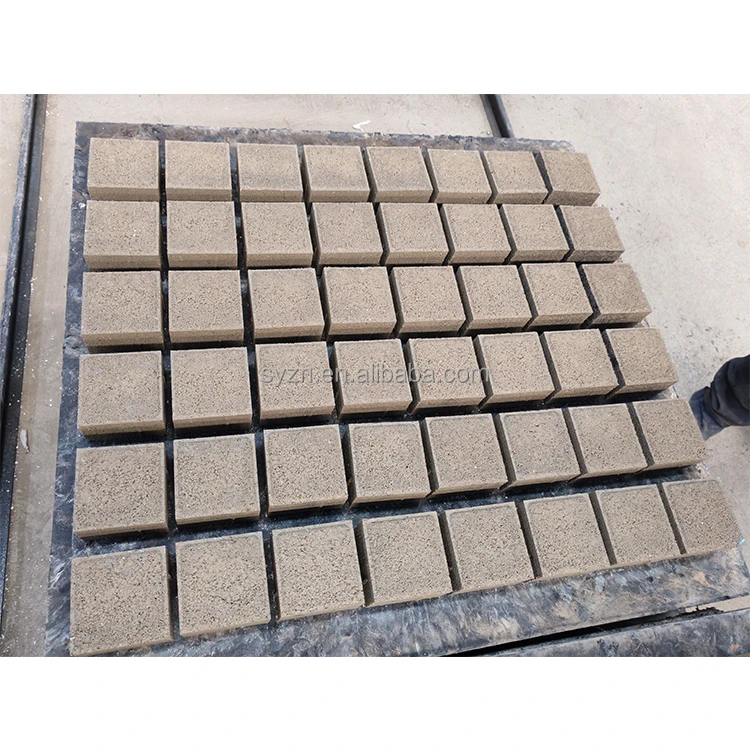
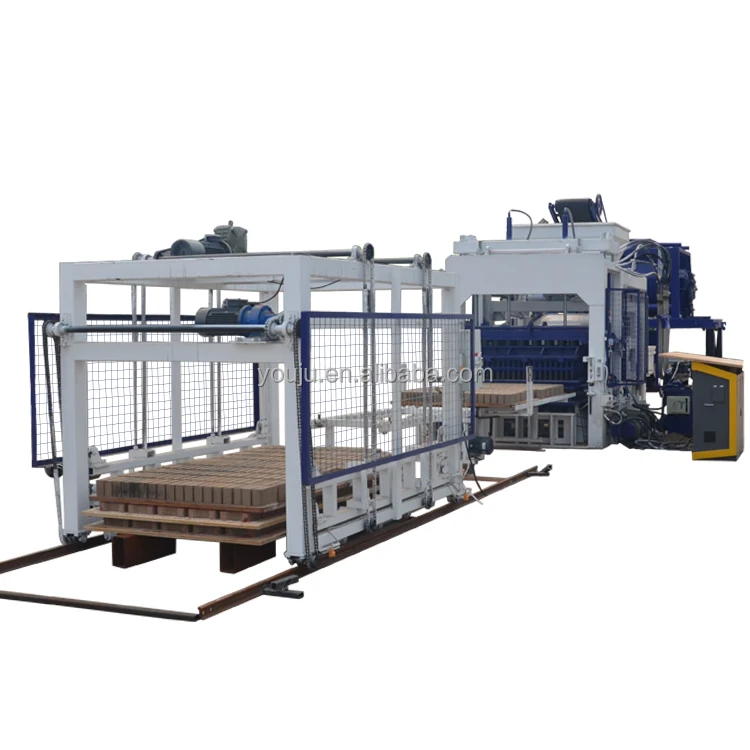 Stationary block machine