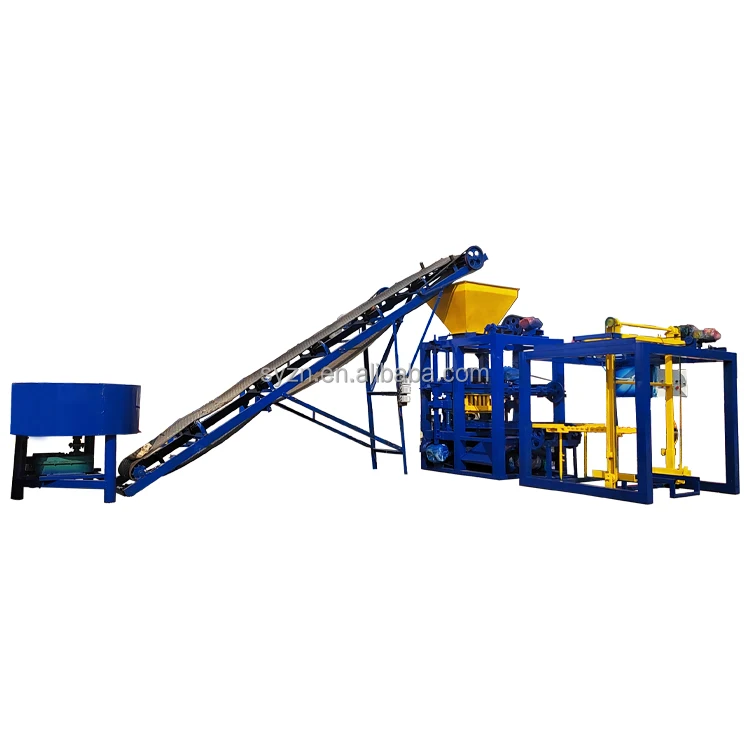
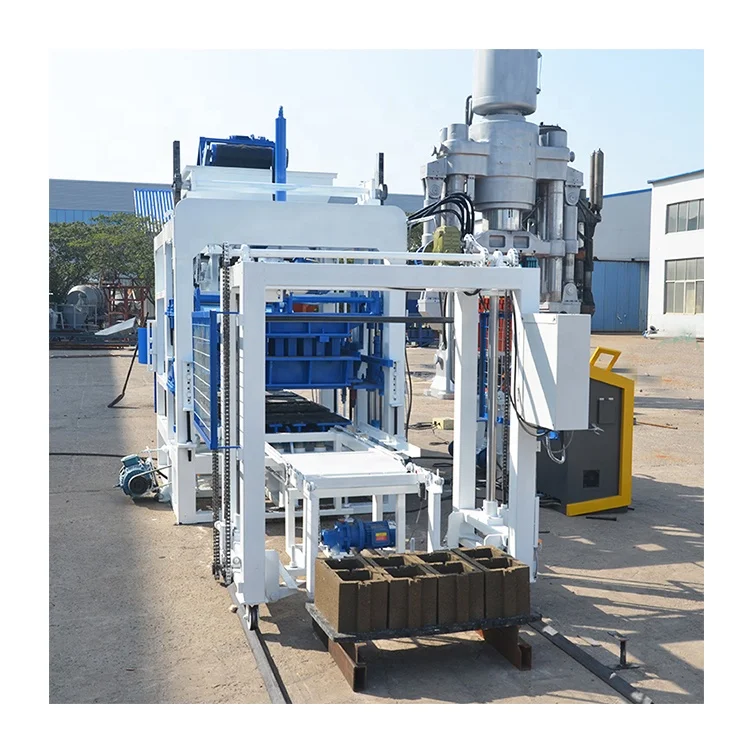
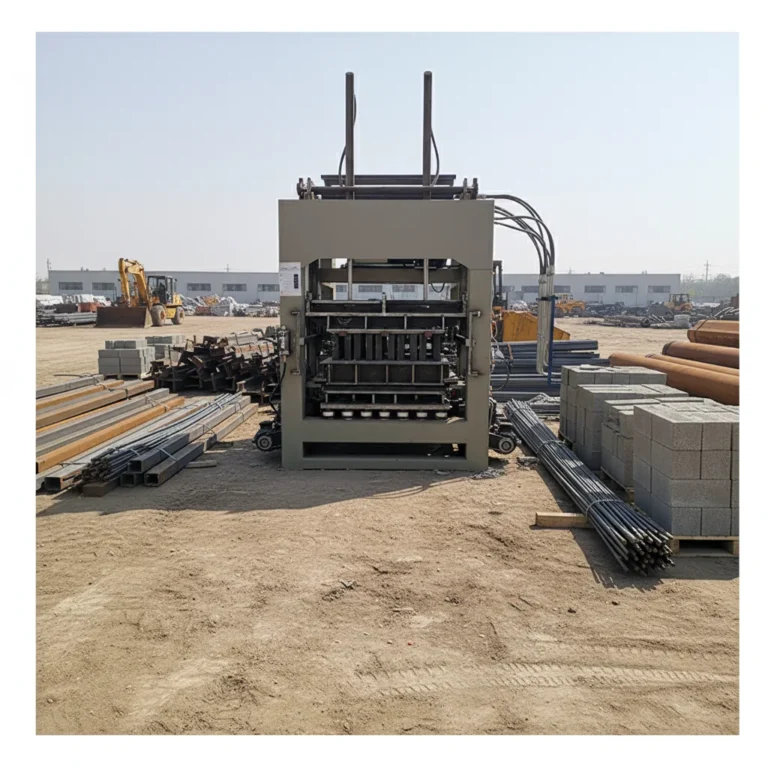
Single-Focus Block Machinery Engineering — the QT8-15 is specified as one matched system of press, mould, pallet and stacker rather than assembled from separate suppliers, so cycle time and output align with your actual block format.
Technical Specifications
| Parameter |
Value |
| Model |
QT8-15 |
| Product Type |
Hydraulic Full Automatic Concrete Block Making Machine with Stacker |
| Overall Dimensions |
8300 × 1860 × 3000 mm |
| Total Mass |
8 T |
| Rated Hydraulic Pressure |
21 MPa |
| Vibration Form |
Platform Vibration |
| Vibration Frequency |
2800 – 4500 r/min |
| Vibration Force |
45 kN |
| Pallet Size |
950 × 900 mm |
| Molding Cycle |
15 – 20 s (basis not stated in source — confirm block format and mix) |
| Overall Power |
55.5 kW |
| Demolding Method |
Hydraulic |
| Automation Level |
Full Automatic with Stacker |
| Factory Area Required |
300 m² |
| Loading |
1 × 40HQ container (basic equipment) |
Application Suitability
| Application |
Material or Output |
| Hollow block production |
Crushed stone, sand, cement, fly ash |
| Solid block manufacturing |
Gravel, slag, dust aggregates |
| Paving and interlocking pavers |
Colored concrete mixes with fine aggregate |
| Kerbstone and curb units |
High-strength concrete with coarse aggregate |
| On-site contractor production |
Locally sourced sand and cement blends |
What "15–20 Seconds per Cycle" Actually Means for Your Output
Cycle time is only meaningful when tied to the block format and mix you will actually run.
Many quotations list a single molding cycle without naming the block size or wall thickness behind that number. A 15-second cycle on a thin paver is very different from the same figure on a 200 mm hollow block, yet the quoted daily output treats them as interchangeable. I have watched a buyer receive a machine whose real-world throughput fell noticeably short of the catalogue figure simply because his local aggregate required a longer vibration hold. The QT8-15 hydraulic automatic block making machine for sale is configured only after we receive your raw material report and target format, so the cycle range stated here carries the correct context. [NEED_CITE: effect of aggregate grading on vibration hold time]

Placing the QT8-15 in the Shiyue Machine Range
The Shiyue range spans mobile egg-layers for on-site work, semi-automatic presses for lower investment starts, and full automatic lines with integrated stacking. The QT8-15 sits in the mid-to-high tier of that automatic segment. Buyers stepping up from a smaller QT4 or QT6 press find the larger pallet and higher vibration force give them room to add formats without a second machine purchase. The integrated stacker removes manual pallet handling from day one, which matters when daily volume moves beyond what a crew can lift by hand.
Where the QT8-15 Fits Your Plant Footprint
A 300 m² factory area is the baseline floor space for the press, pallet return, and stacker zone. This figure does not include raw material storage, curing racks, or finished-block yard space, which vary with your local climate and product mix. Buyers who already run a curing yard should check that the 950 × 900 mm pallet matches their existing rack spacing and forklift tine width before confirming the order. Sending us a layout sketch at inquiry stage avoids rework after the machine lands. [NEED_CITE: typical curing yard area per daily block output tier]
Reading the Vibration and Pressure Numbers Together
Platform vibration at 45 kN works in tandem with 21 MPa hydraulic pressure to compact the concrete mix into the mould cavity. Higher vibration force improves particle rearrangement, while hydraulic pressure locks the formed block to its final density. If either value is mismatched to your aggregate — for example, a high-clay sand that absorbs vibration energy — the block emerges under-compacted regardless of how long the cycle runs. Frequency adjustability between 2800 and 4500 r/min lets the operator dial in the resonance point for different formats, from thin interlocking pavers to tall hollow blocks.
The Cost of Skipping the Raw Material Report
When a machine leaves the factory set to a default vibration profile and the buyer’s local sand contains unexpected fines, the first production run reveals weak blocks, excessive breakage at demolding, and longer cycles as the operator tries to compensate. The press itself is not at fault — the configuration simply never saw the material it would process. I have traveled to sites where an entire curing rack of hollow blocks crumbled under handling because the vibration hold was too short for that particular sand. Correcting the issue after installation costs more in lost production time than a material test would have added to the quotation phase. [NEED_CITE: impact of sand clay content on block compressive strength]
Why Source This Automatic Line Through Shiyue
Block machinery is the only product category we build, which means the press, mould, pallet, and stacker are specified as one matched system rather than sourced from separate vendors and bolted together. Configuration starts from your target block format and local aggregate report, not a catalogue default. Mould design covers every format your market sells, including custom drawings when your buyers ask for a non-standard kerbstone profile. Automation is selectable, so a plant can begin with the QT8-15’s full automatic stacker and add cubing later without replacing the press. Factory testing uses your specified pallet size and a sample mix before the machine is crated.
Documentation & Verification
- Line layout drawing stating capacity per block format, not a single generic number
- Machine specification sheet matching the confirmed pallet size and power rating
- Mould drawing and format list for every block type in your order
- Voltage, frequency, and PLC display language confirmation before production
- Factory test record run on your target block format prior to dispatch
- Packing photographs and container loading plan for customs clearance
Installation, Commissioning & Support
- Foundation plan aligned to the 8300 × 1860 mm footprint and 8 T operating mass
- 55.5 kW total power requires a dedicated three-phase supply matching confirmed voltage and frequency
- Machine dismantled into one 40HQ container; reassembly supervised on site
- First-run parameter tuning using your local aggregate and target block format
- Operator training covers PLC navigation, mould change procedure, and daily maintenance points
- Wear parts list and hydraulic seal kit included with the initial shipment
Starting the Conversation
Share your target block formats, daily output goal, and a sieve analysis of your local sand or crushed stone. Let us know the voltage and frequency at your site, the display language your operators need, and the pallet size already in use if you plan to share curing racks. With those details we can return a configuration proposal that states cycle time and capacity for each format on your list.
Frequently Asked Questions
Q: How does the QT8-15 compare to smaller or larger models in the Shiyue range?
A: The QT8-15 sits between the QT4/QT6 tier and the QT10/QT12 high-capacity lines. It offers a larger pallet and higher vibration force than the smaller models, suiting buyers who need more formats and daily volume, while remaining within a mid-range investment and a 300 m² baseline footprint compared to the larger presses that need more floor space.
Q: Which block format is assumed when quoting the 15–20 second cycle?
A: No single format is assumed by default. We confirm the cycle range against the specific block size, wall thickness, and mix design you provide. Quotations list capacity per format so you can compare output for hollow blocks, pavers, and solid blocks individually before placing the order.
Q: What factory area does a full QT8-15 line actually require?
A: The 300 m² figure covers the press, pallet return system, and stacker zone. Raw material storage, curing racks, and finished-block yard space are additional and depend on your climate and daily volume target. Sending a site sketch helps us produce an accurate total layout.
Q: Can I start with the QT8-15 press and add cubing automation later?
A: Yes. The full automatic stacker is included in the base configuration, and cubing modules can be added as a later extension without replacing the press or changing the pallet circuit. This lets you match automation spend to your actual production ramp-up.
Q: What voltage and control language options are available?
A: Voltage and frequency are confirmed during the quotation stage to match your site supply. The PLC display language is also locked in before production begins so operators can read menus and alarms in their working language from the first day of commissioning.

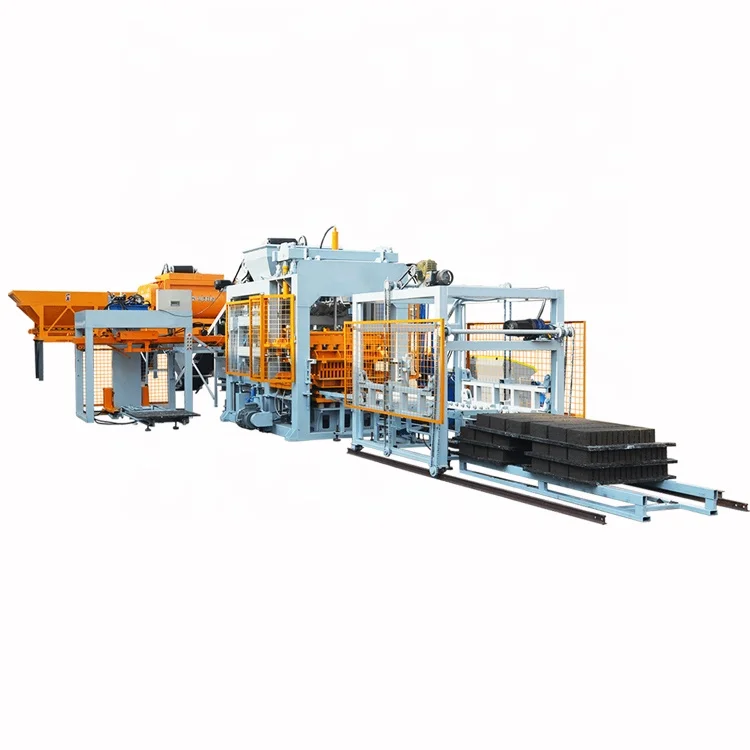
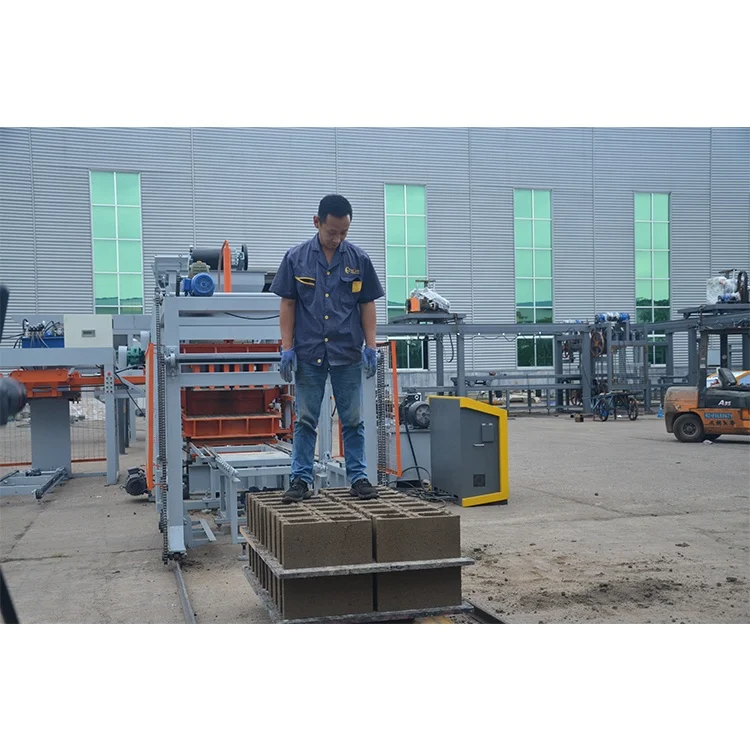 High quality block machine