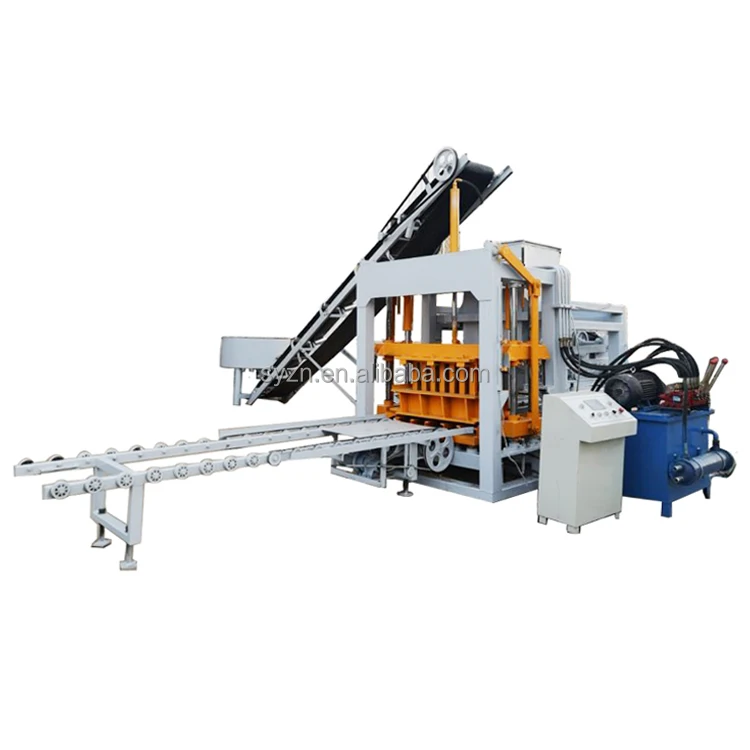
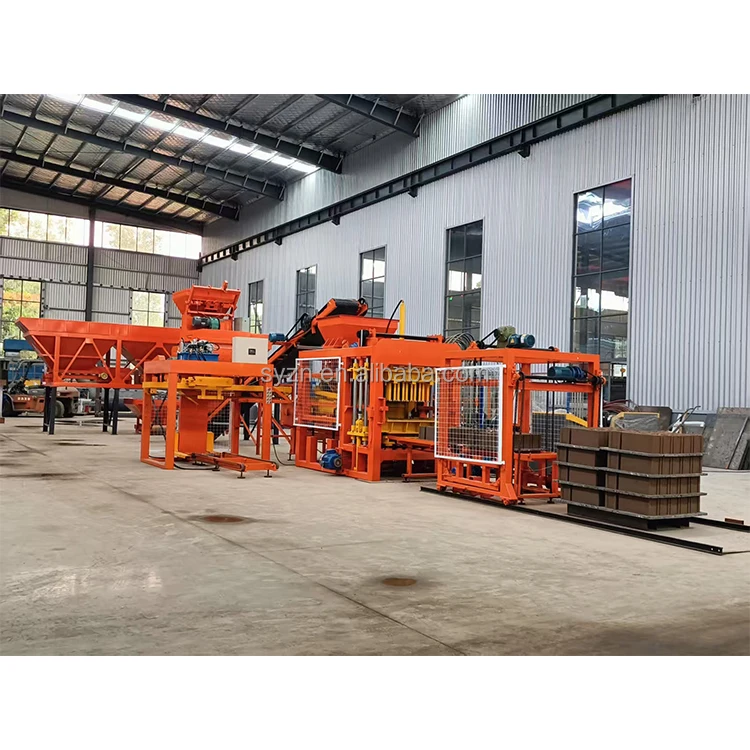
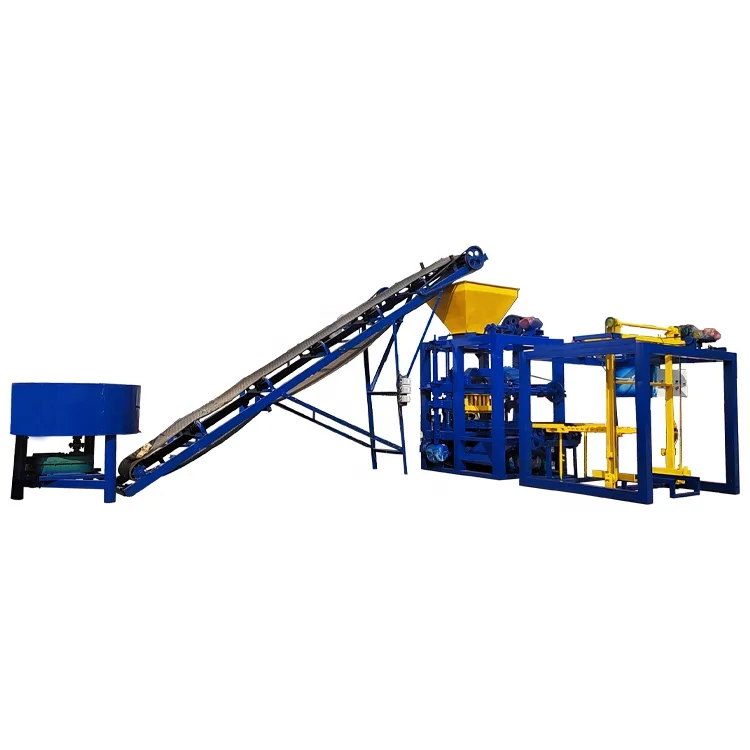
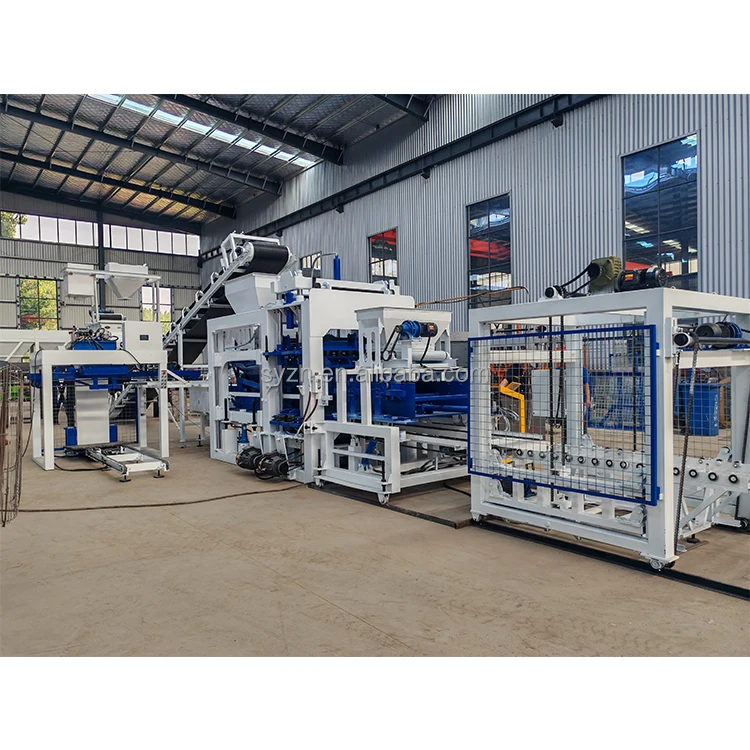
Complete line matching — machine, mould, pallet and handling equipment are specified as a coordinated system around the QT6-15 rather than sourced separately, keeping cycle times aligned across stations.
Technical Specifications
| Parameter |
Value |
| Model |
QT6-15 |
| Product Type |
Concrete Block Making Machine |
| Overall Dimensions (L×W×H) |
8200×1700×2950 mm |
| Vibration Frequency |
0–60 Hz |
| Vibration Form |
Platform Vibration |
| Moulding Mode |
Automatic loading, vibration moulding |
| Pallet Size |
880×850 mm |
| Molding Cycle |
15–20 s (basis not stated in source — confirm block format / material / thickness) |
| Overall Power |
37 kW |
| Vibration Force |
45 kN |
| Total Mass |
7 T |
| Demolding Method |
Hydraulic |
| Factory Area Required |
1200 m² |
| Control System |
PLC with touch screen HMI, fault diagnosis, safety interlock |
| Hydraulic System |
Independent integrated station, isolated from dust and vibration |
| Output — Hollow Block 400×200×200 mm |
1080–1440 pcs/h, 8640–11520 pcs/8hr (6 pcs/mould, 15–20s cycle) |
| Output — Hollow Block 400×150×200 mm |
1440–1920 pcs/h, 11520–15360 pcs/8hr (8 pcs/mould, 15–20s cycle) |
| Output — Solid Brick 240×115×53 mm |
5760–7680 pcs/h, 46080–61440 pcs/8hr (32 pcs/mould, 15–20s cycle) |
| Output — Rectangular Paver 200×100×60 mm |
2160–2880 pcs/h, 17280–23040 pcs/8hr (21 pcs/mould, 20–25s cycle) |
| Output — Zigzag Paver 225×112.5×60 mm |
2160–2880 pcs/h, 17280–23040 pcs/8hr (15 pcs/mould, 20–25s cycle) |
| Block Compressive Strength |
>15 MPa (source value — verify against manufacturer catalog) |
| Standards |
CE (verify per unit) |
Application Suitability
| Application |
Material or Output |
| Hollow block production for building walls |
Crushed stone, sand, cement, fly ash mixes on 400×200×200 mm and 400×150×200 mm formats |
| Solid brick production for masonry |
Fine aggregate and cement blends on 240×115×53 mm standard brick format |
| Rectangular paving block for roads and yards |
Coarse aggregate with controlled cement dosage on 200×100×60 mm paver format |
| Zigzag interlocking paver for walkways |
Interlocking profile on 225×112.5×60 mm mould with platform vibration compaction |
| Multi-format block plant from single press |
Mould change between hollow, solid and paver formats on 880×850 mm pallets |
Why "Pieces per Hour" Means Nothing Without the Mould Name
Every capacity number on this page is tied to a named block format, mould cavity count and cycle window.
A buyer comparing quotations often sees a single headline figure for hourly output with no mention of which block that figure assumes. The same QT6-15 concrete block machine manufacturer may quote one number for a 400×200×200 mm hollow block and an entirely different number for a solid brick, yet both appear under the same model heading in a catalogue [NEED_CITE: block machine capacity quoting conventions in international trade]. When the buyer’s actual product is a paver or a different hollow block dimension, the real shift output can fall well short of the expectation set by that headline figure. That gap is where most disputes start.

Where the QT6-15 Sits Across the Output Tiers
The QT6-15 occupies the mid-tier automatic range in the Shiyue block machine lineup. Below it, semi-automatic models suit smaller plants with lower daily volume and manual pallet handling. Above it, high-capacity automatic lines serve large-scale operations that need continuous stacking and cubing. For a first-plant entrepreneur or a contractor replacing an ageing press, the QT6-15 concrete block machine manufacturer offers steady production across hollow blocks, solid bricks and pavers without the floor space and capital commitment of a full high-capacity line.
Matching Plant Footprint to the Buyer’s Site
The 1200 m² factory area requirement accounts for the press, raw material staging, pallet circulation and a basic curing zone [NEED_CITE: typical block plant layout area allocation by production tier]. Buyers with constrained sites need to know this number before ordering, because squeezing a press into a smaller shed usually means pallets pile up in aisles and forklifts cannot turn. The 8200 mm machine length and 7 T total mass also dictate foundation depth and floor loading, which must be confirmed against the buyer’s existing slab.
Reading the Specs That Actually Shape Daily Output
Platform vibration at 0–60 Hz combined with 45 kN vibration force determines how densely the mix is compacted in the mould cavity. Higher frequency alone does not guarantee stronger blocks; the vibration force must match the hydraulic pressure and the buyer’s aggregate gradation. The 880×850 mm pallet size is shared across hollow block, solid brick and paver moulds, so a format change does not require new pallets — but it does require that the buyer’s existing curing racks and forklifts accommodate that exact dimension. The independent hydraulic station sits apart from the main frame vibration and dust, which matters over months of production because contaminated hydraulic fluid is a common cause of slow demolding and inconsistent press strokes. Molding cycle ranges from 15–20 s for blocks and 20–25 s for pavers, and those windows assume the mix has the right moisture and aggregate profile for the selected format.
The Cost of Choosing Configuration After the Machine Arrives
When voltage, frequency and PLC display language are not confirmed before production, the machine arrives and sits idle while transformers are sourced or a new control panel is shipped [NEED_CITE: export machinery commissioning delays from unconfirmed electrical specifications]. A pallet size selected without checking the buyer’s curing rack spacing means pallets jam at the rack entrance. And when the mould format does not match the products the local market actually buys, the buyer pays for flexibility that never translates into sales. These are not machine defects — they are specification gaps that surface only after installation.
Why Buyers Source the QT6-15 Through This Range
Block machinery is a single focus here, so the press, mould, pallet and handling equipment are specified together rather than assembled from separate vendors. Configuration is set against the buyer’s actual mix design and local aggregate, not pulled from a catalogue default. Mould design covers the formats the buyer’s market sells, including custom drawings when standard formats do not match local demand. Automation level is selectable — a buyer can start with semi-automatic pallet handling and add automatic stacking later. Installation support includes operator training on the PLC touch screen, fault diagnosis routines and mould change procedures.
Documentation & Verification
- Line layout with capacity calculation stating the block format assumed for each output figure
- Machine specification sheet confirming voltage, frequency and PLC display language
- Mould drawing and format list showing included block types and pallet compatibility
- Hydraulic and electrical schematic for local maintenance teams
- Factory test record and packing photographs before dispatch
Installation, Commissioning & Support
- Foundation must support 7 T mass across the 8200×1700 mm footprint with level tolerance
- Dedicated circuit for 37 kW overall power confirmed to local voltage and frequency
- Pre-assembled mainframe arrives skid-mounted for faster positioning on prepared slab
- First-run commissioning covers PLC parameter setting for the buyer’s target block format
- Operator training on HMI fault diagnosis, safety interlock logic and mould change sequence
- Wear parts and mould list provided with recommended replacement intervals
Before You Send an Inquiry
Prepare your target block format and dimensions, the daily output you need for that specific format, and a sample or description of your local sand, stone dust and cement supply. Note your site’s available floor area, ceiling height and existing curing rack dimensions, along with local voltage and frequency. With those details, a capacity calculation can be built around the QT6-15 that reflects your actual conditions rather than a generic catalogue figure.
Frequently Asked Questions
Q: How is output capacity verified and what block format does each figure assume?
A: Every capacity figure on this page names the block format, mould cavity count and cycle time window. For example, hollow block output at 1080–1440 pcs/h assumes a 400×200×200 mm format with 6 cavities per mould and a 15–20 second cycle. Your actual daily output depends on your mix design, aggregate and curing conditions.
Q: Where does the QT6-15 sit versus semi-automatic and higher-tier automatic models?
A: It occupies the mid-tier automatic range — above semi-automatic models with manual pallet handling and below high-capacity lines with full stacking and cubing. It suits buyers who need consistent daily volume across multiple block formats without the footprint of a large automatic plant.
Q: What plant footprint does this tier require compared to smaller or larger machines?
A: The QT6-15 requires approximately 1200 m² including the press area, raw material staging and basic curing space. Semi-automatic models need less, while high-capacity automatic lines with conveyor-based stacking require considerably more floor area and headroom.
Q: Which voltage and PLC language configurations are confirmed before shipment?
A: Voltage, frequency and PLC display language are confirmed during the quotation stage and locked before production. This prevents commissioning delays at your site. The control system supports fault diagnosis and safety interlock in the agreed language.
Q: What mould formats are available and how does investment scale across the range?
A: Standard moulds cover hollow blocks, solid bricks, rectangular and zigzag pavers on the 880×850 mm pallet. Custom moulds can be designed to buyer drawings. Investment scales from semi-automatic through the QT6-15 tier and up to full automatic lines depending on output target and automation level chosen.

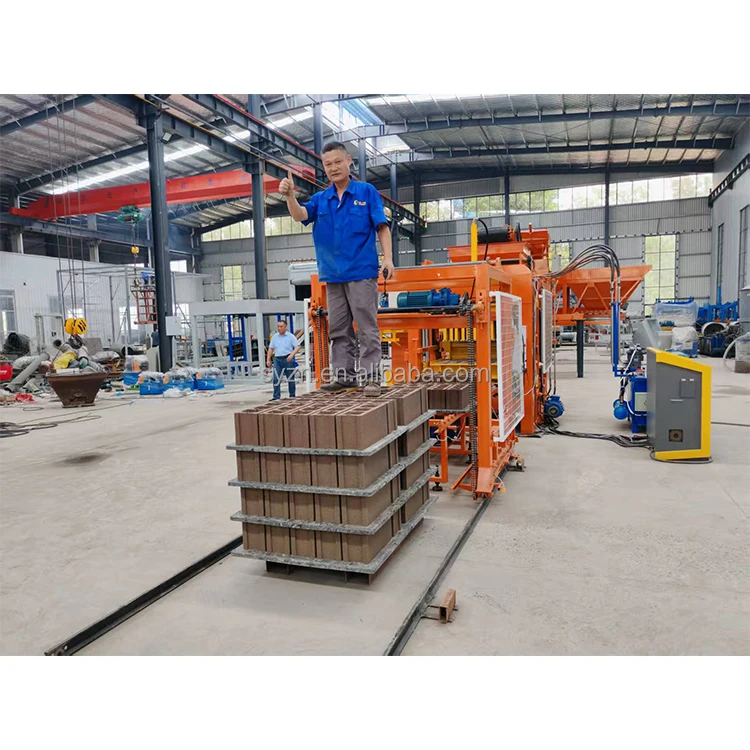
 High quality block machine