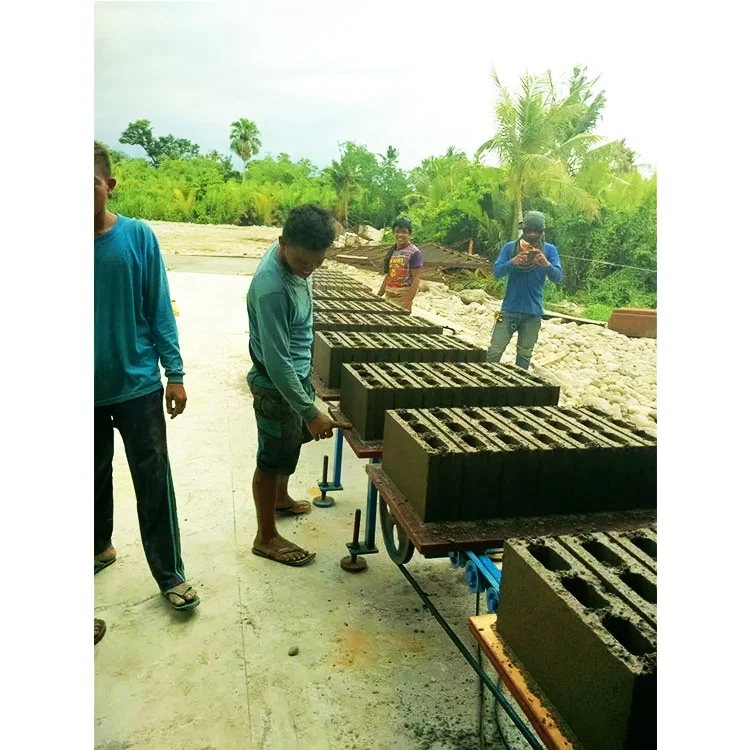
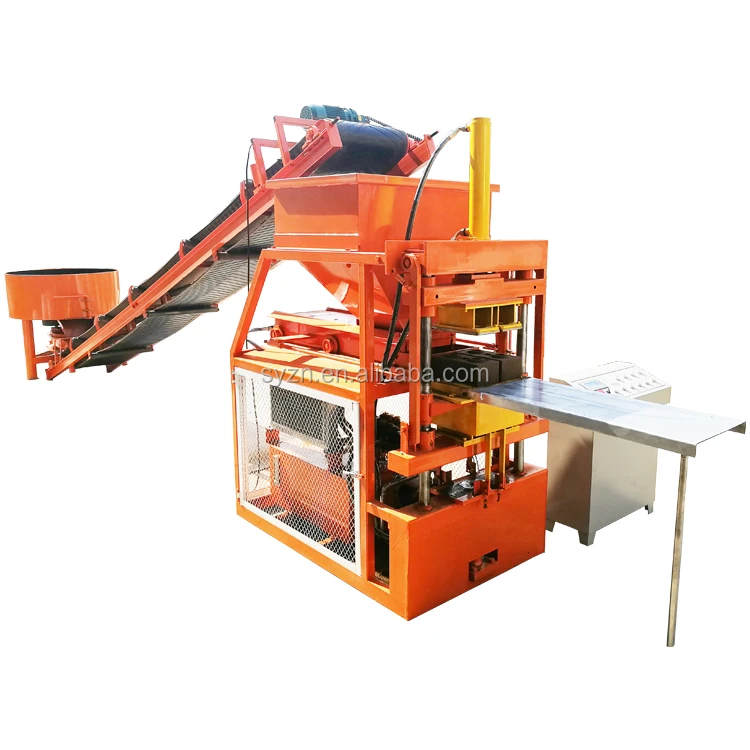
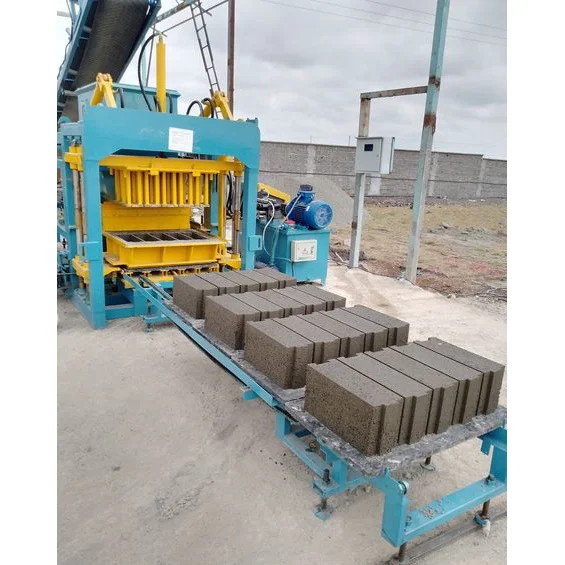
Matched System Sizing — the QT6-15 is specified against your actual block format, local aggregate and target output tier rather than a generic catalogue default.
Technical Specifications
| Parameter |
Value |
| Product Type |
Automatic Hydraulic Block Making Machine |
| Model |
QT6-15 |
| Overall Dimensions (L×W×H) |
8200×1700×2950 mm |
| Total Mass |
7 T |
| Overall Power |
37 kW |
| Vibration Frequency |
0-60 Hz |
| Vibration Form |
Platform Vibration |
| Vibration Force |
45 kN |
| Moulding Mode |
Automatic loading, vibration moulding |
| Demolding Method |
Hydraulic |
| Pallet Size |
880×850 mm |
| Molding Cycle |
15-20 s |
| Control System |
PLC with touch screen interface, fault diagnosis included |
| Hydraulic System |
Independent integrated hydraulic station |
| Recommended Factory Area |
1200 m² |
| Output Capacity (Hollow block 400×200×200 mm) |
1080-1440 pcs/hour (basis: 6 pcs/mould, 15-20 s cycle) |
| Output Capacity (Hollow block 400×150×200 mm) |
1440-1920 pcs/hour (basis: 8 pcs/mould, 15-20 s cycle) |
| Output Capacity (Solid brick 240×115×53 mm) |
5760-7680 pcs/hour (basis: 32 pcs/mould, 15-20 s cycle) |
| Output Capacity (Rectangular paving brick 200×100×60 mm) |
2160-2880 pcs/hour (basis: 21 pcs/mould, 20-25 s cycle) |
| Output Capacity (Zigzag paving brick 225×112.5×60 mm) |
2160-2880 pcs/hour (basis: 15 pcs/mould, 20-25 s cycle) |
| Block Compressive Strength |
>15 MPa |
| Raw Material Adaptability |
Waste ash, slag, and various aggregates; reduced cement dosage supported |
| Voltage & Frequency |
Configurable to buyer’s local supply (basis to be confirmed) |
| PLC Display Language |
Configurable (basis to be confirmed) |
| Warranty |
1 year for the whole machine (excluding spare parts) |
Application Suitability
| Application |
Material or Output |
| Hollow block production for building construction |
Crushed stone, cement, and industrial ash blends at 400×200×200 mm and 400×150×200 mm formats |
| Solid brick production |
Cement-aggregate mixes forming 240×115×53 mm standard bricks |
| Rectangular paving brick |
Fine aggregate and cement producing 200×100×60 mm pavers for roads and walkways |
| Interlocking / zigzag paving brick |
High-density aggregate blends at 225×112.5×60 mm for interlocking surface layouts |
| Industrial waste utilisation |
Fly ash, furnace slag, and construction debris processed into structural blocks |
| Mid-scale fixed block plant |
Production lines operating within an approximately 1200 m² factory footprint |
Why "Pieces per Hour" Means Nothing Without the Block Format Attached
Every output figure we quote names the exact mould, cavity count and cycle time it was measured against.
I spent years watching buyers sign contracts based on a single headline capacity number. A client in the Middle East ordered a QT6-15 class automatic block making machine manufacturer expecting the brochure figure for solid brick — then ran 400×200 mm hollow blocks on local furnace slag. The daily throughput fell to roughly four tenths of the quoted number because the vibration frequency never matched his aggregate density. That mismatch is not a machine defect; it is a quoting defect. When an automatic block making machine manufacturer lists capacity without stating the format, the number is advertising, not engineering [NEED_CITE: common block machine capacity quoting practices across export markets].

Where the QT6-15 Sits in the Full Machine Range
The QT6-15 occupies the mid-tier of our automatic hydraulic block machine lineup. Below it, semi-automatic models serve buyers who handle pallets manually and accept lower output in exchange for reduced capital outlay. Above it, higher-tier automatic lines add automatic stacking, cubing and curing-rack handling for plants running multiple shifts. The QT6-15 bridges these tiers: it delivers PLC-controlled moulding with hydraulic demoulding while leaving room to add automated pallet feeding and stacking as the plant grows. Buyers comparing tiers should match the machine to their current shift pattern and the floor space they can allocate within a 1200 m² footprint.
Matching the Press to the Rest of the Line
A block press only reaches its rated cycle time when upstream mixing and downstream pallet handling keep pace. The QT6-15 runs a 15-20 second cycle for hollow blocks and a 20-25 second cycle for paving formats. If your mixer batches every 45 seconds, the press sits idle every third cycle. If your pallet return conveyor cannot clear cured blocks fast enough, the press waits again. We map every station — raw material feeding, mixing, pallet feeding, stacking, curing rack handling — against the press cycle so the automatic block making machine manufacturer configuration you receive is a line, not an isolated machine [NEED_CITE: block production line synchronisation requirements for fixed plants].
Reading the Specs That Actually Shape Daily Output
The 45 kN vibration force and 0-60 Hz adjustable frequency work together to compact the mix inside the mould cavity. A high frequency suits fine sand and fly ash; a lower frequency moves coarse crushed stone more effectively. Setting the wrong end of that range produces blocks with weak cores or surface cracks. The 880×850 mm pallet size determines which mould formats physically fit the machine — every mould we supply matches this pallet footprint so you avoid the cost and delay of retrofitting. The independent integrated hydraulic station sits apart from the vibration table, which keeps hydraulic seals away from the shock load and dust that shorten component life on press-mounted units. An automatic block making machine manufacturer that mounts the hydraulic pump directly on the vibrating frame will see hose and seal replacements far sooner than one that isolates the station.
What Happens When the Configuration Ignores Your Site Conditions
Choosing a pallet size without checking your existing curing racks means pallets either do not fit the racks or leave gaps that waste curing space. Skipping voltage and frequency confirmation before production results in motors that overheat on a 50 Hz supply or controls that trip breakers on a 60 Hz grid. Ordering a mould set for a format your local market does not buy leaves the machine sitting idle while you wait weeks for a replacement mould. These are not rare edge cases — they are the most frequent commissioning delays we see on mid-tier block lines shipped overseas [NEED_CITE: typical commissioning delay causes for exported block machinery].
Why Source This Tier from Shiyue
Block machinery is our single product focus, so the QT6-15 arrives with moulds, pallets and handling equipment specified as one matched set rather than assembled from separate suppliers. We configure the vibration profile and hydraulic pressure against your actual mix design and local aggregate, not a default table. Moulds are designed for the block formats your market sells, and custom drawings are accepted when standard formats do not match. The automation level is selectable: you can begin with manual pallet handling and add automatic stacking later without replacing the press. Every machine ships with a factory test record run on the agreed block format before crating.
Documentation & Verification
- Line layout drawing showing the QT6-15 footprint with station spacing matched to your 1200 m² site
- Capacity calculation sheet listing output per block format with mould cavity count and cycle time stated
- Mould drawing package covering every format ordered, including custom profiles where applicable
- Voltage and PLC display language confirmation signed off before production begins
- Factory test record photographing the QT6-15 running your chosen block format
- Packing photographs documenting crating condition before container loading
Installation, Commissioning & Support
- Foundation plan aligned to the 8200×1700 mm machine footprint and 7 T operating mass
- Electrical single-line diagram confirming the 37 kW total power draw and dedicated circuit rating
- Dismantling and reassembly sequence for container loading and on-site reconstruction
- First-run parameter setting covering vibration frequency, hydraulic pressure and cycle timing for your mix
- Operator training on the PLC touch screen interface including the built-in fault diagnosis menus
- Wear parts list identifying hydraulic seals, vibration springs and mould liners with reorder intervals
What to Share Before Requesting a Quotation
To size the QT6-15 correctly within the range, we need the block formats your market buys and the daily volume each format requires. Share your local aggregate type — crushed stone, river sand, furnace slag, fly ash — along with any lab mix design you already have. Tell us your site voltage, frequency and preferred PLC display language so the electrical package is built right the first time. If you already own curing racks or forklifts, send their dimensions so the pallet specification and handling layout align with what is on the ground.
Frequently Asked Questions
Q: How is the capacity of the QT6-15 calculated for each block format?
A: Each output figure is derived from the mould cavity count and the cycle time for that specific format. For example, the hollow block 400×200×200 mm capacity of 1080-1440 pieces per hour assumes 6 cavities and a 15-20 second cycle. Different formats have different cavity counts and cycle lengths, so the numbers change accordingly.
Q: Where does the QT6-15 sit compared to semi-automatic and higher-tier models?
A: It is the mid-tier automatic option. Semi-automatic models below it rely on manual pallet handling for lower investment. Higher-tier models above it add automatic stacking and cubing for continuous multi-shift production. The QT6-15 offers PLC-controlled moulding with an upgrade path to higher automation later.
Q: What plant footprint does a QT6-15 line require?
A: The recommended factory area is approximately 1200 m². This covers the press, mixer, pallet circulation, curing rack zones and raw material storage. The exact layout depends on which supporting stations you include and how much curing space your daily output demands.
Q: Can I start with the QT6-15 and add automation later?
A: Yes. The machine supports a phased automation path. You can begin with manual pallet handling and add automatic pallet feeding, stacking or cubing modules as production volume grows, without replacing the press itself.
Q: What voltage and PLC language options are available?
A: Voltage and frequency are configured to match your local supply, and the PLC display language is set to your preference. Both must be confirmed before production so the electrical and control packages are correct when the machine arrives on site.

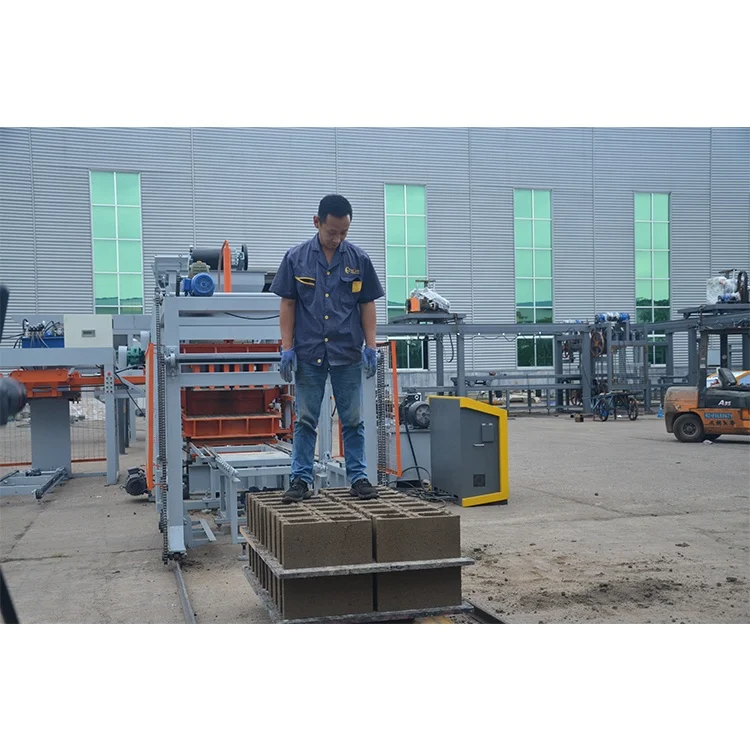
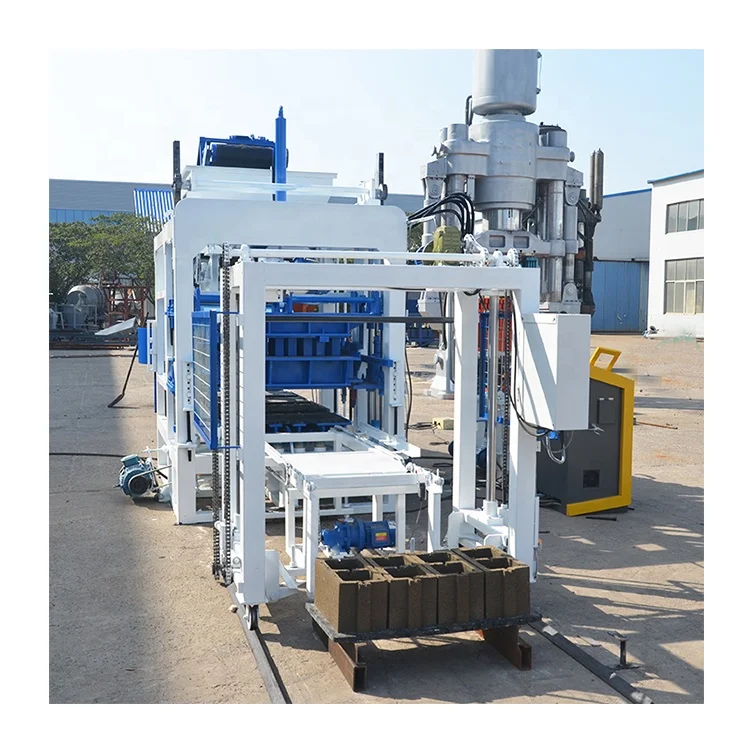 High quality block machine