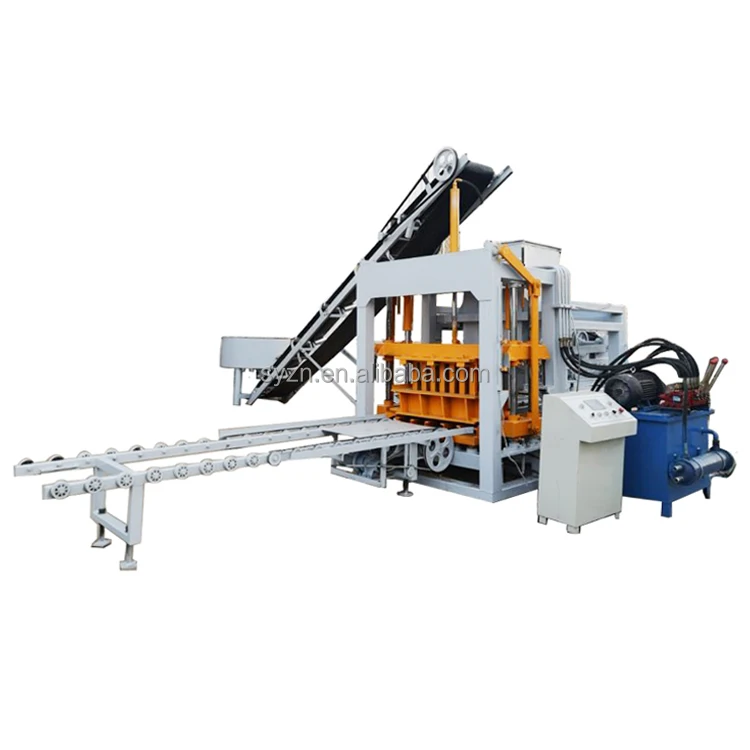
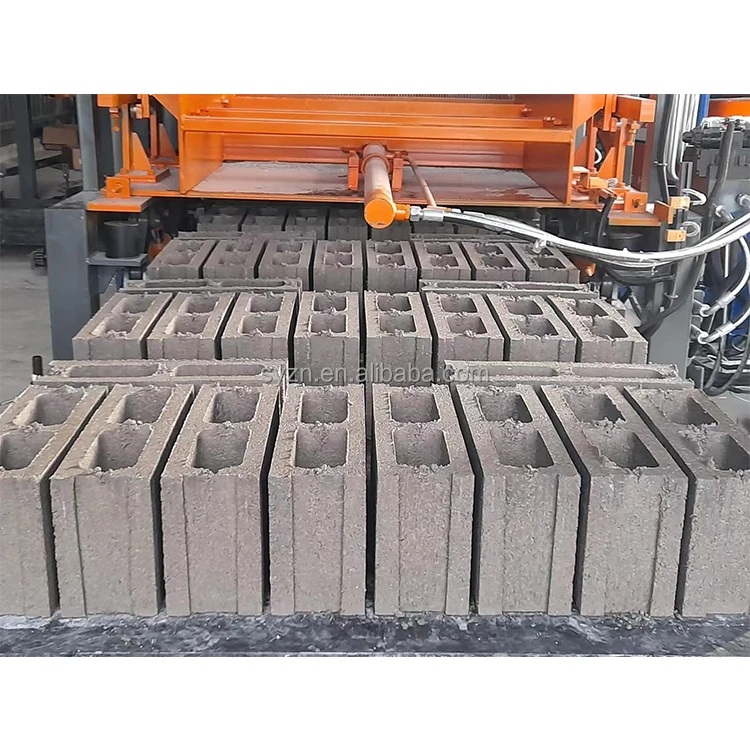
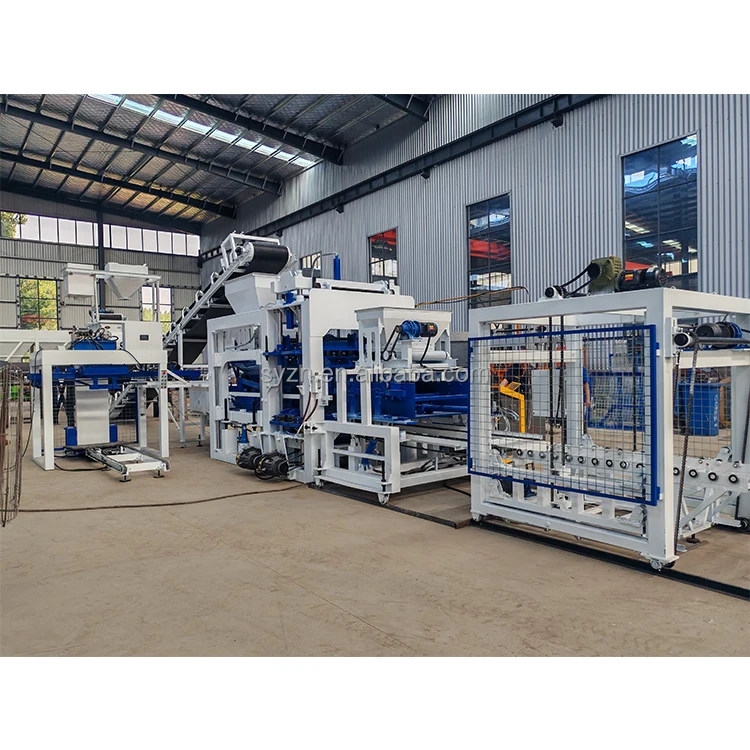
Single-Focus Block Machinery — The LY2-10 is configured against your actual clay mix and target interlocking profile, not pulled from a generic catalogue default.
Technical Specifications
| Parameter |
Value |
| Model |
LY2-10 |
| Product Type |
Clay Interlocking Block Making Machine |
| Machine Type |
Semi-automatic clay and cement interlocking brick making machine |
| Rated Power |
7.5 kW |
| Molding Cycle |
10 s |
| Output Capacity |
6,000 pcs / 8 h (basis not stated in source — confirm block format / material / thickness) |
| Raw Materials |
Clay, soil, earth, mud, concrete, cement, fly ash |
| Overall Dimensions (L×W×H) |
1,300 × 1,800 × 2,400 mm |
| Mould Format Options |
300×150×100 mm, 250×125×75 mm, 230×220×115 mm (1 pc/mould each) |
| Automation Level |
Semi-automatic |
| Certification |
CE (verify applicability to LY2-10) |
Application Suitability
| Application |
Material or Output |
| Small-scale interlocking brick plant |
Clay and cement mix designs for wall construction |
| On-site housing project production |
Soil and mud stabilized with cement for local building |
| Building material distributor adding formats |
Clay interlocking profiles alongside existing concrete blocks |
| Entrepreneur establishing first brick operation |
Low-investment semi-automatic clay brick production |
What "6,000 Pieces Per Shift" Actually Means for Your Clay Mix
Capacity figures mean little without the block format and material assumption written next to them.
I spent four days on a site in South Africa recalibrating a semi-automatic interlocking brick press because the local clay had a higher silt content than the test samples. The daily output dropped to roughly half of what the brochure promised. A clay interlocking block machine manufacturer should always state which interlocking profile, wall thickness, and material composition the quoted cycle time assumes — otherwise you are comparing numbers that were never measured under the same conditions. [NEED_CITE: how raw material variation affects block machine cycle time and output]

Where the LY2-10 Sits in the Full Machine Range
The LY2-10 occupies the semi-automatic tier of Shiyue’s block machine lineup. Buyers evaluating their first clay interlocking brick plant or adding an interlocking format to an existing concrete block range will find this model positioned between manual mobile egg-layers and fully automatic hydraulic lines. The semi-automatic designation means the press cycle runs automatically while pallet handling remains a manual or assisted step — a deliberate choice for operations where capital is limited but consistent block geometry still matters. As a clay interlocking block machine manufacturer, Shiyue structures the range so a buyer can start here and move upward without replacing the entire handling infrastructure.
Footprint, Power, and Site Reality
At 1,300 × 1,800 × 2,400 mm, the LY2-10 fits inside a standard single-bay workshop or under a temporary shelter on a construction site. The 7.5 kW rated power draw stays within the capacity of a typical small-site generator, which matters when grid supply is unreliable or when the machine operates inside a housing development before permanent power is connected. This compact envelope also means the curing area can sit immediately adjacent to the press, reducing the distance operators carry loaded pallets by hand. [NEED_CITE: small workshop layout requirements for semi-automatic block production]
Reading the Specs That Matter for Clay Interlocking Production
Three mould formats ship with the LY2-10: 300×150×100 mm, 250×125×75 mm, and 230×220×115 mm, each producing one brick per cycle at a 10-second molding interval. The 10-second cycle applies to a specific material consistency and compaction resistance — clay with high plasticity or cement-stabilized soil with coarse aggregate will respond differently under vibration and pressure, potentially extending the cycle. The raw material range covers clay, soil, earth, mud, concrete, cement, and fly ash, but the actual mix ratio and moisture content must be matched to the vibration force and hydraulic pressure settings. When these three variables — mix design, vibration, and pressure — are misaligned, blocks crack during curing or fail compressive strength tests. Voltage and frequency remain configurable to the buyer’s local grid, and control language should be confirmed before the PLC panel is assembled.
The Cost of Skipping Material Testing Before Order
Sending a raw material sample before the machine is built feels like a delay, but it prevents far more expensive corrections on site. When clay moisture content or aggregate gradation is not accounted for in the vibration and pressure settings, operators spend weeks adjusting parameters by trial and error. Every day of adjustment is a day of unsaleable output, pallets of cracked bricks, and labour spent re-pressing batches. In the worst cases, the buyer concludes the machine is defective when the real problem is a mismatch between the press configuration and the local material. [NEED_CITE: impact of untested raw materials on block machine commissioning time]
Why Source This Machine Through a Block-Machinery-Only Supplier
Shiyue focuses exclusively on block machines, moulds, pallets, and handling equipment — no product lines outside this scope. The LY2-10 is specified alongside its moulds, pallet size, and handling layout as a matched set, so pallet dimensions align with the curing racks and forklift already on your site. Mould design covers the interlocking profiles your local market actually builds with, including custom drawings if your region uses a non-standard profile. Voltage, frequency, and control language are confirmed before production begins, not discovered during commissioning. Factory testing runs the LY2-10 with the buyer’s target block format before crating, producing a test record rather than a blank assurance.
Documentation & Verification
- Line layout with capacity calculation stating the interlocking format assumed for the 6,000 pcs / 8 h figure
- Mould drawing and format list for all three included interlocking profiles
- Voltage, frequency, and control display language confirmation sheet signed before production
- Factory test record on your specified clay mix and block format
- Packing photographs showing dismantling state and crate condition before container loading
Installation, Commissioning & Support
- 7.5 kW power requirement confirmed against your local supply or generator capacity before dispatch
- 1,300 × 1,800 × 2,400 mm footprint used to plan workshop bay and curing area adjacency
- Semi-automatic pallet handling workflow mapped to your existing forklift and curing rack layout
- Vibration and pressure parameters tuned to your clay sample during on-site commissioning
- Mould change procedure trained with operators on all three interlocking formats included
- Wear parts list provided with part numbers for hydraulic and mould consumables
What to Prepare Before Requesting a Quotation
Provide the specific interlocking brick profile your market demands, including wall thickness and any local dimensional standards. Share a raw material sample or at minimum a sieve analysis and moisture reading from your clay source. Confirm your site voltage, phase, and frequency, along with the preferred language for the control display. State your target daily output and the number of shifts you plan to run, so the capacity calculation reflects your actual operating conditions rather than a generic assumption.
Frequently Asked Questions
Q: How is the 6,000 pcs / 8 h capacity verified, and which block format does it assume?
A: The stated figure comes from the manufacturer’s reference data, but the specific block format, material, and thickness assumption is not declared in the source. Before order, Shiyue provides a capacity calculation sheet that names the exact interlocking profile and mix used for the test, so you know which format produces that number and can compare realistically across your product range.
Q: Where does the LY2-10 sit compared to Shiyue’s automatic and mobile block machines?
A: The LY2-10 is in the semi-automatic tier, positioned above mobile egg-layers and below fully automatic hydraulic lines. It suits buyers who need consistent interlocking brick geometry but want to limit initial investment. The range is structured so automation can be added later without replacing the core press or mould tooling.
Q: What voltage, frequency, and control language options are available?
A: Voltage and frequency are configured to match the buyer’s local grid supply — these must be confirmed before the electrical panel is built. The control display language is also set during this confirmation step, preventing commissioning delays caused by an unreadable interface on arrival.
Q: Can I start semi-automatic and upgrade later?
A: Yes. The semi-automatic tier handles the press cycle automatically while pallet feeding and stacking remain manual or assisted. As production volume grows, automatic pallet feeding, stacking, and cubing modules can be integrated, because the line architecture is planned with that upgrade path from the start.
Q: What mould formats are included, and how long does a change take?
A: Three interlocking profiles ship standard: 300×150×100 mm, 250×125×75 mm, and 230×220×115 mm. Mould change time depends on operator familiarity and whether the machine was ordered with a quick-change system. This should be confirmed during the configuration stage so your daily format-switching plan is realistic.

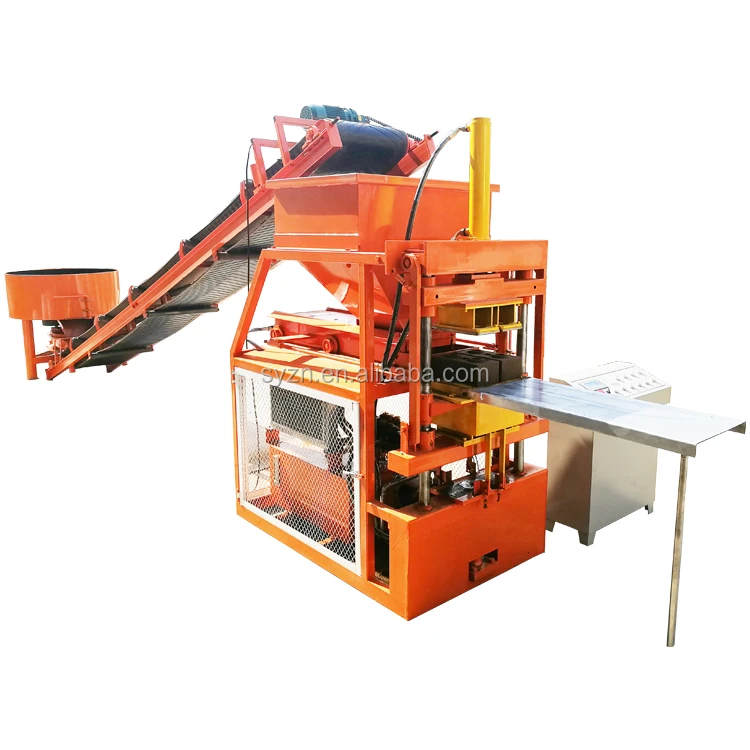
 High quality block machine