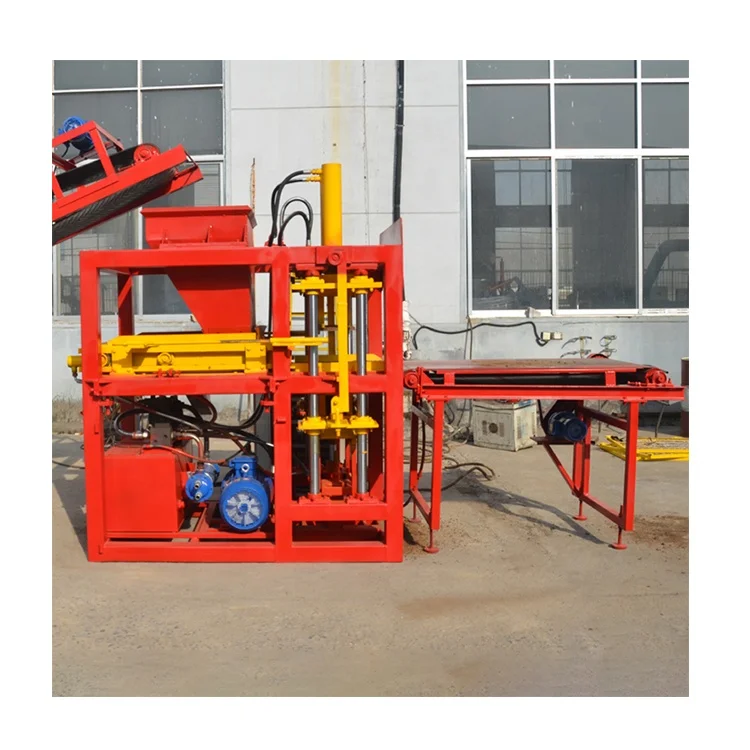
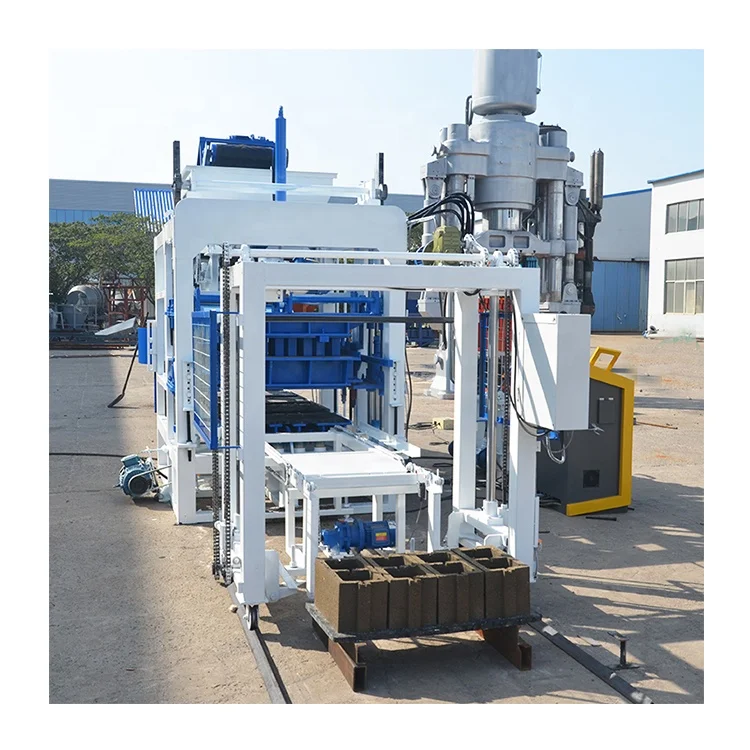
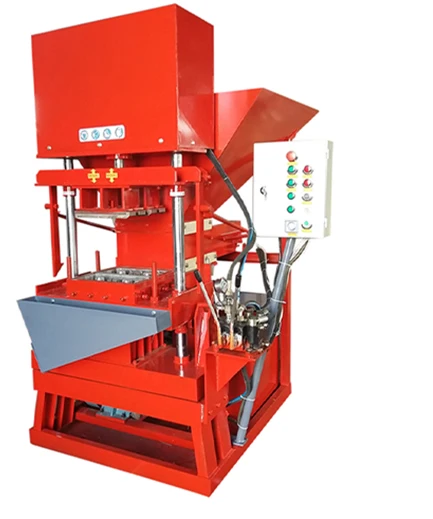
Single Focus Machinery Range — we configure the QT4-18 within a complete tier system so you can see exactly where it fits before committing to an investment level.
Technical Specifications
| Parameter |
Value |
| Model |
QT4-18 |
| Product Type |
Automatic Concrete Block Making Machine |
| Overall Dimensions |
2500×1750×2200mm |
| Rated Pressure |
16 MPa |
| Vibration Form |
Platform Vibration |
| Pallet Size |
950×550mm |
| Molding Cycle |
18–25s |
| Overall Power |
27.5 kW |
| Control System |
PLC with frequency converter |
| Electrical Components |
Schneider brand (source value — verify against manufacturer catalog) |
| Mould Lifting Mechanism |
Double-sided synchronous gears |
| Material Feeder System |
Hopper, feeding box, feeding platform, conveyor system |
| Block Receiver |
Frame, conveyor system, idler wheels with motor, reducer, triangle belt |
| Automation Level |
Pallet feeding by hydro-cylinder, automatic demould and block conveying |
| Key Features |
CE declaration where applicable (source value — verify against manufacturer catalog) |
| Net Weight |
(basis not stated in source) |
| Output Capacity |
(basis not stated in source — confirm block format / material / thickness) |
Application Suitability
| Application |
Material or Output |
| Block and paver production plants |
Concrete mix with local aggregates, cement, fly ash |
| Construction contractors producing blocks on-site |
Crushed stone, sand, and cement blends |
| Entrepreneurs setting up a first block plant |
Standard concrete mix with locally sourced sand |
| Development and housing project contractors |
Laterite sand, river sand, or crushed granite with cement |
| Concrete product manufacturers adding formats |
Fly ash blended with coarse aggregate and cement |
What "18–25 Seconds per Cycle" Actually Means for Your Daily Output
A cycle time is only meaningful once your target block format is defined.
Many buyers receive quotations listing cycles per hour without any mention of which block size or shape that figure assumes. I once worked with a customer who ordered a semi-automatic setup based on a sample run we conducted with standard aggregate. When his local laterite sand arrived on site, the blocks came out weak, the cycle time stretched considerably, and we spent weeks re-tuning the vibration force and mix ratio together. That automatic concrete block making machine for sale was never the problem — the problem was quoting output before the material was confirmed. [NEED_CITE: effect of local aggregate grading on block compaction cycle]

Where the QT4-18 Sits on the Full Machine Range
The QT4-18 occupies the mid-tier of the range, positioned between smaller semi-automatic models designed for workshop volumes and larger high-capacity automatic lines built for continuous two-shift production. Its overall dimensions of 2500×1750×2200mm mean the press itself requires a modest footprint, leaving room for supporting equipment like the JQ500 concrete pan mixer and belt conveyor. Buyers evaluating a first plant often start here because the automatic concrete block making machine for sale provides pallet feeding by hydro-cylinder and automatic demoulding without the capital outlay of a fully stacked and cubed line.
Understanding the Tier Boundaries Before You Decide
Stepping up from the QT4-18 to a higher-capacity model typically involves a larger pallet size, higher overall power demand, and a more extensive supporting equipment package. The pallet size here is 950×550mm, which must be matched against the curing area you already have or plan to build, as well as the forklift dimensions in your yard. If your project calls for formats that require a larger pallet, moving up a tier becomes necessary rather than optional. Conversely, if your daily volume target can be met within this molding cycle of 18–25s once your block format is locked in, investing in a higher tier leaves capital unused. [NEED_CITE: typical plant footprint requirements by block machine tier]
Reading the Pressure and Vibration Specs Together
The rated pressure of 16 MPa works in combination with the platform vibration form to compact the concrete mix inside the mould cavity. Hydraulic pressure alone does not determine block density — the vibration force must be matched to the specific mix design and local aggregate grading your plant will use. The double-sided synchronous gear mould lifting mechanism ensures stable and repeatable demoulding, which matters because uneven lifting cracks freshly pressed blocks before they reach the curing rack. The PLC with frequency converter gives operators control over vibration intensity, so adjustments can be made when aggregate moisture content shifts between seasons. Mould change on this tier relies on manual handling, meaning format flexibility is real but comes with the time cost of a physical swap rather than an automatic system.
The Cost of Skipping the Material Conversation
Ordering a machine configured for a mix you cannot source locally forces a costly material change after arrival. I have seen buyers specify a standard river sand blend during the inquiry stage, only to discover their local supplier provides a much coarser crushed granite that requires different vibration settings and longer compaction times. Voltage and frequency left unconfirmed until after shipment can delay commissioning by weeks while transformers are sourced. [NEED_CITE: common commissioning delays from voltage and frequency mismatches] Pallet size chosen without regard to your existing curing racks means buying an entirely new set or rebuilding your curing area from scratch.
Why Buyers Source This Tier From Shandong Shiyue
Block machinery as a single focus means the QT4-18 is specified alongside its moulds, pallets, and handling equipment as one matched system rather than assembled from separate suppliers. Configuration is set against your actual mix design and local aggregate, not a catalogue default. Mould design covers the formats your market actually sells, with custom drawings available when standard options fall short. The automation level is selectable — you can start with the QT4-18’s semi-automatic operation and plan a future upgrade path. Installation support includes operator training on site so your crew understands the vibration settings and mould change procedure from day one.
Documentation & Verification
- Line layout and capacity calculation stating the block format assumed for the QT4-18
- Machine specification sheet confirming voltage, frequency, and PLC display language before shipment
- Mould drawing and format list showing included hollow mould and available extras
- Factory test record demonstrating the QT4-18 running your requested block format before dispatch
- Pallet specification matched to your curing area dimensions and forklift capacity
- Hydraulic and electrical schematic for local maintenance teams
Installation, Commissioning & Support
- Foundation must accommodate 2500×1750mm footprint with level concrete pad and drainage provision
- Dedicated power circuit required for 27.5 kW overall power draw at your confirmed voltage and frequency
- Machine ships dismantled for container loading with reassembly and alignment completed on site
- First-run commissioning includes vibration force tuning against your local aggregate sample
- Operator training covers PLC navigation, frequency converter adjustment, and double-sided gear mould change procedure
- Wear parts list and mould inventory provided for first replacement planning
What We Need to Move Forward
To place the QT4-18 correctly within the range, share your target block format with dimensions, the local aggregate type available in your area, and your expected daily output target. Let us know your site voltage and frequency, the PLC display language your operators need, and the pallet size that matches your existing curing area. If you have supporting equipment already in place — a mixer, conveyor, or forklift — include those details so we can confirm compatibility before the quotation stage.
Frequently Asked Questions
Q: How is the QT4-18’s daily output calculated, and which block format does the capacity figure assume?
A: The molding cycle of 18–25s provides the base timing, but daily output depends entirely on the block format you intend to produce. A hollow block, a solid block, and a paving block each require different compaction times and yield different quantities per pallet. We calculate realistic output only after confirming your target format, local aggregate, and mix design.
Q: Where does the QT4-18 sit compared to semi-automatic and higher-capacity automatic models?
A: The QT4-18 sits in the mid-tier with automatic demoulding and hydro-cylinder pallet feeding, positioned above smaller workshop models and below high-capacity fully automatic lines. Its 2500×1750×2200mm footprint suits plants with moderate space. Buyers needing continuous two-shift production or larger pallet formats typically step up to the next tier.
Q: What voltage, frequency, and PLC language options are available for my market?
A: Voltage and frequency must be confirmed before production to match your local supply standards. The PLC with frequency converter supports multiple display languages. We confirm these details during the quotation stage so commissioning proceeds without delays upon arrival. [NEED_CITE: voltage and frequency standards by export market]
Q: How much plant floor space and foundation does the QT4-18 require?
A: The press itself occupies a 2500×1750mm area, but total plant footprint must include the mixer, belt conveyor, pallet return path, and curing rack zone. We provide a line layout showing every station placement so you can verify the total space requirement against your building dimensions before committing.
Q: Can the QT4-18 be upgraded later, or is a larger model the better starting point?
A: The QT4-18 supports a path from its current semi-automatic operation toward higher automation, including options for automatic stacking and cubing. Whether upgrading makes sense or starting with a larger model is wiser depends on your volume growth timeline and available capital. We discuss both paths during the configuration stage.

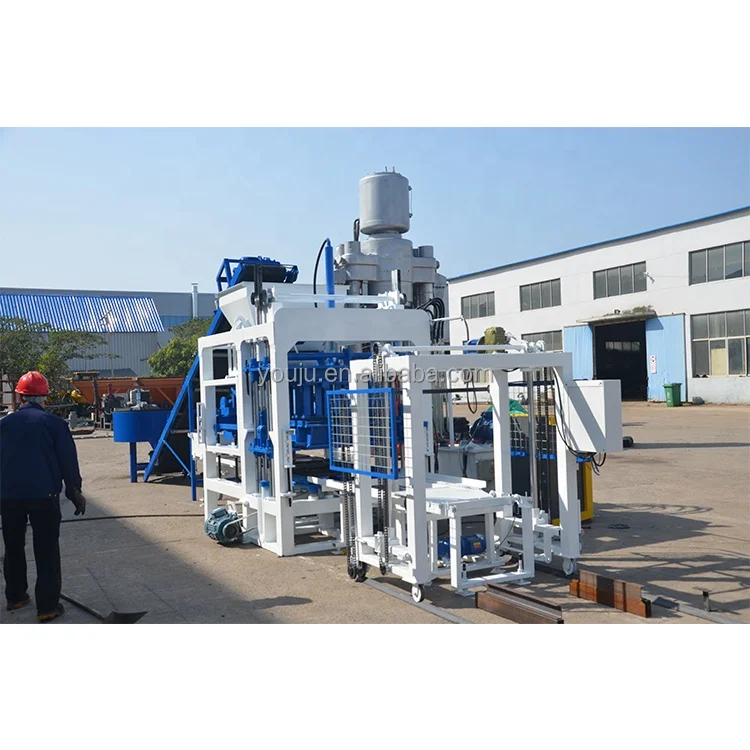
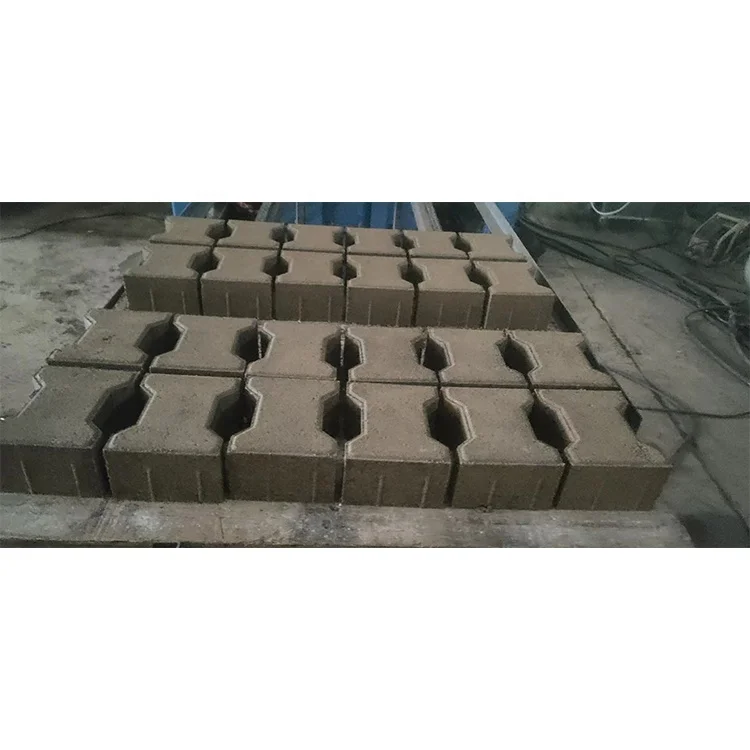 Semi automatic block