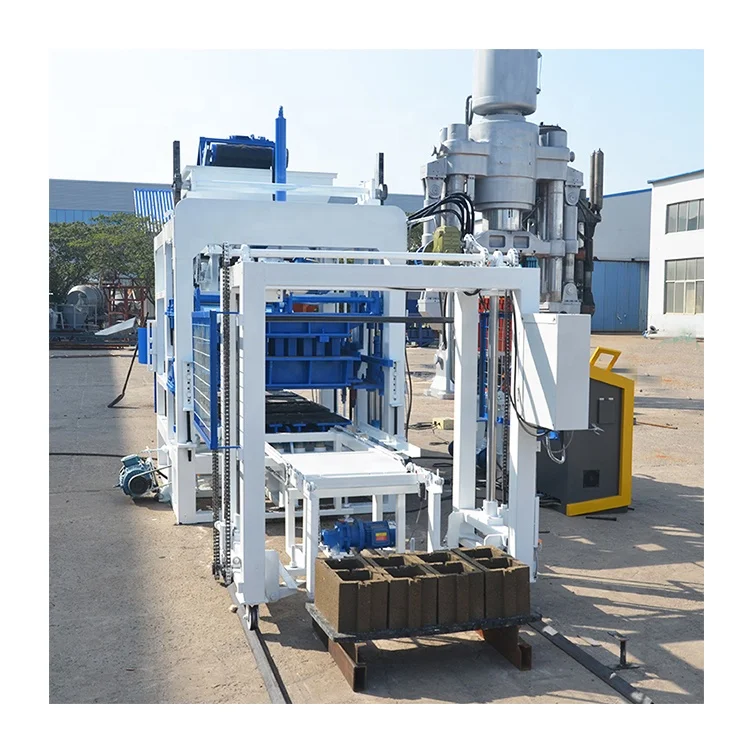
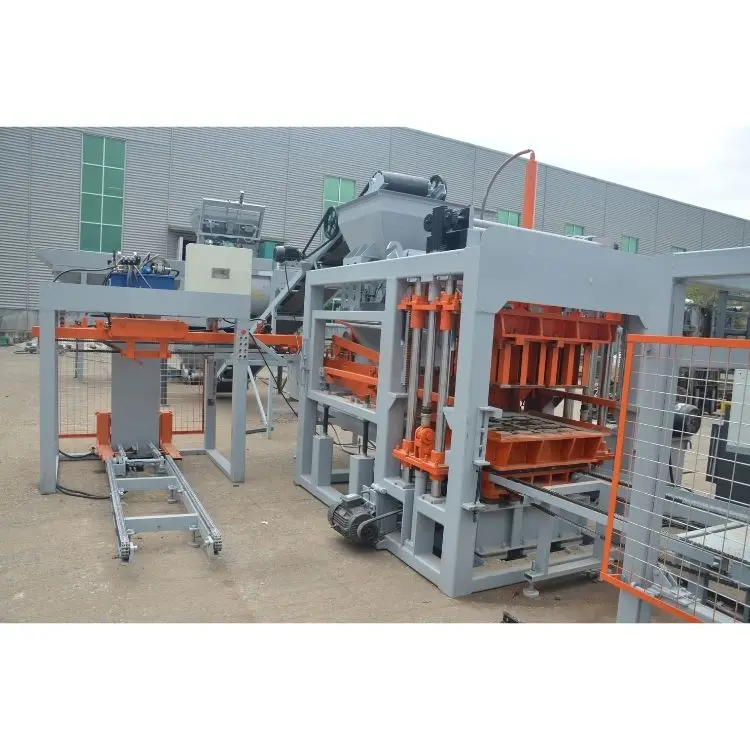
Single-focus block machinery — every ECO 7000 unit leaves the factory as a matched system of press, mould and handling rather than a standalone catalogue item.
Technical Specifications
| Parameter |
Value |
| Model |
ECO 7000 |
| Product Type |
Automatic Compressed Earth Brick Making Machine |
| Power Source |
Electric Powered |
| Brick Type |
Compressed Earth / Clay / Ecological Brick |
| Automation Level |
Semi-automatic to automatic (category listed as semi-automatic; confirm final configuration) |
| Mould Format |
Compressed earth / clay ecological brick |
| Hydraulic Pressure |
(basis not stated in source — confirm with supplier) |
| Vibration Force |
(basis not stated in source — confirm with supplier) |
| Pallet Size |
(basis not stated in source — confirm with supplier) |
| Output Capacity |
(basis not stated in source — confirm block format / material / thickness) |
| Mould Change Time |
(basis not stated in source — confirm with supplier) |
| Cycle Time per Format |
(basis not stated in source — confirm with supplier) |
| Control System |
(basis not stated in source — confirm with supplier) |
| Voltage & Frequency |
(basis not stated in source — confirm target market standard) |
| Rated Power |
(basis not stated in source — confirm with supplier) |
| Overall Dimensions |
(basis not stated in source — confirm with supplier) |
| Net Weight |
(basis not stated in source — confirm with supplier) |
| Certification |
(basis not stated in source — confirm CE applicability) |
Application Suitability
| Application |
Material or Output |
| On-site ecological brick production for housing projects |
Local soil-clay mixes with controlled moisture |
| Small-to-medium brick plant start-up |
Compressed earth blocks from screened laterite or sandy loam |
| Format expansion for existing concrete product manufacturers |
Clay ecological bricks alongside conventional pavers and hollow blocks |
| Contractor-driven rural development builds |
Stabilised earth blocks using on-site excavation spoil |
Why "Pieces per Hour" Misleads Compressed Earth Brick Buyers
Real daily output depends entirely on which block format the quoted cycle time assumes.
A compressed earth brick making machine manufacturer quoting a single throughput figure ignores the reality that a 290×140×90 mm interlocking brick cycles at a fundamentally different rate from a 250×125×100 mm solid ecological block. Buyers who sign off on a headline number without specifying the reference format routinely discover their actual shift output falls well short of the business plan. Moisture content in the clay-soil mix further shifts cycle behaviour, meaning a machine tuned for 12 % moisture may stall or produce cracked faces when local red soil arrives at 18 %. [NEED_CITE: effect of soil moisture on compressed earth block cycle consistency]

Where the ECO 7000 Sits in the Full Machine Range
The ECO 7000 occupies the entry-to-mid tier within the broader compressed earth brick making machine manufacturer lineup, positioned for buyers who need ecological block capability without committing to a fully automatic high-capacity line. Its electric-powered platform suits regions where grid stability is acceptable, and the semi-automatic baseline allows a first-time plant owner to manage capital outlay while retaining an upgrade path toward automatic pallet feeding and stacking later.
Matching Automation Level to Plant Ambition
Choosing between semi-automatic and automatic operation is less about prestige and more about labour availability and shift planning. A semi-automatic ECO 7000 keeps an operator at the pallet station, which works for smaller crews and lower daily targets, whereas moving to automatic pallet handling removes that bottleneck and lets the press run at its own rhythm. [NEED_CITE: labour allocation in semi-automatic versus automatic block plants] The decision should be made against the buyer’s actual staffing model, not a catalogue default.
Reading the Specification Sheet Against Local Conditions
Hydraulic pressure and vibration force must be evaluated together because compressed earth relies on static compression rather than the high-frequency vibration used for concrete blocks. Pallet size dictates how many bricks cure per rack and must align with the forklift and curing area the buyer already operates. Voltage and control language, often left as footnotes, become blockers if the destination market runs on 400 V / 50 Hz while the machine ships wired for a different standard. Confirming these parameters before production avoids a commissioning delay that can stretch into weeks.
The Hidden Cost of Skipping a Soil Sample
Sending a soil sample before the order seems like an extra step, yet it prevents the most expensive post-delivery problem: a machine configured for standard sandy loam that cannot compact high-plasticity red clay without cracking every fifth brick. Reworking mould clearances and re-tuning pressure profiles on site burns through commissioning days and erodes buyer confidence. Every parameter adjustment made remotely is a guess; every adjustment made against an actual sample is engineering. [NEED_CITE: field failures caused by untested local soil in compressed earth block production]
Why Source the ECO 7000 Through This Range
Block machinery is the sole product focus, so the ECO 7000 arrives with mould, pallet and handling specified as one system rather than assembled from separate vendors. Configuration is set against the buyer’s own soil-clay mix and target block format, not a generic catalogue entry. Custom mould drawings are available when the local market demands a format outside the standard list. Automation level is selectable, letting a buyer begin semi-automatic and add automatic pallet feeding when volume justifies it. Installation support includes operator training so the crew can run the machine independently from day one.
Documentation & Verification
- Machine specification sheet listing hydraulic pressure and cycle time per confirmed block format
- Mould drawing and format list matched to buyer’s target ecological brick dimensions
- Voltage, frequency and PLC display language confirmation before production
- Factory test record run on buyer-supplied soil sample where available
- Packing photographs and customs documentation support for destination port
Installation, Commissioning & Support
- Foundation plan scaled to ECO 7000 footprint and rated power requirement
- Electrical supply checked against confirmed voltage and dedicated circuit rating
- Machine arrives in shipping condition with reassembly guidance for the press frame
- First-run parameter tuning performed against local soil-clay mix on site
- Operator training covers mould change procedure and daily maintenance checkpoints
- Wear parts list and mould replacement schedule provided before handover
What to Include in Your Inquiry
Share the specific ecological brick dimensions your market sells, the daily output target per shift, and a representative soil or clay sample from your project area. Confirm your site voltage, frequency, and the language your operators need on the control display. If you already run pallets, forklifts, or a curing yard, provide those dimensions so the handling equipment can be matched before the quotation is issued.
Frequently Asked Questions
Q: What block format is the ECO 7000 output capacity based on?
A: Output varies with block size, mix moisture, and compaction pressure. The quotation includes a capacity table calculated per confirmed format rather than a single headline number, so buyers see realistic daily output for the exact ecological brick they intend to produce.
Q: Where does the ECO 7000 fit between semi-automatic and automatic tiers?
A: The ECO 7000 starts as a semi-automatic platform suited to smaller plants and first-time investors. Buyers can add automatic pallet feeding and stacking later, aligning capital spend with actual volume growth rather than over-specifying from day one.
Q: Can the ECO 7000 handle my local clay or soil type?
A: The machine is configured against the buyer’s actual soil sample. Moisture content, plasticity, and sand-clay ratio are reviewed before mould clearances and pressure settings are finalised, avoiding on-site rework and cracked brick rejects.
Q: Will the voltage and control language match my country’s standard?
A: Voltage, frequency, and PLC display language are confirmed during the order stage. Production does not begin until the buyer approves these parameters, preventing commissioning delays caused by mismatched electrical supply or unreadable operator screens.
Q: How are installation and spare parts handled after delivery?
A: On-site commissioning includes press alignment, parameter tuning with local material, and operator training. A wear parts list and mould replacement schedule ship with the machine so replacements can be ordered before the first changeover is due.

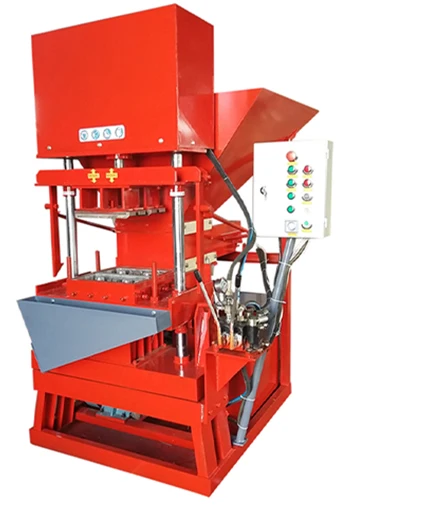
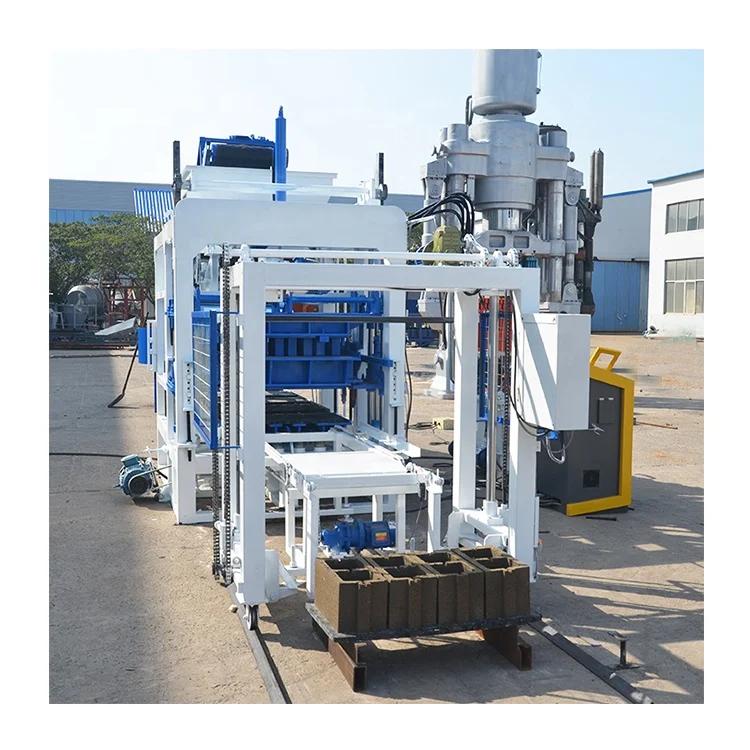 Semi automatic block