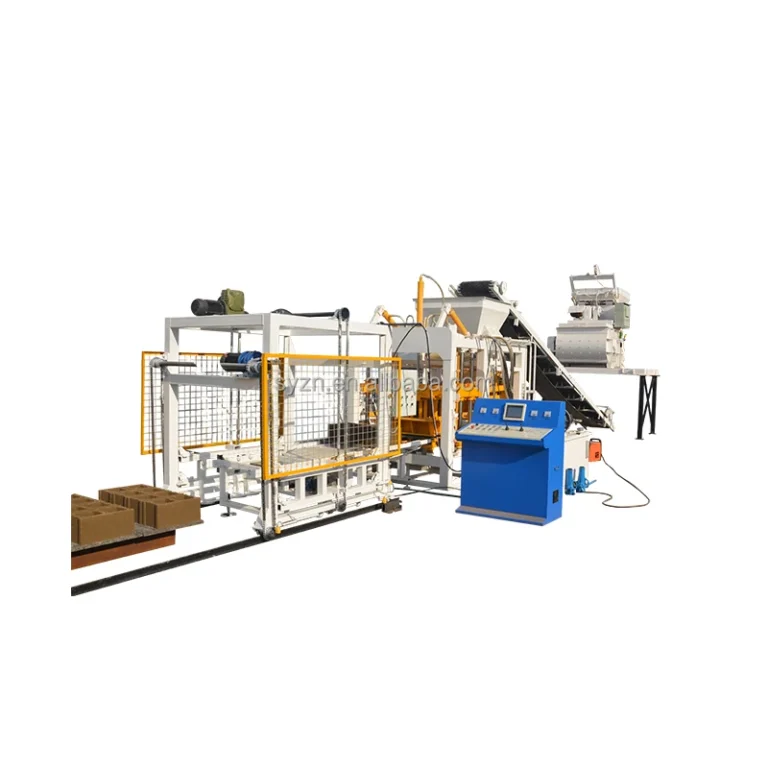
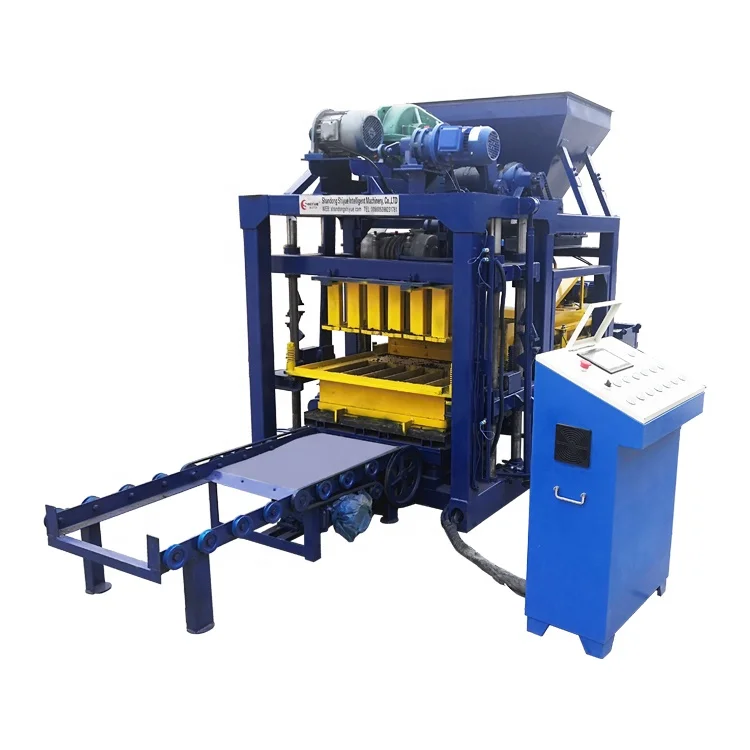
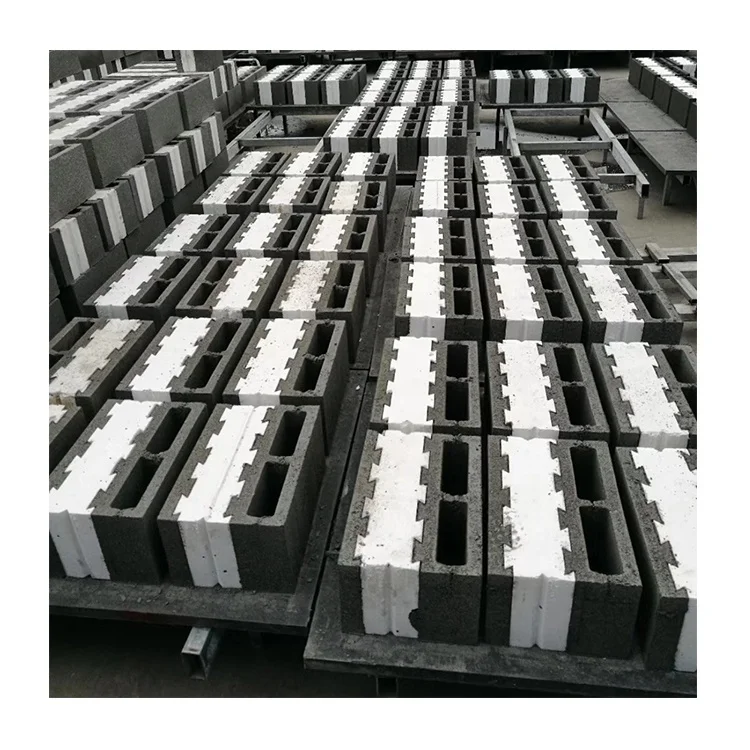
Configuration matched to buyer material — Every QT4-15A setup starts with the customer’s actual aggregate and target block format, not a catalogue default.
Technical Specifications
| Parameter |
Value |
| Model |
QT4-15A |
| Product Type |
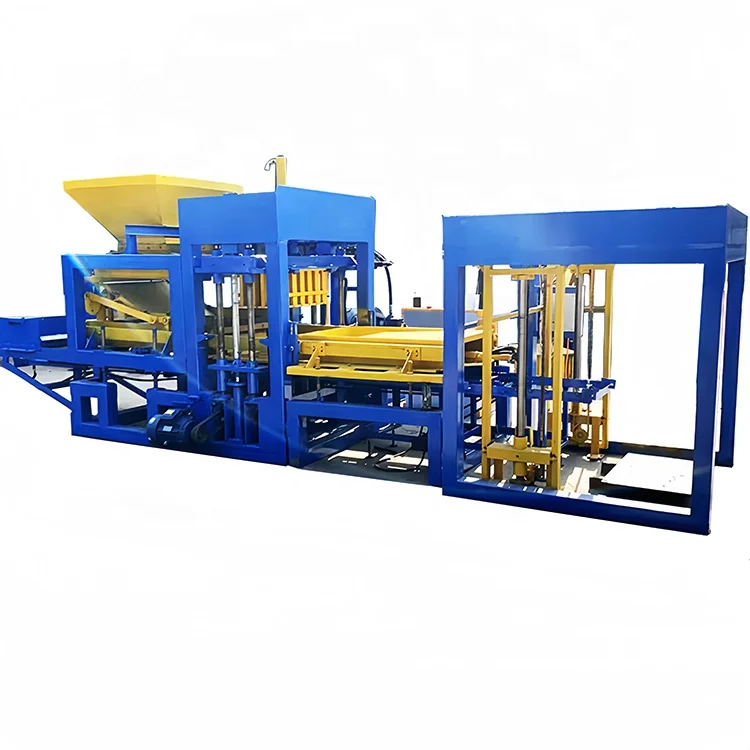
Fully Automatic Concrete Block Making Machine |
| Overall Dimensions (L×W×H) |
4100×1600×2600 mm |
| Rated Pressure |
16–21 MPa |
| Main Vibration Form |
Platform Vibration |
| Vibration Frequency |
4200 r/min |
| Vibration Force |
55 kN |
| Pallet Size |
880×550 mm |
| Molding Cycle |
25–30 s (basis to be confirmed by block format) |
| Overall Power |
18.45 kW |
| Total Mass |
4 T |
| Demolding Method |
Hydraulic |
| Applied Products |
Hollow/solid blocks, pavers, interlocking blocks, curbstone |
| Factory Area |
300 m² |
Application Suitability
| Application |
Material or Output |
| Standard hollow block production |
Crushed stone, sand, cement, fly ash |
| Solid paver manufacturing |
Gravel, cement, pigment for colored units |
| Interlocking brick runs |
Sand, slag, cement mixes |
| Curbstone and landscape units |
Coarse aggregate with cement binder |
What "25–30 Seconds" Actually Means for Your Output
Cycle time only translates to daily volume when the block format, mix design and pallet handling are defined together.
Sellers quote a concrete block making machine manufacturer cycle figure without stating which block size or wall thickness it assumes. Buyers then discover that a 400×200×200 mm hollow block takes noticeably longer to compact than a thin paver, and their real shift output drops. We saw a Middle East plant lose half a shift because the vibration frequency was not matched to their larger aggregate. Asking for a per-format capacity sheet before ordering prevents this surprise [NEED_CITE: block format assumptions in capacity quotations].

Where the QT4-15A Sits in the Automatic Range
The QT4-15A occupies the mid-tier of the full automatic lineup, bridging workshop-scale semi-automatic presses and high-capacity continuous lines. Buyers moving up from egg-laying or mobile machines find the platform vibration and hydraulic demolding deliver a noticeable jump in block consistency. Those comparing upward to larger-tier automatics will trade some cycle speed for a smaller plant footprint and lower initial capital. This concrete block making machine manufacturer positions the model for entrepreneurs and contractors who need reliable daily output without the space and power demands of a top-tier line.
Matching the Line to Your Site Conditions
A mid-tier press only performs when the surrounding stations keep pace. Raw material feeding, mixer discharge, pallet circulation and stacking must all complete their actions within the QT4-15A molding window so the press is never left idle. If the curing area is undersized or the forklift cannot handle the 880×550 mm pallet load, finished blocks pile up at the machine exit and the cycle stalls. Planning the full line layout before the press arrives avoids bottlenecks that no amount of automation can fix [NEED_CITE: block plant line balancing principles].
Reading the Numbers That Matter
The 16–21 MPa hydraulic pressure works together with the 55 kN vibration force to compact the mix; if pressure is high but vibration is weak, the block surface cracks before full density is reached. Platform vibration at 4200 r/min suits medium-coarse aggregates, but finer sand blends may require frequency adjustment to avoid segregation. The 880×550 mm pallet dictates the curing rack spacing and forklift tine width — ordering pallets without checking existing racks leads to double-handling. Hydraulic demolding lifts the mould vertically, reducing edge damage on thin-walled hollow blocks compared to mechanical stripping.
The Hidden Cost of Skipping Configuration Checks
When voltage and PLC display language are not confirmed before production, the machine arrives and sits unpowered while transformers and control panels are re-ordered. Moulds specified for a block format the local market does not buy force the plant to run unwanted inventory. Pallets chosen without regard to the buyer’s existing curing racks mean every loaded board must be re-stacked by hand, adding labour the quotation never included [NEED_CITE: commissioning delays from unconfirmed electrical standards].
Why Source the QT4-15A Through This Range
Block machinery is the single focus here, so the press, mould, pallet and handling equipment are specified as one matched system rather than assembled from separate vendors. Configuration starts with the buyer’s local aggregate and target block format, not a default catalogue page. Mould design covers the formats the buyer’s market actually sells, including custom drawings when standard options fall short. Automation level is selectable, allowing a plant to start semi-automatic and add stacking or cubing later. Installation support includes operator training on the specific controls and maintenance intervals of this model.
Documentation & Verification
- Line layout showing capacity calculation per block format for the QT4-15A
- Machine specification sheet confirming voltage, frequency and PLC language
- Mould drawing and format list matched to 880×550 mm pallet
- Factory test record run on buyer’s specified mix before dispatch
- Operation and maintenance manual with wear parts schedule
Installation, Commissioning & Support
- 300 m² factory area includes press, mixer and curing rack zones
- 18.45 kW total power requires dedicated circuit with correct voltage tap
- Machine ships in 1×40HQ; on-site assembly aligns platform vibration base
- First-run commissioning sets hydraulic pressure to match buyer’s mix density
- Operator training covers PLC navigation, mould change and daily greasing points
- Wear parts list identifies hydraulic seals and vibration motor bearings for stocking
Planning Your QT4-15A Inquiry
Tell us the exact block formats you sell, the daily volume each format requires, and the aggregate available at your site. Include your local voltage and frequency, the PLC display language your operators read, and the curing space you can allocate. If you already run pallets or forklifts, share those dimensions so the 880×550 mm pallet system integrates without re-handling.
Frequently Asked Questions
Q: How is daily output calculated for the QT4-15A and which block format is assumed?
A: Output depends on the block dimensions, wall thickness and mix design. A 25–30 s cycle applies to a specific reference format; larger hollow blocks or thicker pavers extend the cycle. We provide a capacity sheet listing each target format with its individual cycle time and realistic shift output.
Q: Where does the QT4-15A sit in the full automatic range?
A: It is the mid-tier option, above semi-automatic and mobile machines but below high-capacity continuous lines. Buyers gain platform vibration and hydraulic demolding without the footprint and power draw of the top tier. Stepping up adds faster cycles and larger pallets; stepping down reduces capital and space.
Q: What voltage, frequency and PLC language options are available?
A: Voltage and frequency are set to match the buyer’s local grid before production begins. PLC display language is confirmed at the same stage so operators can read menus and alarms on day one. Standard industrial voltages and major languages are supported.
Q: What plant footprint does the QT4-15A require?
A: The press itself fits within a 300 m² factory area that also accommodates the mixer, pallet circulation and curing rack zones. Ceiling height must clear the 2600 mm machine height plus maintenance access. Curing area size depends on the pallet cycle and daily output target.
Q: Which automation functions are included and which are optional?
A: The base configuration covers automatic molding, hydraulic demolding and platform vibration. Pallet feeding, stacking and cubing are selectable based on labour availability and budget. Buyers can start with manual pallet handling and add automated stations as production volume grows.

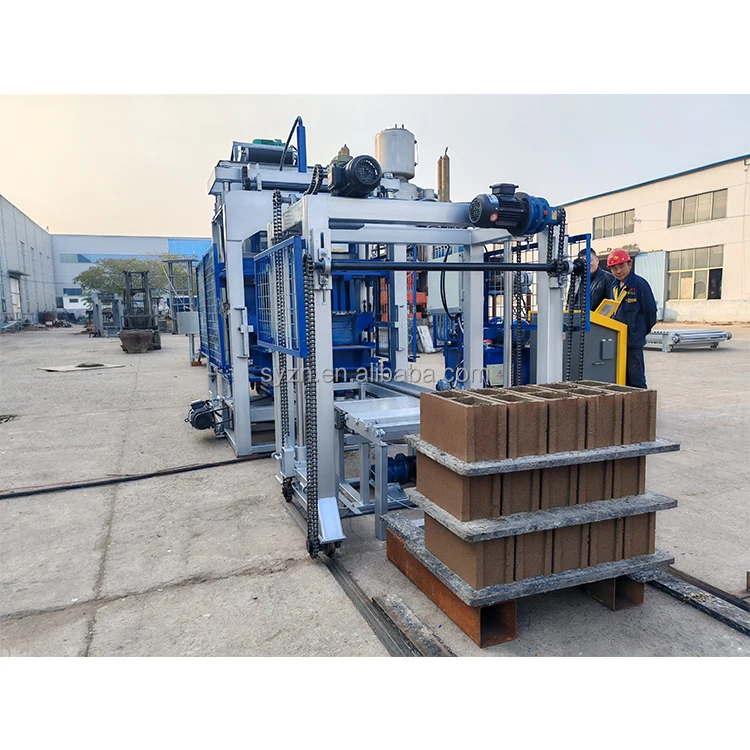
 High quality block machine