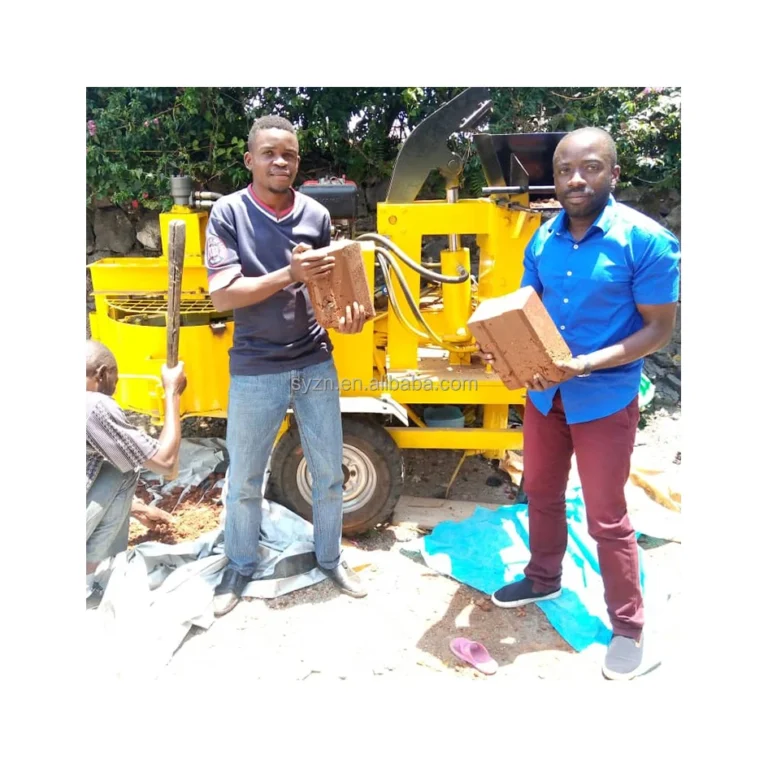
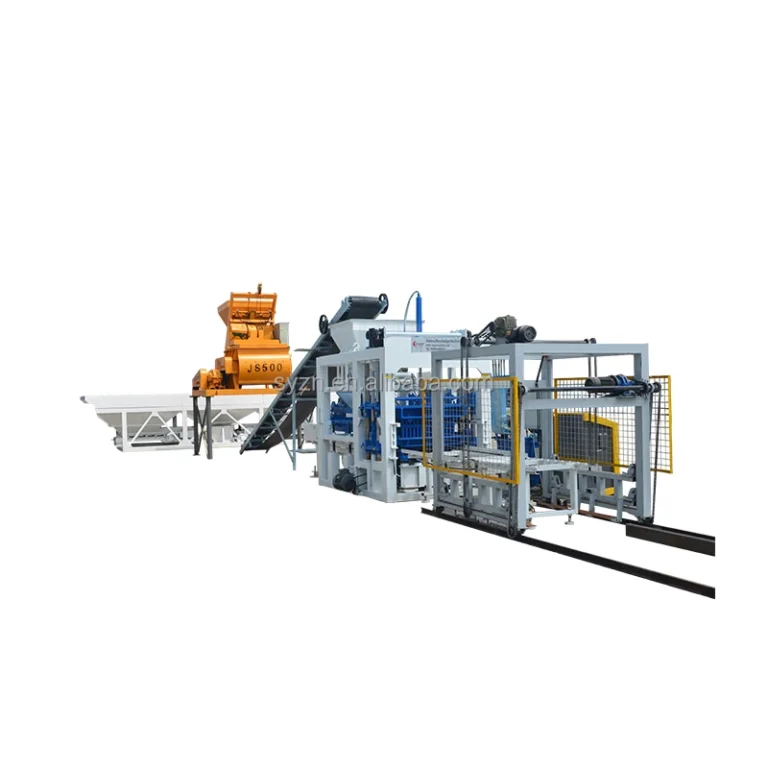
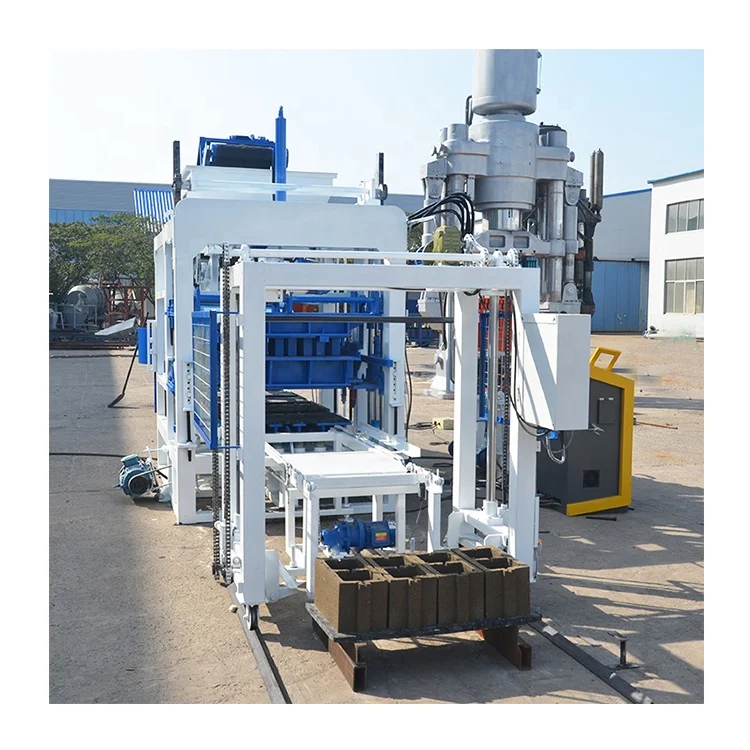
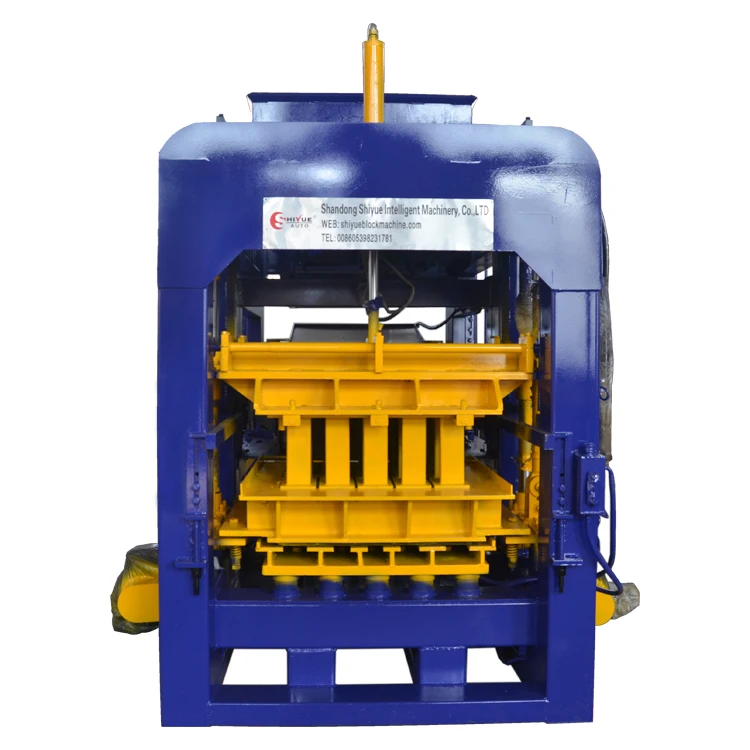
Complete Range Coverage — the QT4-15A positions buyers clearly between workshop semi-automatic units and high-capacity lines, with output tier, footprint, and investment level stated per block format.
Technical Specifications
| Parameter |
Value |
| Model |
QT4-15A |
| Product Type |
Fully Automatic Concrete Block Making Machine |
| Overall Dimensions (L×W×H) |
4100×1600×2600 mm |
| Total Mass |
4 T |
| Rated Pressure |
16–21 MPa |
| Main Vibration Form |
Platform Vibration |
| Vibration Frequency |
4200 r/min |
| Vibration Force |
55 kN |
| Pallet Size |
880×550 mm |
| Molding Cycle |
25–30 s (basis to be confirmed per block format) |
| Overall Power |
18.45 kW |
| Demolding Method |
Hydraulic |
| Automation Level |
Fully Automatic |
| Factory Area Required |
300 m² |
| Loading |
1×40HQ container (basic equipment) |
| Warranty |
1 year (excluding spare parts) |
Application Suitability
| Application |
Material or Output |
| Hollow block production for residential and commercial masonry |
Crushed stone, sand, cement, fly ash |
| Solid block manufacturing for load-bearing walls |
Gravel, sand, cement, dust |
| Interlocking paver and colored paver runs |
Fine aggregate, cement, pigment additives |
| Curbstone and kerb production for infrastructure projects |
Coarse aggregate, slag, cement |
| On-site block production for housing developments |
Local aggregate blends, cement |
Why the "Cycles per Hour" Number Misleads Buyers
Capacity only means something when tied to a specific block format and mix design.
Many quotations list a single cycle-per-hour figure for a fully automatic concrete block making machine manufacturer without stating which block size or raw material blend that number assumes. In practice, a machine running 400×200×200 mm hollow blocks produces far fewer units per shift than the same press making thin paving stones. When buyers arrive on site and feed in local volcanic ash or slag instead of standard sand, vibration force and hydraulic pressure may no longer match, causing freshly demolded blocks to collapse at the edges. I have spent days adjusting parameters on machines that were configured for a default mix rather than the buyer’s actual material [NEED_CITE: common causes of block collapse in demolding]. The QT4-15A’s platform vibration at 4200 r/min and 55 kN force must be validated against your aggregate before capacity numbers are finalized.

Where the QT4-15A Sits in the Output Spectrum
The QT4-15A occupies the mid-tier automatic range. It bridges the gap between semi-automatic workshop machines that require manual pallet handling and high-capacity lines with full stacking and cubing systems. For entrepreneurs setting up a first block plant, this tier offers a fully automatic concrete block making machine manufacturer configuration with a 300 m² footprint — compact enough to fit most start-up yards while still delivering hydraulic demolding and automatic pallet feeding. Buyers who anticipate volume growth can later add upstream batching and downstream stacking modules within the same product family.
Understanding Automation Levels Before You Commit
Automation is not a single toggle but a spectrum of stations. The QT4-15A automates the press cycle, pallet feeding, and hydraulic demolding, but the raw material batching and end-of-line stacking can be configured from manual through to fully automatic depending on your labor availability and budget. A fully automatic setup reduces operator involvement at each station and improves batch-to-batch consistency, yet it also demands stable voltage and trained maintenance staff. Buyers in regions with frequent power fluctuation should consider whether the PLC control cabinet includes surge protection and whether the local grid can sustain the 18.45 kW draw [NEED_CITE: electrical supply stability for industrial PLC systems]. Choosing the right automation tier upfront prevents costly retrofits or underutilized equipment.
How Vibration, Pressure, and Pallet Size Work Together
The 16–21 MPa rated pressure and 55 kN vibration force are not independent specifications — they must be balanced against each other and against the buyer’s mix design. Insufficient vibration leaves voids in the block body; excessive pressure without adequate vibration crushes the aggregate structure, weakening the finished product. The 880×550 mm pallet size is chosen to match standard curing rack dimensions and common forklift tine widths, so blocks can move from press to curing area without manual re-stacking. The 25–30 s molding cycle varies depending on block height and material flow characteristics, meaning taller hollow blocks will naturally extend cycle time beyond the lower end of that range. A fully automatic concrete block making machine manufacturer should always state which block format the cycle time reflects.
The Hidden Cost of Skipping Pre-Shipment Configuration
When voltage, frequency, and PLC display language are not confirmed before production, machines arrive on site and sit idle for weeks while control panels are rewired or HMI screens are reprogrammed. I have seen plants lose an entire commissioning window because the PLC interface defaulted to a language the local operators could not read, turning a routine first-run procedure into a troubleshooting exercise. Similarly, if the mould set does not cover the block formats that the buyer’s market actually purchases, the format flexibility the machine was bought for simply does not exist. These oversights compound: delayed commissioning pushes back revenue, and mismatched moulds force buyers into unplanned secondary orders [NEED_CITE: commissioning delays caused by unconfirmed electrical specifications].
Why Buyers Specify With Us
Every QT4-15A quotation starts with the buyer’s target block format, daily output requirement, and local raw material profile — not a catalogue default. The mould set is designed around the formats the buyer’s market sells, including custom drawings when standard moulds do not cover regional sizes. Machine, pallet, and handling equipment are specified as one matched system, so pallet size aligns with the buyer’s existing curing racks and forklifts. Configuration is tested against the buyer’s actual mix design before final hydraulic and vibration settings are locked. Installation support includes operator training on the specific PLC language and control interface confirmed at order stage.
Documentation & Verification
- Line layout showing QT4-15A station positions within a 300 m² footprint
- Capacity calculation sheet with output stated per block format and mix
- Mould drawing and format list covering buyer’s target block types
- Voltage, frequency, and PLC display language confirmation record
- Factory test record with hydraulic pressure and vibration force logged
- Packing photographs documenting dismantling state before container loading
Installation, Commissioning & Support
- 300 m² factory area with level concrete slab to support 4 T machine mass
- Dedicated electrical circuit rated for 18.45 kW with confirmed voltage and frequency
- Machine dismantled into 1×40HQ loading configuration for shipment
- Hydraulic pressure and vibration frequency calibrated to buyer’s mix on first run
- Operator training on PLC interface in confirmed display language
- Wear parts list with mould and hydraulic component replacement intervals
What We Need to Move Forward
To configure the QT4-15A accurately, provide your target block formats with dimensions, expected daily output, and the local aggregate or raw material blend you plan to use. Confirm your site’s available floor area, ceiling height, and existing curing rack or forklift specifications. State the local voltage, frequency, and preferred PLC display language so the control system matches your operators’ requirements from day one.
Frequently Asked Questions
Q: How is the QT4-15A’s capacity calculated, and which block format is assumed?
A: Capacity is calculated from the molding cycle of 25–30 s, but the actual output depends entirely on the block format being produced. A quotation will state output figures tied to a specific block size — for example, hollow block output differs from paver output. We do not quote a single cycles-per-hour number without naming the format and mix design it assumes.
Q: Where does the QT4-15A sit in the range compared to other tiers?
A: The QT4-15A is a mid-tier fully automatic option. It sits above semi-automatic workshop machines that require manual pallet handling and below high-capacity lines with full cubing and stacking systems. Buyers starting a first plant often find this tier balances automation with a manageable 300 m² footprint and investment level.
Q: What voltage and PLC language options are available?
A: Voltage and frequency are configured to match the buyer’s local grid before production begins, and the PLC display language is confirmed at the order stage. This prevents commissioning delays caused by incompatible electrical supply or unreadable control interfaces when the fully automatic concrete block making machine manufacturer delivers the equipment on site.
Q: What plant footprint does this tier require compared to larger lines?
A: The QT4-15A requires approximately 300 m² for the basic production line including press, pallet feed, and curing area access. High-capacity automatic lines with stacking and cubing stations require considerably more floor space. The compact footprint makes this tier suitable for buyers with limited yard area or those setting up a first plant.
Q: Can I add automation stations later within the same product range?
A: Yes. The QT4-15A platform supports adding upstream batching and downstream stacking modules as production volume grows. Buyers can start with the core automatic press and pallet feeding, then integrate additional stations within the same fully automatic concrete block making machine manufacturer product family without replacing the main press unit.

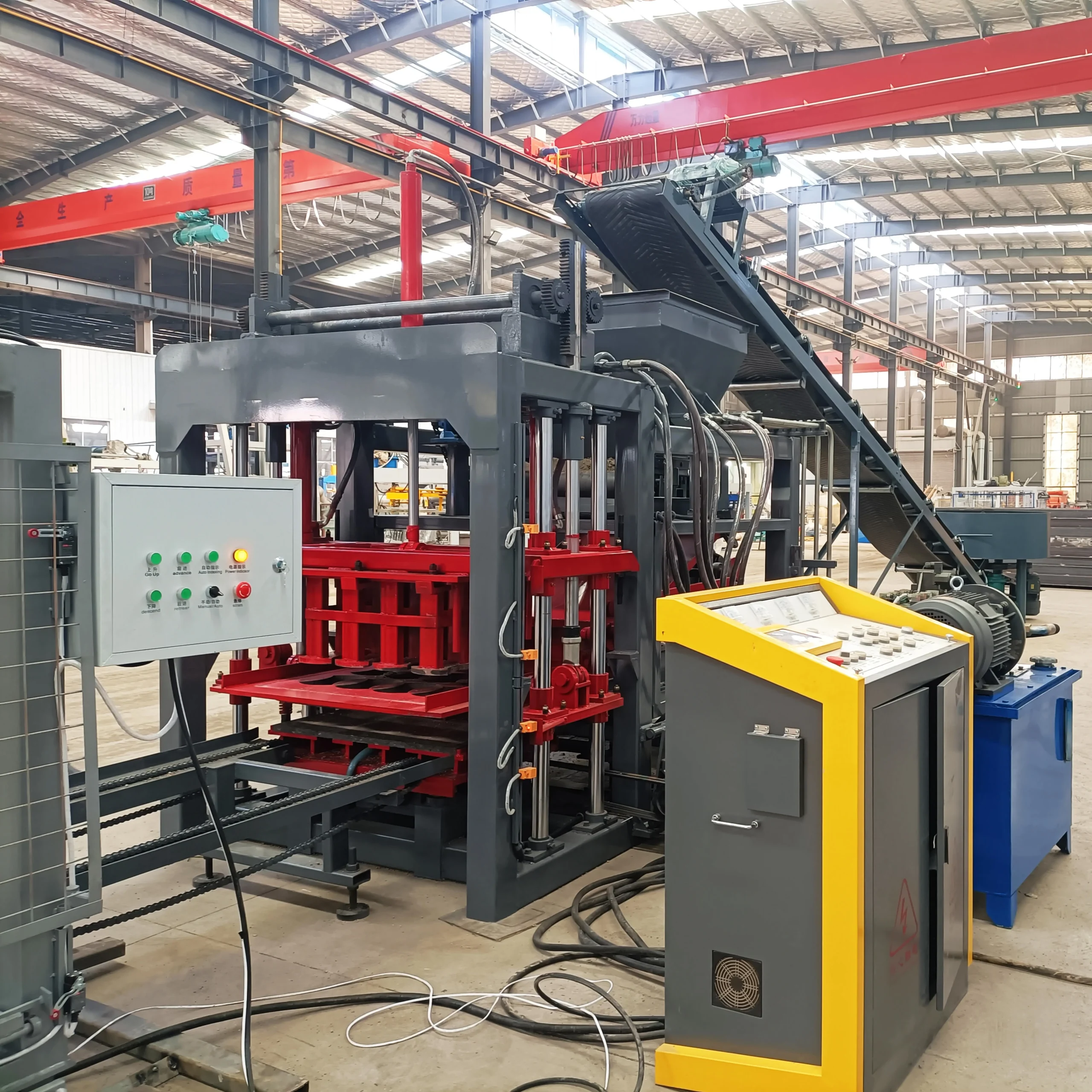
 High quality block machine