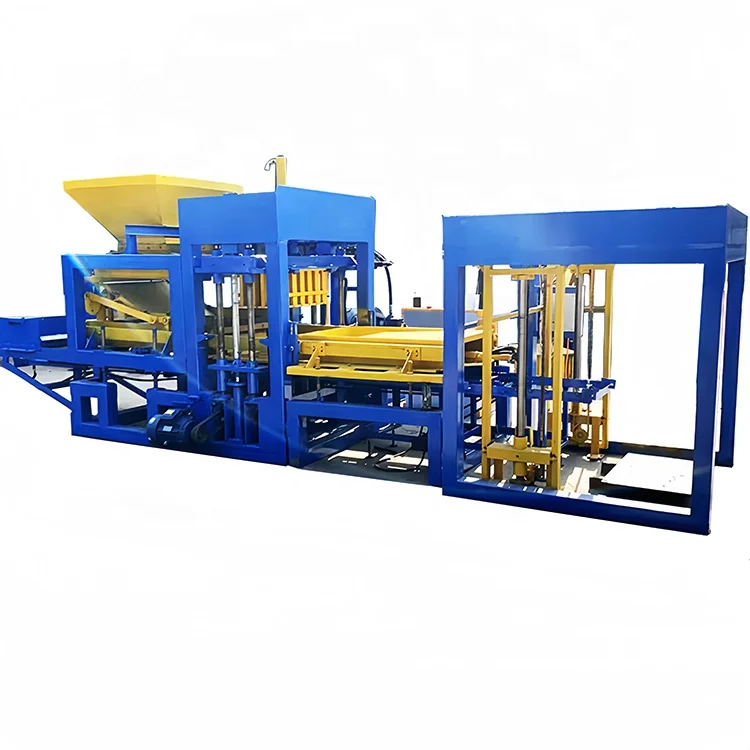
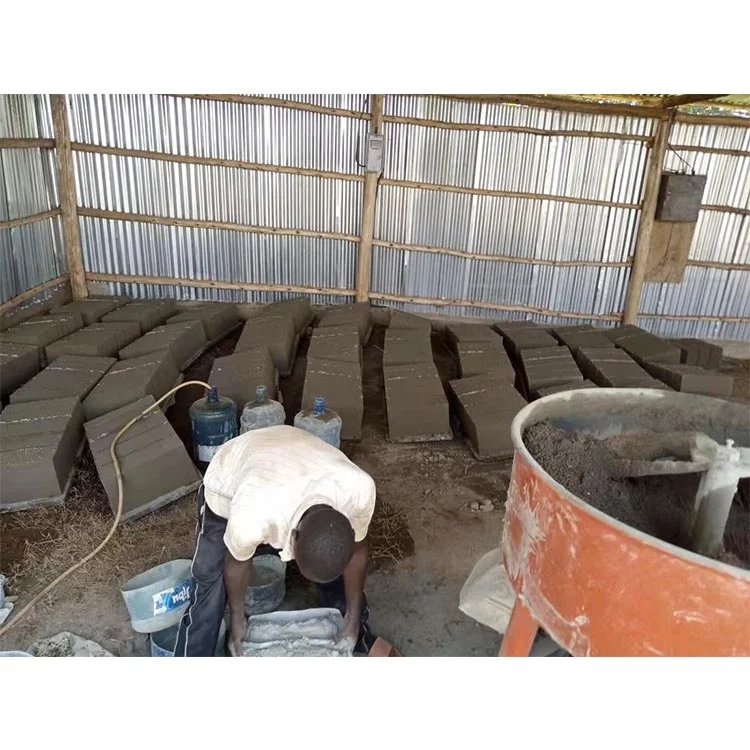
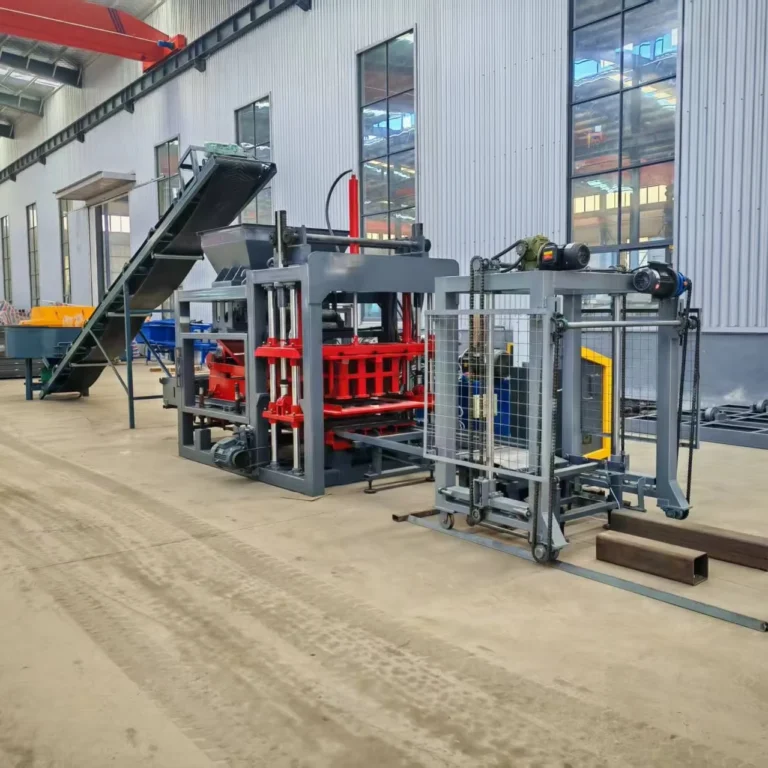
Mid-Tier Matched System — The QT4-18 is positioned as a single-sourced block making machine, pallet, and mould package rather than a standalone press, so output figures and handling requirements align with your actual site conditions before dispatch.
Technical Specifications
| Parameter |
Value |
| Model |
QT4-18 |
| Product Type |
Semi-Automatic Concrete Block Making Machine |
| Overall Dimensions (L×W×H) |
3900×1600×2300 mm |
| Total Weight |
3 T |
| Rated Power |
24 KW |
| Vibration Force |
40-50 KN |
| Vibration Method |
Bed mould vertical vibration and upper mould compression vibration |
| Hydraulic System |
Hydraulic station for high pressure and stable operation |
| Molding Cycle |
15-25 s |
| Pallet Size |
850×550×25 mm |
| Mixer Model |
JQ350 |
| Applied Products |
Paver, solid, hollow, curbstone |
| Raw Materials |
Crushed stones, sand, cement, dust, fly ash |
| Automation Level |
Semi-automatic |
| Output Capacity (Hollow Block 400×200×200 mm) |
1200-1680 pcs/h, 9600-13440 pcs/8hr |
| Output Capacity (Hollow Block 400×150×200 mm) |
1800-2400 pcs/h, 14400-19200 pcs/8hr |
| Output Capacity (Solid Brick 240×115×53 mm) |
3240 pcs/h, 16200-19440 pcs/8hr |
Application Suitability
| Application |
Material or Output |
| 8-inch hollow block yard for housing projects |
Crushed stone, sand, and cement producing 400×200×200 mm blocks |
| 6-inch hollow block for partition walls |
Local aggregate blends forming 400×150×200 mm units |
| Standard solid brick production |
Cement and fly ash mixes yielding 240×115×53 mm bricks |
| Paver and curbstone for site contractors |
Interchangeable moulds on the same press platform |
What "Pieces per Hour" Really Means on a Concrete Block Making Machine
The cycle time of 15-25 seconds only becomes a meaningful daily output when you pin it to a specific block format and shift length.
I have watched buyers sign for a concrete block making machine manufacturer quote that promised impressive hourly numbers, only to discover the figure assumed a solid brick they never intended to sell. When the same press switched to the 8-inch hollow blocks their market actually demanded, throughput dropped to a different tier entirely. That gap between quoted and real output is where project schedules break and cash flow stalls [NEED_CITE: capacity calculation methods for block production equipment]. The QT4-18 output table above lists three separate formats with their own cycle assumptions so you can plan against the product your buyers will actually purchase.

Placing the QT4-18 in the Block Machine Range
The QT4-18 sits in the mid-tier of our semi-automatic block machine range, filling the gap between single-operator mobile egg-laying machines and fully automatic lines with robotic stacking. Buyers who have outgrown manual pallet handling but are not yet ready to commit to a high-capacity automatic plant find this tier practical. The semi-automatic configuration keeps capital outlay measured while still delivering hydraulic pressing and dual vibration, which are the two systems that determine whether your blocks survive the journey from press to curing rack without corner damage.
Semi-Automatic Means You Choose Where Labour Goes
On the QT4-18, pallet handling and product stacking remain manual tasks while the press cycle, vibration sequence, and hydraulic pressure operate under powered control. This division lets a startup block yard begin production with a smaller crew and add automatic pallet feeders or stackers later as volume justifies the investment. The upgrade path matters because re-selling a machine that cannot be expanded often costs more than the automation module you skipped. A concrete block making machine manufacturer that only offers fixed configurations forces you into a decision today that your market may not support yet [NEED_CITE: semi-automatic to automatic block plant upgrade considerations].
Dual Vibration, Hydraulic Pressure, and Pallet Logistics
The QT4-18 pairs bed mould vertical vibration with upper mould compression vibration, a dual approach that compacts the concrete mix from both directions during the 15-25 second molding cycle. For hollow blocks, this matters because the thin web walls between cavities need even density to avoid cracking during demoulding. The hydraulic station maintains consistent pressure across each cycle, which keeps block dimensions stable from the first press of the morning to the last. The 850×550 mm pallet size was chosen to fit standard curing rack widths and manual trolley dimensions common in medium-scale yards. If your existing curing area uses a different pallet footprint, confirming this before production avoids a situation where fresh blocks cannot reach the rack without double-handling.
When the Wrong Pallet Size Derails a Block Yard
A pallet dimension that does not match your curing racks or forklift tines turns every production hour into a handling problem. I have visited sites where blocks sat on the press platform because the curing racks were built for a different pallet width, and the yard crew spent half the shift moving product by hand instead of pressing more. The pallet specification is not a minor accessory — it is the physical link between the press output and your curing capacity. Choosing a concrete block making machine without confirming pallet compatibility against your existing yard layout is one of the most common reasons daily output falls short of the quoted figure [NEED_CITE: pallet handling mismatches in block production plants].
Why Source This Machine Through a Single-System Approach
The QT4-18 is specified alongside its moulds, pallets, and JQ350 mixer as one matched set, so the mixer output rate feeds the press without bottlenecking or overflowing. Every capacity figure we quote names the block format and shift length it assumes, eliminating the guesswork that plagues catalogue-only quotations. Mould drawings are confirmed against your local market’s block sizes before production begins, not after the machine arrives. Voltage, frequency, and control display language are locked in during the order stage — a step I insist on after watching a site in Saudi Arabia lose three weeks because the control cabinet was wired for the wrong grid. The factory test record documents actual press cycles on your specified block format before the QT4-18 leaves the floor.
Documentation & Verification
- Factory test record showing press cycles on your specified hollow or solid block format
- Line layout drawing with capacity calculation stating the exact block dimensions assumed
- Voltage, frequency, and control language confirmation sheet signed before production
- Mould drawing and format list confirming every block size included in the initial delivery
- Hydraulic and electrical schematic for your maintenance team’s reference
- Packing photographs documenting dismantling state before container loading
Installation, Commissioning & Support
- Foundation plan matched to the 3900×1600 mm footprint and 3 T operating weight
- Power connection confirmed for 24 KW draw at your local voltage and frequency
- Machine arrives partially dismantled; reassembly sequence documented with photographs
- First-run commissioning covers hydraulic pressure calibration and vibration timing on your mix
- Operator training addresses mould change procedure and daily greasing points
- Wear parts list identifies hydraulic seals and vibration components with reorder intervals
Before You Request a Quote
Tell us which block formats your market actually sells, the daily volume you need for each, and the raw materials available at your site. Share your local voltage and frequency so the electrical system is configured before the QT4-18 enters production. If you already have curing racks or pallet handling equipment, send the dimensions so the pallet specification integrates with what is already on the ground. The more precise your input, the more accurate the capacity calculation we return.
Frequently Asked Questions
Q: Where does the QT4-18 sit in the full block machine range, and when should I choose a fully automatic tier instead?
A: The QT4-18 occupies the semi-automatic mid-tier, suited to buyers who need hydraulic pressing and dual vibration but handle pallets and stacking manually. If your target output requires continuous two-shift operation and your labour cost justifies automatic stacking and cubing, a fully automatic tier eliminates those manual stations. The semi-automatic platform does allow later addition of automation modules.
Q: How do I verify the quoted daily output against the specific block format my market actually sells?
A: Request a capacity calculation that names the exact block dimensions, molding cycle assumption, and shift length behind every output figure. For the QT4-18, the 400×200×200 mm hollow block yields 9,600-13,440 pieces per eight-hour shift, while the 400×150×200 mm hollow block reaches 14,400-19,200 in the same period. Any quote that gives one number without naming the format should be questioned.
Q: Is the QT4-18 configured for my local aggregate and mix design, or is it a catalogue default?
A: The vibration force range of 40-50 KN and hydraulic pressure are set against the mix design you confirm during the order stage, not a generic catalogue setting. If your local aggregate is coarser or your cement content differs from standard assumptions, the press parameters adjust accordingly. This confirmation step happens before production, ensuring block strength meets your market requirement from the first run.
Q: What automation upgrade path is available if I start with this semi-automatic model?
A: The QT4-18 semi-automatic configuration leaves room to add automatic pallet feeding, stacking, and cubing modules as your production volume grows. Rather than replacing the entire press, you add the automation stations around it. Discussing the upgrade path at the initial order stage ensures the base machine includes the mechanical and electrical interfaces needed for later expansion.

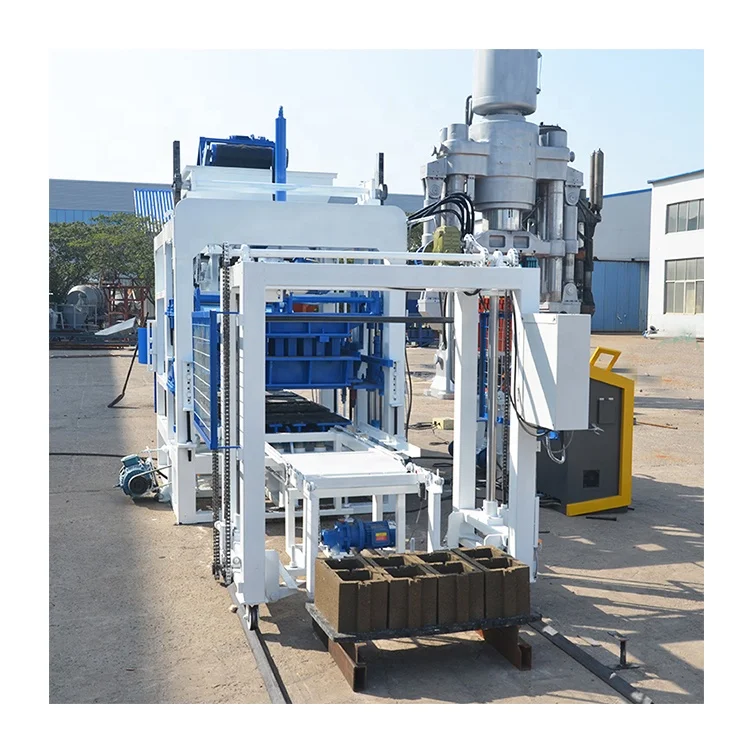
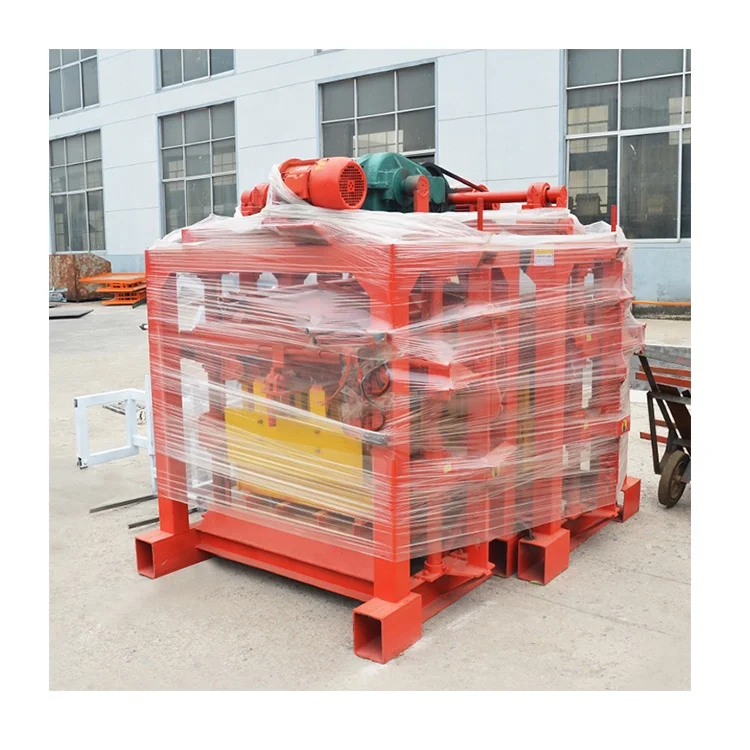 High quality block machine