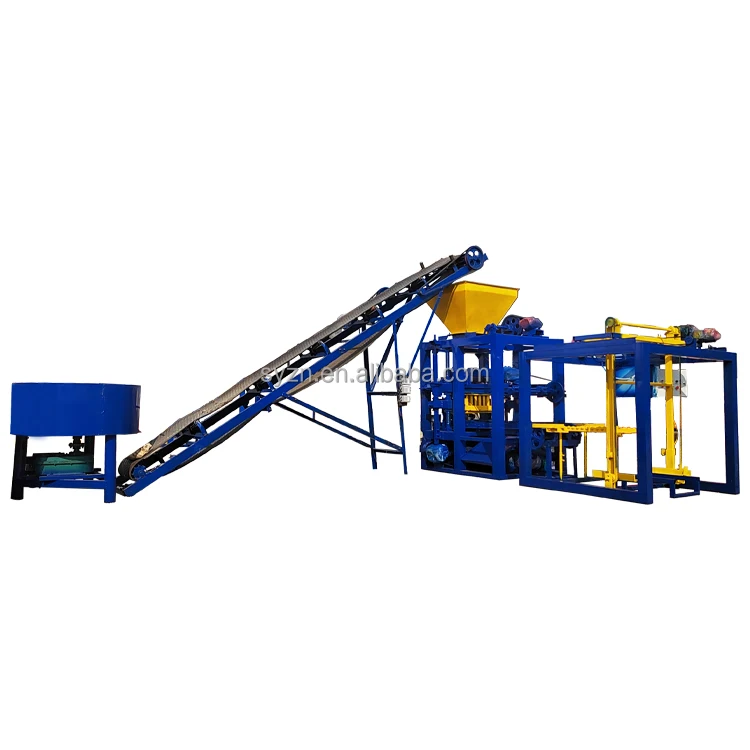
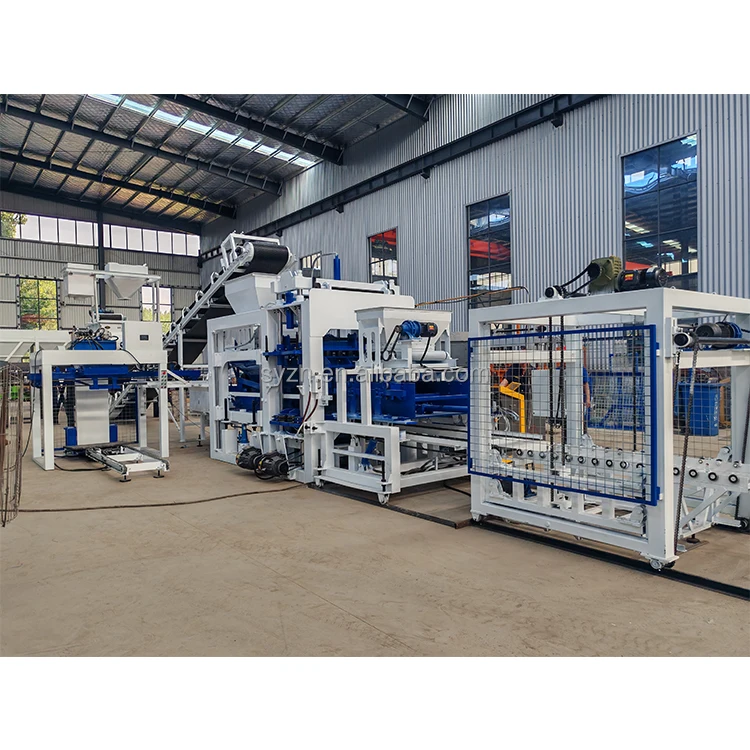
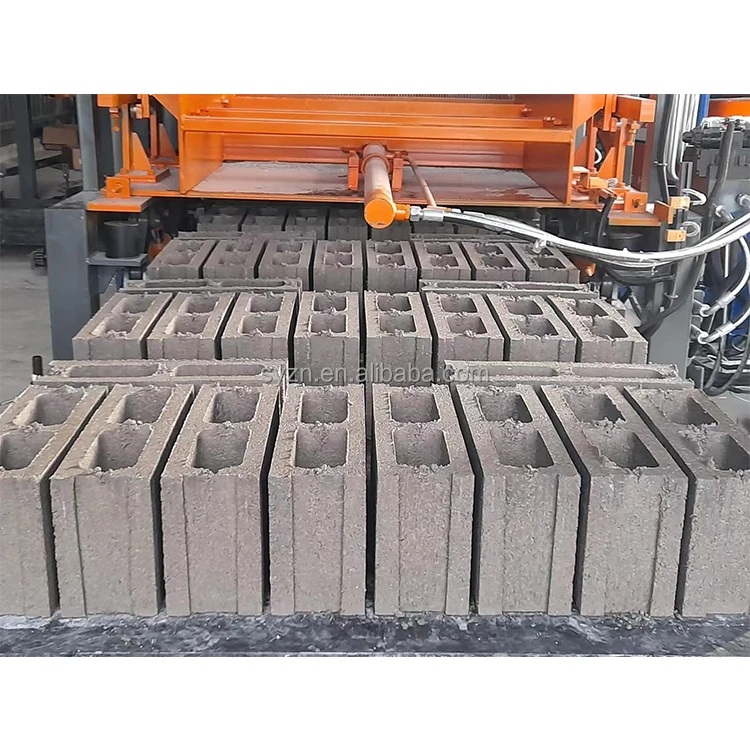
Single-focus machinery design — every component from the press to the pallet return is engineered as one system around the QT4-15, eliminating the mismatches that arise when buyers piece together equipment from separate vendors.
Technical Specifications
| Parameter |
Value |
| Model |
QT4-15 |
| Product Type |
Hydraulic Automatic Concrete Block Making Machine |
| Control System |
Computer controlled, fully automatic |
| Vibration Mode |
Multiaxis synchronizer vibration, vertically downward |
| Hydraulic System |
High thermal efficiency, low heat productivity |
| Mixer System |
Multiaxis forced mixer system |
| Guide Bearing |
Long-period over-length guide bearing for upper mould and mould box alignment |
| Rack Construction |
High strength with special welding technique, resists vibrating shock |
| Cycle Time |
15-20s |
| Output Capacity (400x200x200mm hollow block) |
4 pcs/mould, 900-1200 pcs/hour, 7200-9600 pcs/8hr |
| Output Capacity (400x150x200mm hollow block) |
5 pcs/mould, 1080-1440 pcs/hour, 8640-11520 pcs/8hr |
| Output Capacity (400x100x200mm hollow block) |
8 pcs/mould, 1440-1920 pcs/hour, 11520-15360 pcs/8hr |
| Output Capacity (200x100x60mm paving block) |
16 pcs/mould, 2880-3840 pcs/hour, 23040-30720 pcs/8hr |
| Output Capacity (240x115x53mm solid brick) |
28 pcs/mould, 5930-6720 pcs/hour, 47400-53700 pcs/8hr |
| Automation Level |
Fully automatic |
| Warranty |
1 year for the whole machine (excluding spare parts) |
| Rated Power (kW) |
(basis to be confirmed) |
| Voltage & Frequency |
(basis to be confirmed) |
| Overall Dimensions (L×W×H) |
(basis to be confirmed) |
| Net Weight |
(basis to be confirmed) |
| Hydraulic Pressure (MPa) |
(basis to be confirmed) |
| Vibration Force (kN) |
(basis to be confirmed) |
| Pallet Size |
(basis to be confirmed) |
| Mould Change Time |
(basis to be confirmed) |
| PLC Language Options |
(basis to be confirmed) |
Application Suitability
| Application |
Material or Output |
| Hollow block production plants |
Crushed stone, sand, cement, and fly ash aggregates for 400x200x200mm, 400x150x200mm, and 400x100x200mm hollow formats |
| Paving block manufacturing |
High-density concrete mixes for 200x100x60mm interlocking and standard paving formats |
| Solid brick production |
Standard concrete and clay-blend mixes for 240x115x53mm solid bricks |
| On-site contractor production |
Local aggregate and cement for housing project block requirements |
| Building material distributor stock |
Standardized formats for regional resale to smaller block producers |
What "9600 Blocks per Shift" Actually Means for the QT4-15 automatic block making machine manufacturer
Capacity numbers only matter when tied to a specific block format and mould cavity count.
I have seen buyers sign contracts based on a single headline output figure, only to discover on commissioning day that the machine was rated on a small solid brick while their market actually sells 200mm hollow blocks. The QT4-15 automatic block making machine manufacturer documentation must state that 7200 to 9600 pieces per eight-hour shift applies only to the 400x200x200mm hollow block with four cavities per mould. Switch to a 150mm wall thickness and the cavity count rises to five, altering the daily total. [NEED_CITE: block format assumptions in machinery capacity quotations] Without this clarity, the daily output falls far short of expectation and the entire production schedule collapses before the first curing cycle finishes.

Positioning the QT4-15 Within the Full Machine Range
The Shiyue lineup spans from small workshop semi-automatic presses to high-capacity fully automatic lines. The QT4-15 automatic block making machine manufacturer sits in the mid-tier fully automatic segment, offering computer-controlled production for buyers ready to move beyond manual pallet handling but not yet requiring the output volume of the largest models in the catalog.
Investment Tier and Plant Footprint Considerations
Choosing this mid-tier model means balancing capital outlay against floor space and supporting equipment needs. A buyer stepping up from a semi-automatic press will find the QT4-15 requires a dedicated raw material batching area, a pallet return circuit, and a curing zone sized for the higher output volume. [NEED_CITE: plant layout requirements for mid-tier automatic block machines] Understanding where this model sits helps entrepreneurs and expanding producers plan their facility footprint before committing to a purchase order.
Hydraulic Pressure and Vibration Force Matching
The multiaxis synchronizer vibration delivers vertically downward force, which must work in concert with the hydraulic pressure to achieve consistent block density. If the vibration force is too low for the buyer’s aggregate gradation, the blocks emerge weak regardless of cement content. The long-period over-length guide bearing system keeps the upper mould and mould box aligned through thousands of cycles daily, preventing uneven compaction that causes rejected batches.
Rack Construction and Continuous Shock Resistance
The high-strength rack uses a special welding technique engineered to resist the continuous vibrating shock inherent in block production. Standard structural welding can develop microfractures after months of high-frequency vibration, leading to frame misalignment and inconsistent block dimensions. This construction approach is critical for maintaining the 15-20 second cycle time reliability over the machine’s operational life. [NEED_CITE: structural fatigue in vibrating machinery frames]
The Hidden Cost of Unmatched Pallet and Curing Configurations
When a quotation omits pallet specifications, buyers often discover their existing forklifts cannot handle the pallet size the machine requires, forcing an unplanned equipment purchase. Pallet material also affects block quality; warped or waterlogged pallets create uneven base surfaces that weaken the finished product. A mid-tier automatic line that outputs thousands of blocks per shift will quickly overwhelm a curing area designed for semi-automatic volumes, creating a bottleneck that negates the press speed advantage entirely. [NEED_CITE: pallet handling mismatches in block production lines]
Why Procurement Through This Channel Works
Shiyue maintains block machinery as a single focus, meaning the QT4-15 press, moulds, pallets, and handling equipment are specified as one matched system rather than assembled from unrelated suppliers. The configuration process sets machine parameters against the buyer’s actual mix design and local aggregate, not a generic catalog default. Mould design covers the formats the buyer’s market actually sells, including custom drawings when standard options do not match regional demand. The automation level is selectable, allowing a buyer to start with the QT4-15 and add stacking or cubing stations later as volume grows. Installation and commissioning support includes operator training so the crew understands mould change procedures and cycle time optimization from day one.
Documentation & Verification
- Line layout and capacity calculation stating the exact 400x200x200mm hollow block format assumed for the 7200-9600 piece shift output
- Machine specification sheet confirming hydraulic pressure, vibration force, and pallet size matched to your site conditions
- Mould drawing and format list covering the hollow, paving, and solid brick formats your regional market demands
- Voltage, frequency, and PLC display language confirmation document signed off before production begins
- Factory test record showing actual cycle times and block dimensions from your specified mould set
- Operation and maintenance manual with wear parts list and mould change procedures for the QT4-15
Installation, Commissioning & Support
- Foundation requirements based on the QT4-15 overall dimensions and dynamic vibration loads during 15-20 second cycle operation
- Electrical supply confirmation covering voltage, frequency, and dedicated circuit capacity for the multiaxis forced mixer and hydraulic system
- Machine dismantling for container loading with reassembly guidance covering rack alignment and guide bearing verification on site
- Commissioning protocol including first-run cycle time validation against the stated 900-1200 pieces per hour hollow block output
- Operator training covering PLC navigation, mould change sequences, and multiaxis synchronizer vibration adjustment for different mix designs
- Wear parts and hydraulic seal inventory recommendation based on the 4-cavity hollow block mould and continuous shift operation
Preparing Your Inquiry for the QT4-15 automatic block making machine manufacturer
To receive an accurate configuration proposal, provide the specific block formats your market sells along with the target daily output for each format. Include details about your local raw materials, particularly aggregate type and any clay or silt content that affects mix design. Specify your available workshop dimensions, curing area size, and existing material handling equipment so the supporting line can be matched correctly.
Frequently Asked Questions
Q: How does the QT4-15’s output tier compare to semi-automatic models and higher-capacity automatic lines in the range?
A: The QT4-15 occupies the mid-tier fully automatic position. Semi-automatic models require manual pallet handling and suit lower daily volumes, while higher-tier lines add automatic stacking and cubing for maximum throughput. The QT4-15 delivers computer-controlled production with multiaxis vibration, positioned for buyers scaling beyond manual operation without the capital commitment of the largest configurations available.
Q: What block formats are the capacity figures based on, and how does output change when switching moulds?
A: Each capacity figure corresponds to a specific format and cavity count. The 7200-9600 pieces per shift applies to 400x200x200mm hollow blocks with four cavities. Switching to 400x100x200mm blocks increases cavities to eight, raising hourly output to 1440-1920 pieces. Mould changes require downtime, so format flexibility depends on changeover speed and operator familiarity.
Q: What plant footprint and supporting equipment does the QT4-15 require at this automation level?
A: A fully automatic configuration requires raw material feeding, a multiaxis forced mixer, pallet feeding, and a pallet return circuit. The curing area must accommodate the higher shift output compared to semi-automatic volumes. Floor space for the press itself plus material flow paths must be confirmed against the overall dimensions before installation planning begins.
Q: Can the QT4-15 be upgraded later with additional automation stations such as automatic stacking and cubing?
A: Yes. The automation level is selectable, and buyers can begin with basic automatic operation and add stacking, curing rack handling, and cubing stations as production volume justifies the investment. The control system supports integration of these additional stations when the expansion timeline arrives.

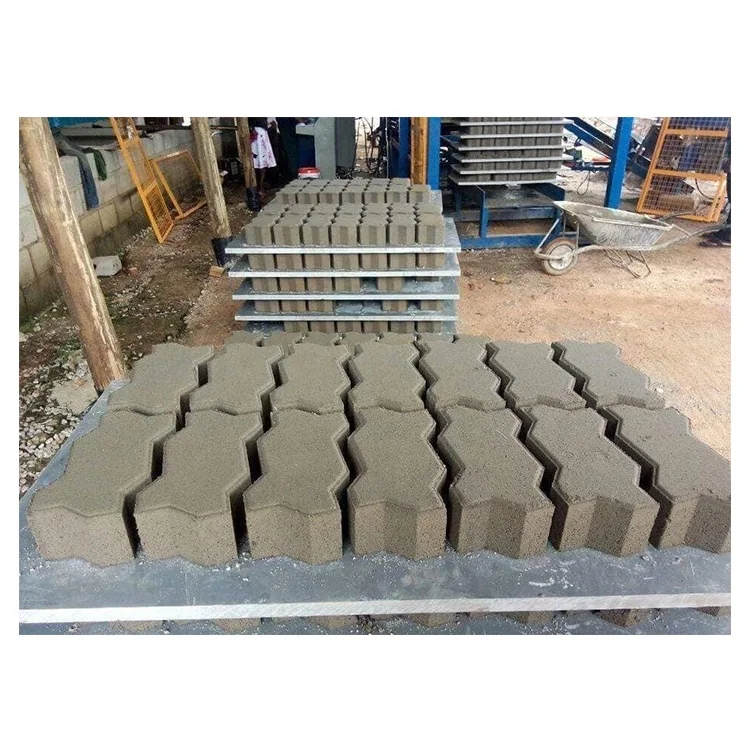
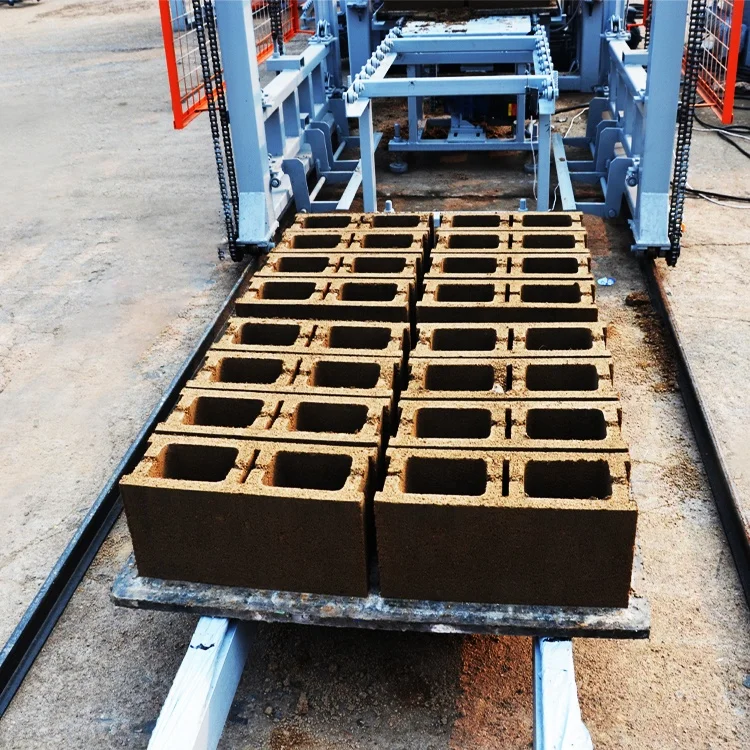 High quality block machine