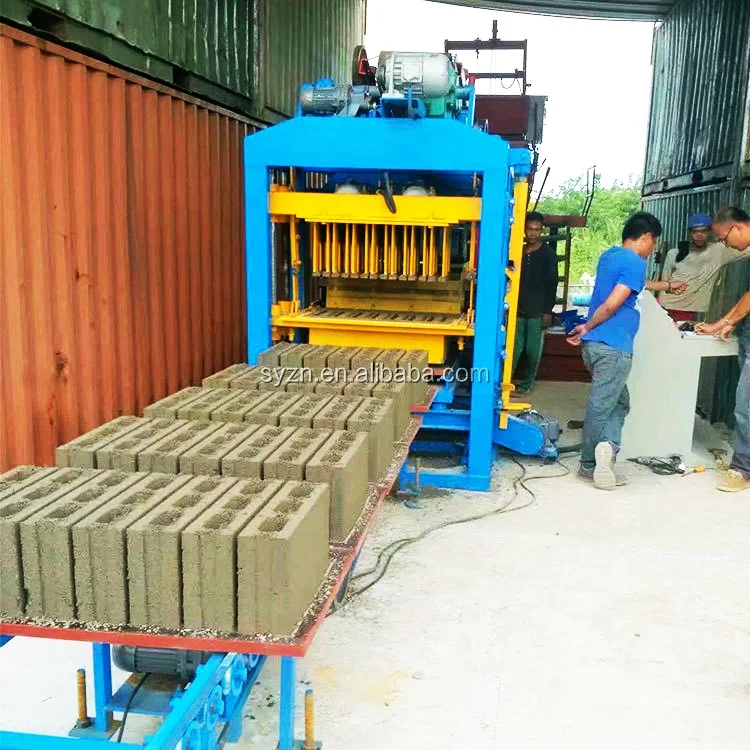
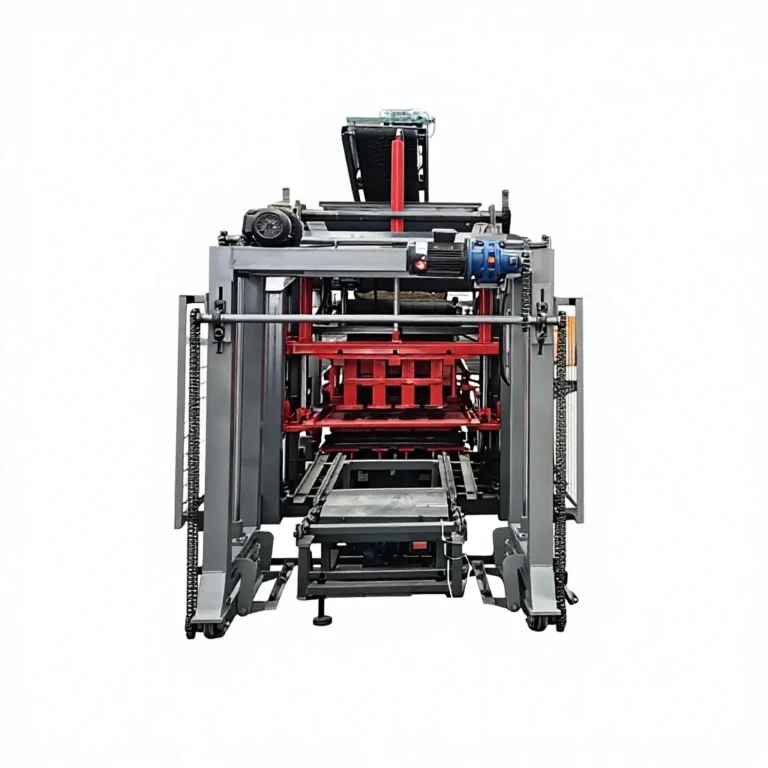
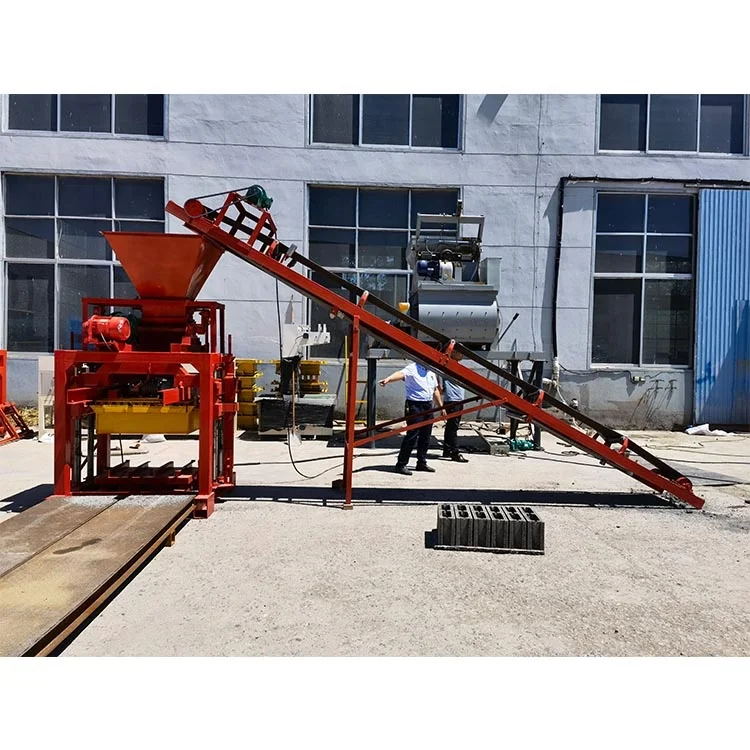
Matched System Integration — the QT8-15 block machine ships as a coordinated press, mould, pallet, and handling setup rather than a standalone unit assembled from separate sources.
Technical Specifications
| Parameter |
Value |
| Model |
QT8-15 |
| Product Type |
Hydraulic Block Making Machine |
| Overall Dimensions (L×W×H) |
8300 × 1860 × 3000 mm |
| Rated Pressure |
21 MPa |
| Main Vibration Form |
Platform Vibration |
| Vibration Frequency |
2800–4500 r/min |
| Vibration Force |
45 kN |
| Pallet Size |
950 × 900 mm |
| Molding Cycle |
15–20 s |
| Overall Power |
55.5 kW |
| Total Mass |
8 T |
| Demolding Method |
Hydraulic |
| Recommended Factory Area |
300 m² |
| Applied Products |
Concrete blocks, hollow/solid blocks, pavers, interlocking blocks, curbstone, colored pavers |
| Raw Materials |
Crushed stone, sand, cement, dust, fly ash, gravel, slag |
| Voltage & Frequency |
Basis to be confirmed |
| Control System |
Basis to be confirmed |
| Output Capacity |
Basis to be confirmed |
| Mould Change Time |
Basis to be confirmed |
| Automation Level |
Basis to be confirmed |
| Stacking Method |
Basis to be confirmed |
Application Suitability
| Application |
Material or Output |
| Hollow block production for housing projects |
Crushed stone, sand, cement, fly ash blends |
| Solid block manufacturing for load-bearing walls |
Gravel, cement, and locally sourced aggregate |
| Paver and colored paver runs for landscaping |
Fine sand, cement, pigment additives |
| Interlocking brick production for perimeter walls |
Sand, crushed stone dust, cement |
| Kerbstone and curb production for roadworks |
Coarse aggregate, cement, slag mixes |
What "Cycles Per Hour" Actually Means for the QT8-15 Block Machine
A cycle time figure is only useful when tied to the exact block format being produced.
I once watched a plant owner in West Africa stare at a QT8-15 hydraulic block making machine for sale brochure that promised impressive hourly cycles. What the brochure did not say was that those numbers assumed a small solid paver format. When he switched to the 200 mm hollow blocks his market actually demanded, the daily output dropped considerably. The press ran the same number of cycles, but each cycle produced fewer blocks because the mould cavity count was different. [NEED_CITE: block format cavity count and its effect on daily throughput calculations]
This is the gap we close up front. Before we configure a QT8-15 block machine manufacturer quote, we ask which formats you plan to sell, in what proportions, and from which raw materials. That way, the capacity calculation you receive reflects your actual product mix, not a best-case scenario.

Where the QT8-15 Sits in the Shiyue Range
The QT8-15 occupies the mid-to-high output tier in our full machine lineup. Below it sit the semi-automatic models suited for smaller workshops or first-time entrepreneurs working with tighter budgets. Above it are the high-capacity fully automatic lines designed for plants running multiple shifts with dedicated pallet return systems. The QT8-15 sits at the point where a buyer has outgrown entry-level volume but does not yet need the footprint and staffing commitment of a top-tier installation.
For a buyer surveying options, this positioning matters because it defines what you get and what you might upgrade toward later. The QT8-15 block machine manufacturer range allows a plant to start with manual pallet handling and add automatic stacking as production stabilizes.
Automation Tiers and Future Expansion Paths
A common question from plant owners evaluating the QT8-15 hydraulic block making machine for sale is whether they can begin semi-automatic and upgrade later. The frame and hydraulic architecture support this progression. Pallet feeding, stacking, and cubing modules can be added as separate stations once the operator team has established consistent mix designs and shift routines. [NEED_CITE: automation upgrade paths in hydraulic block press installations]
The control system is configurable for PLC or relay-based logic depending on the automation level selected. Display language is confirmed before production so that when the machine arrives on site, the operator interface matches the workforce. Skipping this step has delayed commissioning on more projects than I care to count.
Reading the Specs That Actually Shape Daily Output
The 21 MPa rated pressure and 45 kN vibration force work together to compact the mix into a dense, consistent block. Pressure alone does not guarantee strength; without sufficient vibration, the aggregate particles do not settle tightly. Vibration alone without enough hydraulic pressure leaves blocks that crumble at the edges during demolding. The QT8-15 pairs both at levels suited for standard concrete block grades across hollow, solid, and paver formats.
The 950 × 900 mm pallet size is not arbitrary. It aligns with standard curing rack dimensions used across most block plants, meaning you can source or fabricate racks locally without custom engineering. It also matches the fork spacing on common warehouse forklifts, so you do not need specialized handling equipment to move green blocks to the curing area.
A molding cycle of 15–20 seconds applies across formats, though thicker blocks and denser mixes push toward the upper end of that range. The 55.5 kW overall power draw places the QT8-15 in a range that most mid-capacity plant electrical services can support without dedicated transformer upgrades.
The Hidden Cost of a Misconfigured Line
When pallet size is chosen without checking the buyer’s existing curing racks and forklifts, the result is a plant where blocks sit on the floor because nothing fits the racks. When voltage and frequency are not confirmed before production, the machine arrives and sits idle while a local electrician rewires the control panel. These are not hypothetical problems — they show up regularly in plants where the press was quoted in isolation rather than as part of a coordinated line. [NEED_CITE: common commissioning delays in exported block making equipment]
Why Source the QT8-15 Through Shiyue
Every QT8-15 configuration starts with the buyer’s actual mix design and local aggregate, not a catalogue default. We request material samples or lab reports before finalizing vibration and pressure settings.
The machine, mould, pallet, and handling equipment are specified as one matched system. This eliminates the integration gaps that appear when a buyer sources the press from one supplier and pallets from another.
Mould design covers the formats your market sells, including custom drawings when standard catalogue moulds do not match local building codes or buyer preferences.
Automation level is selectable, allowing a buyer to start at a comfortable investment tier and add stacking or cubing modules as the plant stabilizes and output demands grow.
Installation support includes operator training on the specific block formats and mix designs the plant will run, not generic machine operation.
Documentation & Verification
- Line layout drawing with capacity calculation per block format for the QT8-15
- Machine specification sheet confirming hydraulic pressure, vibration force, and pallet size against your mix
- Mould drawing and format list showing cycle times for each block type the QT8-15 will produce
- Voltage, frequency, and PLC display language confirmation form signed before production
- Factory test record on your specified block format before dispatch
- Packing photographs and customs documentation support for export shipment
Installation, Commissioning & Support
- Foundation pad must accommodate the 8300 × 1860 mm footprint with clearance for pallet circulation
- Electrical supply must support 55.5 kW total draw with a dedicated circuit for the hydraulic pump motor
- Machine ships partially dismantled for container loading; reassembly aligns with the provided layout drawing
- First-run commissioning includes vibration frequency tuning against your local aggregate sample
- Operator training covers mould change procedure, hydraulic pressure adjustment, and daily maintenance checkpoints
- Wear parts list and mould inventory provided so first replacements can be ordered before they are needed
Before You Send an Inquiry
To give you an accurate QT8-15 configuration, we need to know the block formats your market sells, the daily volume you plan to run per format, and your local raw material characteristics. Share your site voltage and frequency, preferred control language, and the curing space and forklift equipment you already have on site. If you have an existing mixer or batching system, let us know its capacity so we can confirm whether it matches the press cycle rate.
Frequently Asked Questions
Q: How is the QT8-15 output capacity calculated for each block format?
A: Capacity is calculated per format based on the mould cavity count, the 15–20 second molding cycle, and realistic shift hours including pallet handling time. We provide a written capacity table listing each block type you plan to produce alongside its expected daily output, so you can compare figures against your sales targets before committing.
Q: Where does the QT8-15 fit compared to smaller and larger models in the range?
A: The QT8-15 sits in the mid-to-high tier, above semi-automatic workshop models and below fully automatic high-capacity lines. It suits plants that have outgrown entry-level volume but are not yet ready for the staffing and footprint demands of a top-tier installation. The automation level can be adjusted as production needs evolve.
Q: How are voltage, frequency, and control language confirmed before shipment?
A: We send a confirmation form listing your site voltage, frequency, and preferred PLC display language for your signature before production begins. This step prevents the commissioning delays that occur when a machine arrives configured for a different electrical standard or with an interface the operator cannot read.
Q: What factory area does the QT8-15 require?
A: The press itself measures 8300 × 1860 × 3000 mm, and the recommended factory area is approximately 300 m² to accommodate the press, pallet circulation, raw material staging, and initial curing rack placement. Exact layout depends on your automation level and whether stacking is manual or automatic.
Q: Can I start with semi-automatic operation and add automation later?
A: Yes. The QT8-15 frame and hydraulic system support future addition of automatic pallet feeding, stacking, and cubing modules. Many buyers start semi-automatic to manage initial investment and operator learning, then upgrade individual stations once daily routines and mix designs are stabilized.

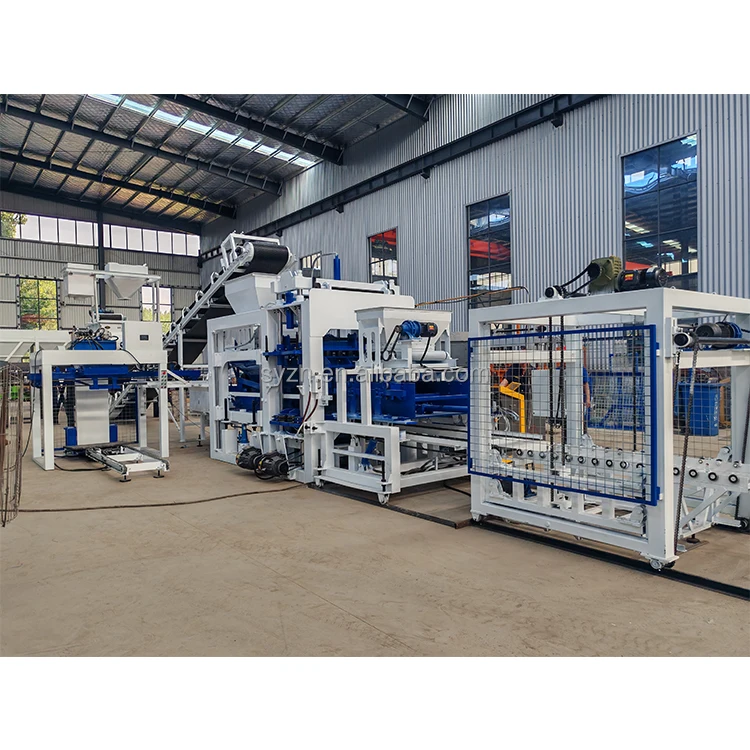
 High quality block machine