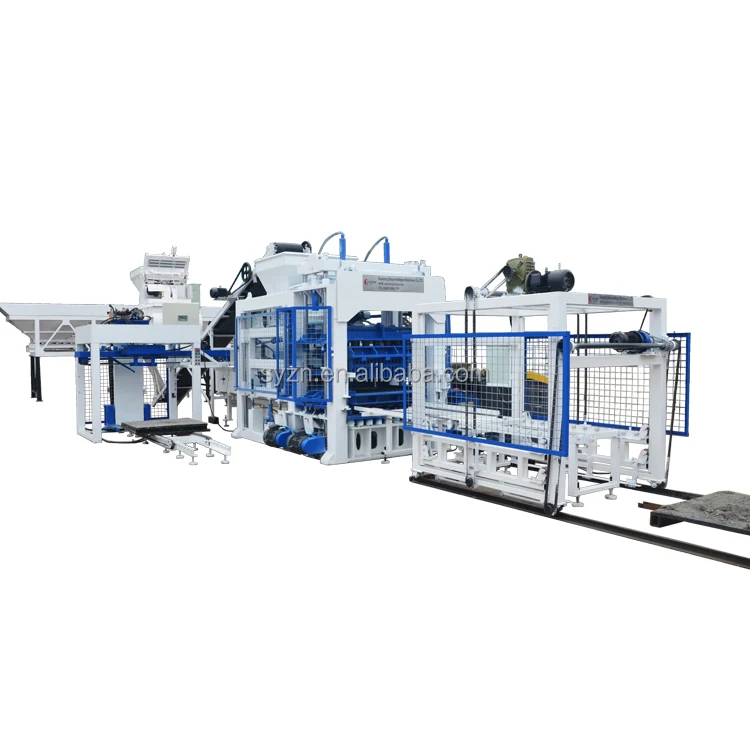
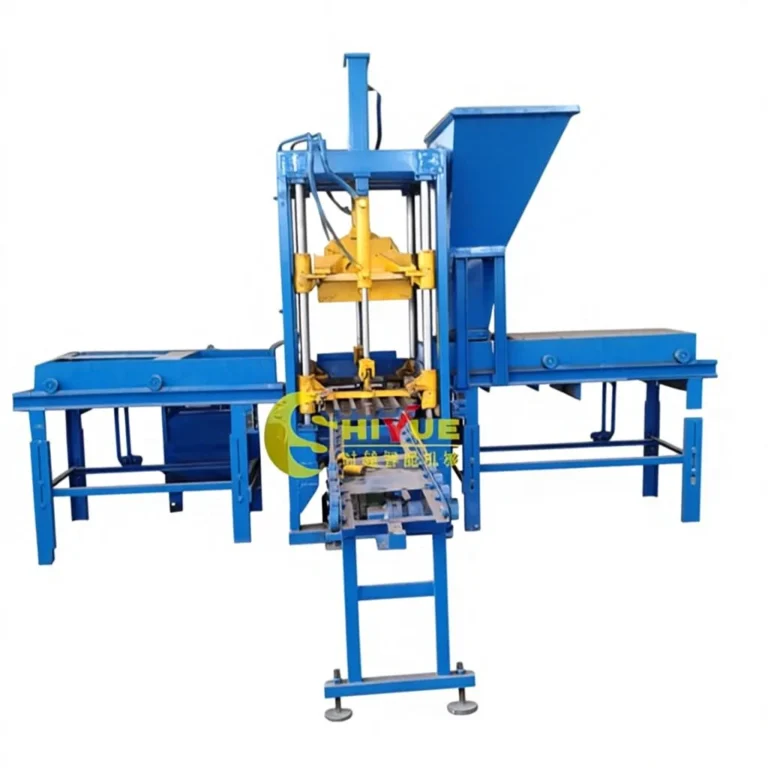
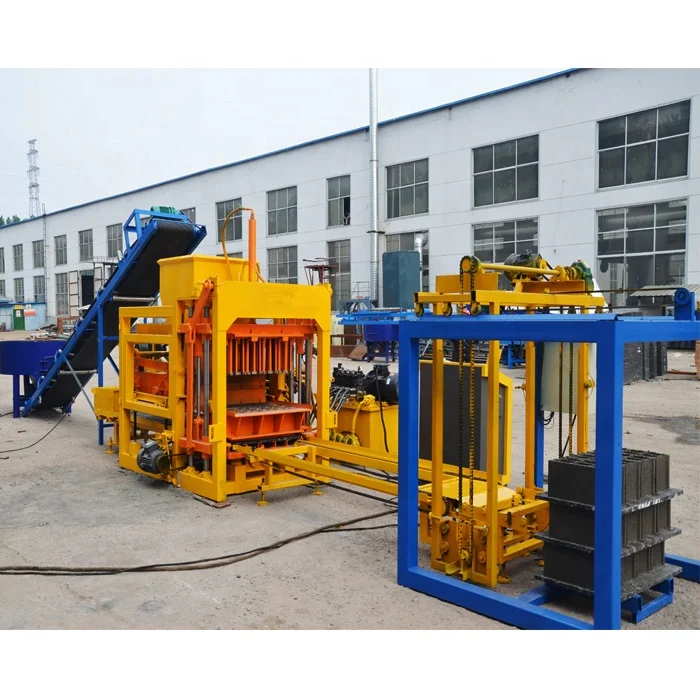
Pallet-Free Stacking System — The QT18-25 eliminates pallet investment entirely by stacking blocks directly after moulding, a configuration we specify only after confirming your curing area layout and local climate conditions.
Technical Specifications
| Parameter |
Value |
| Model |
QT18-25 |
| Product Type |
Fully Automatic Hydraulic Pallet-free Hollow Block Machine |
| Brick Height Range |
50–300 mm |
| Stacking Height |
0–1200 mm |
| Main Vibration Form |
Platform Vibration |
| Vibration Frequency |
2800–4500 r/min |
| Pallet Size |
1350 × 1350 × 120 mm |
| Molding Cycle |
15–25 s |
| Vibration Power |
60 kW |
| Hydraulic System Power |
59 kW |
| Diving Method |
Hydraulic |
| Demolding Method |
Vibration and Hydraulic |
| General Water Consumption |
8 T/Day |
| Factory Area |
2000 m² |
| Control System |
PLC with person-machine conversation interface |
| Automation Level |
Fully Automatic |
Application Suitability
| Application |
Material or Output |
| Hollow block production for load-bearing walls |
Crushed stone, sand, cement, fly ash blends |
| Solid block manufacturing for foundations |
Gravel, cement, dust mixes |
| Interlocking block and paver runs |
Colored aggregates with cement binders |
| Curbstone production for municipal projects |
High-strength concrete with slag or gravel |
What "15-Second Cycle" Means Across Different Block Formats
Cycle time shifts with every mould change — the 15–25 second range covers standard hollow blocks, not the entire format list.
When buyers see a single cycle time quoted, they assume it applies equally to pavers, kerbstones, and hollow blocks. In practice, taller hollow blocks near 300 mm require longer vibration dwell to achieve full compaction, while thin pavers can run faster. The QT18-25 fully automatic block machine manufacturer documentation specifies this range, but the exact figure for your target format must come from a factory test using your actual mix [NEED_CITE: cycle time variance across block formats in hydraulic pallet-free systems]. I have watched project timelines slip because a buyer committed to a daily output number that only applied to one specific hollow block size.

Where the QT18-25 Sits in the Automatic Tier
This model occupies the high-capacity end of our stationary range. Buyers comparing it against semi-automatic options should note the pallet-free stacking system: blocks are extruded, lifted, and stacked without any pallet circulation loop. That removes an entire category of capital cost and maintenance from the line, but it also means the curing area must be planned around direct stacking rather than pallet-based rack systems. The QT18-25 fully automatic block machine manufacturer configuration is aimed at operations that have already outgrown mobile or egg-laying machines and need sustained daily volume.
The 2000 m² Footprint Question
A complete line built around this press demands roughly 2000 m² of factory area. That figure includes raw material storage, the mixer station, the press itself, the stacking zone, and a curing area sized for the output volume. Before quoting, we confirm whether the buyer’s site can accommodate this footprint, including ceiling height for the 1200 mm stacking clearance and forklift circulation paths [NEED_CITE: plant layout standards for high-capacity block production]. Contractors working inside existing structures often need a line layout drawing early in the conversation to avoid discovering spatial conflicts after the machine ships.
Vibration Force and Hydraulic Pressure as a Matched Pair
The 60 kW vibration system paired with 59 kW hydraulic power defines what the press can actually compact. Platform vibration at 2800–4500 r/min drives aggregate particles into position while hydraulic pressure holds the mould head down against the mix. If vibration is too high relative to hydraulic clamping, blocks crack at demolding. If hydraulic pressure dominates without sufficient vibration, the core of a 300 mm hollow block stays loose. The adjustable frequency range lets operators dial in the right balance for their specific aggregate — crushed stone behaves differently from fly ash or slag under vibration. This is why we ask for local material samples before finalizing the configuration.
When Mix Design and Machine Configuration Drift Apart
I once saw a QT18-25 line arrive at a Middle East site where the local sand had a clay content far above what the original mix design assumed. The vibration frequency that worked perfectly in our factory test produced crumbling blocks on the buyer’s floor. We spent two weeks re-tuning hydraulic pressure and vibration dwell before output met the buyer’s strength requirements [NEED_CITE: aggregate variability effects on block compressive strength]. That delay would have been avoided if the buyer had sent a representative aggregate sample during the proposal stage rather than after shipment.
Why Buyers Source the Press and Line Together
Specifying the QT18-25 through a single source means the mixer capacity, stacking height, and curing rack layout are all calculated against the same daily output assumption. When the press, pallet system, and stacking unit come from separate suppliers, cycle time mismatches cause the press to idle while downstream stations catch up. Our configuration sets the raw material feeding rate and water dosing to match the 15–25 second molding window. The PLC interface displays in the buyer’s chosen language, confirmed before production starts. Factory test records document actual cycle times per block format, not catalogue averages. Installation includes operator training on mould change procedures so format flexibility is usable from day one, not after weeks of trial runs.
Documentation & Verification
- Line layout drawing with capacity calculation per your target block format
- Machine specification sheet matching vibration and hydraulic settings to your mix
- Mould drawing and format list covering all requested block types
- Voltage, frequency, and PLC display language written confirmation
- Factory test record with cycle time measured on your specified formats
Installation, Commissioning & Support
- Foundation plan sized for 60 kW vibration loads and 2000 m² line footprint
- Dedicated electrical circuit matching confirmed voltage and frequency before dispatch
- Stacking system calibrated on-site to your 1200 mm maximum stacking height
- PLC language and person-machine interface verified during first-day commissioning
- Mould change training covering hydraulic release and vibration recalibration
- Wear parts list with reorder intervals based on your local aggregate abrasiveness
What to Share Before Requesting a Quote
To size a QT18-25 line properly, send us your target block formats with dimensions, the daily output you need per format, and a description of your locally available aggregates. Include your site dimensions, ceiling height, existing forklift capacity, and local voltage and frequency standards. If you have an existing mixer or batching plant, share its model and throughput so we can confirm compatibility or propose the right upstream match.
Frequently Asked Questions
Q: What daily output can the QT18-25 achieve, and which block format is that based on?
A: The molding cycle ranges from 15 to 25 seconds depending on block height and mix characteristics. Daily output varies significantly between a standard hollow block and a thicker paver or kerbstone. We provide a capacity calculation per format in our proposal so buyers see realistic numbers for their specific product, not a single figure that only applies to one block type.
Q: How does the QT18-25 compare to semi-automatic models in investment and footprint?
A: The QT18-25 sits at the high-capacity automatic tier and requires approximately 2000 m² of factory area. Semi-automatic models serve smaller plants with lower investment but demand more manual labor for pallet handling and stacking. The pallet-free design of the QT18-25 removes pallet circulation costs, though buyers upgrading from semi-automatic should plan for the larger curing area that direct stacking requires.
Q: What automation features does this model include?
A: The QT18-25 runs a full PLC control system with a person-machine conversation interface, automatic stacking to 1200 mm height, and hydraulic diving and demolding. It is positioned as a fully automatic machine in our range. Buyers starting with semi-automatic equipment can plan an upgrade path, but the QT18-25 itself is designed for operations already committed to minimal manual intervention.
Q: What voltage and PLC language options are available for export markets?
A: Voltage and frequency are confirmed during the proposal stage to match the buyer’s local electrical grid. The PLC display language is set before production so operators can read the interface on day one. We document both specifications in written confirmation to prevent commissioning delays that occur when these details are left until the machine arrives on site.
Q: How does the pallet-free system change curing area planning?
A: Blocks stack directly to 1200 mm height without pallets, which eliminates pallet purchase and circulation maintenance. However, the curing area must accommodate stacked block columns rather than pallet-based racks. Buyers should plan floor space and forklift access around this stacking method, and we include curing layout guidance in our line documentation.

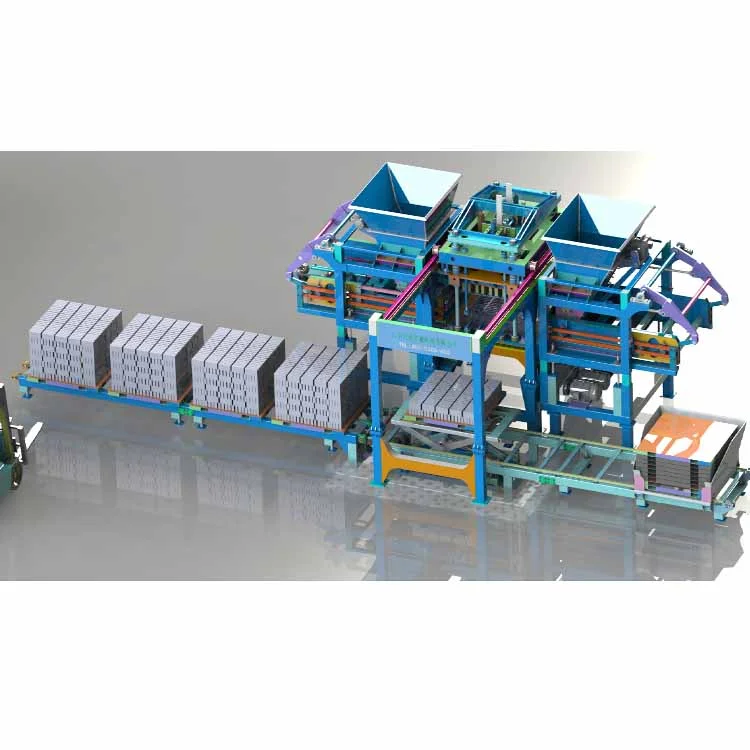
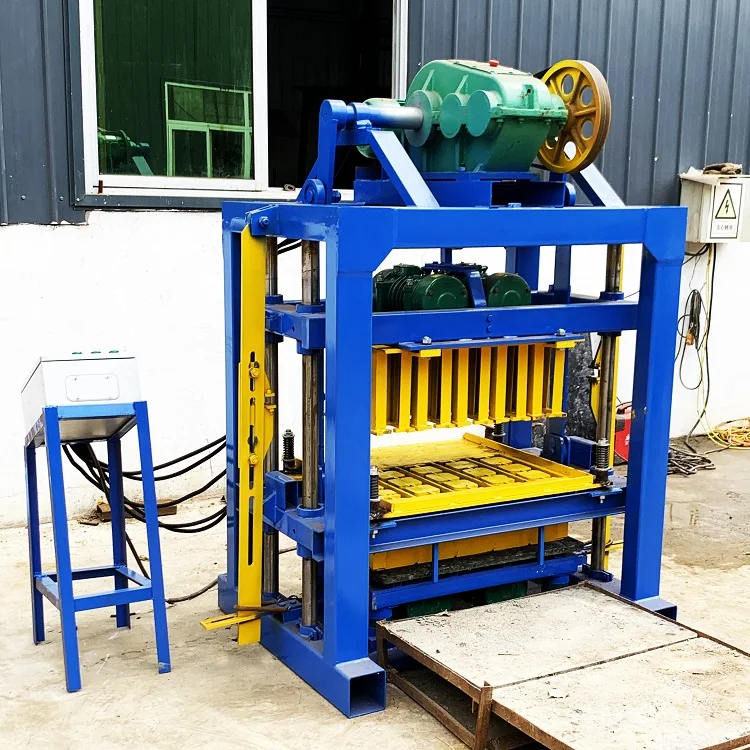 Stationary block machine