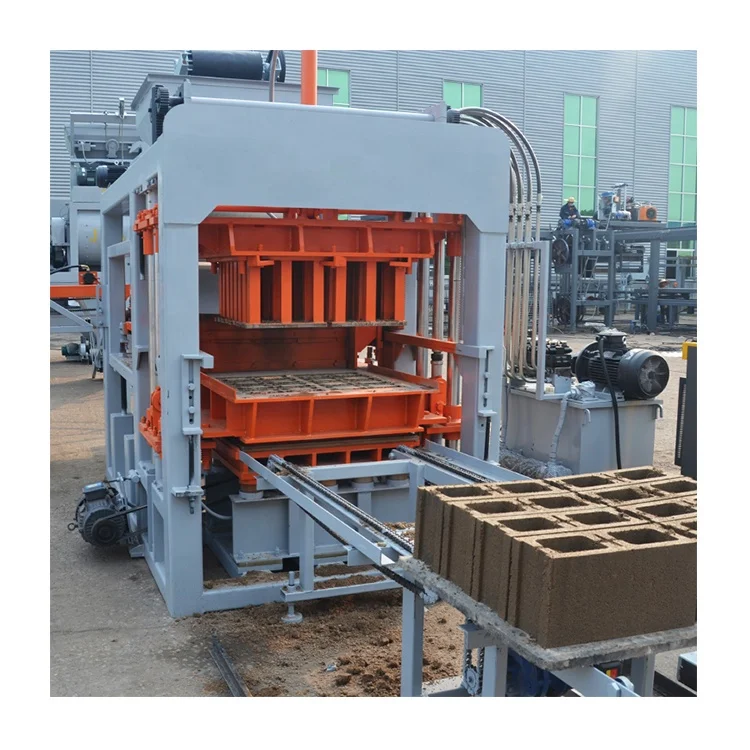
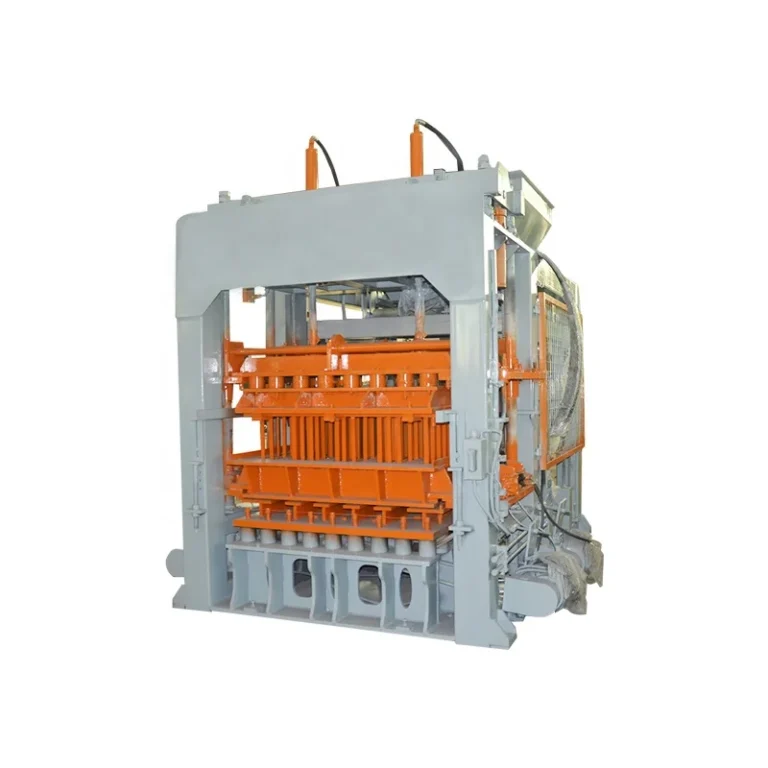
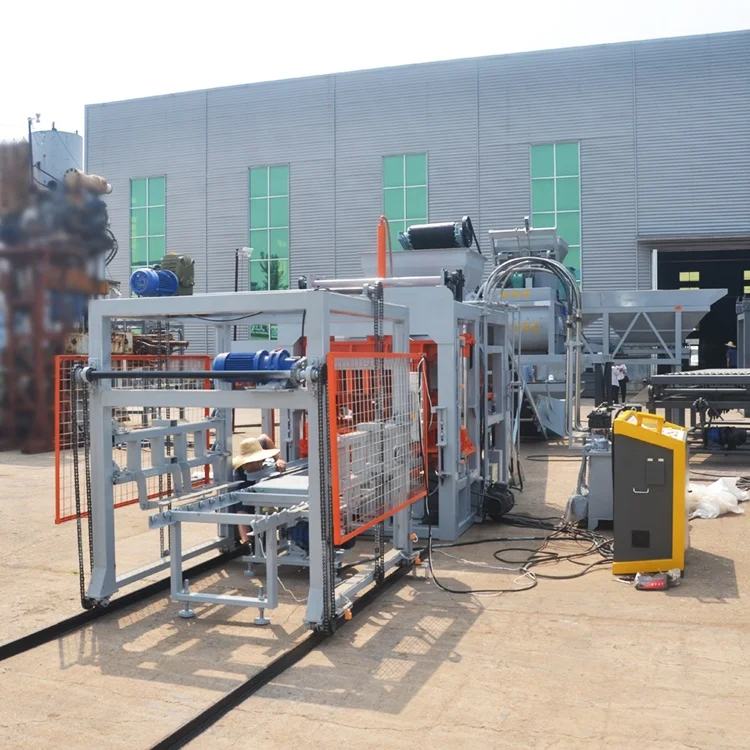
Matched System Engineering — we specify the Qt10-15 automatic block machine as one integrated unit covering press, mould, pallet and handling, eliminating the mismatches that occur when buyers assemble these elements from separate suppliers.
Technical Specifications
| Parameter |
Value |
| Model |
Qt10-15 |
| Product Type |
Automatic Concrete Block Making Machine |
| Overall Dimensions (L×W×H) |
9350×2320×2950 mm |
| Rated Pressure |
21 MPa |
| Main Vibration Form |
Platform Vibration |
| Vibration Frequency |
2800~4500 r/min |
| Vibration Force |
60 kN |
| Pallet Size |
1100×900 mm |
| Molding Cycle |
15-25 s (basis not stated in source — confirm block format / material / thickness) |
| Overall Power |
44 kW |
| Total Mass |
10 T |
| Demolding Method |
Hydraulic |
| General Water Consumption |
8 T/Day |
| Factory Area |
500 m² |
| Control System |
PLC with person-machine conversation interface |
| Automation Level |
Fully automatic production line |
| Applied Products |
Concrete blocks, hollow/solid blocks, pavers, interlocking blocks, curbstone, colored pavers |
| Raw Materials |
Crushed stone, sand, cement, dust, fly ash, gravel, slag |
Application Suitability
| Application |
Material or Output |
| High-volume block and paver production plants |
Upgrading from semi-automatic lines to fully automated output using crushed stone, sand, and cement |
| Development and housing project contractors |
Producing multiple block formats locally on a single line using available aggregate and fly ash |
| Concrete product manufacturers expanding range |
Adding pavers, interlocking bricks, and curbstones to existing catalogs via custom mould design |
Why "Cycles Per Hour" Rarely Matches Your Daily Tally
A cycle time is only honest when it names the exact block format and mix design used to measure it.
I have watched too many buyers arrive at a factory yard expecting the Qt10-15 automatic block machine manufacturer to hand them a daily output figure, only to discover the quoted number assumed a thin paver on a perfect quartz sand mix that does not exist at their job site. When the local aggregate holds more moisture or the cement content is lower, the vibration frequency must shift and the cycle stretches. Without that conversation before the machine is built, the real output on day one lands well below the brochure promise. [NEED_CITE: aggregate moisture variation effects on concrete block compaction]

Where the Qt10-15 Sits in the Shiyue Range
The Shiyue lineup spans mobile egg-laying machines for on-site production, semi-automatic presses for smaller workshops, and fully automatic lines for high-capacity plants. The Qt10-15 occupies the upper tier of this automatic block machine range, carrying a 10-ton frame and a 44 kW total power draw that demands a dedicated transformer and a cured concrete floor. Buyers stepping up from a semi-automatic unit will find the footprint larger but the labor requirement lower, since the PLC-controlled line manages pallet feeding, pressing, and ejection without manual intervention at the press itself.
The Full Line, Not Just the Press
A block machine is only as productive as the slowest station around it. If the mixer cannot deliver a consistent batch every cycle, the Qt10-15 waits. If the pallet return conveyor jams, the press idles. Shiyue engineers the raw material feeder, mixer, pallet feeder, stacking system, and curing rack handling as one matched sequence, so the cycle time set at the PLC reflects what the entire line can sustain — not what the press could do in isolation. This is the difference between a machine that runs well during the factory test and one that runs well during your third shift in the rainy season. [NEED_CITE: production line bottleneck analysis in concrete block plants]
Reading the Numbers That Actually Matter
The 21 MPa rated pressure and 60 kN vibration force work together: pressure compacts the mix while vibration settles fine particles into voids, and if either is mismatched to your aggregate, the block emerges weak or cracked. The adjustable vibration frequency from 2800 to 4500 r/min exists precisely because different block formats demand different energy profiles — a tall hollow block needs lower frequency and longer vibration to consolidate the core, while a dense paver needs high frequency for surface finish. The 1100×900 mm pallet is not a universal size; it must match your curing rack spacing and your forklift’s tine width, otherwise you will spend weeks re-racking or buying new handling equipment. The PLC with a person-machine conversation interface allows the operator to store recipes per format, so switching from hollow blocks to curbstones does not mean guessing at pressure and vibration settings from memory.
The Cost of Skipping the Configuration Conversation
When a buyer orders a block machine without specifying voltage, the machine arrives and sits in a container while transformers are sourced. When the pallet size is chosen from a catalog without checking the buyer’s curing yard dimensions, half the pallets cannot be stacked where intended. When the mould list does not include the format that actually sells in the local market, the machine produces inventory that does not move. These are not equipment failures; they are specification failures, and they cost weeks of lost production before the first good block is ever sold. [NEED_CITE: commissioning delays due to voltage mismatch in imported machinery]
What You Actually Get When You Order
Block machinery is Shiyue’s single focus, meaning the Qt10-15 is not a generic press rebranded from a catalogue. The machine, mould, pallet, and handling equipment are specified as one system against your local aggregate and target block format. Custom mould design to buyer drawings is standard practice, not an afterthought. The automation level is selectable, so a buyer can begin with semi-automatic pallet handling and add full stacking and cubing later without replacing the press. Installation support includes operator training on the specific formats you will produce, not a generic manual handed over at the dock.
Documentation & Verification
- Line layout with capacity calculation stating which block format the Qt10-15 cycle time was measured on
- Mould drawing and format list confirming every product the 1100×900 mm pallet will accommodate
- Voltage, frequency, and PLC display language confirmation sheet signed before production starts
- Factory test record with photographs showing the Qt10-15 running your specified mix and mould
- CE declaration documentation where applicable to your import market requirements
- Packing photographs and customs documentation support for smooth port clearance
Installation, Commissioning & Support
- Foundation plan sized for the 10-ton Qt10-15 frame and 9350 mm length, with anchor bolt positions marked
- Dedicated electrical circuit for the 44 kW total draw, with voltage and frequency confirmed to your local grid
- Machine arrives dismantled for container loading; on-site reassembly includes press alignment and hydraulic line purge
- First-run commissioning sets vibration frequency and hydraulic pressure against your actual mix design and aggregate
- Operator training covers PLC recipe storage, mould change procedure, and daily maintenance checkpoints
- Wear parts and mould list provided so you can order replacements before the first changeover is due
Before You Send the Inquiry
Tell us the block formats that move in your market and the daily volume you need per format. Share your local raw material source — the type of sand or crushed stone, its typical moisture content, and what cement you can procure. Confirm your site’s voltage, frequency, and the language your operators will need on the PLC screen so that commissioning starts on day one, not day thirty.
Frequently Asked Questions
Q: How is the Qt10-15 daily output calculated, and which block format is the cycle time based on?
A: The 15–25 second molding cycle is a range, not a fixed number. The actual cycle depends on the block format, wall thickness, and your mix design. Before quotation, Shiyue provides a capacity calculation that names the specific block used for the estimate, so you can compare it against your real product mix.
Q: Where does the Qt10-15 sit in the Shiyue range, and what investment tier does it represent?
A: It sits in the high-capacity fully automatic tier, above the semi-automatic workshop machines and the mobile egg-laying units. It requires a larger factory area and higher power supply but delivers a lower labor requirement per block produced through the PLC-controlled line.
Q: What plant footprint does the Qt10-15 require compared to smaller models?
A: The 500 m² factory area covers the press, mixer, pallet handling, and curing rack space. Smaller semi-automatic machines may fit in half that area, but they require manual pallet handling and stacking, which changes the labor calculation entirely.
Q: Can I start semi-automatic and upgrade to full automation on the Qt10-15 later?
A: Yes. The Qt10-15 supports selectable automation levels. A buyer can begin with manual pallet handling and add automatic stacking and cubing modules later, because the press, PLC, and hydraulic system are designed to accept those additions without a full machine replacement.
Q: How are voltage, frequency, and PLC language confirmed before the machine ships?
A: Shiyue documents the buyer’s electrical grid specifications and preferred control language on a confirmation sheet signed before production begins. This prevents the common situation where a machine arrives and sits idle while a transformer or translation is arranged locally.

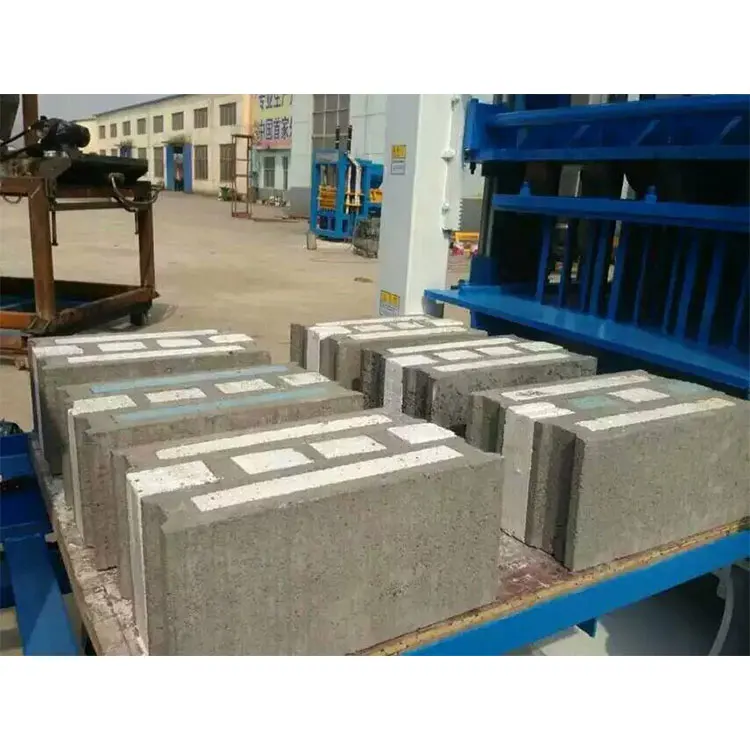
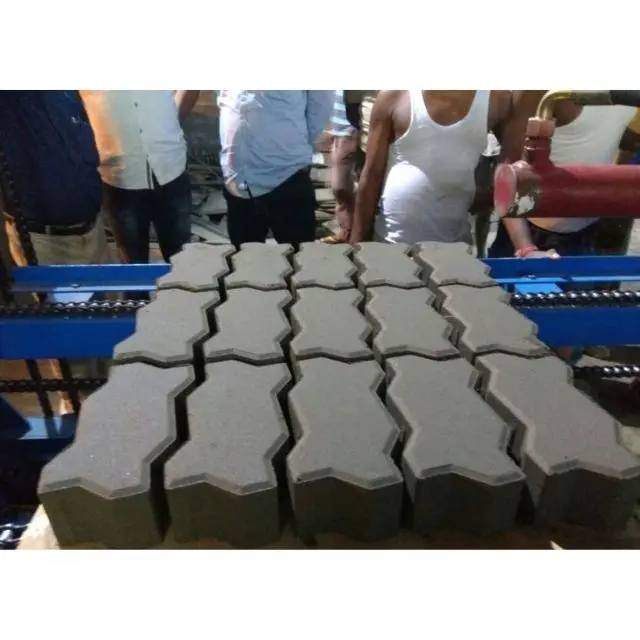 Automatic block machine