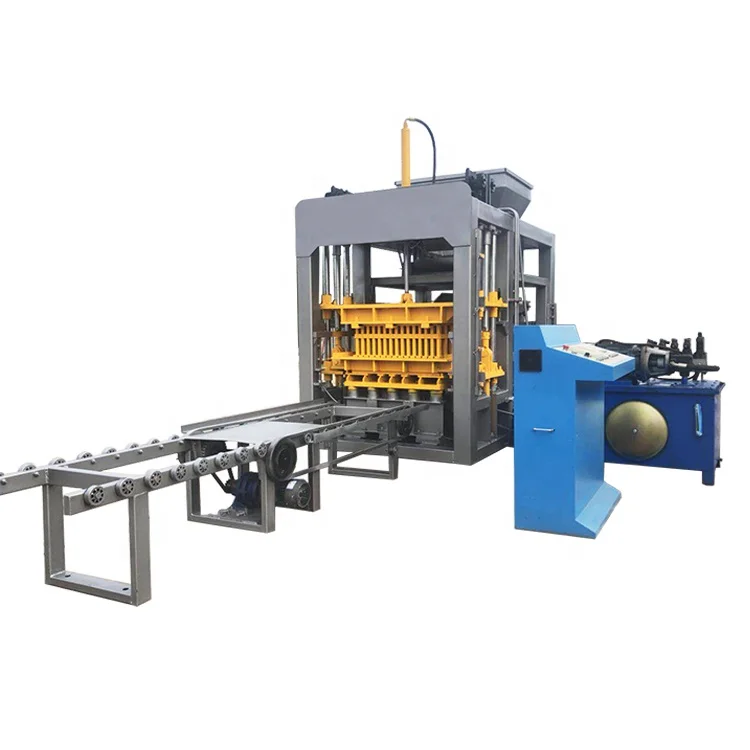
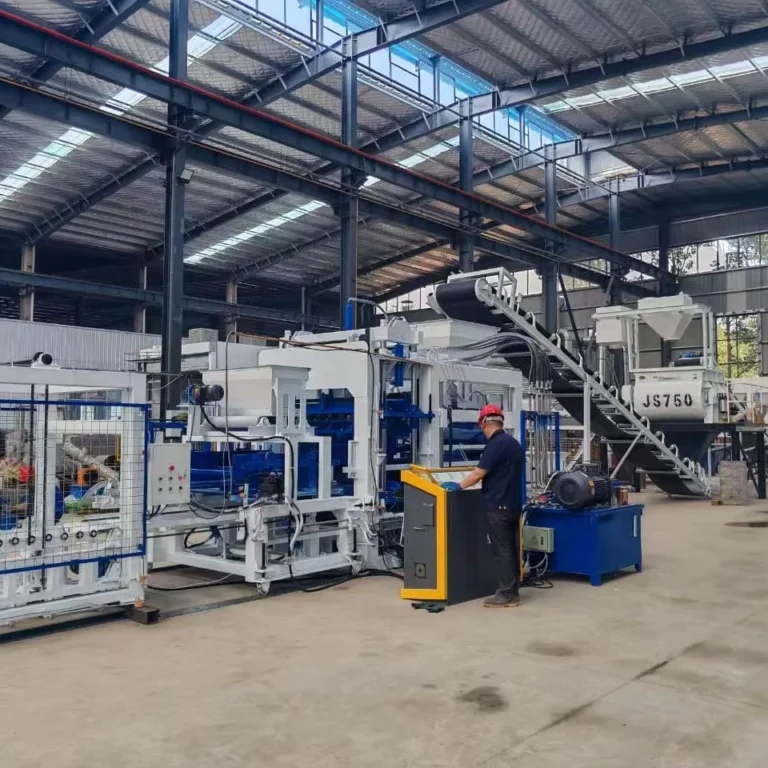
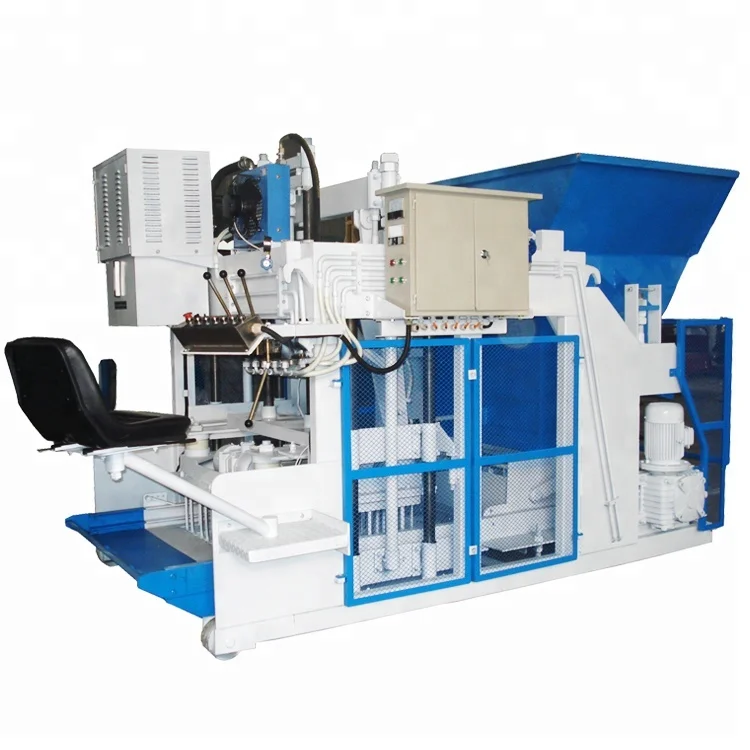
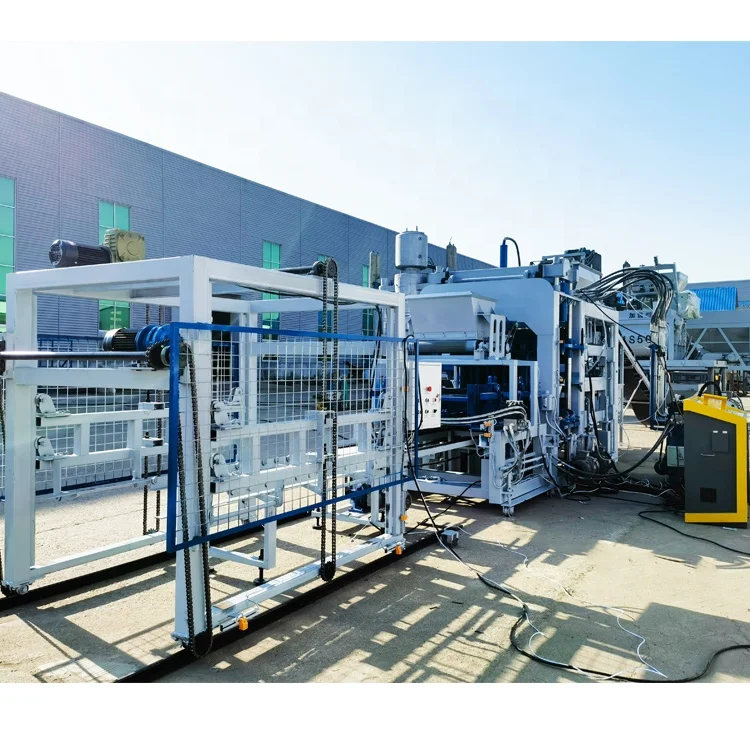
Complete matched system — The QT6-15 is specified as one integrated line from batching through stacking, preventing the output bottlenecks that occur when machines are assembled from separate suppliers without cycle-time alignment.
Technical Specifications
| Parameter |
Value |
| Model |
QT6-15 |
| Product Type |
Fully Automatic Concrete Block Making Machine |
| Automation Level |
Fully automatic with PLC controller, capable of unattended operation |
| Line Composition |
Batching machine, mixer, cement silo, conveyor, block forming machine, stacker |
| Material Handling |
Forklift truck transport for blocks and empty plates |
| Mould Compatibility |
Paving blocks, hollow blocks, and other standard formats |
| Assembly State |
Complete sets of equipment (economy line configuration) |
| Output Capacity |
High output (basis not stated in source) |
| Hydraulic Pressure (MPa) |
To be confirmed based on block format and mix design |
| Vibration Force (kN) |
To be confirmed based on block format and mix design |
| Pallet Size |
To be confirmed based on curing area and forklift capacity |
| Cycle Time per Format |
To be confirmed based on specific block dimensions and material |
| Rated Power (kW) |
To be confirmed based on final line configuration |
| Voltage & Frequency |
Configurable to site requirements (to be confirmed) |
| Overall Dimensions |
To be confirmed based on line layout |
| Certification |
To be confirmed |
Application Suitability
| Application |
Material or Output |
| Paving block production |
Crushed stone, cement, sand, and water for interlocking and standard pavers |
| Hollow block production |
Lightweight or normal-weight aggregates with cement binder for structural and partition blocks |
| First-time automatic plant setup |
Entrepreneurs transitioning from manual or semi-automatic production |
| Plant capacity expansion |
Existing block producers upgrading to unattended PLC-controlled operation |
What "High Output" Leaves Out When No Block Format Is Stated
Capacity figures mean nothing without the format and mix they assume.
Many buyers receive a single output number—cycles per hour or pieces per shift—with no mention of which block size, wall thickness, or aggregate type that number was based on. I once watched a high-capacity automatic line in the Middle East struggle because the quoted output assumed clean river sand, but the local supply had high clay content. The machine’s cycle time stretched, vibration force proved insufficient for the heavier mix, and daily production fell well below the brochure figure. When evaluating a fully automatic block making machine manufacturer, the first document you should request is a capacity calculation that names the exact format, mix design, and cycle time for each block type you intend to produce [NEED_CITE: buyer specification requirements for concrete block machinery].

Where the QT6-15 Fits in the Full Machine Range
The QT6-15 occupies the economy tier of the automatic range, designed for buyers who need PLC-controlled unattended operation but are not yet ready to invest in a high-capacity line. It integrates batching, mixing, conveying, forming, and stacking into one matched system, so cycle times are balanced across stations and the press is not left waiting for material or pallets. This positioning makes it a practical entry point for entrepreneurs setting up a first fully automatic block making machine manufacturer relationship, or for existing semi-automatic plant owners planning a measured step up in output.
Matching the Line to Your Actual Site Conditions
Every automatic line must be configured around the buyer’s local aggregate, available curing area, and existing material-handling equipment. A pallet size chosen without regard to the forklift capacity or curing rack dimensions already on site creates daily friction that no amount of automation can solve. The QT6-15’s pallet and stacking specification is confirmed against your site’s actual conditions before production begins, ensuring the output format matches what your yard and logistics can absorb [NEED_CITE: site-specific configuration for concrete block plants].
Reading the Specification Sheet Beyond the Headline Numbers
Hydraulic pressure and vibration force are the two parameters that directly determine block density and strength. If either is mismatched to your mix design—say, a lightweight aggregate that requires less pressure but more vibration—the resulting blocks will be either too fragile or too dense, and the machine will spend extra cycles compensating. Pallet size dictates how many blocks are formed per cycle and must align with your curing rack spacing. The PLC control language and voltage frequency must match your site’s electrical infrastructure and operator capability, otherwise commissioning stalls until the correct transformer or HMI screen arrives.
The Hidden Cost of Overlooking the Supporting Stations
A common mistake is quoting the press in isolation and treating batching, mixing, pallet feeding, and stacking as afterthoughts. When the mixer’s batch size does not match the press cycle, the machine pauses between cycles. When the pallet feeder cannot keep pace, operators manually load pallets, negating the automation you paid for. When the stacker is omitted entirely, blocks are stacked by hand, capping output regardless of how fast the press cycles. These mismatches surface only after the line is running, when the cost of correction is far higher than specifying the supporting stations correctly from the start [NEED_CITE: block production line integration failures].
Why Sourcing From a Single-System Manufacturer Matters
Block machinery is the sole focus here, which means the press, moulds, pallets, and handling equipment are specified as one matched system rather than assembled from separate vendors. Configuration is set against your actual mix design, local aggregate, and target block format—not a catalogue default. Moulds are designed and supplied for the formats your market actually sells, with custom drawings available when standard formats do not fit. The automation level is selectable, so you can start with the QT6-15 economy line and upgrade to a higher-capacity tier within the same fully automatic block making machine manufacturer ecosystem as demand grows. Installation and commissioning include operator training so the line runs correctly from the first production day.
Documentation & Verification
- Line layout drawing with capacity calculation stated per block format and mix design
- Machine specification sheet covering hydraulic pressure, vibration force, pallet size, and PLC language
- Mould drawing and format list confirming which block types the line will produce
- Voltage, frequency, and control display language confirmation document before shipment
- Factory test record showing cycle times per format with your proposed material mix
- Packing photographs and customs documentation support for export clearance
Installation, Commissioning & Support
- Foundation drawing provided for QT6-15 line footprint, including curing yard area requirements
- Electrical supply specification for PLC-controlled stations, with dedicated circuit recommendations
- Machine arrives in dismantled shipment-ready state with reassembly guided by layout drawing
- First-run commissioning includes cycle time adjustment and block strength verification per format
- Operator training covers PLC interface, mould change procedure, and daily maintenance routines
- Wear parts list and mould replacement schedule provided for ongoing production continuity
Preparing Your Inquiry
To receive a line proposal that reflects your actual production conditions rather than a generic quotation, provide the block formats you intend to sell, your target daily output per format, the local aggregate type and mix design if available, your site’s voltage and frequency, and the forklift or pallet-handling equipment already on site. This information allows the line to be configured as one matched system from the first proposal.
Frequently Asked Questions
Q: How is the QT6-15’s output verified, and which block format does each figure assume?
A: Output figures are provided only after a capacity calculation that names the specific block format, wall thickness, mix design, and cycle time. No single headline number is quoted without these parameters stated, so the buyer can compare the QT6-15 against their actual product range and local material conditions.
Q: Where does the QT6-15 sit in the full automatic range, and what is the upgrade path?
A: The QT6-15 is the economy tier, suited for first-time automatic plants or semi-automatic upgrades. Higher tiers within the same fully automatic block making machine manufacturer range offer greater cycle speeds, larger pallet sizes, and expanded stacking automation, allowing a phased investment as market demand grows.
Q: What voltage, frequency, and PLC display language options are confirmed before shipment?
A: Voltage and frequency are configured to match the buyer’s site electrical infrastructure, and the PLC display language is confirmed in writing before production begins. This prevents commissioning delays caused by mismatched transformers or untranslated control screens.
Q: Which block formats can this machine produce, and how does format choice affect output?
A: The QT6-15 can produce hollow blocks, paving blocks, and other standard formats using compatible moulds. Each format has a different cycle time and blocks-per-pallet count, so daily output varies by format and must be calculated individually rather than assumed from a single machine rating.

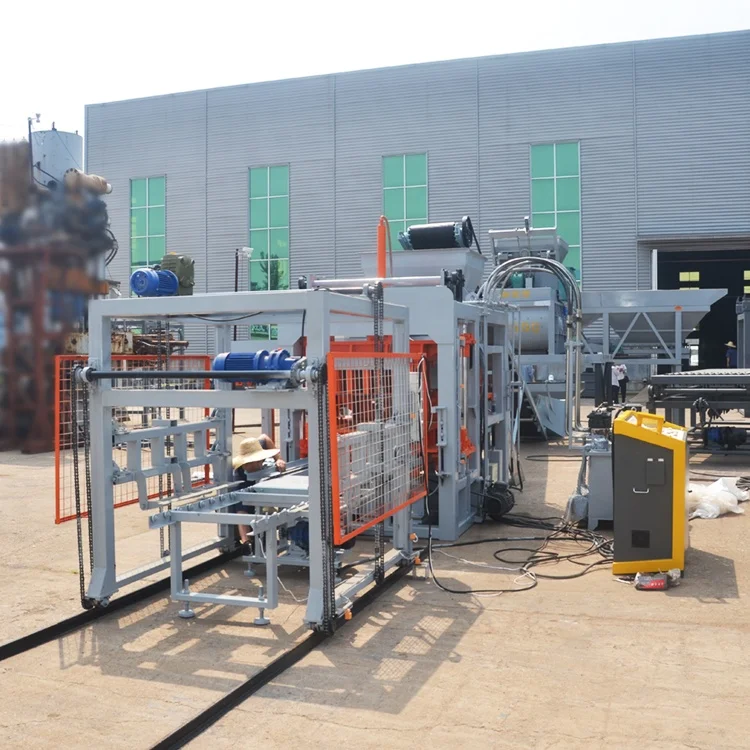
 Automatic block machine