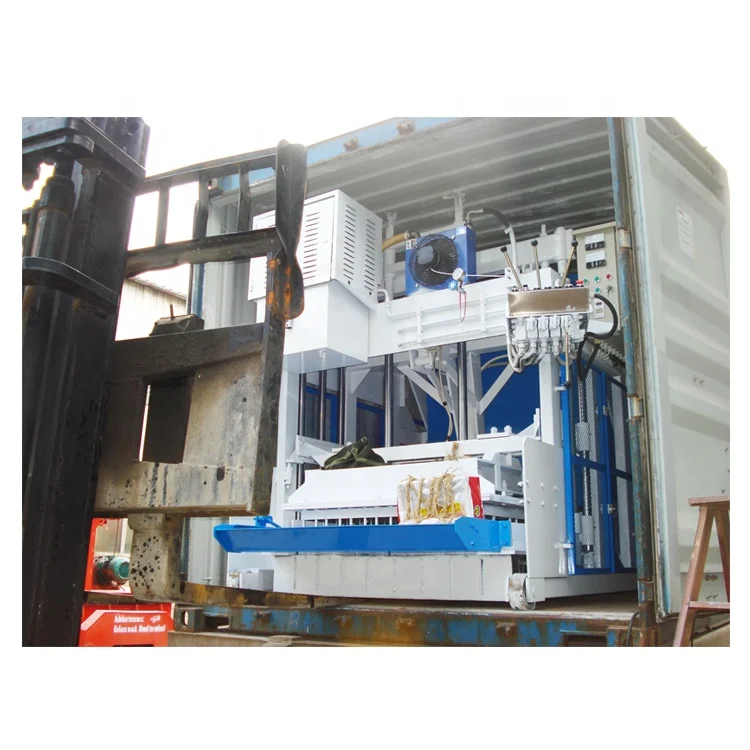
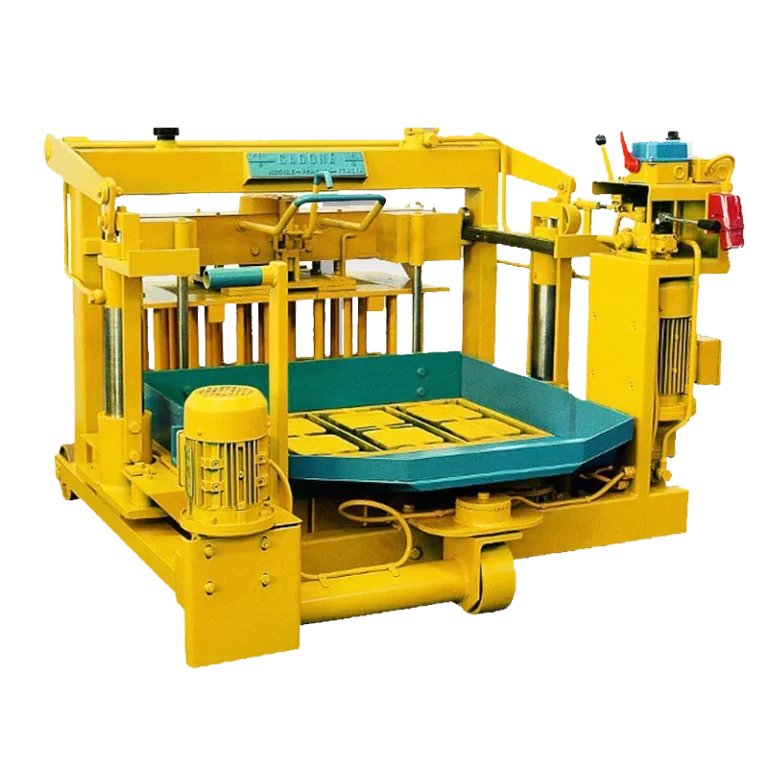
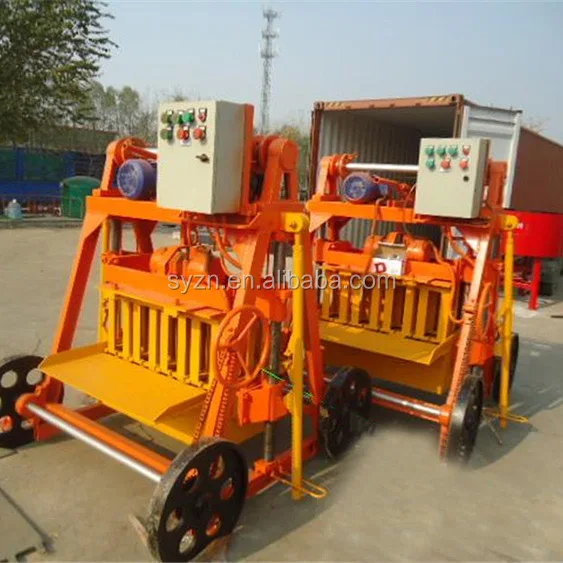
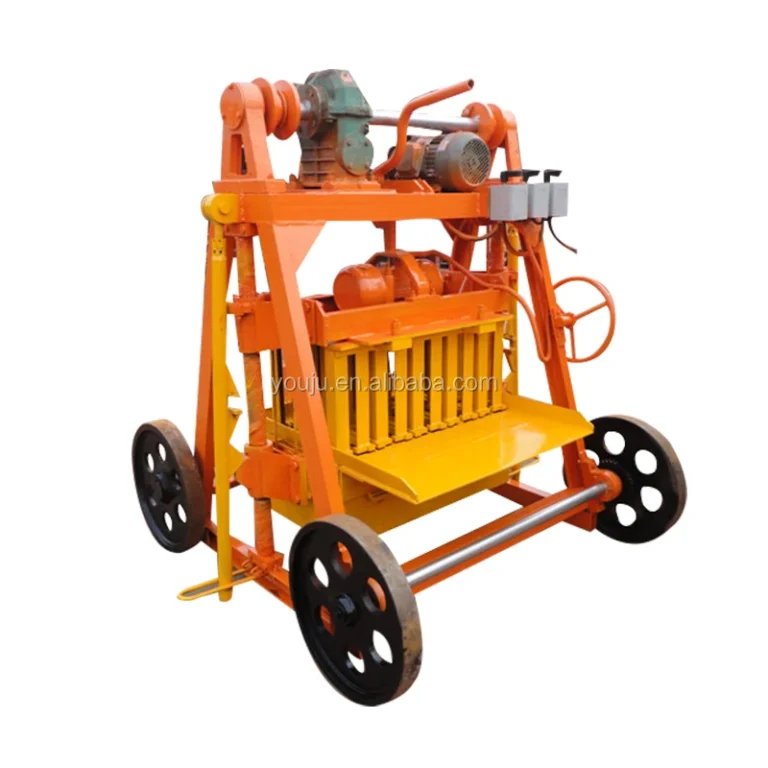
Matched System Design — the QMY4-30 is specified as a complete mobile unit with mould, vibration, and hydraulic demolding tuned to the buyer’s actual block format rather than sold as a standalone press with unverified output claims.
Technical Specifications
| Parameter |
Value |
| Model |
QMY4-30 |
| Product Type |
Mobile Block Making Machine |
| Hydraulic Method |
Mould vibration |
| Demold Method |
Hydraulic |
| Molding Cycle |
30 seconds |
| Total Power |
5.95 kW |
| Output Capacity |
480 pcs/h based on 400×200×200mm hollow block |
| Output Capacity |
600 pcs/h based on 400×150×200mm hollow block |
| Output Capacity |
840 pcs/h based on 400×100×200mm hollow block |
| 8-Hour Output |
3,840 pcs based on 400×200×200mm hollow block |
| 8-Hour Output |
4,800 pcs based on 400×150×200mm hollow block |
| 8-Hour Output |
6,720 pcs based on 400×100×200mm hollow block |
| Qty/Mould |
4 pcs for 400×200×200mm format |
| Qty/Mould |
5 pcs for 400×150×200mm format |
| Qty/Mould |
7 pcs for 400×100×200mm format |
| Pallet Required |
No — pallet-free mobile design |
| Automation Level |
Manual / semi-manual mobile operation |
| Assembly State |
Fully assembled mobile unit |
| Voltage & Frequency |
Basis to be confirmed with buyer |
| Control System |
Basis to be confirmed with buyer |
Application Suitability
| Application |
Material or Output |
| On-site block production without a fixed plant |
Hollow and solid cement blocks from local aggregate |
| Mountainous and hilly terrain construction |
Mobile production directly at remote build sites |
| Industrial and mining area block production |
Standard hollow blocks for facility walls and partitions |
| Desert and coastal area construction |
Cement blocks using locally sourced sand and crushed stone |
| Small-scale hollow and solid block manufacturing |
Multiple hollow block formats up to 6,720 pcs per 8-hour shift |
| Contractor-driven housing and development projects |
On-demand block output without pallet logistics |
What "Output per Hour" Leaves Out About Mobile Block Machines
Every capacity figure on this page is tied to a specific block format — because a number without a format is meaningless.
I have watched buyers compare mobile block machine quotes side by side, pick the one with the highest hourly number, then arrive on site to discover the quoted rate assumed a small solid brick they never intended to produce. The actual hollow block they need runs at a fraction of that headline figure, and suddenly the project timeline is in trouble. A mobile block machine manufacturer that quotes capacity honestly will always state the format first and the number second. [NEED_CITE: block machine capacity verification standards]

Where Mobile Sits in the Full Machine Range
The QMY4-30 occupies the entry tier of the block machine lineup — the mobile, pallet-free category designed for buyers who need production capability without investing in a fixed plant, pallet inventory, or pallet handling infrastructure. Semi-automatic machines sit above this tier, adding stationary operation with pallet-fed cycles and higher throughput. Fully automatic lines add batching, stacking, and cubing at the top. Understanding this ladder matters before any purchase decision, because a mobile block machine manufacturer should help a buyer identify where they actually belong on it before narrowing down a model.
The Pallet-Free Advantage for Project-Driven Buyers
Eliminating pallets from the production equation removes a cost layer that surprises many first-time block plant operators. Pallets require purchase, storage space, ongoing replacement as they wear, and forklift or manual handling between the machine and the curing area. For a contractor producing blocks directly at a construction site — especially in mountainous, coastal, or remote terrain — that entire pallet logistics chain becomes impractical. The QMY4-30 deposits each moulded block directly onto the ground, which is precisely why mobile machines earn their place on sites where a fixed plant with pallet circulation is not an option. [NEED_CITE: pallet-free mobile block production logistics]
Reading the Specs That Actually Determine Block Quality
The mould vibration method and hydraulic demolding on the QMY4-30 work together to determine the density and dimensional consistency of every block produced. Vibration force compacts the concrete mix inside the mould cavity, while the hydraulic demold cycle must release the block without cracking or corner damage — if either parameter is mismatched to the buyer’s local aggregate and cement ratio, block strength drops. The 30-second molding cycle is constant across the three listed hollow block formats, but the output scales from 480 to 840 pcs/h because smaller formats fit more cavities per mould: four for the 200mm-wide block, seven for the 100mm-wide block. Total power at 5.95 kW reflects the mobile design philosophy — enough to drive vibration and hydraulics without requiring a heavy-duty electrical supply that remote sites cannot provide.
The Cost of Skipping Configuration Details Before Ordering
Buyers who confirm nothing beyond model number and price before shipment often arrive at commissioning to discover that the voltage and frequency do not match local supply, the control panel language is unreadable to the operator, or the mould supplied produces a block format the local market does not buy. Each of these gaps costs weeks of delay and unplanned expense on site. When a mobile block machine manufacturer does not ask for local electrical standards, target block formats, and raw material samples before building, those problems land squarely on the buyer. [NEED_CITE: voltage and frequency standards by export market]
Why Sourcing the QMY4-30 Through This Range Matters
Block machinery is the single focus here, which means the QMY4-30 is not a generic catalogue item assembled from unrelated component suppliers — the machine, mould, and handling method are specified as one system. Capacity calculations are stated per block format, so a buyer comparing this mobile tier against semi-automatic options sees honest numbers rather than inflated headline rates. Mould options cover the hollow block formats the buyer’s market actually sells, and custom mould designs are available from buyer drawings. The automation level is selectable within the mobile tier, allowing a buyer to start with manual operation and understand the production process before considering a move to semi-automatic or full-line equipment later. Installation support and operator training are included so the first production run on site is supervised, not left to trial and error. [NEED_CITE: CE machinery directive requirements for industrial equipment]
Documentation & Verification
- Capacity calculation sheet stating output per block format for the QMY4-30
- Machine specification confirming total power, hydraulic method, and molding cycle
- Mould drawing and format list showing all available hollow block sizes
- Voltage and frequency confirmation document before production begins
- Factory test record on buyer’s specified block format before dispatch
- Operation and maintenance manual in buyer’s required language
Installation, Commissioning & Support
- Site power supply must match confirmed voltage and frequency for the 5.95 kW total load
- Fully assembled mobile unit arrives ready for operation without on-site structural installation
- First-run commissioning with parameter adjustment for buyer’s local aggregate and mix design
- Operator training covering mould change procedure and daily maintenance checks
- Mould and hydraulic wear parts list with reorder part numbers included at delivery
- Recommended maintenance intervals aligned with the 30-second molding cycle duty rating
What to Share Before Requesting a Quotation
To get a meaningful proposal rather than a generic price list, share the hollow block formats your market sells, the daily output target tied to those specific formats, and the raw materials available locally — especially aggregate type and cement grade. Confirm your site’s voltage, frequency, and whether you need the control panel in a specific language. If you already have a mixer or material feeding setup, mention that so the mobile block machine manufacturer can advise on compatibility.
Frequently Asked Questions
Q: How is output capacity verified and what block format is each figure based on?
A: Every capacity number published for the QMY4-30 is tied to a specific hollow block format. The 480 pcs/h rate applies to 400×200×200mm blocks, 600 pcs/h to 400×150×200mm, and 840 pcs/h to 400×100×200mm. These figures assume a 30-second molding cycle with standard concrete mix. Buyers should request the capacity calculation sheet that lists each format and its corresponding hourly and shift output.
Q: Where does a mobile machine sit in the range compared to semi-automatic and automatic tiers?
A: Mobile machines like the QMY4-30 sit at the entry tier — pallet-free, requiring no fixed plant or pallet handling infrastructure. Semi-automatic machines add stationary operation with pallet-fed production and higher throughput. Fully automatic lines add batching, stacking, and cubing. The right tier depends on the buyer’s daily volume, available site infrastructure, and investment plan.
Q: What voltage and frequency configurations are available for the target market?
A: Voltage and frequency are not fixed defaults — they must be confirmed with the buyer before production. Different export markets operate on different electrical standards, and shipping a machine configured for the wrong supply causes commissioning delays. Buyers should state their local voltage, phase, and frequency at the inquiry stage so the electrical system is built correctly from the start.
Q: What block formats can the QMY4-30 produce, and can custom moulds be supplied?
A: The QMY4-30 produces hollow blocks in 400×200×200mm, 400×150×200mm, and 400×100×200mm formats, each with a dedicated mould cavity count. Custom mould designs are available from buyer drawings for formats outside this standard range. Buyers should specify the block sizes their local market demands so the correct mould set is included with the machine.
Q: What site conditions are needed to operate a mobile block machine?
A: The QMY4-30 requires a level, compacted ground surface for block deposition and enough clearance for the operator to move the unit along the production area. Power supply must match the confirmed voltage and frequency for the 5.95 kW load. No fixed plant structure, pallet storage, or curing rack system is needed, which is why mobile machines suit remote, mountainous, and project-driven construction sites.

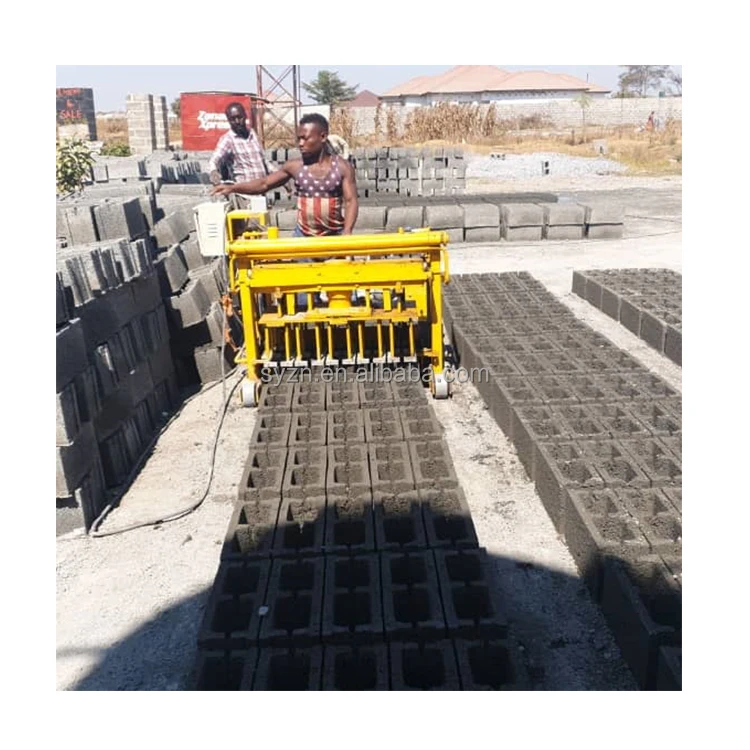
 Mobile block machine