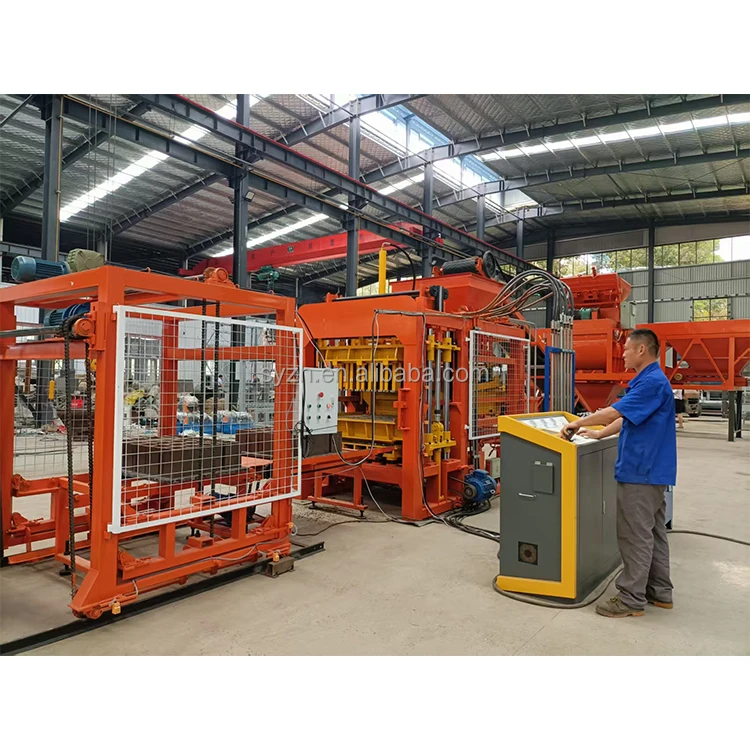
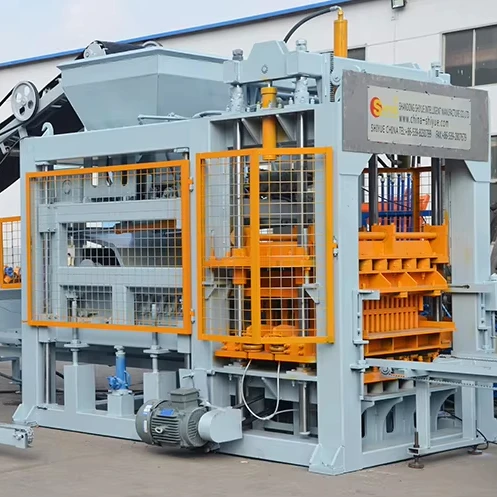
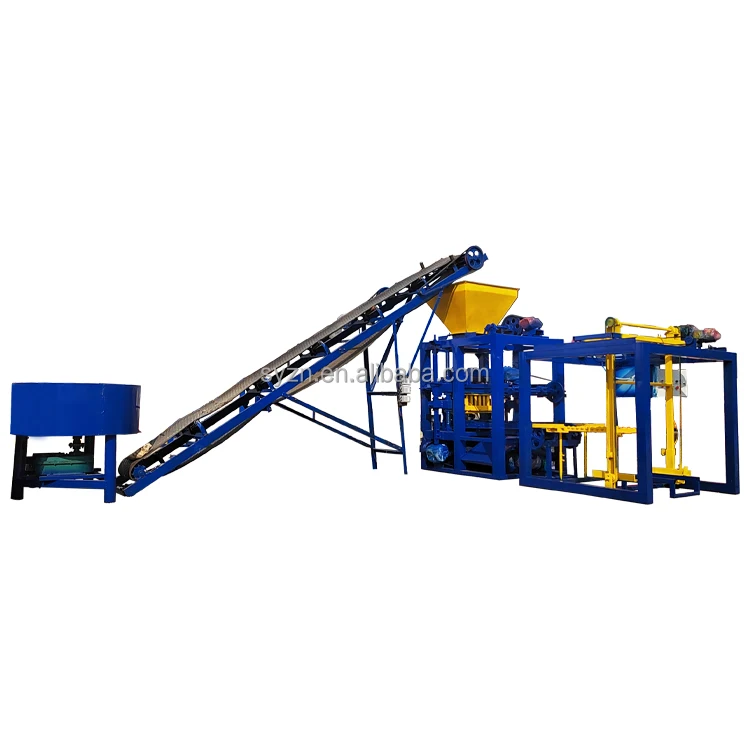
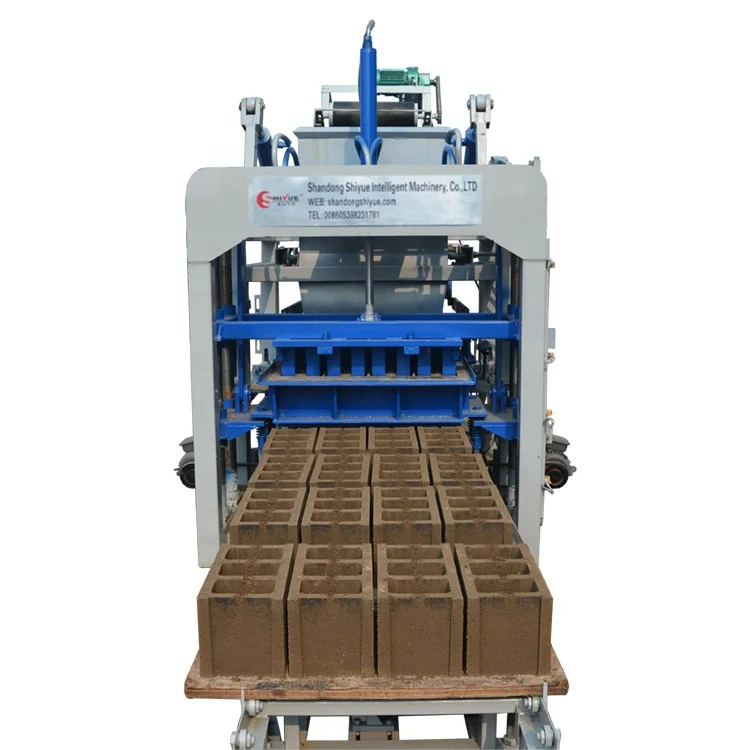
Single-focus block machinery supply — the M7MI hydraulic clay block machine is specified as one matched system of press, mould, and diesel power unit rather than assembled from unrelated sources.
Technical Specifications
| Parameter |
Value |
| Product Type |
Hydraulic Clay Interlocking Block Making Machine |
| Model |
M7MI |
| Overall Dimensions (L×W×H) |
3200×1100×1500 mm |
| Net Weight |
1100 kg |
| Power Source |
Diesel Engine |
| Hydraulic Pressure |
16 MPa |
| Molding Cycle |
15–20 s |
| Cycle Time (300×150×100 mm block) |
20 s per piece |
| Output per Hour (300×150×100 mm block) |
200 pcs |
| Output per 8hr Shift (300×150×100 mm block) |
1600 pcs |
| Raw Material |
Clay, soil, or concrete |
| Mould System |
Interchangeable moulds for different interlocking formats |
| Automation Level |
Manual / semi-automatic |
| Voltage & Frequency |
Not applicable (diesel-powered) |
Application Suitability
| Application |
Material or Output |
| On-site interlocking block production for housing projects |
Local clay or soil with cement stabiliser |
| Off-grid block manufacturing in remote areas |
Soil-based mixes where grid electricity is unavailable |
| Small-scale block plants in West and North Africa |
Clay, laterite, or concrete mixes |
| Contractor-driven construction sites |
Interlocking blocks at 300×150×100 mm and similar formats |
What "2200 Blocks per Day" Actually Means for the M7MI Hydraulic Clay Block Machine
Capacity only becomes real once you name the block format behind the number.
I remember quoting a daily output figure from a catalogue to a buyer in West Africa. The number assumed a specific block size and ideal cycle conditions. When the buyer ran a different interlocking profile with his local clay, the real output dropped considerably. That lesson stays with me on every M7MI hydraulic clay block machine configuration I work on. The M7MI is sometimes quoted at 2200 pcs/day (8 hours) (basis not stated in source), but when the block is 300×150×100 mm at a 20-second cycle, the verified figure is 1600 pieces per shift. Always confirm which format and cycle time the output number assumes before comparing machines [NEED_CITE: capacity calculation methodology for hydraulic block presses].

Where the M7MI Sits in the Shiyue Range
The M7MI occupies the mobile, diesel-powered tier of the Shiyue block machine range. It is designed for buyers who need interlocking block production without a fixed plant, electrical infrastructure, or complex material handling lines. Compared to semi-automatic stationary models higher in the range, the M7MI trades automation for site mobility and off-grid capability. For a first-time buyer or a contractor working on a remote housing project, this machine removes the dependency on grid power entirely.
Matching the Press to the Project Footprint
A block machine is only as useful as the site it operates on. The M7MI’s 3200×1100×1500 mm footprint and 1100 kg weight mean it can be transported to a project site and put to work without a dedicated factory building. The diesel engine configuration suits regions in Mauritania, Ghana, Morocco, and Guinea where construction sites frequently lack three-phase power. This positioning makes the M7MI a practical choice for development contractors who produce blocks locally rather than trucking them in from a distant plant [NEED_CITE: off-grid construction practices in sub-Saharan Africa].
Reading the Specs That Matter on Site
The 16 MPa hydraulic pressure is the core compaction force available for densifying clay and soil mixes into interlocking blocks. For soil with higher sand content, achieving adequate green strength depends on matching this pressure with the correct cement percentage in the mix, which is why we always recommend a sample test before finalising the configuration. The 15–20 second molding cycle varies depending on the interlocking profile being pressed — simpler profiles cycle faster, while complex interlock geometries require the full 20 seconds. The interchangeable mould system allows a single machine to produce different block formats, though each format change involves manual adjustment. Because the machine is diesel-powered, buyers avoid the voltage, frequency, and PLC language issues that frequently delay commissioning on electric machines arriving in a new country.
The Cost of Skipping the Format Conversation
When a buyer purchases a clay block machine based on a headline output number without confirming the mould format and local material, the consequences show up on the first production day. Blocks crack during curing because the hydraulic pressure was not matched to the soil composition. The cycle time turns out longer than quoted because a different interlocking profile was selected. The daily output target is never met, and the buyer blames the machine rather than the specification gap. These problems are avoidable with a sample test and a capacity calculation that names the exact block format [NEED_CITE: soil stabilisation testing for compressed earth blocks].
Why Buyers Source the M7MI Through Shiyue
The M7MI is specified as a matched system — press, diesel engine, and mould are selected together rather than sourced separately, so hydraulic pressure and mould geometry are aligned from the start. The configuration is set against the buyer’s actual clay or soil sample and target block format, not a default catalogue entry. Mould options are chosen for the interlocking profiles the buyer’s local market actually demands, and custom mould design is available when standard profiles do not match. Buyers can start with the M7MI as a manual operation and later move up to semi-automatic or automatic tiers within the Shiyue range as production volume grows. Installation support includes operator training on mould change procedures and basic diesel engine maintenance so the team is self-sufficient on site.
Documentation & Verification
- Line layout stating block format assumed for each output figure on the M7MI
- Mould drawing and interlocking profile list confirming included formats
- Machine specification sheet with 16 MPa pressure and dimension confirmation
- Factory test record showing actual cycle time and block output before dispatch
Installation, Commissioning & Support
- Flat, compacted ground preparation sufficient for 1100 kg machine weight and 3200 mm length
- Diesel fuel supply and basic filtration for engine start-up and continuous operation
- Machine arrives as a single unit; no heavy dismantling required for container loading
- First-run commissioning includes mould fitting and cycle timing verification on your material
- Operator training covers manual mould change procedure and daily hydraulic inspection
- Wear parts list with reorder references for mould liners and hydraulic seals
Preparing Your M7MI Enquiry
To size the M7MI accurately, share the interlocking block format your market sells, the daily output you need on that specific format, and a description or sample of your local clay or soil. Confirm whether your site has any electrical supply or is fully off-grid, as this determines whether the diesel configuration is the right choice or whether a semi-automatic electric model further up the Shiyue range would suit your operation better.
Frequently Asked Questions
Q: How is the M7MI daily capacity calculated, and which block format does each figure assume?
A: The 2200 pcs/day figure appears in some source materials without a stated basis. When calculated on a 300×150×100 mm interlocking block at a 20-second cycle with one piece per mould, the output is 200 pcs/hour or 1600 pcs per 8-hour shift. Always confirm which format and cycle your quotation assumes.
Q: What interlocking block formats and mould options are available for the M7MI?
A: The M7MI uses interchangeable moulds for different interlocking profiles. Standard options include common interlocking block geometries used in housing construction. Custom moulds can be designed to buyer drawings when local market demand requires a profile outside the standard range.
Q: How does the diesel engine configuration affect site requirements and operating costs?
A: The diesel engine removes the need for grid electricity, making the M7MI suitable for remote construction sites. Operating costs depend on local diesel prices and engine maintenance intervals. This configuration avoids voltage, frequency, and control language issues that arise with electric machines in export markets.
Q: Where does the M7MI sit in the Shiyue range compared to semi-automatic and automatic tiers?
A: The M7MI is the mobile, diesel-powered entry in the range, suited for off-grid or project-site production. Semi-automatic and automatic tiers higher in the range add electric power, PLC control, pallet systems, and stacking equipment for buyers who need greater volume from a fixed plant location.

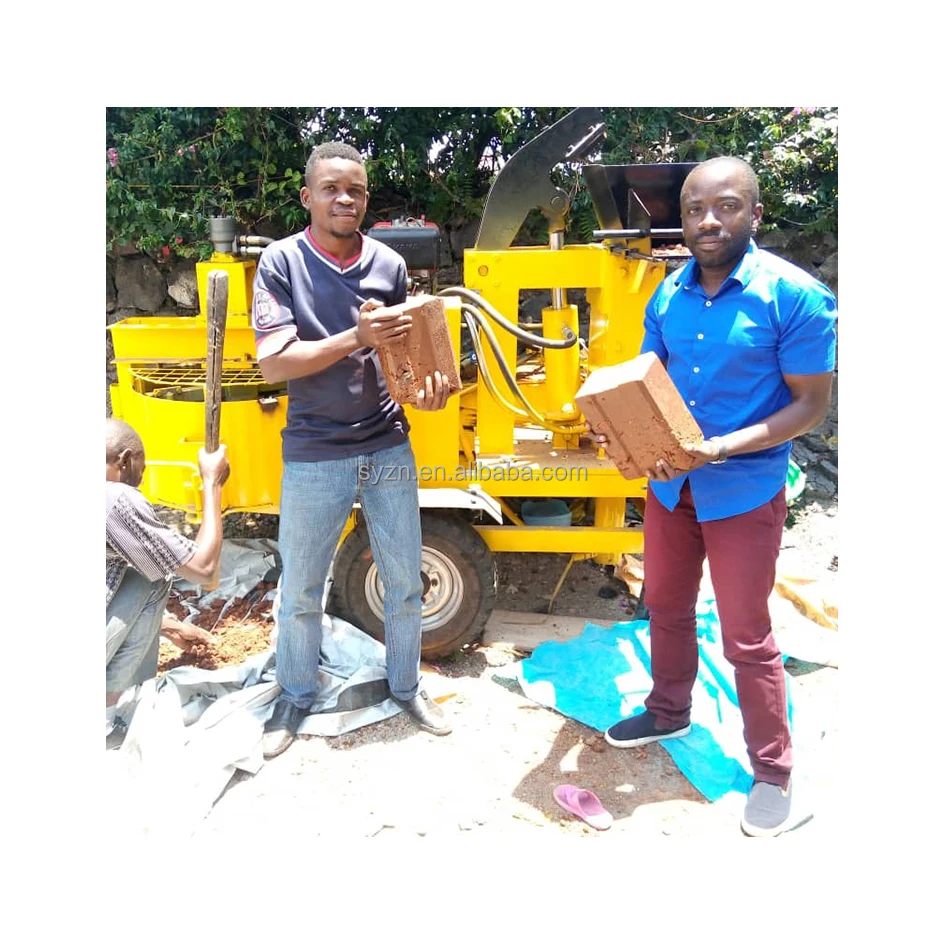
 High quality block machine