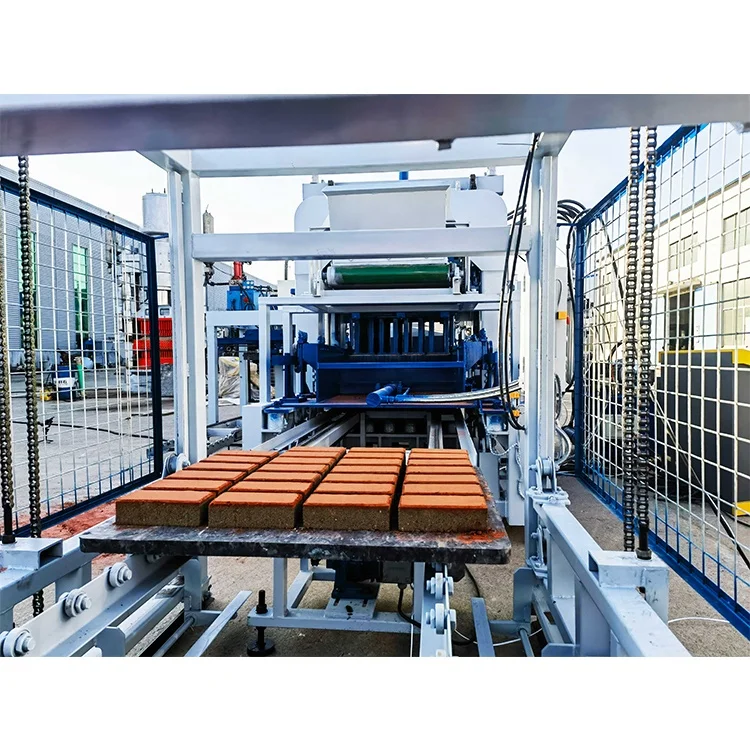
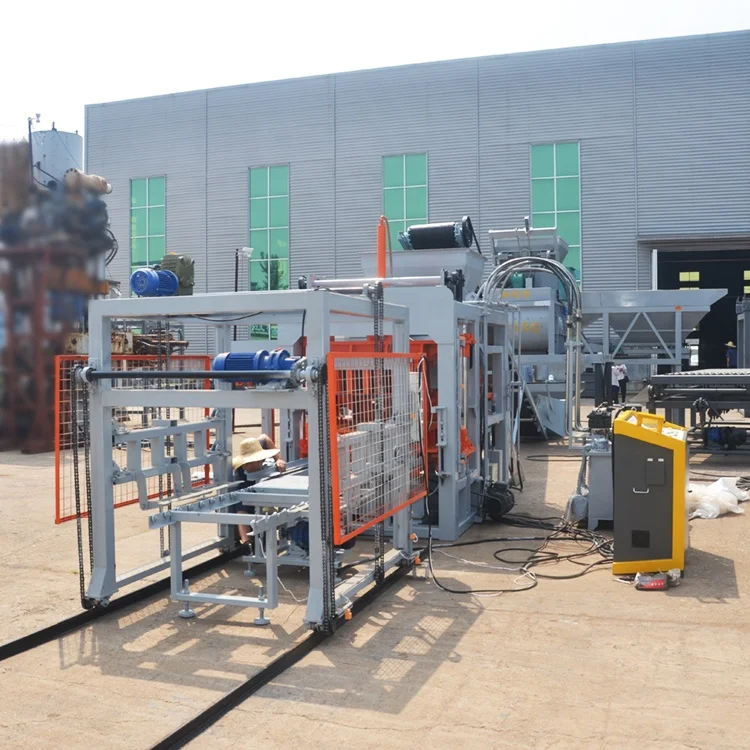
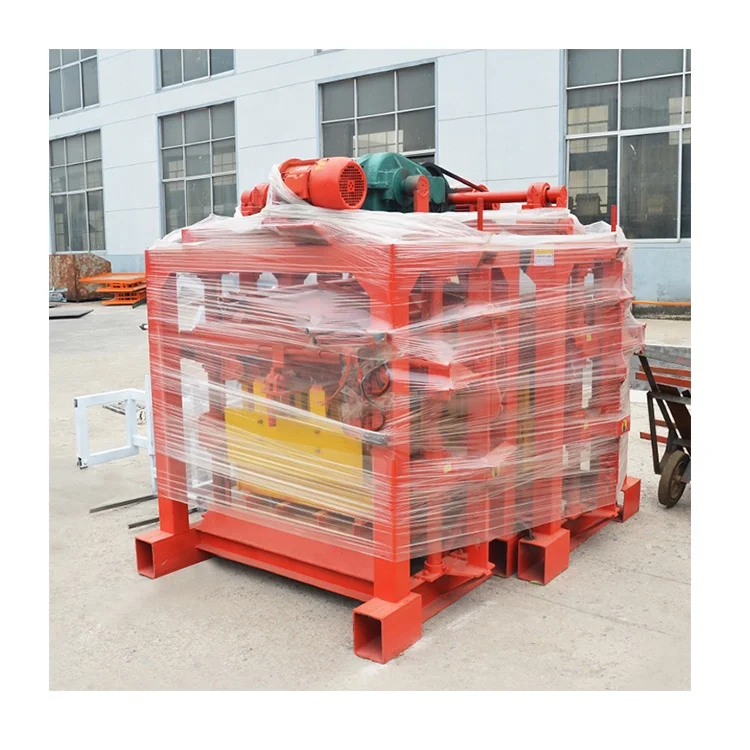
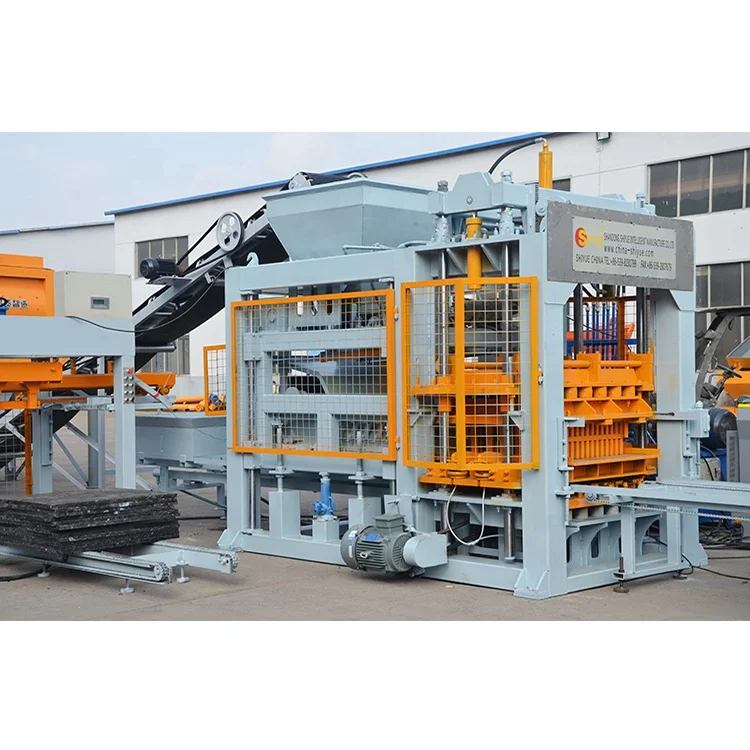
Entry-Level Investment Footprint — the QTJ4-26 sits at the base of our semi-automatic range, sized for entrepreneurs and site contractors who need proven hollow and solid block output before committing to a full automatic line.
Technical Specifications
| Parameter |
Value |
| Model |
QTJ4-26 |
| Product Type |
Semi-Automatic Concrete Block Making Machine |
| Overall Dimensions (L×W×H) |
2060×1730×2580 mm |
| Molding Cycle |
26 s |
| Vibration Frequency |
4200 r/min |
| Vibration Force (Exciting Power) |
35.5 kN |
| Rated Power |
14.25 kW |
| Mixer Model |
JQ350 |
| Pallet Size |
850×450×20 mm |
| Net Weight |
1800 kg |
| Vibration Type |
Vertical, dual motors under the mould |
| Guide System |
Four guide pillars with automatic mould movement |
| Automation Level |
Semi-automatic (manual pallet handling) |
| Applied Products |
Concrete hollow blocks (8 inch, 6 inch), solid bricks |
| Raw Materials |
Crushed stones, sand, cement, dust, fly ash |
| Output (390×190×190 mm hollow block) |
4 pcs/mould, 480 pcs/hr, 3800 pcs/8hr |
| Output (400×150×200 mm hollow block) |
5 pcs/mould, 600 pcs/hr, 4800 pcs/8hr |
| Output (240×115×53 mm solid brick) |
18 pcs/mould, 2100 pcs/hr, 17000 pcs/8hr |
Application Suitability
| Application |
Material or Output |
| Small-scale hollow block production |
8-inch and 6-inch hollow blocks from crushed stone, sand, and cement |
| On-site contractor block manufacturing |
Solid bricks and hollow blocks using locally available aggregate and fly ash |
| First-time block plant setup |
Entry-level daily volume of hollow blocks and solid bricks for regional building supply |
| Distributor format expansion |
Standard concrete masonry units added to an existing building material catalog |
What "480 Pieces per Hour" Actually Means on the Shop Floor
Capacity figures only hold weight when the block format and cycle assumptions are stated alongside them.
I have seen buyers compare two machines purely on the hourly number in the brochure, only to discover one figure was based on a small solid brick and the other on a large hollow block. The QTJ4-26 block making machine for sale is rated at 480 pieces per hour based on a 390×190×190 mm hollow block with a 26-second molding cycle. Switch the mould to a 240×115×53 mm solid brick and the same machine delivers 2100 pieces per hour — same press, different product. This is why our proposals always state the exact format behind every capacity figure [NEED_CITE: importance of format-specific capacity disclosure in block machinery quotations]. Without that clarity, a buyer planning around 400×150×200 mm hollow blocks might expect 480 per hour when the realistic figure is 600 per hour, or vice versa, throwing off the entire project timeline and revenue forecast.

Where the QTJ4-26 Sits in the Full Machine Range
Our lineup spans mobile egg-laying units for on-site work, semi-automatic presses like this semi-automatic block machine manufacturer model for small-to-medium plants, and high-capacity fully automatic lines with pallet stacking and cubing. The QTJ4-26 occupies the entry semi-automatic tier: it handles pallet loading and block ejection mechanically but relies on an operator to transfer pallets to the curing area. This keeps the initial investment contained while preserving a clear upgrade path toward automatic handling when volume justifies the step.
Matching the Machine Tier to Your Project Phase
Entrepreneurs launching a first block plant often face uncertain local demand, making a lower-capacity semi-automatic tier the pragmatic starting point. Construction contractors producing blocks for a specific housing development benefit from the compact footprint and simpler foundation requirements — the 2060×1730 mm frame fits inside a standard workshop bay without special civil works. Once daily volumes consistently exceed what manual pallet handling can sustain, buyers add automatic stackers and curing rack systems to the same press footprint, extending the line without replacing the core machine [NEED_CITE: typical upgrade path from semi-automatic to automatic block production].
How Vibration Force and Pillar Guidance Shape Block Density
The 35.5 kN exciting power delivered by two vertical motors directly beneath the mould compacts the concrete mix upward through the cavity, which is the standard approach for hollow block formation. That vibration must be paired with rigid mould alignment; the four-pillar guide system keeps the upper and lower mould halves registered within tight tolerances across every cycle. If the pillars wear unevenly or the vibration frequency drifts from the 4200 r/min design point, blocks exit with density variations — heavier on one side, weaker on the other. For buyers working with coarse local aggregate like volcanic scoria or recycled crushed concrete, matching vibration frequency to particle size is as important as the force rating itself. The 14.25 kW total rated power must also be confirmed against site supply to avoid tripping breakers during peak draw [NEED_CITE: relationship between aggregate particle size and optimal vibration frequency in concrete block molding].
When the Wrong Pallet Size Derails the Curing Workflow
Pallet dimensions are frequently treated as a minor accessory specification, yet they govern how blocks move from press to curing area to dispatch. The QTJ4-26 uses an 850×450×20 mm pallet, and that size must align with the curing rack spacing and the forklift tine width the buyer already operates. I worked on a project where the plant owner ordered pallets to match the machine but the curing racks on site were built for a different dimension, forcing every pallet to be re-stacked by hand before curing could begin. That kind of mismatch adds labor, slows output, and introduces block damage [NEED_CITE: pallet size compatibility with curing racks and forklift equipment in block plants]. Confirming pallet size against existing site infrastructure before the machine ships prevents weeks of lost production after commissioning.
Why Configuration Starts with Your Local Aggregate, Not a Catalog Default
Shandong Shiyue Intelligent Machinery treats the QTJ4-26 as a system configured around the buyer’s actual materials and target formats rather than a fixed catalog unit. The machine, mould, pallet, and handling workflow are specified together so that vibration parameters match the aggregate the buyer can actually source locally. Mould design covers the hollow block and solid brick formats that sell in the buyer’s specific market, including custom mould drawings when standard formats do not match local building codes. Automation level is selectable — a buyer can begin with manual pallet handling on this semi-automatic tier and add automatic stacking and cubing later without replacing the press. Installation and commissioning support includes on-site operator training so the crew understands mould change procedure, vibration adjustment, and daily maintenance from day one.
Documentation & Verification
- Line layout and capacity calculation stating the exact block format assumed for the QTJ4-26
- Machine specification sheet covering vibration force, cycle time, and pallet dimensions
- Mould drawing and format list confirming hollow block and solid brick compatibility
- Voltage and control language confirmation recorded before production begins
- Factory test record with photographs taken on the buyer’s specified block format
- Packing photographs and customs documentation support for export shipment
Installation, Commissioning & Support
- Foundation slab leveled to support the 2060×1730 mm frame and 1800 kg operating weight
- Dedicated electrical circuit rated for the 14.25 kW total draw including the JQ350 mixer
- Machine shipped partially assembled with four-pillar frame and vibration table pre-mounted
- First-run commissioning includes vibration frequency tuning to the buyer’s specific aggregate mix
- Operator training covers the 26-second cycle workflow, mould change, and manual pallet handling sequence
- Wear parts list supplied with recommended hydraulic seal and vibration motor brush replacement intervals
What We Need from You to Build an Accurate Proposal
To size the QTJ4-26 correctly for your project, share the specific hollow block and solid brick dimensions your market demands along with your target daily output. Let us know the type of aggregate available locally — whether that is river sand, crushed limestone, volcanic scoria, or fly ash — and the curing area dimensions you have on site. Confirming your local voltage and frequency early ensures the electrical panel and motor wiring match your grid before the machine leaves our factory.
Frequently Asked Questions
Q: How is the hourly capacity calculated and which block format does it assume?
A: Every capacity figure for the QTJ4-26 is tied to a specific block format and the 26-second molding cycle. For a 390×190×190 mm hollow block the rate is 480 pieces per hour; for a 400×150×200 mm block it is 600 per hour; for a 240×115×53 mm solid brick it reaches 2100 per hour. We state the format behind every number in our proposals.
Q: What is the plant footprint compared to automatic models in the range?
A: The QTJ4-26 measures 2060×1730 mm at the base, requiring a compact workshop bay without heavy civil works. Automatic models add pallet feeding conveyors, stackers, and cubing stations that extend the line length considerably. This semi-automatic tier suits sites where space and initial investment are both constrained.
Q: Can I move from this semi-automatic machine to a fully automatic line later?
A: Yes. The QTJ4-26 press can be integrated with automatic pallet feeding, stacking, and cubing equipment as volume grows. The core vibration and mould systems remain in place while handling stations are added around the press, avoiding a full machine replacement.
Q: What voltage and control language options are available for my region?
A: Voltage and frequency are configured to match the buyer’s local grid before production begins. Control panel labeling and display language are confirmed during the proposal stage so operators can read instructions and alarms in their working language from the first day of commissioning.
Q: How does the QTJ4-26 fit into the full range of block machines you manufacture?
A: It sits at the entry semi-automatic tier, below higher-output automatic lines and above mobile egg-laying units. Buyers use it as a starting point for small-to-medium plants or on-site contractor production, then upgrade handling automation as demand increases without changing the core press.

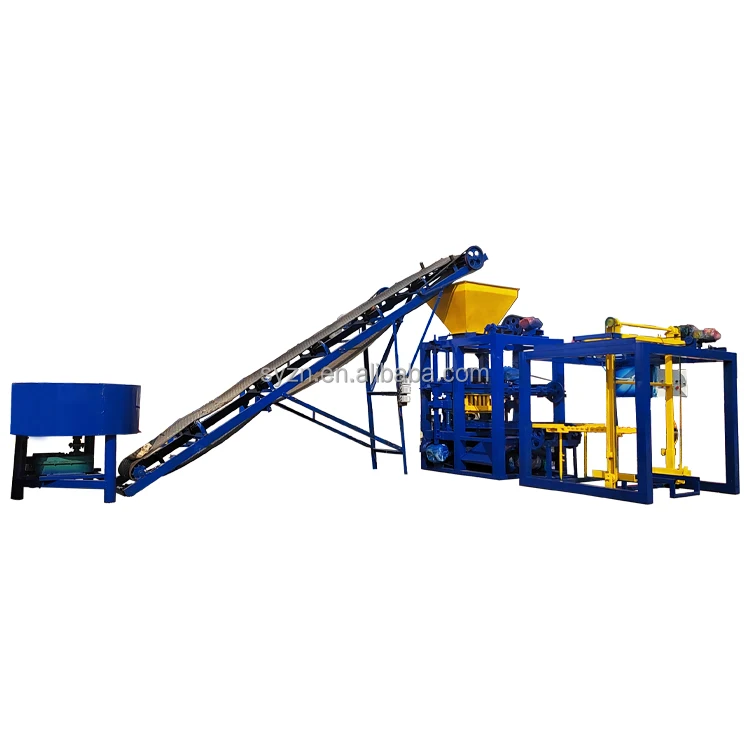
 High quality block machine