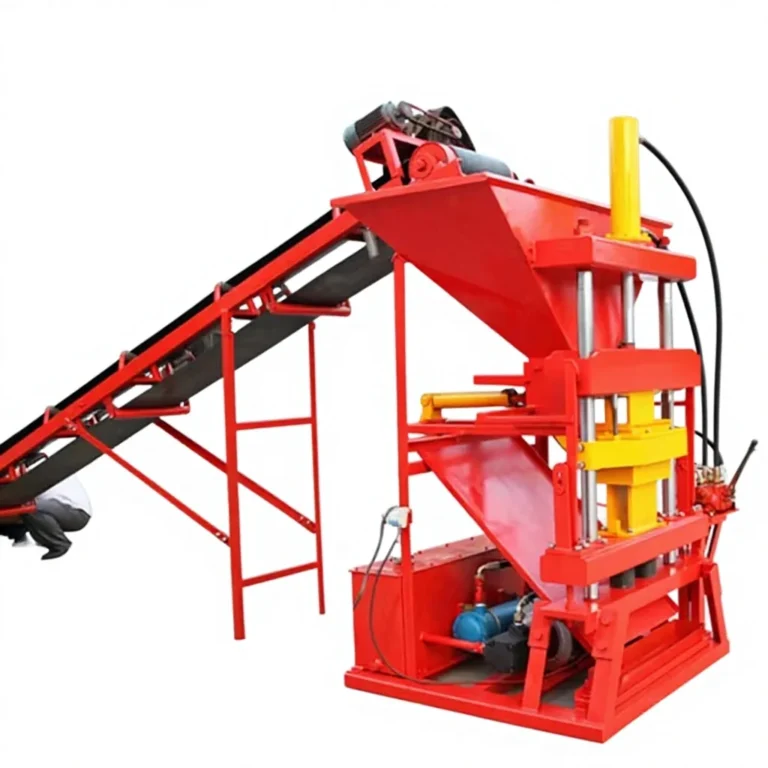
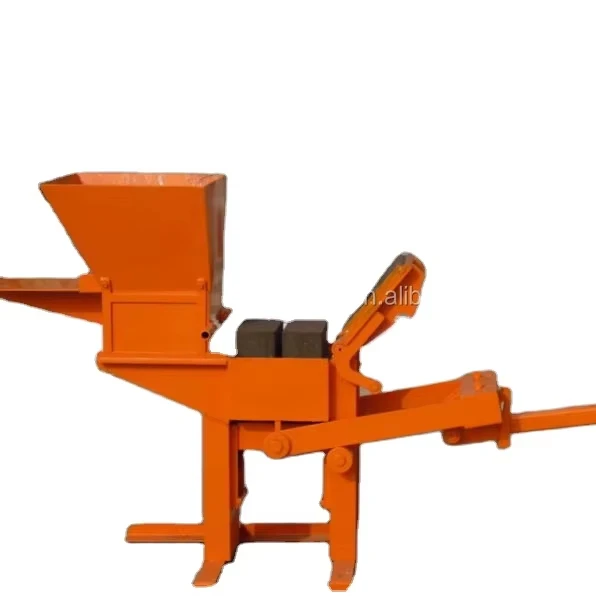
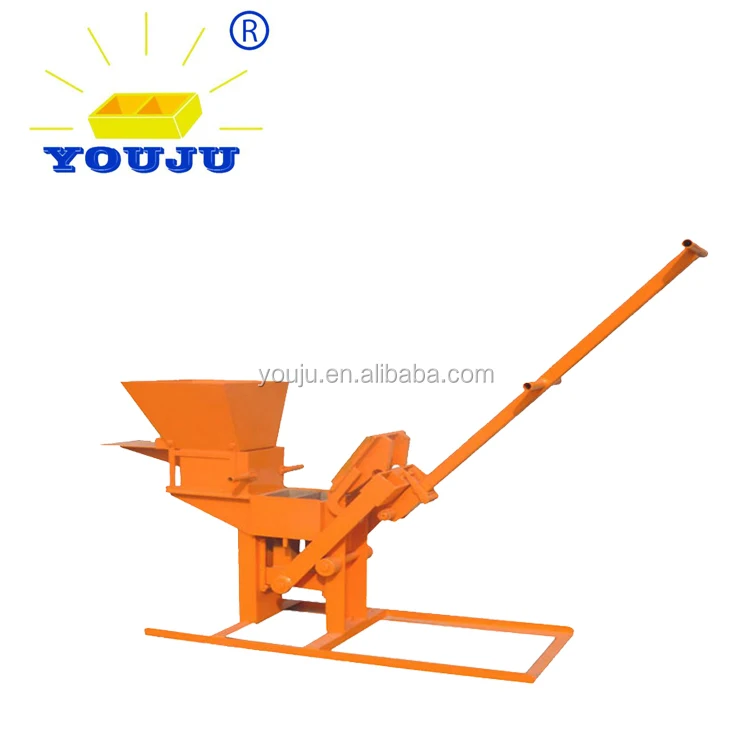
Zero-Power Manual Operation — the LY2-40 runs entirely on human force, removing any dependency on grid voltage or generator fuel, which is exactly what remote job sites and first-time brick ventures need before they consider stepping up to powered tiers.
Technical Specifications
| Parameter |
Value |
| Model |
LY2-40 |
| Product Type |
Manual Clay Interlocking Brick Making Machine |
| Rated Power |
No power required — fully manual mechanical operation |
| Voltage & Frequency |
Not applicable (no electrical drive) |
| Control System |
Manual mechanical levers (no PLC or electrical control) |
| Overall Dimensions (L × W × H) |
1600 × 700 × 1200 mm |
| Net Weight |
200–240 kg |
| Cycle Time |
30–40 s (basis not stated in source — confirm block format / material / thickness) |
| Output Capacity |
400–1000 pcs/day (basis not stated in source — confirm block format / material / thickness) |
| Hydraulic Pressure |
Not applicable (manual mechanical pressing) |
| Vibration System |
None indicated |
| Pallet Requirement |
Not stated in source |
| Mould Format |
Changeable moulds for interlocking clay brick profiles |
| Automation Level |
Fully manual |
| Stacking Method |
Manual handling |
| Mobility |
Steel wheels for on-site relocation |
| Recommended Mixer |
JFA-1 Mixer or JQ350 Mixer |
| Warranty |
1 Year |
Application Suitability
| Application |
Material or Output |
| Off-grid rural housing projects |
Soil-cement interlocking bricks where no grid power is available |
| On-site contractor brick production |
Clay and stabilised soil mixes produced directly at the building site |
| First-plant entrepreneur ventures |
Low-capital interlocking brick output with minimal infrastructure |
| Community development construction |
Ecological interlocking bricks from locally sourced soil and cement |
What "400–1000 Pieces per Day" Actually Means for Your Crew
Daily throughput depends entirely on the interlocking brick format you press, the soil-cement mix your crew feeds, and the number of operating hours you sustain. I have stood on sites in West Africa where a manual clay interlocking brick making machine manufacturer quoted a daily figure based on a thin paver profile, while the buyer was pressing a full-height interlocking wall block that took twice the compaction effort. The cycle time of 30–40 s is measured under ideal conditions with a practiced crew and a consistent mix. Real output shifts when the soil moisture changes between morning and afternoon, when the mould needs cleaning after every few dozen cycles, or when the crew rotates. [NEED_CITE: field capacity verification methods for manual brick presses]
Where the LY2-40 Sits on the Machine Range
The LY2-40 occupies the entry tier — a fully manual, zero-power press designed for buyers who either have no electricity or need to keep initial investment at the absolute floor. Before stepping up to a semi-automatic machine with vibration and hydraulic assist, a buyer should confirm whether the local market actually pays a premium for the higher density that powered machines deliver. For many rural housing applications, a well-cured soil-cement interlocking brick from a manual press meets the structural requirement, and the LY2-40 is the starting point on the range where that conversation begins.
Mould Changeover and Format Flexibility on Site
The changeable mould system allows a single LY2-40 frame to produce more than one interlocking brick profile, but the practical range of formats depends on which moulds you order upfront. On a remote site with no workshop and no crane, swapping a mould means unbolting the current insert, lifting it clear by hand, and seating the replacement — a task that is straightforward when the bolt pattern and alignment pins are well-matched, but frustrating when tolerances are loose and the mould rocks under compaction. [NEED_CITE: mould alignment standards for manual interlocking brick machines]

Reading the Specs That Matter for Manual Pressing
With no motor, no hydraulic pump, and no vibration system, the specs that govern output quality are mechanical rather than electrical. The 1600 × 700 × 1200 mm frame footprint determines how much floor space the press occupies on a cramped job site and whether it can pass through a standard doorway for indoor storage. The 200–240 kg net weight is low enough for two people to reposition on its steel wheels, yet heavy enough that the frame resists lifting off the ground during a full-force lever stroke. The recommended JFA-1 or JQ350 mixer pairing matters because soil-cement consistency — not just the press itself — controls whether the brick releases cleanly from the mould or tears at the interlocking lip. Mould profile selection determines the wall thickness and interlocking geometry, both of which influence the compressive strength the finished brick can achieve after curing.
The Cost of Skipping Mix Verification Before You Order
I once watched a crew in South Asia spend an entire week blaming the machine when bricks crumbled at the interlocking edge. The problem was not the press — it was the local laterite soil, which had a clay fraction too low to bind without added cement, and the crew had been mixing at a ratio meant for a different soil type entirely. When a manual clay interlocking brick making machine manufacturer ships a press without a documented soil-cement compatibility check, the buyer absorbs the cost of failed batches, wasted cement, and lost construction days. Confirming your soil profile and running trial mixes before the machine leaves the factory removes that risk. [NEED_CITE: soil-cement mix design guidelines for interlocking compressed earth blocks]
Why Buyers Source This Tier Here
Block machinery as a single focus means the LY2-40 press, its moulds, and the recommended mixer are specified as one matched set rather than assembled from unrelated suppliers. Configuration is set against the buyer’s actual soil type and target brick format, not a catalogue default. Mould design covers the interlocking profiles the buyer’s local market sells, with custom drawings available when a standard profile does not match. The automation tier is selectable — a buyer can start with the LY2-40 and move to a semi-automatic press later without changing suppliers. Installation guidance and operator training are included so the first day of production is not spent guessing lever technique.
Documentation & Verification
- Capacity calculation stating the exact interlocking brick dimensions assumed for daily output
- Machine specification sheet confirming overall dimensions and net weight
- Mould drawing and format list showing included and optional interlocking profiles
- Operation and maintenance manual covering lever system use and mould change procedure
- Factory test record on the buyer’s selected soil-cement mix before dispatch
- Recommended mixer pairing document matching the JFA-1 or JQ350 to target output volume
Installation, Commissioning & Support
- No electrical connection required — the 1600 × 700 × 1200 mm frame is positioned on level ground and secured against lateral movement
- Steel-wheel mobility allows two operators to relocate the LY2-40 across a site without a forklift
- First-day commissioning covers lever stroke technique, mould release timing, and soil-cement feed consistency
- Operator training addresses mould changeover procedure and bolt-torque sequence for format swaps
- Wear parts list identifies high-friction surfaces and recommended replacement intervals for the manual lever pivot
- Maintenance schedule covers pivot lubrication and mould surface inspection at defined cycle counts
Before You Send an Inquiry
To size the LY2-40 correctly, share the interlocking brick format your local market demands — including dimensions and the interlocking profile drawing if you have one. Confirm the soil type at your project site and whether you have access to Portland cement or an alternative stabiliser. Let us know whether you already have a mixer on site or need the JFA-1 or JQ350 included in the scope. Daily operating hours and crew size help us calculate realistic throughput against the 30–40 s cycle baseline.
Frequently Asked Questions
Q: How is the 400–1000 pcs/day capacity verified, and which brick format does it assume?
A: The output range is based on a cycle time of 30–40 s, but the source does not state which interlocking brick format, wall thickness, or soil-cement mix was used. We provide a capacity calculation document that states the exact format dimensions and mix ratio assumed, so the figure matches your actual production target rather than a generic range.
Q: What interlocking brick formats and mould sizes are available for the LY2-40?
A: The machine accepts changeable moulds for various interlocking clay brick profiles. Specific format dimensions and interlocking geometries are listed in the mould drawing and format list we supply with the quotation. Custom mould designs based on buyer drawings are available when a standard profile does not match local market requirements.
Q: What soil-cement mix design should I confirm before ordering?
A: Your local soil type — clay fraction, moisture content, and aggregate size — determines the cement ratio needed for adequate compressive strength. We recommend a soil analysis and trial mix before the machine ships, so the LY2-40 is configured for material you can actually source rather than a theoretical blend.
Q: When should a buyer step up from the LY2-40 to a semi-automatic or automatic tier?
A: Move up when your market demands higher brick density than manual compaction can achieve, when daily volume exceeds what a manual crew can sustain, or when format changeover frequency requires faster mould swaps. The LY2-40 is the range entry point; semi-automatic tiers add vibration and hydraulic assist for those requirements.
Q: What is the mould change procedure and expected changeover time?
A: Mould changeover involves unbolting the current insert, lifting it from the frame, and seating the replacement mould with alignment pins. The exact changeover time depends on the mould size and bolt configuration. We include the step-by-step procedure and recommended torque values in the operation manual so the swap is repeatable on site.

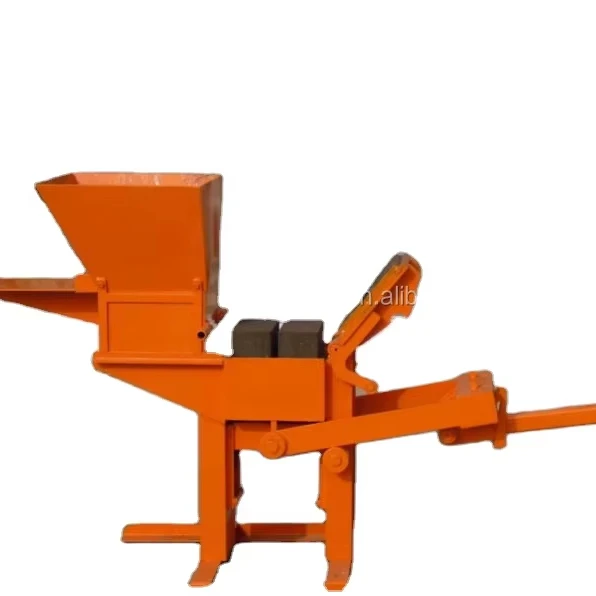
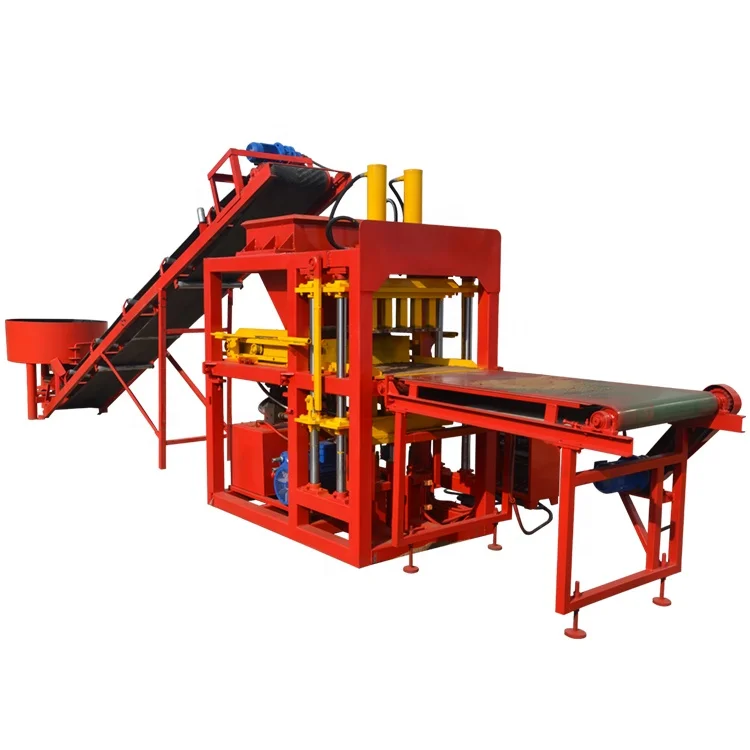 Clay interlocking brick