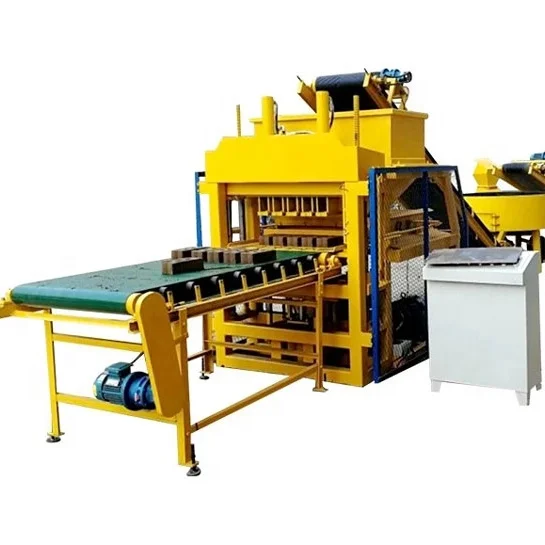
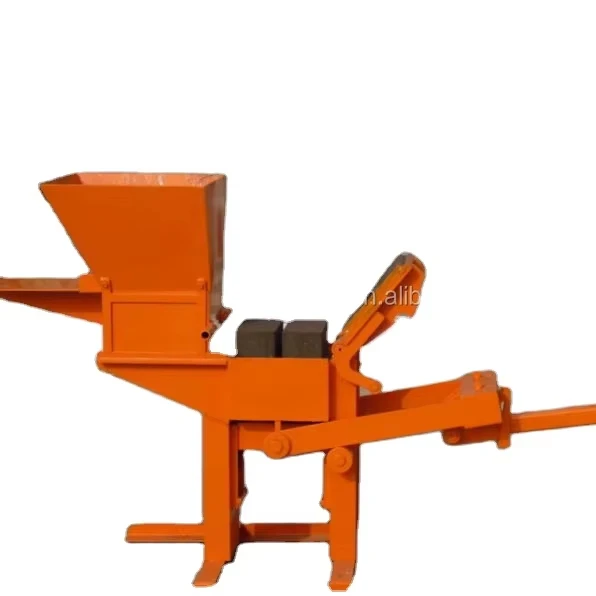
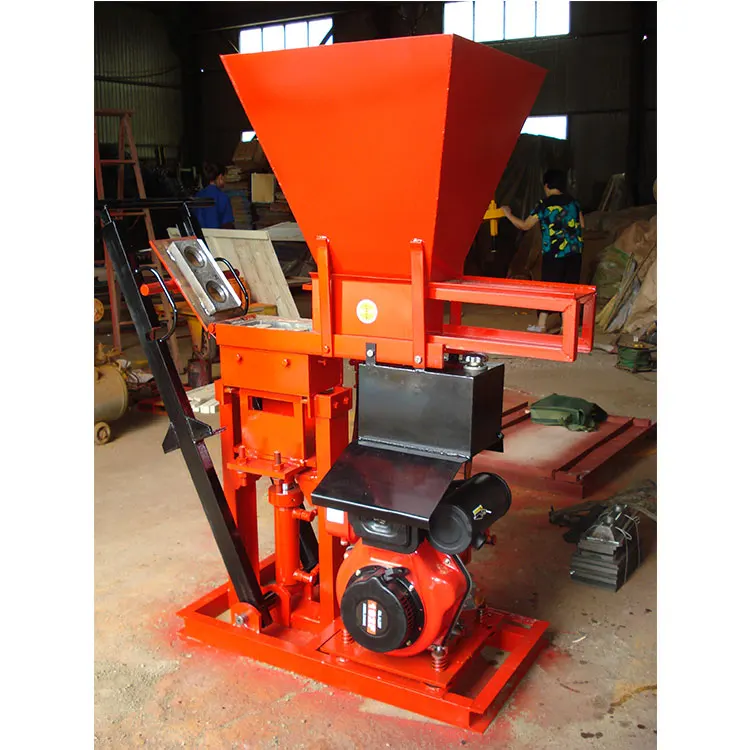
Block machinery as a single focus — The LY2-40 anchors the entry tier of our lineup, letting buyers compare manual, semi-automatic, and automatic output levels before narrowing the configuration to their site conditions.
Technical Specifications
| Parameter |
Value |
| Model |
LY2-40 |
| Product Type |
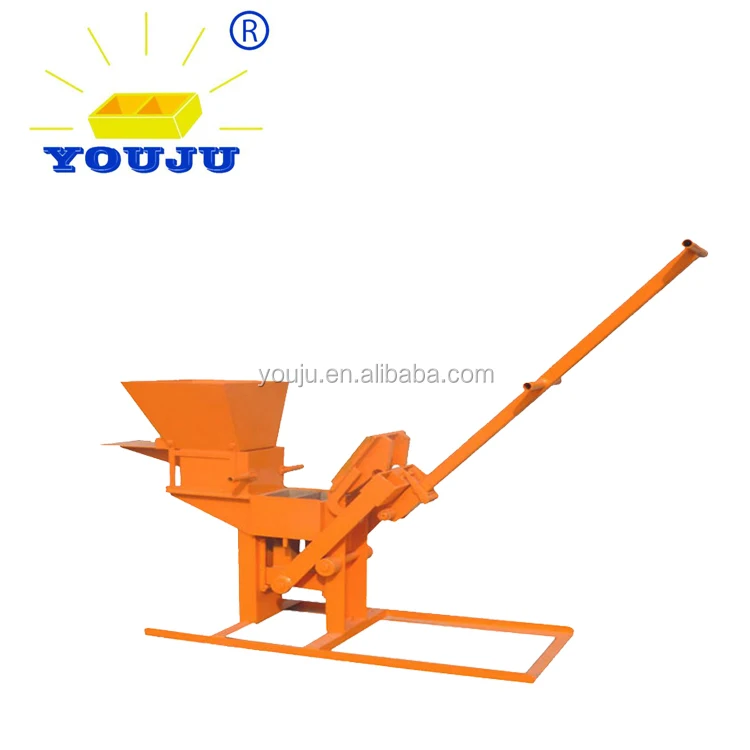
Manual Clay Interlocking Brick Making Machine |
| Total Power |
No Power, Completely Manual |
| Overall Dimensions |
1600 x 700 x 1200 mm |
| Net Weight |
200-240 kgs |
| Molding Cycle |
30-40s |
| Output Capacity |
400-1000 pcs/day (basis to be confirmed — dependent on block format, material, and thickness) |
| Lifting System |
Manually operated |
| Mobile Devices |
Steel wheels |
| Moulds |
Changeable for various interlocking block formats |
| Basic Equipment |
JFA-1 Mixer or JQ350 Mixer |
| Automation Level |
Completely Manual |
| Mixing Option |
Automatized mix (Eco Mix Force line mixer) or Manual mixing |
| Warranty |
1 Year |
Application Suitability
| Application |
Material or Output |
| Small-scale ecological brick production |
Soil, clay, and cement mixes |
| No-power or off-grid rural construction |
Local aggregate without grid electricity |
| On-site housing development projects |
Interlocking clay bricks formed and cured locally |
| Entrepreneur entry-level block plants |
Low-volume manual brick forming with minimal capital |
What "1000 Pieces per Day" Actually Means for a Manual Press
Daily output figures are meaningless unless tied to a specific block format, material mix, and operator cycle.
Many buyers see a capacity number on a spec sheet and plan their entire delivery schedule around it. With a completely manual interlocking brick machine, the molding cycle relies on human effort—pulling the lever, filling the hopper, releasing the brick. If your local clay has high plasticity or moisture content, the mix sticks to the mould cavity, forcing operators to clean between cycles and cutting actual daily volume well below the quoted range. I have seen projects stall because the quoted capacity assumed a free-flowing sandy loam while the site sat on heavy clay [NEED_CITE: soil plasticity index and its effect on manual mould release times]. Before committing, confirm the exact interlocking profile you intend to produce so the capacity calculation matches reality.

Positioning the LY2-40 Within the Full Machine Range
The LY2-40 serves as the starting point of the Shiyue block machine lineup. It requires zero electricity, making it the default choice for remote sites, disaster-relief housing, or first-time entrepreneurs testing market demand before investing in powered equipment. The manual interlocking brick machine manufacturer lineup continues upward through semi-automatic hydraulic presses and fully automatic lines with pallet feeders and stackers, so buyers can map their growth trajectory from day one.
Understanding the Footprint and Mobility Advantage
Because the LY2-40 sits on steel wheels and weighs under a quarter-ton, a two-person crew can push it across a cleared site without a forklift or concrete foundation. This mobility eliminates the fixed-plant footprint that higher tiers demand. For contractors rotating between village housing projects, the machine moves with the work. Buyers surveying the full range should note that semi-automatic and automatic tiers require level concrete pads, curing racks, and three-phase power—infrastructure the LY2-40 bypasses entirely [NEED_CITE: typical site preparation requirements for manual versus automatic block presses].
How Cycle Time and Mix Design Intersect
The stated 30–40 second molding cycle assumes an operator working at a steady rhythm with a well-proportioned soil-cement mix. Interlocking brick profiles include tongue-and-groove edges that demand clean release; if the clay fraction is too high, the brick tears on demoulding. The paired JFA-1 or JQ350 mixer prepares small batches so the mix stays workable rather than drying out in a large hopper. The manual lever delivers compaction through mechanical advantage rather than hydraulic pressure, so consistency depends on the operator pulling to the same stop point each stroke.
The Hidden Cost of Skipping the Raw Material Conversation
Ordering a manual interlocking brick machine without testing your soil first often leads to bricks that crack during curing or crumble when handled. When the mix lacks enough clay to bind but has too much silt to compact, the bricks leave the mould with weak edges. Operators then over-compress to compensate, bending levers and fatiguing the frame prematurely. The problem surfaces only after the machine arrives, forcing costly cement additions or material sourcing changes [NEED_CITE: common causes of interlocking brick edge failure in field conditions].
Why Buyers Source the Entry Tier Here
Block machinery is our single focus, which means the LY2-40 is not a generic trading item but part of a matched system. The mould profile you select is cross-referenced against your soil test and target market demand, not pulled from a default catalogue. Moulds remain changeable across interlocking formats, and the same buyer can later move to a semi-automatic press that accepts the same pallet size and mould envelope. Line layouts state the block format assumed in the capacity calculation, so daily output planning is transparent from the first inquiry.
Documentation & Verification
- Line layout showing LY2-40 placement with manual curing area dimensions
- Mould drawing and interlocking brick profile list matched to your market
- Machine specification sheet confirming dimensions, weight, and cycle time
- Operation and maintenance manual in the buyer’s operating language
- Factory test record on your selected soil-cement mix before dispatch
Installation, Commissioning & Support
- No electrical connection required; site needs only a level, compacted earth base for the 1600 x 700 mm footprint
- Steel wheels allow manual repositioning across the site without heavy lifting gear
- Mixer pairing confirmed for either the JFA-1 or JQ350 unit depending on batch volume
- On-site operator training covers lever technique, mix proportioning, and mould cleaning cycles
- Changeable mould inventory and wearing part list supplied for first replacement planning
Next Steps Before You Order
Tell us which interlocking brick profile your local market demands, along with a soil sample analysis if available. Share the site conditions—whether you have grid power for a mixer or need fully manual operation. This information lets us place the LY2-40 correctly within the range and confirm whether the next tier up makes sense for your volume targets.
Frequently Asked Questions
Q: Where does the LY2-40 sit in the full Shiyue block machine range, and what is the next tier up?
A: The LY2-40 occupies the entry tier as a completely manual, zero-power unit. The next tier introduces semi-automatic hydraulic presses with electric vibration, pallet feeding, and higher output per shift. Buyers can start here to validate their market and move up later without changing block formats, since mould dimensions follow the same envelope across tiers.
Q: How is daily output calculated, and which block format does the quoted capacity assume?
A: The 400–1000 pcs/day figure depends on the interlocking brick profile, soil-cement mix, and operator rhythm. Thicker or more complex profiles extend the 30–40 second cycle. We provide a capacity calculation that names the exact block format assumed, so your production plan is based on the profile you will actually sell, not a generic number.
Q: What plant footprint and site conditions does this manual machine require compared to semi-automatic tiers?
A: The LY2-40 needs a compacted earth surface for its 1600 x 700 mm footprint and no three-phase power. Semi-automatic tiers require a level concrete pad, curing rack area, electrical supply, and space for pallet circulation. This difference determines whether a remote or temporary site can host block production at all.
Q: Can I start with the LY2-40 and upgrade to a semi-automatic or automatic line later?
A: Yes. Mould profiles and pallet sizes carry forward through the range. When you move to a powered press, the interlocking brick formats you already established in the market remain compatible. The upgrade path involves adding automation stations around the press rather than replacing your entire product catalog.
Q: What mixer options pair with this machine, and how do they affect overall line throughput?
A: The JFA-1 is a small manual or low-power unit suitable for batch-by-batch mixing beside the press. The JQ350 offers higher batch volume and can be motor-driven where power is available. Your choice determines whether mixing keeps pace with the manual molding cycle or becomes the bottleneck on a busy shift.

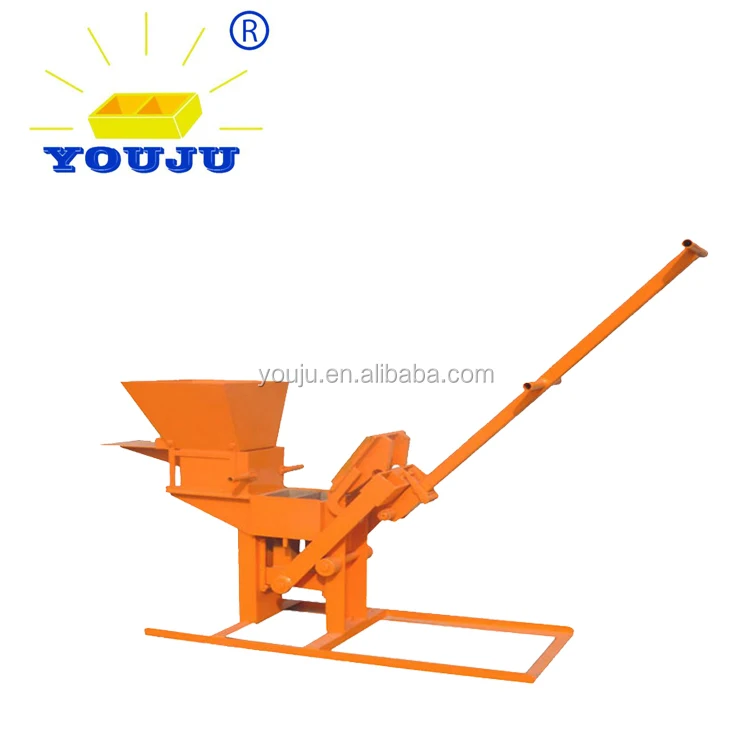
 Clay interlocking brick