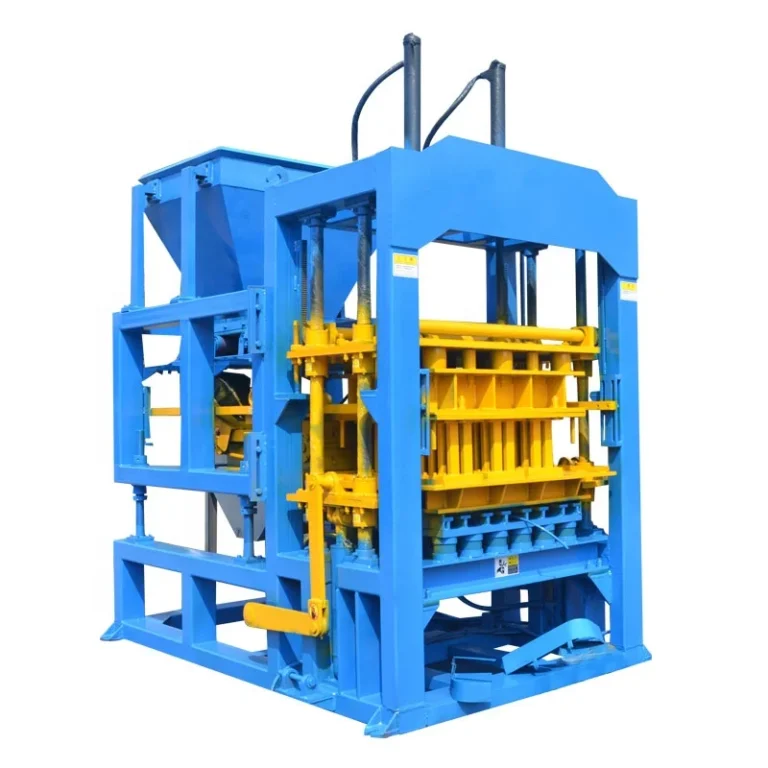
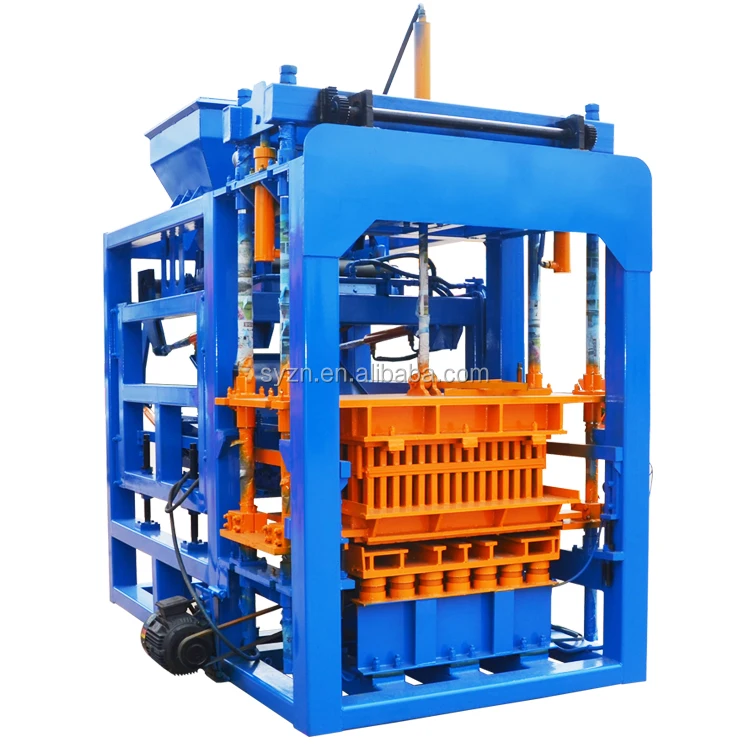
Matching the press to the buyer’s actual block format — The QTJ4-24 semi-automatic block machine is positioned at the entry tier of our stationary range, specified alongside its mixer, conveyor, and optional stacker as one matched system rather than separate catalogue items.
Technical Specifications
| Parameter |
Value |
| Product Type |
Semi-Automatic Concrete Block Making Machine |
| Model |
QTJ4-24 |
| Molding Type |
Platform Vibration |
| Machine Frame |
Dragon gate style, super steel construction, four vertical wear-resisting shafts |
| Vibration System |
Lower platform vibration (2 × 3kW motors) + upper vibration (1.5kW attached device) |
| Elevating System |
Cone-shape motor with JZQ250 speed reducer |
| Delivery Device |
Cycloidal pin wheel speed reducer with chain and V-belt drive |
| Pallet Size |
850mm × 450mm |
| Mould Format (Hollow Block) |
390mm × 190mm × 190mm, 4 pcs/mold |
| Mould Format (Solid Brick) |
240mm × 115mm × 53mm, 21 pcs/mold |
| Overall Dimensions (Working) |
3600mm × 1700mm × 2560mm |
| Total Mass |
1750kgs |
| Overall Power |
14.25kW |
| Automation Level |
Semi-automatic |
| Line Configuration |
QTJ4-24 press + JQ350 pan mixer + 6m belt conveyor |
| Optional Equipment |
Auto stacker (3–6 layers depending on block height), trolley for curing yard transport |
| Output Capacity |
basis not stated in source — confirm block format and cycle time |
| Cycle Time |
basis not stated in source |
| Voltage & Frequency |
configurable — confirm before production |
| Control System |
Electronic controlling part (PLC type and language configurable) |
Application Suitability
| Application |
Material or Output |
| Hollow block production for small-scale block plants |
Crushed stone, sand, cement, and water mix |
| Solid brick manufacturing |
Local aggregate with cement binder |
| On-site block production by construction contractors |
Available raw materials at project locations in West Africa and similar markets |
| First block plant for entrepreneurs |
Low-investment entry with semi-automatic workflow |
| Building material workshops adding block formats |
Existing operations expanding product range |
What "Pieces per Hour" Actually Means on a Semi-Automatic Block Machine
Cycle time only matters when tied to the exact block format your market sells.
I once watched a buyer in Lagos unpack a block machine whose brochure promised impressive hourly numbers. Those figures assumed a small solid brick format, but his entire customer base bought 190mm hollow blocks. The real daily output on the format he needed was less than half the quoted figure. When evaluating a Semi-Automatic Block Machine manufacturer, always ask which block format the capacity number assumes [NEED_CITE: capacity calculation standards for concrete block machinery]. The QTJ4-24 molds four hollow blocks or twenty-one solid bricks per cycle, and those two formats produce very different daily totals.

Where the QTJ4-24 Sits in the Stationary Machine Range
The QTJ4-24 occupies the entry tier of our stationary block machine lineup. It is built for buyers who need a working production line without the capital outlay of a fully automatic plant. The press comes paired with a JQ350 pan mixer and a 6m belt conveyor, forming a complete Semi-Automatic Block Machine manufacturer solution from raw material to cured block. For buyers surveying options before committing, this tier represents the threshold where mechanized vibration replaces manual tamping.
Understanding the Automation Boundary
Semi-automatic means the press cycle runs under electronic control, but pallets move between stations with operator involvement. An optional auto stacker can handle three to six layers depending on block height, removing the most labor-intensive step from the curing workflow. This configuration lets a first-time plant owner start production quickly and add automation later. The upgrade path is a practical consideration for buyers in developing markets where labor costs may shift over time [NEED_CITE: automation adoption patterns in African block production].
Vibration, Frame Rigidity, and Block Density
The lower platform uses two 3kW vibration motors while a 1.5kW upper vibration device applies additional compaction from above. This dual-source arrangement compresses the concrete mix from both directions, which is important when working with local aggregates that vary in grading and clay content. The dragon gate frame with four vertical wear-resisting shafts keeps the mould aligned through thousands of cycles, preventing uneven block walls that lead to rejection. Pallet size at 850mm × 190mm must match your curing rack spacing and the forklift you plan to use, because a mismatch here creates a bottleneck no amount of press speed can fix. The 14.25kW total power draw is modest enough for a standard three-phase supply, but voltage and frequency must be confirmed against your local grid before the machine enters production [NEED_CITE: voltage and frequency standards by export market].
When the Wrong Pallet Size Derails a Project
A buyer in Accra ordered a machine without checking his curing yard dimensions. The pallets that arrived did not fit his existing racks, forcing him to rebuild the entire curing area before producing a single saleable block. Pallet size and material should be confirmed against the curing space you have, not the curing space you wish you had. On the QTJ4-24, the 850mm × 450mm pallet is standard, and any deviation must be discussed before the frame is welded. Selecting the wrong pallet specification also affects forklift compatibility and stacking height, compounding delays at the very stage where blocks gain their strength [NEED_CITE: curing and handling requirements for concrete blocks].
Why Source This Tier from a Single-System Supplier
Block machinery is the sole focus of our engineering and production work, so the QTJ4-24 press, its moulds, the JQ350 mixer, and the belt conveyor are specified together as a matched line. Mould design covers the hollow block and solid brick formats listed in the specifications, with custom drawings available for buyers whose markets demand other shapes. Configuration is set against the buyer’s actual local aggregate and target block format rather than a catalogue default. The automation level is selectable, meaning a buyer can begin with manual pallet handling and add the optional auto stacker when production volume justifies it. Installation support includes operator training so the crew understands vibration timing, mix consistency, and mould change procedure from the first day.
Documentation & Verification
- Line layout drawing showing QTJ4-24 press, mixer, and conveyor placement with pallet flow direction
- Capacity calculation document stating output per shift for each listed block format
- Mould drawing with dimensional tolerances for 390×190×190mm hollow and 240×115×53mm solid formats
- Pallet specification sheet covering size, material, and load rating for 850×450mm boards
- Electrical schematic with voltage and frequency as confirmed for the destination country
- Factory test record capturing vibration amplitude and block density before dispatch
Installation, Commissioning & Support
- Foundation pad must support 1750kgs total mass with level tolerance for the dragon gate frame alignment
- Three-phase power supply matching confirmed voltage and frequency, dedicated circuit for 14.25kW total draw
- Press ships partially assembled; vibration motors and elevating system require on-site mounting and belt tensioning
- First-run commissioning includes vibration timing adjustment to suit the buyer’s confirmed mix design
- Operator training covers mould change procedure, pallet loading sequence, and daily shaft lubrication
- Wear parts list provided at delivery identifying replacement intervals for vibration motor mounts and guide shafts
What to Prepare Before Requesting a Quotation
Share the block formats your market actually buys, along with the daily volume you need to sustain your operation. Confirm your local aggregate type and whether you have tested it with cement in a trial mix. Provide your site voltage, frequency, and the control language your operators read, because these details affect commissioning timing once the machine arrives.
Frequently Asked Questions
Q: What daily output can I realistically expect from the QTJ4-24, and for which block format?
A: Output depends entirely on the block format and the cycle time achieved with your specific mix. The machine moulds four hollow blocks or twenty-one solid bricks per cycle. Request a capacity calculation that states the assumed format and cycle time, then multiply by your planned shift hours to get a realistic daily figure.
Q: Where does the QTJ4-24 sit in the full machine range, and what does upgrading add?
A: The QTJ4-24 is the entry tier of the stationary range. Moving to the next tier adds higher vibration force, larger pallet size, and greater automation such as automatic pallet feeding and cubing. The step up is worthwhile when daily volume demands exceed what a semi-automatic workflow can sustain with available labor.
Q: Is the pallet size fixed at 850mm × 450mm, or can it be configured?
A: The standard pallet for this model is 850mm × 450mm. If your curing area or existing forklift requires a different dimension, this must be discussed before the machine frame is built, because pallet size determines the press table, rack spacing, and handling equipment throughout the line.
Q: What supporting equipment is included, and what is optional?
A: The standard line includes the QTJ4-24 press, a JQ350 pan mixer, and a 6m belt conveyor. An auto stacker capable of three to six layers and a curing yard trolley are optional. Buyers should confirm which items appear in the quotation to avoid manual handling bottlenecks at the curing stage.
Q: Can I start semi-automatic and upgrade later without replacing the press?
A: The QTJ4-24 supports adding the optional auto stacker after initial installation. Further automation upgrades depend on the specific configuration chosen at the outset. Discussing your growth plan during the inquiry stage ensures the machine is delivered with upgrade compatibility built in.

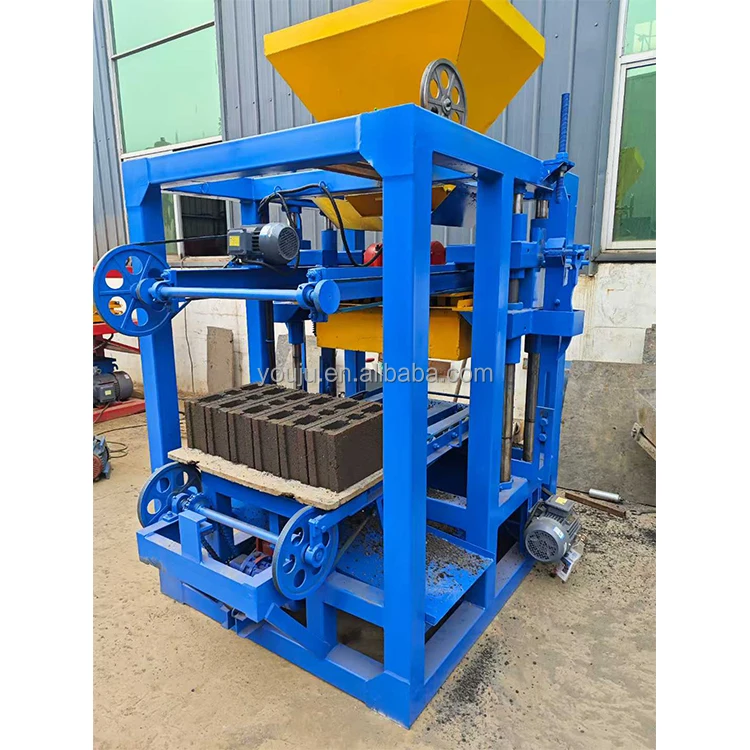
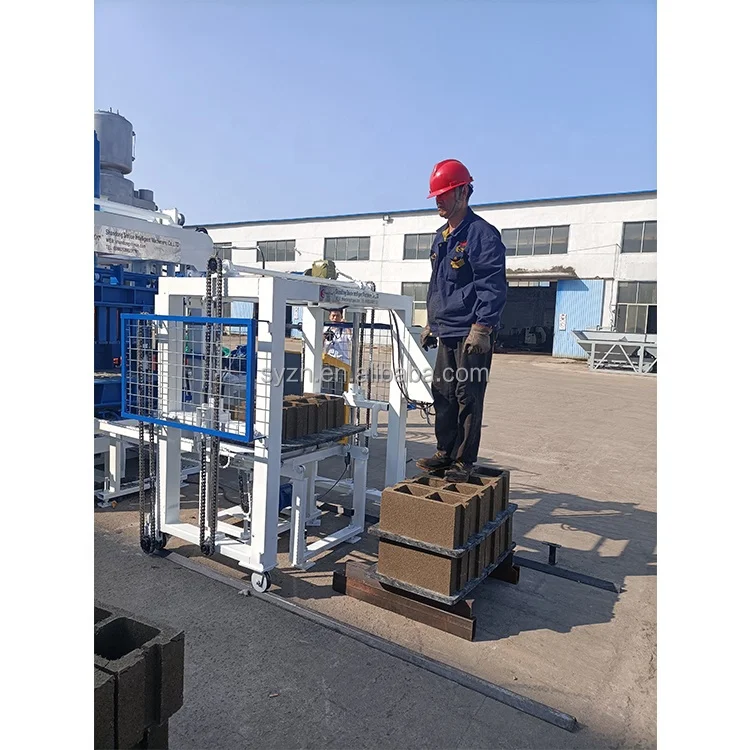 Stationary block machine