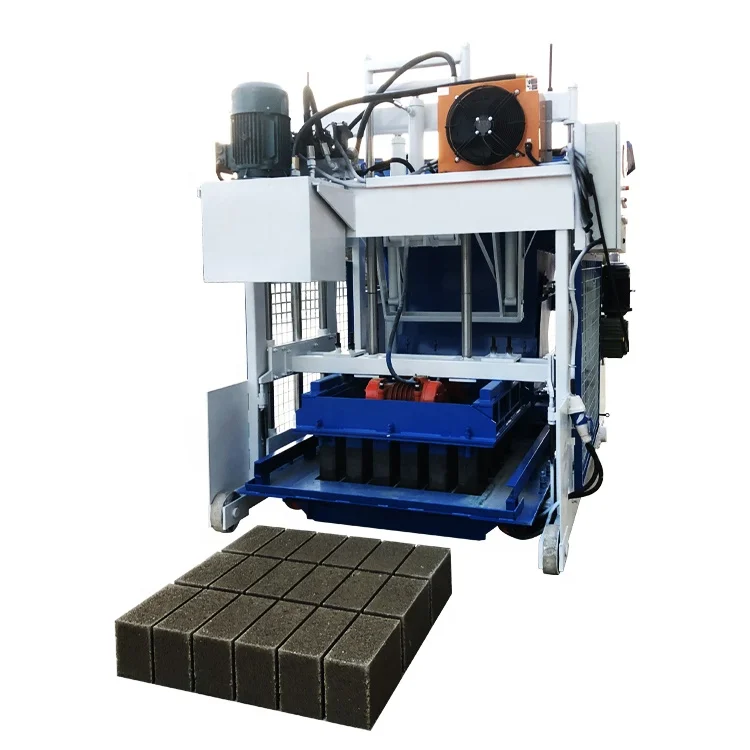
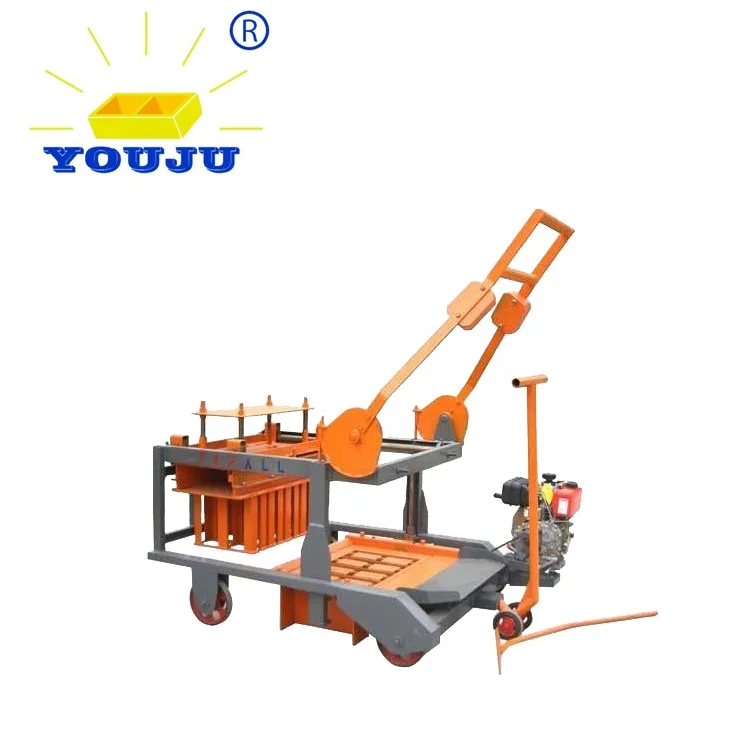
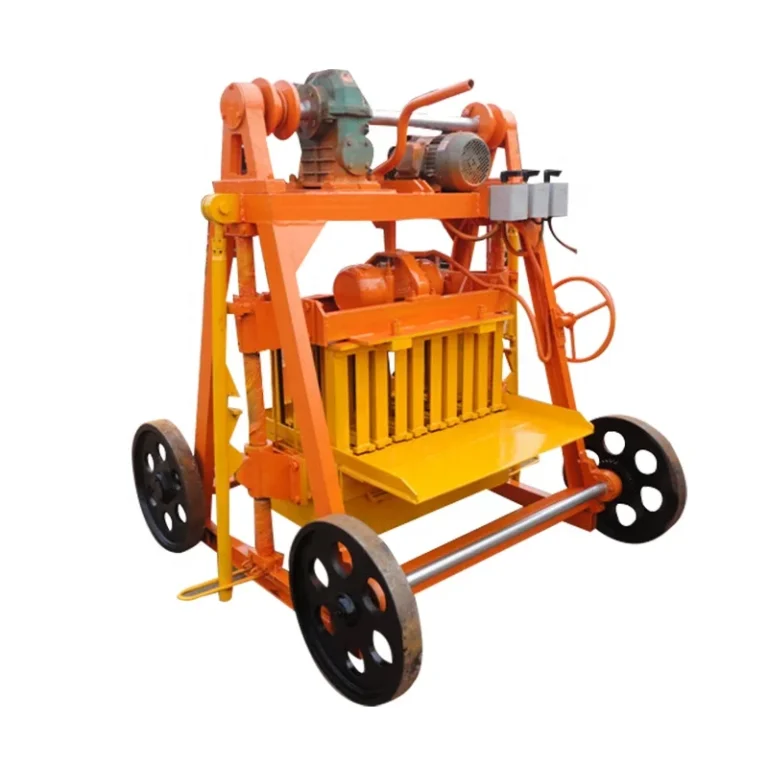
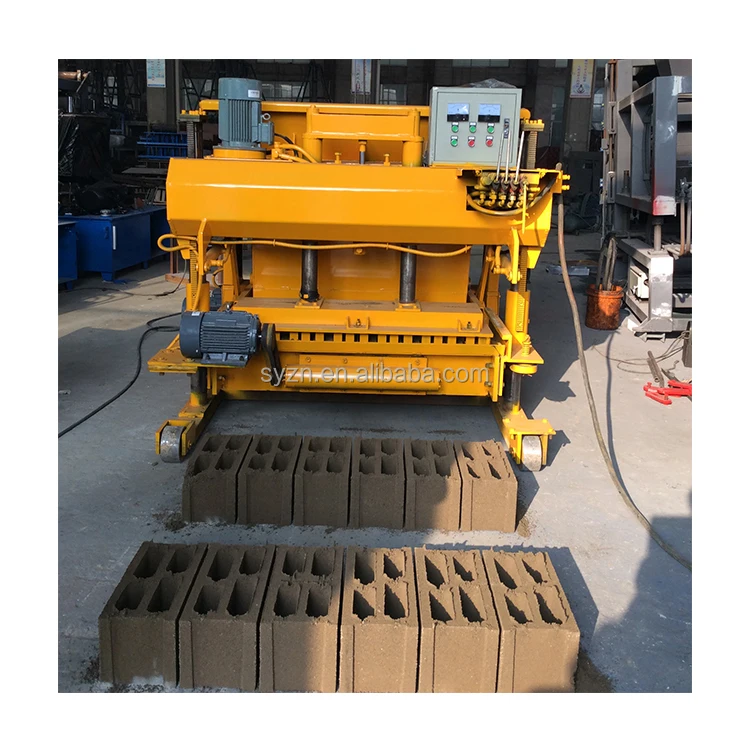
Single-Focus System Matching — the QMY4-30 mobile block machine is specified as a matched set of press, mixer and hydraulic demolding, not assembled from separate catalog items.
Technical Specifications
| Parameter |
Value |
| Model |
QMY4-30 |
| Product Type |
Mobile Cement Block Making Machine |
| Overall Dimensions (L×W×H) |
1300×1500×1000 mm |
| Total Mass |
950–1000 kg |
| Overall Power |
5.95 kW |
| Host Machine Power |
5.95 kW |
| Rated Pressure |
6–8 MPa |
| Vibration Force |
28.6 kN |
| Vibration Frequency |
4500 r/min |
| Main Vibration Form |
Moulding Vibration |
| Molding Area |
400×800 mm |
| Molding Cycle |
15–25 s (basis to be confirmed per block format) |
| Demolding Method |
Hydraulic |
| Pallet Size |
No pallets required (egg-laying type) |
| Mixer Model |
JQ350 |
| General Water Consumption |
4 T/day |
| Applied Products |
Hollow, solid, interlocking blocks and pavers |
| Factory Area Recommendation |
500 m² |
| Automation Level |
Automatic (degree to be verified against configuration) |
| Standards |
ISO 9001, CE, SGS |
Application Suitability
| Application |
Material or Output |
| On-site building block production |
Crushed stone, sand, cement and fly ash |
| Road paver and kerbstone laying |
Gravel, slag and local aggregates |
| Housing project block supply |
Hollow and solid blocks from site-available mix |
| Garden and landscaping interlocking bricks |
Cement-stabilized sand and stone dust |
| Remote construction without fixed plant |
Egg-laying output directly on leveled ground |
What "15-Second Cycle" Leaves Out When You Buy a Mobile Block Making Machine Manufacturer’s Spec Sheet
Cycle time is always format-dependent, not a single headline number.
I have stood on project sites in West Africa where a QMY4-30 class machine was ordered against a quoted cycle, only to discover that the 15–25 second range applies to a specific lightweight hollow block. The moment the crew switched to a denser interlocking paver using local laterite aggregate, the cycle stretched noticeably because the vibration had to work longer to consolidate a heavier mix [NEED_CITE: block cycle time variation by format and aggregate density]. When a mobile block making machine manufacturer lists one molding cycle without naming the assumed format, daily output planning becomes guesswork. Buyers who skip the per-format breakdown end up short on delivery schedules and blame the machine.

Where the QMY4-30 Sits in the Full Shiyue Range
The QMY4-30 occupies the mobile and egg-laying tier, the entry point for buyers who want block production without investing in a fixed plant, pallet inventory or curing rack infrastructure. Compared to the semi-automatic and fully automatic tiers above it, this tier trades continuous high-volume output for portability and lower capital outlay. Contractors working on remote housing projects or road works find this tier practical because the machine lays blocks directly on leveled ground and moves with the work front.
Understanding the Footprint and Power Envelope
At 1300×1500×1000 mm and just under one tonne, the QMY4-30 is sized for sites where space and power are constrained. The 5.95 kW total power draw means it can run from a small diesel generator set common on developing-world construction sites, without requiring a dedicated three-phase industrial supply at full capacity [NEED_CITE: generator sizing for small block machines on remote sites]. The compact footprint also means a contractor can store it in a standard site container between project phases rather than building a dedicated machine shed.
Pressure, Vibration and Block Density — Reading the Numbers Together
The 6–8 MPa rated pressure and 28.6 kN vibration force at 4500 r/min must be evaluated as a paired system. Hydraulic pressure compacts the mix vertically while moulding vibration consolidates it laterally; if either is mismatched to the buyer’s local aggregate gradation, blocks emerge with inconsistent density and break during handling. The 400×800 mm molding area defines the largest mould envelope available, which in practice limits the maximum single-block dimension and determines how many units a single mould cavity can produce per cycle. A larger hollow block fills more of that area and produces fewer pieces per cycle than a small interlocking paver, which is why the same machine yields different daily totals depending on the format chosen.
The Hidden Cost of Skipping Per-Format Capacity Verification
When a buyer orders based on a single cycle-time claim, the first sign of trouble appears during the trial production week. Blocks that look acceptable fresh from the machine crack during curing because the vibration was insufficient for the denser mix the local quarry supplies. The crew then slows the cycle to compensate, output drops, and the project timeline slips [NEED_CITE: effect of local aggregate variation on block strength and cycle adjustment]. Replacing moulds later to chase a different format adds cost and delay that could have been caught at the quotation stage with a proper format-by-format capacity sheet.
Why Buyers Source This Tier Through Shiyue
Block machinery is Shiyue’s single product focus, so the QMY4-30 arrives as a matched system — press, JQ350 mixer, and hydraulic demolding specified together rather than bolted on from unrelated suppliers. The configuration is set against the buyer’s actual mix design and local aggregate, not a catalog default that assumes ideal materials. Mould design covers the formats the buyer’s market actually sells, and custom mould drawings are available within the 400×800 mm envelope. The automation level is selectable, letting a first-time operator begin with mobile egg-laying production and later move into a semi-automatic line as demand grows. Installation support and operator training are included, addressing the commissioning gaps that leave machines idle on arrival.
Documentation & Verification
- Line layout stating per-format output assumptions for the QMY4-30 molding area
- Mould drawing and format list confirming cavity count per block type
- Hydraulic and electrical schematic matching the shipped configuration
- Voltage and control language confirmation signed before production begins
- Factory test record on the buyer’s specified block format before dispatch
Installation, Commissioning & Support
- 500 m² area preparation with leveled ground for pallet-free egg-laying output
- 5.95 kW power connection verified against site generator or grid supply
- Machine arrives assembled; mixer and hydraulic lines connected on site
- First-run block test with buyer’s local aggregate to confirm cycle and density
- Operator training covering mould change, mix adjustment and daily maintenance
- Wear parts list for hydraulic seals and vibration motor bearings included
What to Send With Your Inquiry
Share the block formats your market sells, your target daily output per format, and the local aggregate type you plan to use. Include site voltage and frequency so the electrical system is confirmed before production. If you have an existing mixer or curing area, note the dimensions so the line layout accounts for your current equipment.
Frequently Asked Questions
Q: How is daily output calculated and which block format is assumed?
A: Daily output depends on the block format, cavity count within the 400×800 mm molding area, and the molding cycle for that specific format. We provide a per-format capacity sheet showing assumed cycle time and realistic daily totals so you can plan against the formats you actually sell, not a single headline figure.
Q: What block formats fit the QMY4-30 and how does cycle time vary?
A: Hollow blocks, solid blocks, interlocking pavers and kerbstones all fit within the 400×800 mm molding area. Denser formats and heavier aggregates require longer vibration to reach target strength, extending the cycle beyond the base range. We confirm cycle time per format during the quotation stage.
Q: How does this mobile tier compare to semi-automatic and automatic tiers?
A: The mobile tier requires the lowest capital outlay and no fixed plant or pallet investment. Semi-automatic tiers add pallet handling and higher output, while automatic tiers include stacking and cubing. The range lets you start mobile and move up as market demand justifies the next tier.
Q: What voltage and frequency options are available?
A: The electrical system is configured to match the buyer’s site supply before production begins. Voltage, frequency and control panel language are confirmed in writing so the machine commissions without delay on arrival. We supply the schematic with the confirmed values for local electrician reference.

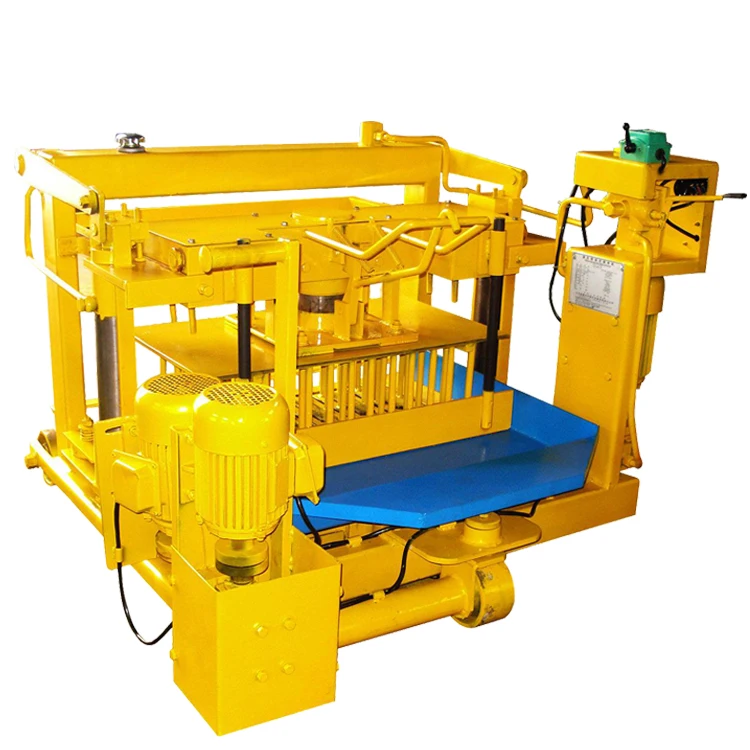
 Mobile block machine