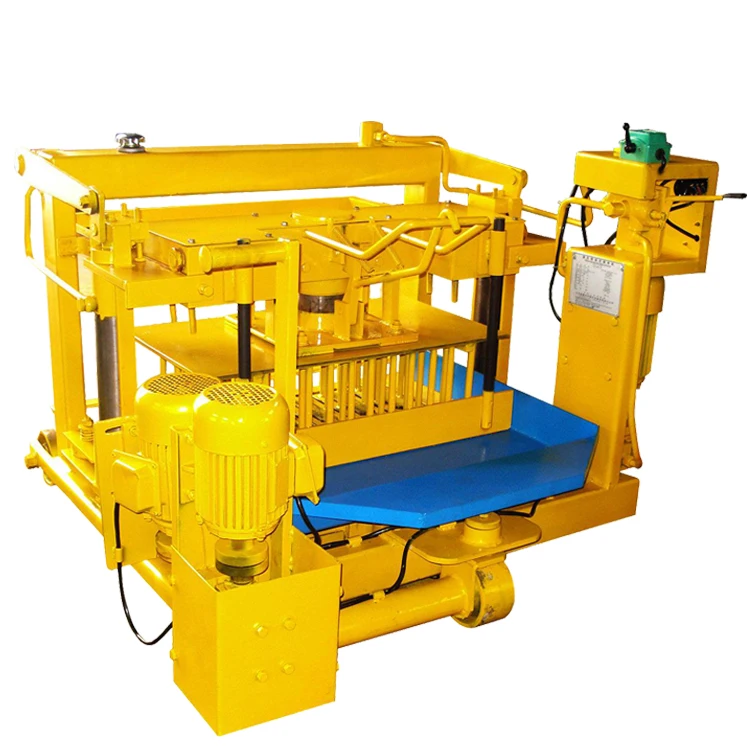
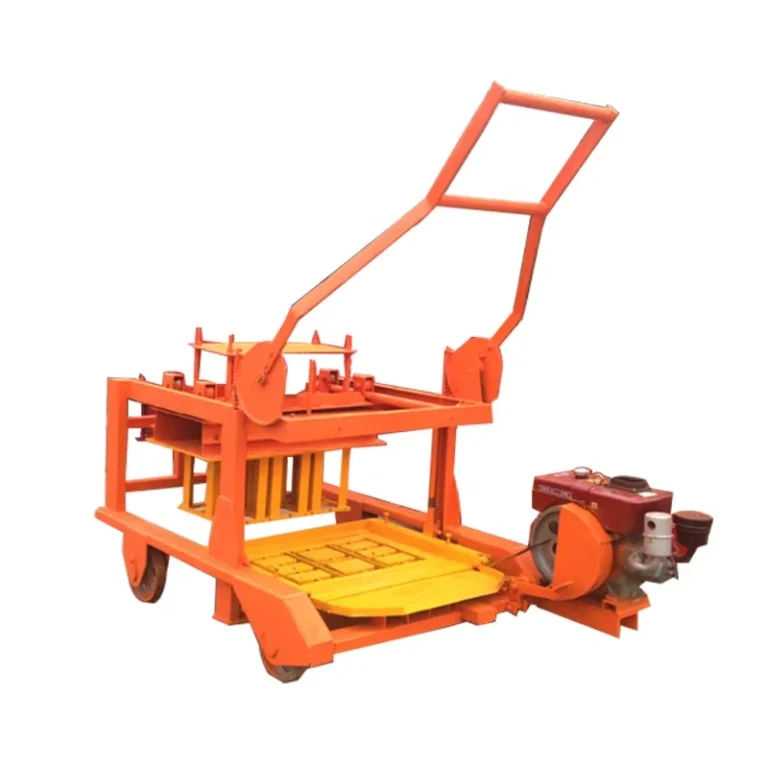
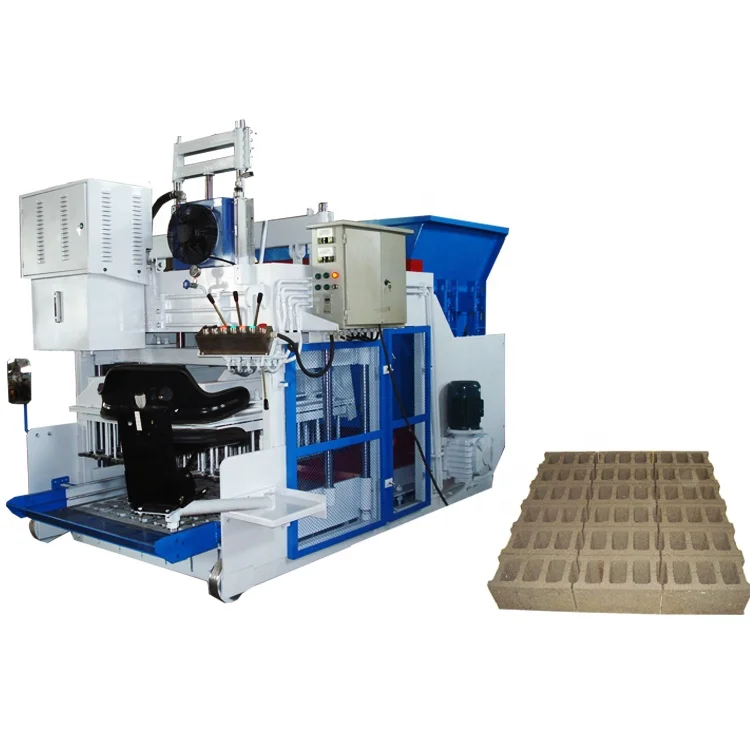
Single-focus configuration — this mobile egg-laying block machine is specified against your actual site conditions and target format rather than shipped as a catalogue default.
Technical Specifications
| Parameter |
Value |
| Model |
QMY4-30 |
| Product Type |
Mobile Concrete Block Making Machine |
| Rated Power |
5 kW |
| Overall Dimensions (L×W×H) |
1200×1200×1100 mm |
| Net Weight |
950 kg |
| Cycle Time |
30 seconds |
| Assembly State |
Skid-mounted, mobile |
| Mould Format |
Changeable for hollow block and solid brick |
| Mould Change Time |
(basis not stated in source) |
| Automation Level |
Manual (mobile / egg-laying type) |
| Pallet Size |
Not required (egg-laying / mobile type) |
| Voltage & Frequency |
(basis to be confirmed with buyer’s site supply) |
| Control System |
(basis to be confirmed — PLC / relay / manual) |
| Hydraulic Pressure |
(basis to be confirmed per block format / material) |
| Vibration Force |
(basis to be confirmed per block format / material) |
| Raw Materials |
Cement, sand, crushed stones, slag |
| Output Capacity (400×200×200mm hollow block) |
480 pcs/h, 3840 pcs/8h |
| Output Capacity (400×150×200mm hollow block) |
600 pcs/h, 4800 pcs/8h |
| Output Capacity (400×100×200mm hollow block) |
840 pcs/h, 6720 pcs/8h |
| Warranty |
One year |
Application Suitability
| Application |
Material or Output |
| On-site block production for housing projects |
Hollow blocks from cement, sand and crushed stone laid directly on a prepared ground bed |
| First block plant for new entrepreneurs |
Solid bricks and hollow blocks from locally available aggregates without fixed plant investment |
| Remote or temporary construction sites |
Mobile production using slag and sand mixes where pallet transport is impractical |
| Infrastructure contractors producing locally |
Interlocking formats and kerbstone formats where changeable moulds match phase requirements |
What a Mobile Block Making Machine Removes from Your Setup
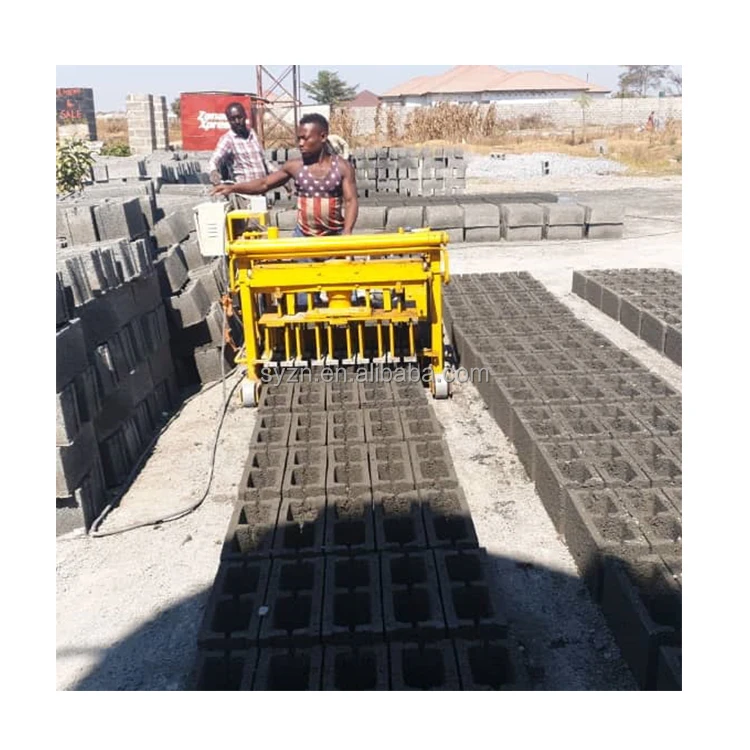
A mobile egg-laying unit eliminates pallets, curing racks, and the handling line that typically doubles the footprint of a block plant.
When buyers quote a stationary machine, the pallet question often surfaces late in the conversation. Pallets must be purchased, fed, collected, cleaned, and stored. A mobile block making machine like the QMY4-30 lays blocks directly on the ground surface, which means your curing area is simply the floor space around the machine path. For contractors working inside a housing development or on a remote infrastructure site, this removes the entire downstream handling chain from the quotation. The trade-off is that output is lower than a fully automatic stationary line, but the capital requirement and site preparation stay minimal [NEED_CITE: comparative setup requirements for mobile versus stationary block production].

Where the QMY4-30 Sits in Our Full Range
This model anchors the entry tier of our block machine range. Automatic lines with full pallet handling and cubing systems occupy the upper tier, requiring a fixed plant, a curing chamber, and dedicated forklift circulation space. Semi-automatic machines sit in the middle, still needing pallets but allowing the buyer to defer automatic stacking. The QMY4-30 removes both pallets and fixed infrastructure, placing it squarely with buyers who need production at the job site itself. A construction contractor pouring blocks for their own housing phases, or an entrepreneur testing block demand before committing to a stationary plant, typically lands here.
Output Honest by Block Format
Capacity figures in our industry are often quoted as a single number without stating which block size that number assumes. The QMY4-30 documentation lists output separately for three hollow block formats — 400×200×200mm yields 3,840 pieces in an 8-hour shift, 400×150×200mm yields 4,800 pieces, and 400×100×200mm yields 6,720 pieces, all based on a 30-second cycle time. This means a buyer targeting the 200mm wall block will see noticeably lower daily volume than one producing the 100mm partition block, even on the same machine [NEED_CITE: cycle time variance across block formats in mobile egg-laying machines]. Knowing which format your local market actually buys determines whether this tier meets your daily requirement or whether you need to step up to a semi-automatic press.
Reading the Specs That Actually Matter
The 950 kg net weight and 1200×1200×1100 mm footprint mean the QMY4-30 can be repositioned around a job site with a small loader or even manually on level ground, which is relevant when your curing area shifts as the project progresses. The 5 kW rated power keeps site electrical demands low — most temporary site supplies can accommodate this without a dedicated transformer, though voltage and frequency must still be confirmed before production begins. Raw material flexibility across cement, sand, crushed stone, and slag means the machine does not force you into a single mix design, but vibration force and hydraulic pressure must be matched to whichever aggregate you actually source locally. An oversized aggregate that passes the hopper but does not compact properly under the vibration setting will produce weak blocks regardless of cycle speed. The skid-mounted assembly state also means the machine arrives as a single unit without foundation bolts, reducing commissioning time on first setup.
The Cost of Skipping the Voltage Conversation
One of the most common commissioning delays on export machinery stems from voltage and frequency mismatches discovered only when the machine is uncrated on site. A 5 kW motor wound for a voltage your site does not supply cannot be corrected with an adapter — it requires a rewind or a replacement motor, both of which halt production for days. This is why the QMY4-30 specification sheet flags voltage and frequency as items to be confirmed before production begins, not after shipment. Buyers working in regions with multiple voltage standards across neighbouring sites should state their exact supply at the inquiry stage [NEED_CITE: voltage and frequency standards by export market].
Why Buyers Source This Tier Through Us
Block machinery is our single focus, so the QMY4-30 is specified as part of a matched conversation about your format, your aggregate, and your site — not pulled from a catalogue page. Configuration is set against your actual mix design and local raw materials, because a machine tuned for fine sand will struggle with the crushed stone you actually have on site. Mould design covers the formats your market sells, and custom mould drawings are available if your project requires a non-standard dimension. You can start at the mobile tier and step up to semi-automatic or automatic later, keeping the same supplier relationship and parts supply chain. Installation and commissioning support includes operator training on the specific formats you intend to run, so your crew is producing acceptable blocks before the technician leaves site.
Documentation & Verification
- Line layout showing ground space required for egg-laying production path and curing area
- Capacity calculation sheet listing output per block format with stated cycle time assumption
- Mould drawing and format list confirming block dimensions match your local market standard
- Voltage and control language confirmation document signed before production release
- Factory test record on your specified raw material mix before dispatch
- Operation and maintenance manual with wear parts and mould replacement schedule
Installation, Commissioning & Support
- Level compacted ground surface required — no concrete foundation needed for the 950 kg skid-mounted unit
- 5 kW power supply on a dedicated circuit with confirmed voltage and frequency matching motor winding
- Machine arrives assembled on skid; no dismantling required beyond shipping restraints
- First-run commissioning includes vibration force and cycle timing adjustment for your specific block format
- Operator training covers mould change procedure, mix ratio adjustment, and daily block quality checks
- Wear parts list supplied at handover with recommended reorder intervals for your production volume
What to Prepare Before Requesting a Quotation
To size the QMY4-30 correctly for your project, share the block formats your market sells along with the daily output you need per format. Confirm your local raw materials — particularly the type and maximum particle size of your aggregate — so vibration and mould gap settings can be matched before build. State your site voltage, frequency, and phase supply so the motor and any control components are wound correctly before the machine enters production.
Frequently Asked Questions
Q: How is capacity calculated for each block format, and what does a realistic 8-hour shift yield?
A: The QMY4-30 operates on a 30-second cycle across all listed formats. Based on that cycle, a 400×200×200mm hollow block yields 480 pieces per hour and 3,840 pieces in an 8-hour shift. Smaller formats such as 400×100×200mm produce 840 pieces per hour and 6,720 per shift. These figures assume continuous operation without extended stoppages.
Q: What voltage and frequency does the QMY4-30 require, and can it be configured for my site?
A: Voltage and frequency are confirmed with each buyer before production begins, because the 5 kW motor must be wound to match your exact site supply. This confirmation step prevents commissioning delays on arrival. State your supply specification at the inquiry stage so the correct configuration is built in from the start.
Q: Which block formats can one machine produce, and how long does a mould change take?
A: The QMY4-30 accepts changeable moulds for hollow block and solid brick formats. Multiple moulds can be ordered to cover the range your market requires. Mould change time is confirmed during the proposal stage once your format list is finalised, so you know before shipment how much shift time a changeover will consume.
Q: Where does the mobile tier sit in investment and output compared to semi-automatic and automatic lines?
A: The mobile tier requires no pallets, no fixed plant, and no curing rack infrastructure, keeping initial investment at the entry point of our range. Output per shift is lower than semi-automatic and automatic tiers, which run faster cycles and handle pallets mechanically. The mobile tier suits contractors producing on their own site or entrepreneurs testing market demand before scaling up.
Q: What raw material mix does the machine expect, and can it be adjusted to my local aggregate?
A: The QMY4-30 runs on cement, sand, crushed stone, and slag. Vibration force and mould gap settings are matched to your specific aggregate size and mix design during configuration. If your local material falls outside typical ranges, adjustments are made before build so the machine arrives tuned for what you will actually feed it.

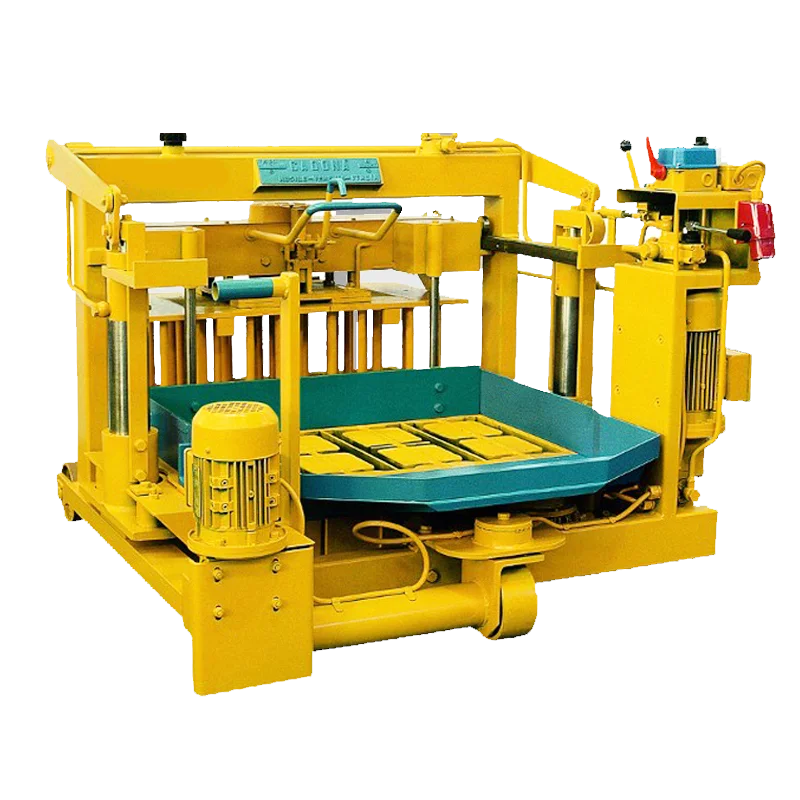
 Mobile block machine