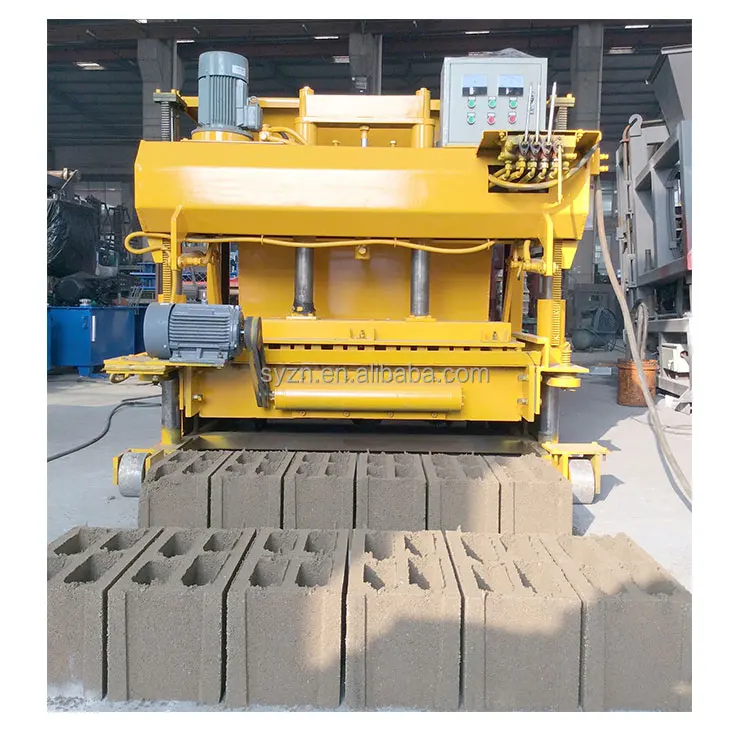
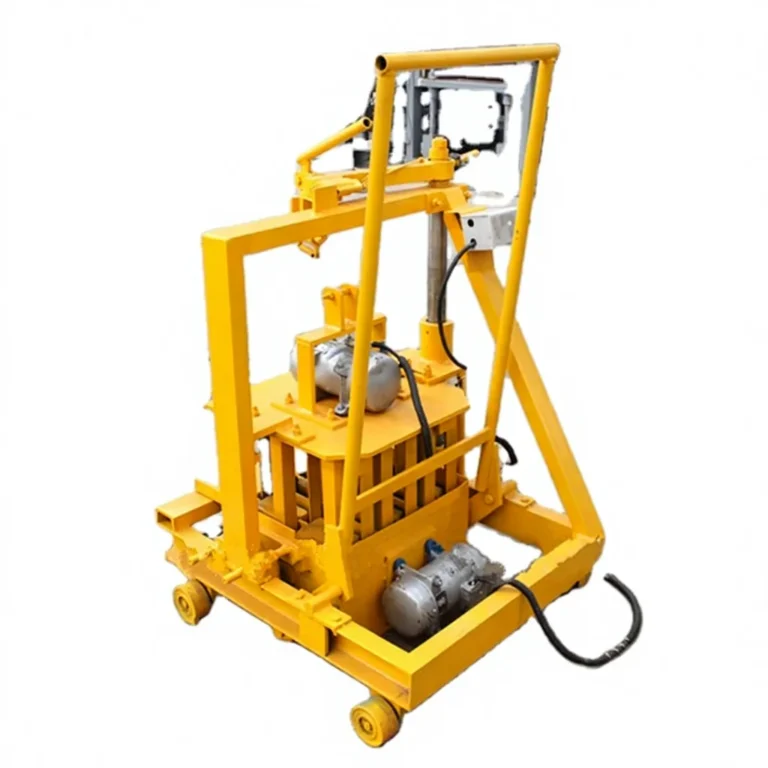
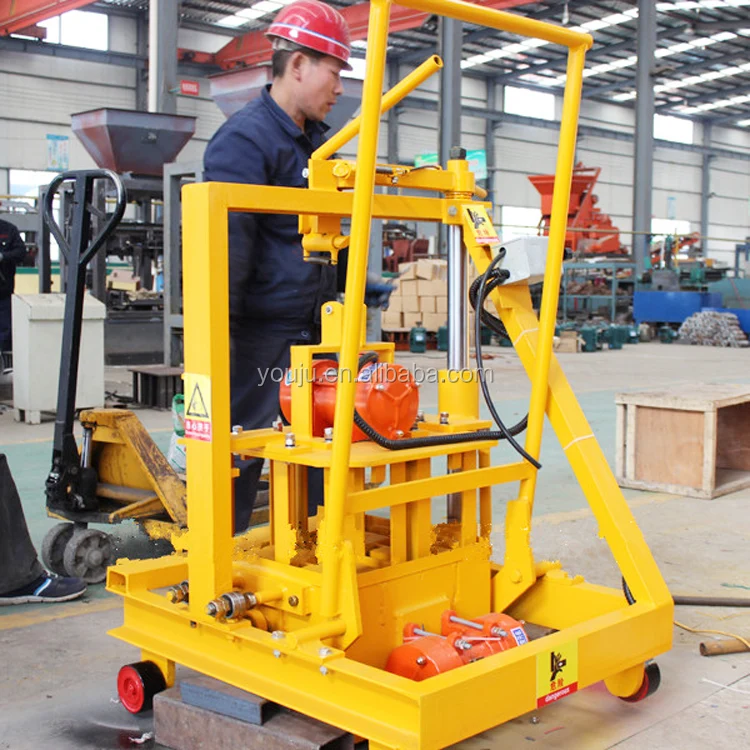
Matched System Design — every QMY4-30 unit leaves the factory with pallets, moulds, and handling gear specified as one integrated line, not a collection of unrelated components.
Technical Specifications
| Parameter |
Value |
| Model |
QMY4-30 |
| Product Type |
Mobile Cement Block Making Machine |
| Dimension of Host Machine |
1300 × 1500 × 1000 mm |
| Rated Pressure |
6–8 MPa |
| Main Vibration Form |
Moulding Vibration |
| Vibration Frequency |
4500 r/min |
| Vibration Force |
28.6 KN |
| Pallet Size |
Not required (palletless / egg-laying type) |
| Molding Cycle |
15–25 s (basis not stated in source — confirm block format / material / thickness) |
| Overall Power |
5.95 kW |
| Demolding Method |
Hydraulic |
| Mixer Model |
JQ350 |
| Molding Area |
400 × 800 mm |
| General Water Consumption |
4 T/day |
| Total Mass |
950–1000 kg |
| Applied Products |
Hollow blocks, solid blocks, pavers, interlocking blocks |
| Standards |
ISO 9001, CE, SGS |
Application Suitability
| Application |
Material or Output |
| On-site building construction |
Hollow and solid concrete blocks from crushed stone, sand, and cement |
| Road paving and landscaping |
Interlocking pavers from gravel, fly ash, and cement |
| Municipal and garden projects |
Kerb and porous blocks using slag, dust, and local aggregate |
| Remote or dispersed housing sites |
Egg-laying production without fixed plant infrastructure |
What "15–25 Seconds per Mould" Actually Means for Your Site
A cycle time is only meaningful when you know which block format and mix it was measured on.
Sellers often quote the fastest cycle the machine can achieve on its lightest mould. When that same QMY4-30 mobile block making machine manufacturer runs a taller hollow block with a stiff, low-slump mix, the vibration and hydraulic dwell extend well past the catalogue number. I have watched contractors base their entire project schedule on a headline cycle, only to find daily output falling far short once the local sand — often high in clay or moisture — hits the hopper. [NEED_CITE: effect of aggregate clay content on concrete block cycle time] The honest figure only emerges after your specific material has been trialled in the mould you plan to sell.

Where the QMY4-30 Sits in the Broader Range
The QMY4-30 occupies the entry point of the mobile block machine lineup. It is designed for buyers who need block production directly on the job site without investing in a fixed plant, pallet inventory, or a large curing hall. Above it sit higher-output mobile units with larger moulding areas, then semi-automatic stationary plants that add pallet circulation, and finally fully automatic lines with batching, stacking, and cubing. Placing yourself correctly on this ladder before committing budget prevents the common mistake of buying a machine that is either oversized for a short-term site or undersized for a long-term commercial block yard.
Palletless Operation and What It Demands from Your Ground
Egg-laying production eliminates pallet cost and the space needed to store them, but it transfers quality responsibility to the ground surface. The QMY4-30 lays blocks directly onto a flat concrete floor or compacted sand bed. If the surface is uneven, the freshly demoulded block tilts before initial set, causing one wall to bear all the weight and crack. [NEED_CITE: floor flatness tolerance for palletless egg-laying block machines] A smooth, level casting area of roughly 500 m² is the practical minimum for continuous daily production and block curing. Buyers who skip this floor preparation step often blame the machine for breakage that is actually a ground issue.
Pressure, Vibration, and the Density Balance
The 6–8 MPa rated pressure and 28.6 KN vibration force work together to compact the concrete mix inside the mould cavity. Pressure squeezes air out while vibration re-arranges aggregate particles into a tighter matrix. If vibration dominates without enough hydraulic clamp, the block sticks to the mould walls and tears on release. If pressure dominates without sufficient vibration, the core remains loose and the block crumbles during handling. The 4500 r/min moulding vibration frequency is tuned for standard crushed-stone and sand mixes; very fine materials like fly ash may require adjustment to the vibration duration rather than amplitude. Overall power stays at 5.95 kW, meaning the unit can run on a portable generator at sites where grid supply is unreliable.
The Hidden Cost of Overlooking Mould Changeover
A mobile unit is often bought for format flexibility — hollow blocks in the morning, pavers in the afternoon. If the mould change procedure requires extensive manual bolt work and alignment with overhead lifting gear that the site does not have, the machine sits idle for most of a shift during changeover. That lost time cancels out the very flexibility the buyer paid for. Before ordering, confirm the exact bolt count, lifting point positions, and whether a simple hydraulic slide or manual crane is expected on your site.
Why Buyers Source This Mobile Tier Here
Block machinery is the single product focus, so the QMY4-30 is not a re-badged generic press but a unit whose hydraulic circuit and vibration motor are matched to the moulds and mixer shipped alongside it. The configuration is set against the buyer’s actual mix design and local aggregate, not a default catalogue recipe. Mould design covers the formats the buyer’s regional market actually sells, with custom drawings available. Automation level remains selectable — a buyer can start with the basic egg-laying setup and add pallet-based semi-automatic stations later. Installation, commissioning, and operator training are included so the first production run is supervised, not left to guesswork.
Documentation & Verification
- Capacity calculation sheet stating the exact block format and mix assumed for the QMY4-30
- Mould drawing pack with format list and bolt-hole pattern for quick changeover reference
- Voltage, frequency, and control-panel language confirmation signed before production
- Factory test record run on the buyer’s specified aggregate blend before dispatch
- Hydraulic and electrical schematic for on-site troubleshooting by local electricians
Installation, Commissioning & Support
- Flat concrete casting area of roughly 500 m² required; compacted sand acceptable for temporary sites
- 5.95 kW total draw requires a dedicated 3-phase circuit or portable generator of adequate rating
- Machine ships as a single skid; JQ350 mixer arrives separately and connects via flexible hose
- First-day commissioning includes vibration duration tuning to your local sand moisture level
- Operator training covers hydraulic demolding sequence and daily mould-face cleaning routine
- Wear-part list identifies vibration springs and hydraulic seals for first-year inventory planning
Before You Request a Quote
Tell us which block format you sell most — hollow, solid, paver, or interlocking — along with the target daily output in pieces. Share the local sand or aggregate type and whether your site has stable grid power or will rely on a generator. With that, a matched QMY4-30 configuration and realistic capacity figure can be prepared.
Frequently Asked Questions
Q: How is the daily output of the QMY4-30 calculated?
A: Output is tied to a specific block format, mix design, and operator rhythm. We provide a capacity sheet that names the exact block size and mould used for the calculation, so you can compare it with your own target format. Without that sheet, any "pieces per day" figure is meaningless.
Q: Does palletless production limit the block types I can make?
A: Egg-laying works well for hollow and solid blocks plus many interlocking pavers. Very thin or highly perforated formats may require a pallet-based system because the green block lacks enough body to stand unsupported. We confirm format suitability during the mould selection stage.
Q: What voltage and control language will the machine arrive with?
A: Voltage, frequency, and control-panel language are confirmed in writing before production starts. This prevents commissioning delays and ensures the operator can read cycle prompts in a familiar language from day one.
Q: Where does the QMY4-30 sit compared to semi-automatic and automatic plants?
A: It is the entry mobile tier — palletless, site-portable, low infrastructure. Semi-automatic stationary plants add pallet circulation and higher output; full automatic lines add batching, stacking, and cubing. The QMY4-30 is suited to on-site contractors or first-time buyers testing a market.
Q: What installation support is provided after delivery?
A: A technician supervises first-day commissioning, tunes vibration timing to your local aggregate, and trains operators on the hydraulic demolding cycle. A wear-parts list and maintenance schedule are handed over so routine upkeep can begin immediately.

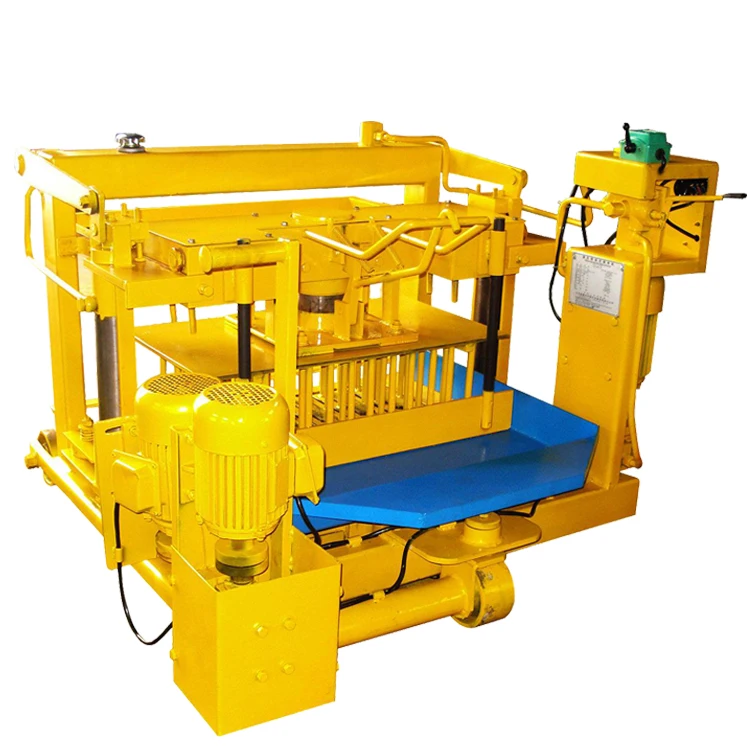
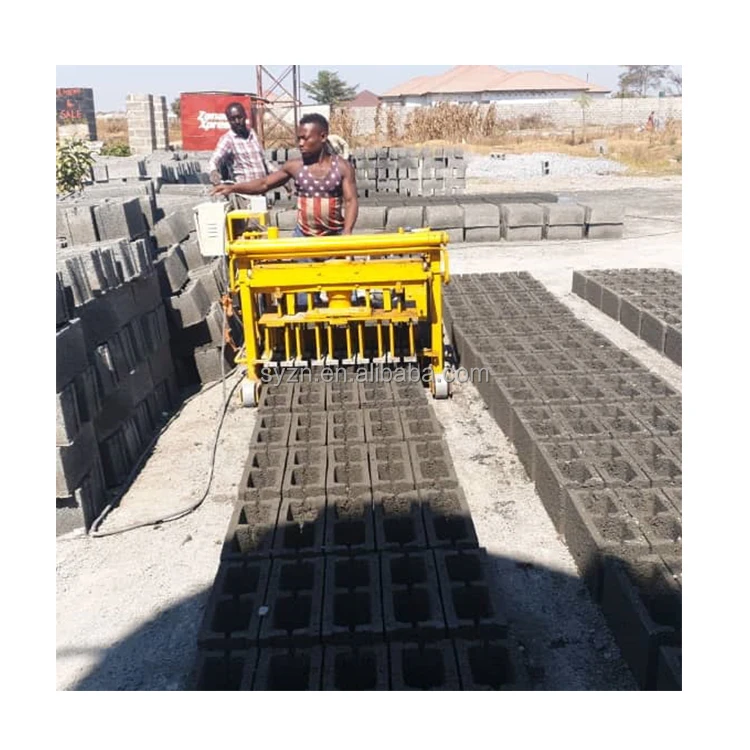 Mobile block machine