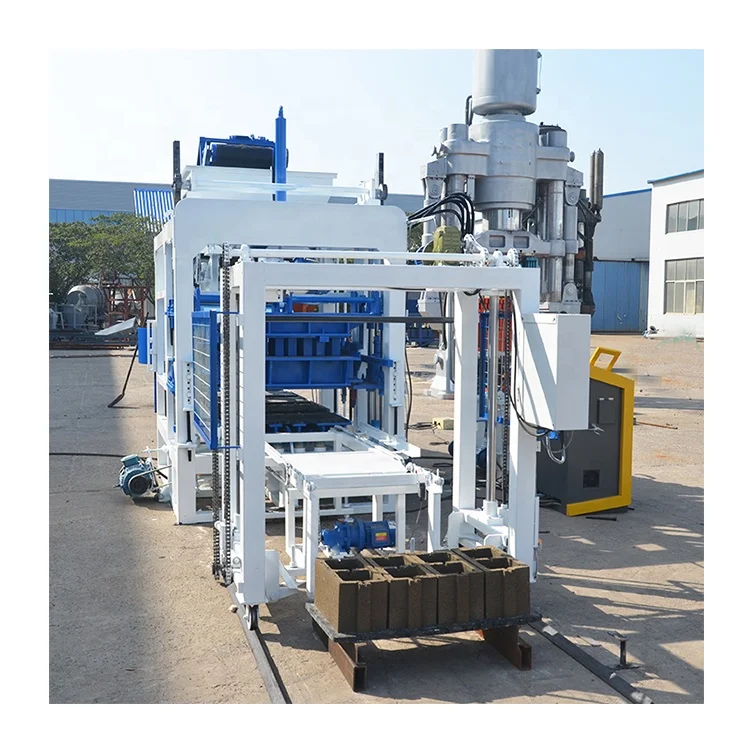
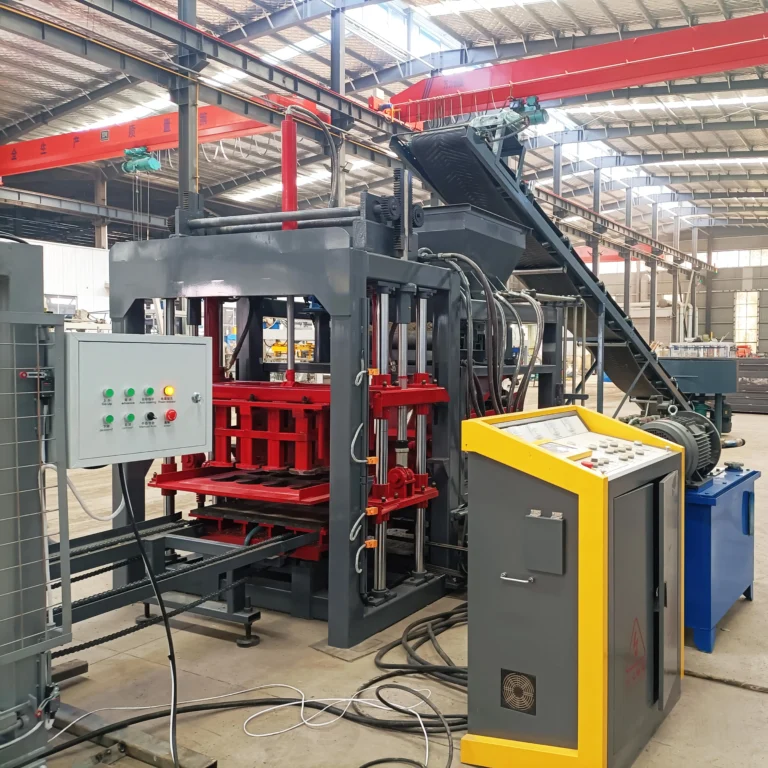
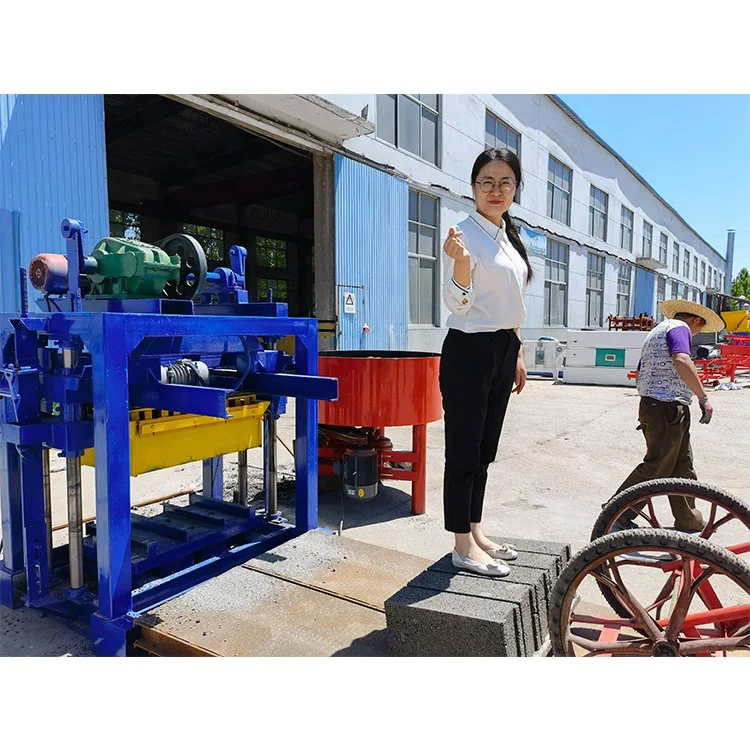
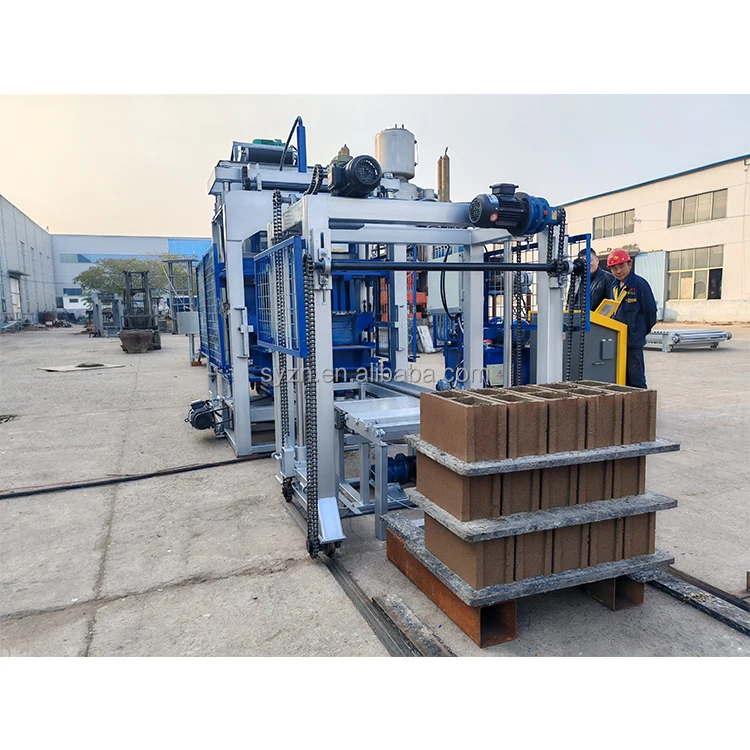
Single-Focus Block Machinery — the LY2-10 is specified as part of a matched system with its moulds, pallets, and handling equipment rather than treated as a standalone press.
Technical Specifications
| Parameter |
Value |
| Model |
LY2-10 |
| Product Type |
Clay Block Making Machine |
| Machine Power |
7.5 kW |
| Molding Cycle |
10 s |
| Output Capacity |
6000 pcs/8hours (basis not stated in source — confirm block format / material / thickness) |
| Throughput Rate |
750 pcs/hour (based on 1 pc per mould, 10 s cycle for listed formats) |
| Capacity per Mould |
1 pc (300×150×100 mm interlocking brick) |
| Alternative Mould Format |
1 pc (250×125×75 mm brick) |
| Alternative Mould Format |
1 pc (230×220×115 mm brick) |
| Raw Materials |
Clay, soil, earth, mud, concrete, cement, fly ash |
| Automation Level |
Semi-automatic |
| Overall Dimensions (L×W×H) |
1300×1800×2400 mm |
Application Suitability
| Application |
Material or Output |
| Interlocking brick production for housing projects |
Clay and soil with cement binder |
| Small workshop brick manufacturing |
Locally sourced earth, mud, or fly ash |
| On-site block production for contractors |
Soil and concrete mixes available at project location |
| Building material distributors expanding format range |
Cement and clay interlocking bricks |
What "6000 Pieces per Day" Actually Means for Your Plant
Capacity figures are meaningless unless the block format behind them is stated.
I remember quoting a clay block making machine manufacturer capacity to a Southeast Asian buyer years ago based on catalogue numbers. The local soil had high sand content, and the extrusion pressure could not keep up — real output dropped to roughly half of what the brochure promised. The buyer nearly cancelled the order. Since that project, I always ask for raw material samples and the specific block dimensions the buyer intends to produce before confirming any throughput number. The LY2-10 is rated at 750 pcs/hour based on the listed interlocking formats at one piece per mould with a 10-second cycle, but switching to a thicker or larger brick will change that calculation. [NEED_CITE: capacity calculation standards for block making equipment]

Where the LY2-10 Sits in the Full Machine Range
The LY2-10 occupies the entry-level semi-automatic tier of Shiyue’s clay block making machine lineup. It is designed for buyers who need interlocking brick capability without the floor space, power supply, or capital outlay that a fully automatic line demands. The 7.5 kW motor runs on standard workshop power, and the 1300×1800×2400 mm footprint fits inside a modest production shed. For a first-time plant owner or a contractor producing bricks directly on a construction site, this tier removes the complexity of pallet conveyors and automatic stackers while still delivering consistent moulding cycles.
Scaling Up When Your Market Demands It
A semi-automatic press like the LY2-10 can be the starting point rather than the final configuration. When daily orders grow beyond what manual pallet handling can support, buyers typically move to a higher automation tier with automatic pallet feeding, stacking, and cubing. The mould formats and block dimensions you validate on this machine often carry forward to larger presses in the range, so the product development work is not wasted. This tier-by-tier approach lets you match investment to confirmed demand rather than paying for capacity your market has not yet justified. [NEED_CITE: block plant automation upgrade paths]
Reading the Specs That Actually Matter
The 10-second moulding cycle determines how many times the press completes a forming stroke per hour, but real throughput also depends on how fast an operator can remove the filled mould and place the next batch of raw material. The 7.5 kW power rating is modest, which means the machine does not require a dedicated transformer or heavy-gauge supply cable — an important consideration when you are setting up in a rural area or a temporary project site. Three mould formats are listed (300×150×100 mm, 250×125×75 mm, 230×220×115 mm), each producing one brick per cycle. Choosing which format to run first should be driven by which brick your local construction market actually specifies, not by which mould happens to ship as standard.
The Cost of Skipping Configuration Details
I have seen buyers receive a block press only to discover that the pallet size does not match their curing racks or the forklift they already own. Others arrive at commissioning and find the voltage and control display language were never confirmed, leaving the machine idle while a new PLC board is shipped. With semi-automatic machines, these oversights are especially costly because the operator is standing right there — every minute of downtime is visible labour cost with no output. Confirming pallet dimensions, electrical supply, and control language before production starts avoids these delays. [NEED_CITE: electrical supply compatibility for industrial machinery exports]
Why Buyers Source This Range Here
Shiyue treats block machinery as a single focus, so the LY2-10 is specified alongside its matching mould, pallet, and handling equipment rather than assembled from unrelated suppliers. Machine configuration is set against your actual mix design and local aggregate, not a default catalogue setting. Mould design covers the formats your market sells, and custom moulds can be produced to buyer drawings. The automation level is selectable — you can start semi-automatic and plan an upgrade path. Installation support includes operator training so your team is running the press correctly from the first shift.
Documentation & Verification
- Line layout and capacity calculation stating the exact interlocking brick format assumed
- Machine specification sheet with mould format list and pallet dimensions
- Hydraulic and electrical schematic matching your confirmed voltage and frequency
- Factory test record run on your specified clay or soil mix before dispatch
- Operation and maintenance manual with wear parts and mould replacement schedule
- Packing photographs and customs documentation support for your destination port
Installation, Commissioning & Support
- Foundation pad sized to the 1300×1800 mm footprint with level tolerance confirmed before delivery
- Dedicated circuit rated for 7.5 kW continuous draw with correct voltage and frequency verified on site
- Machine arrives as a single assembly; semi-automatic configuration keeps dismantling and re-erection straightforward
- First-run parameter setting covers moulding cycle timing and raw material feed rate for your specific mix
- Operator training on mould change procedure across the three listed brick formats
- Wear parts list and mould inventory documented so first replacements are on hand before they are needed
Before You Send an Inquiry
To match the right machine tier to your project, share the interlocking brick dimensions your local market demands, the clay or soil type you plan to use, and your target daily output. Include your site power supply voltage and frequency so electrical configuration is confirmed before production. If you have existing curing racks or a specific forklift, provide the pallet dimensions that will fit them. This information lets us propose a configuration that reflects your actual conditions rather than a generic catalogue entry.
Frequently Asked Questions
Q: How is the 6000 pcs/8hours capacity calculated, and which block format does it assume?
A: That figure is based on a 10-second moulding cycle producing one brick per mould for the listed interlocking formats (300×150×100 mm, 250×125×75 mm, or 230×220×115 mm). Actual output changes if you switch to a different brick size, adjust the cycle for your specific clay mix, or account for operator loading time. We provide a capacity calculation tied to your chosen format before order confirmation.
Q: Where does the LY2-10 sit compared to automatic and mobile block machines?
A: The LY2-10 is in the semi-automatic entry tier, suited to first-time plants and on-site contractors who do not yet need automatic pallet feeding or stacking. Mobile egg-laying machines are for project sites with no fixed plant, while fully automatic lines serve buyers with higher daily volumes and confirmed market demand for multiple formats.
Q: What voltage and frequency options are available for my market?
A: Voltage and frequency must be confirmed before production so the motor, control panel, and any PLC components match your local grid. Share your site supply details during the inquiry stage, and we configure the electrical system accordingly to avoid commissioning delays after the machine arrives.
Q: Can I start with the LY2-10 and move to a higher automation tier later?
A: Yes. Many buyers begin with semi-automatic operation to validate their local market and raw material supply, then upgrade to automatic pallet feeding and stacking as demand grows. The mould formats you develop on the LY2-10 can often be carried forward to larger presses in the range.
Q: What mould formats are available, and can custom moulds be made?
A: Three standard interlocking brick formats are listed for the LY2-10, and custom moulds can be designed and manufactured to your drawings. We confirm the mould list against the block types your local construction market actually specifies before finalizing the order.

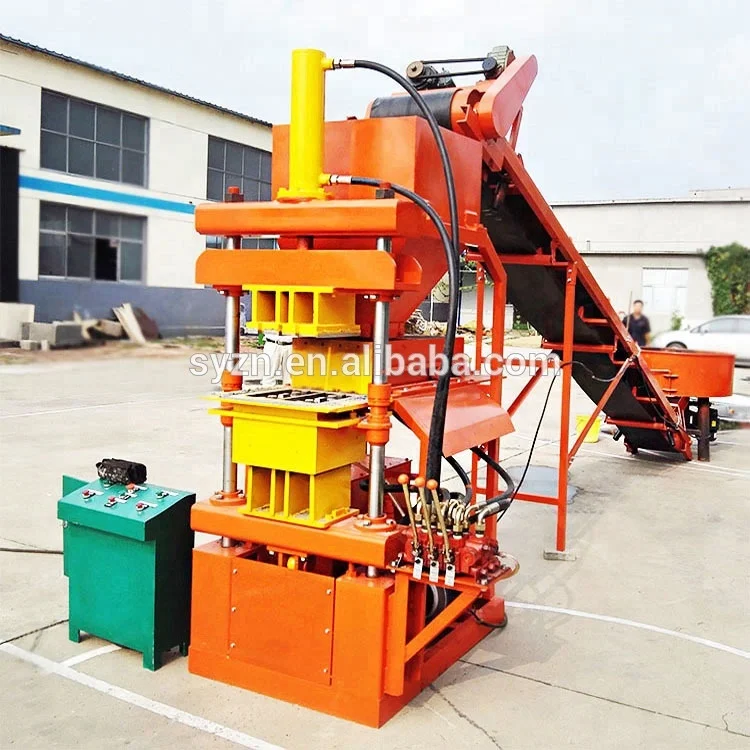
 High quality block machine