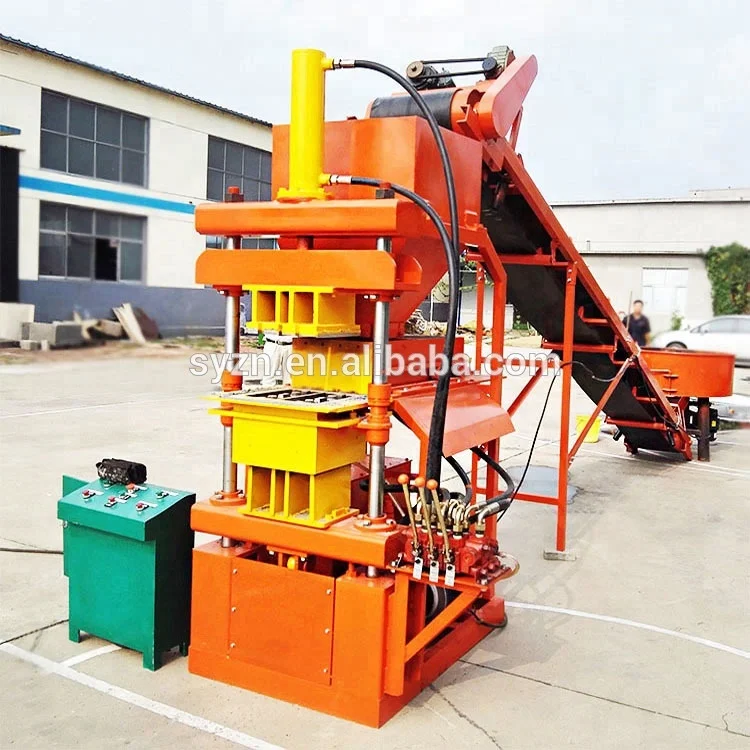
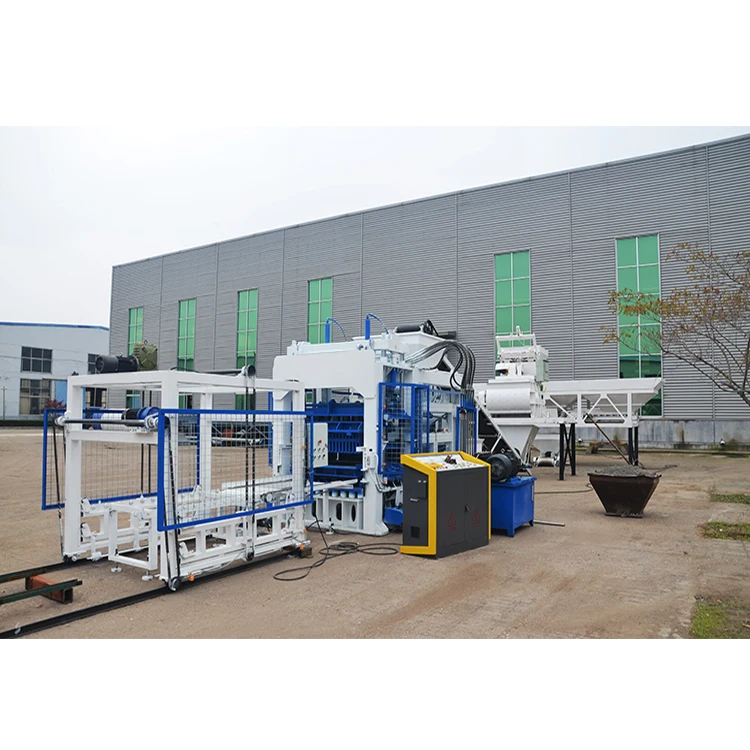
Matched System Approach — we treat the press, moulds, pallets, and handling equipment as one engineered package rather than sourcing components from separate vendors.
Technical Specifications
| Parameter |
Value |
| Model |
QT8-15 |
| Product Type |
Hydraulic Block Making Machine |
| Overall Dimensions (L×W×H) |
8300×1860×3000 mm |
| Rated Pressure |
21 MPa |
| Vibration Form |
Platform Vibration |
| Vibration Frequency |
2800–4500 r/min |
| Vibration Force |
45 kN |
| Pallet Size |
950×900 mm |
| Molding Cycle |
15–20 s |
| Overall Power |
55.5 kW |
| Total Mass |
8 T |
| Demolding Method |
Hydraulic |
| Factory Area Required |
300 m² |
| Applied Products |
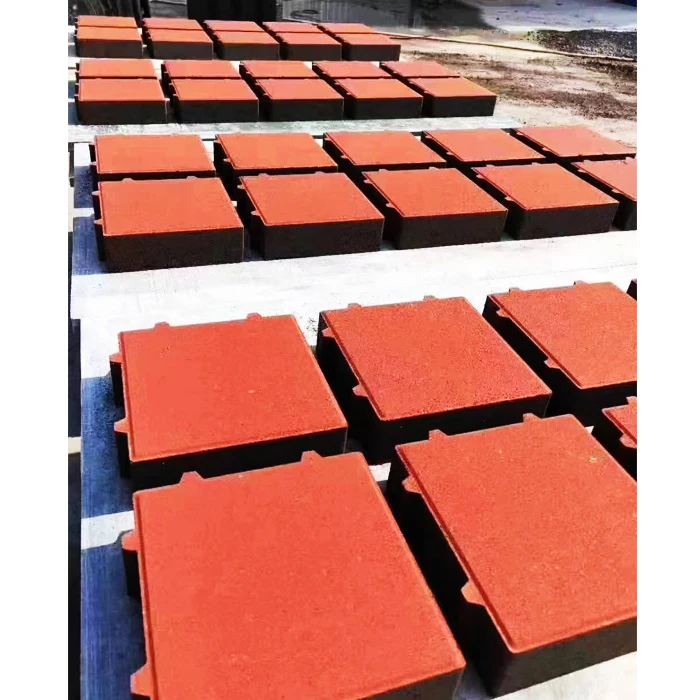
Concrete blocks, hollow/solid blocks, pavers, interlocking blocks, curbstone, colored pavers |
| Raw Material Compatibility |
Crushed stone, sand, cement, dust, fly ash, gravel, slag |
| Output Capacity |
Capacity chart only — exact output depends on block format, material, and thickness (basis to be confirmed) |
| Warranty |
1 year (whole machine, excluding spare parts) |
| Loading |
1×40HQ container (basic equipment) |
Application Suitability
| Application |
Material or Output |
| Hollow block production for residential construction |
Crushed stone, sand, cement, fly ash blends |
| Solid block manufacturing for load-bearing walls |
Gravel, cement, dust aggregates |
| Paving block and interlocking brick production |
Cement with colored pigments and fine sand |
| Curbstone forming for municipal infrastructure |
Heavy aggregate mix with slag or crushed stone |
| Colored paver output for commercial landscaping |
Cement, fine sand, iron oxide pigments |
What Buyers Overlook When Sizing a Block Making Machine Manufacturer
Cycle time means nothing unless you know which block format it was measured against.
I once watched a Middle East contractor lose nearly an entire week because the block making machine manufacturer quoted capacity based on standard test sand, while the site was running volcanic aggregate with completely different compaction behavior. The rated pressure and vibration force were mismatched to the local mix, and daily output dropped to a fraction of the catalog claim [NEED_CITE: block density variation across aggregate types]. This is where the QT8-15 block machine for sale conversation needs to start — not with a cycle number pulled from a brochure, but with your actual target format, local raw material profile, and realistic daily run hours.

Where the QT8-15 Sits in the Full Machine Range
The QT8-15 occupies the mid-to-high output tier in our block machine lineup. It bridges the gap between smaller workshop-scale semi-automatic presses and large fully automatic lines that demand extensive plant infrastructure. Buyers evaluating a first production facility often find this tier gives them meaningful daily volume without the capital and space commitments of a high-capacity automatic setup. The 15–20 second molding cycle and 950×900 mm pallet size place it firmly in the range where both hollow blocks and pavers can be produced without reconfiguring the entire line.
How Automation Level Shapes the Investment Decision
A buyer setting up an initial block plant may start with manual pallet handling and basic stacking to keep the entry cost manageable, then add automatic pallet feeding and stacking as volume grows. The QT8-15 supports this progression because the press itself does not change — only the upstream and downstream stations are upgraded [NEED_CITE: automation upgrade paths in block production lines]. Distributors comparing models across the range should note that a block making machine manufacturer quoting only the press without specifying the surrounding handling equipment is leaving major cost and labor variables undefined.
Reading the Specs That Actually Matter on Site
The 21 MPa rated hydraulic pressure and 45 kN platform vibration force work together to compact the mix into a dense, consistent block. In practice, vibration frequency between 2800 and 4500 r/min determines how quickly air is expelled from the mix during each cycle, while hydraulic pressure provides the final densification. If the vibration force is too low for the aggregate particle size, blocks emerge with weak corners and inconsistent weight. The 8-ton total mass and 8300×1860×3000 mm footprint mean the machine requires a poured concrete foundation of adequate thickness, and the 300 m² factory area covers the press, pallet return system, and immediate curing rack space. The 55.5 kW overall power demand requires a dedicated three-phase supply with proper circuit protection, which must be confirmed before the machine leaves the factory.
The Cost of Skipping Configuration Details
When voltage, frequency, and PLC display language are left unconfirmed until the machine arrives on site, commissioning delays of several weeks are common. I have seen operators unable to navigate control menus because the interface defaulted to a language they could not read, forcing the plant to idle while replacement HMI panels were shipped internationally [NEED_CITE: commissioning delays from unconfirmed electrical specifications]. Similarly, if the pallet size is selected without checking the curing area layout and the forklift capacity the buyer already operates, pallets pile up on the floor instead of moving through the curing racks as planned.
Why Buyers Choose This Supply Route
Every QT8-15 leaves the factory as part of a matched system — the mould, pallet, and handling equipment are specified against the buyer’s actual mix design and target block format, not pulled from a default catalog page. Configuration proposals include a capacity calculation that names the block format behind each output figure, so there is no guesswork about what the press will actually produce per shift. Mould design covers the formats the buyer’s local market demands, with custom drawings available for non-standard shapes. The automation level is selectable at the time of order, meaning a buyer can commission a semi-automatic line now and plan an upgrade path without replacing the core press. Factory testing runs the machine on a mix profile that mirrors the buyer’s raw materials before shipment.
Documentation & Verification
- Line layout and capacity calculation naming the block format behind each output figure
- Machine specification sheet with hydraulic and electrical schematics for site planning
- Mould drawing and format list confirming included and optional block types
- Voltage, frequency, and control language confirmation sheet signed before production
- Factory test record run on mix profile matching buyer’s raw materials
- Packing photographs and customs documentation support for shipment
Installation, Commissioning & Support
- Foundation drawing provided based on the 8 T machine mass and vibration load profile
- 55.5 kW power requirement confirmed against buyer’s three-phase supply and circuit capacity
- Machine dismantled into container-loadable sections for 1×40HQ shipment
- On-site assembly with hydraulic line reconnection and vibration platform alignment
- First-run parameter tuning against local aggregate and mix proportions
- Operator training covering mould change procedure, pallet handling, and daily maintenance checkpoints
Starting the QT8-15 Conversation
To give you a meaningful configuration proposal, we need to know your target block format and the daily volume your market demands. Share your local raw material profile — especially the aggregate type, gradation, and any industrial byproducts like fly ash you plan to use. We also need your available plant footprint, ceiling height, and the curing area layout so the pallet size and handling equipment match what you can actually operate on site.
Frequently Asked Questions
Q: How does the QT8-15 output tier compare to smaller and larger models in the range?
A: The QT8-15 sits between workshop-scale semi-automatic presses and high-capacity fully automatic lines. It offers a 15–20 second molding cycle and 950×900 mm pallet size that support meaningful daily volume for growing plants. Buyers needing higher throughput typically move to larger pallet formats and full automatic stacking, while those starting out may choose a smaller press with manual pallet handling.
Q: What block format is assumed when capacity per hour is quoted, and how do I verify daily output?
A: Capacity figures must always name the specific block format, mix design, and thickness they were measured against. Without this, the number is unreliable. Our proposals include a capacity calculation table that lists output per format, so you can see what the QT8-15 produces for your exact target product rather than a generic test-block figure.
Q: What plant footprint and foundation does the QT8-15 require, and how does that scale with automation?
A: The base machine occupies a footprint within a 300 m² factory area including press, pallet return, and nearby curing racks. Adding automatic pallet feeding and stacking extends the line length. The 8 T total mass and platform vibration require a poured concrete foundation, and we provide a foundation drawing specific to your soil conditions before installation begins.
Q: Can I start with a semi-automatic configuration on this model and upgrade later?
A: Yes. The QT8-15 press itself remains the same whether you run manual pallet handling or full automatic stacking and cubing. Upgrading later means adding upstream and downstream stations without replacing the core hydraulic press, mould system, or vibration platform, which protects your initial investment.
Q: What is included in the quotation — is pallet handling, stacking, and curing part of the package?
A: Our quotation specifies exactly which stations are included: the press, mould set, pallet specifications, and any handling equipment you selected. If pallet feeding, stacking, or curing rack systems are not in the scope, we state that clearly so there are no surprise labor costs when the line starts production.

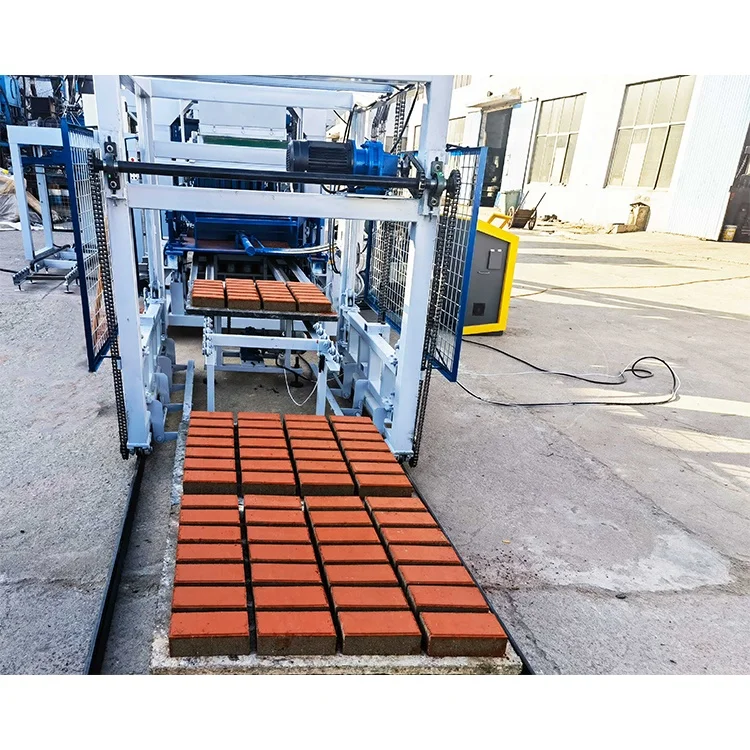
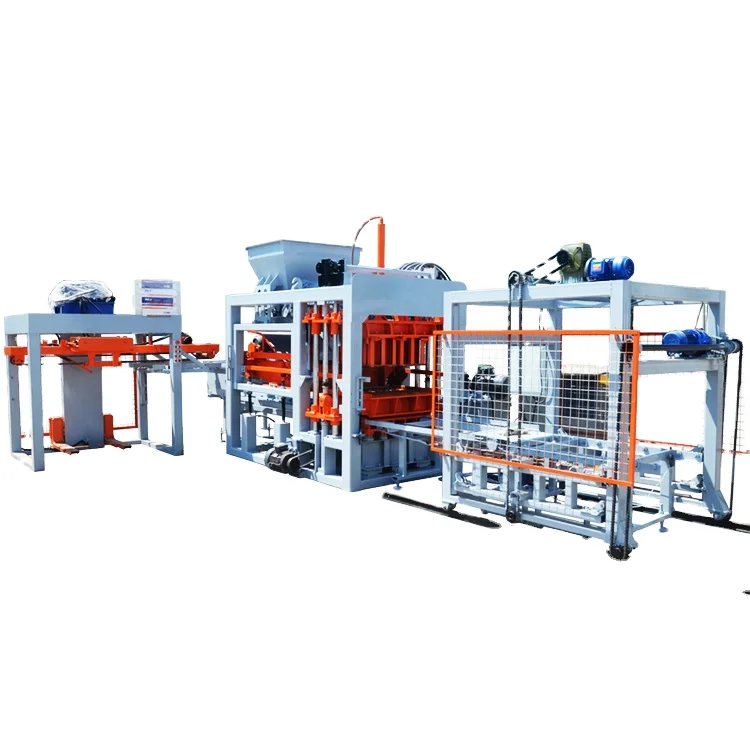 High quality block machine