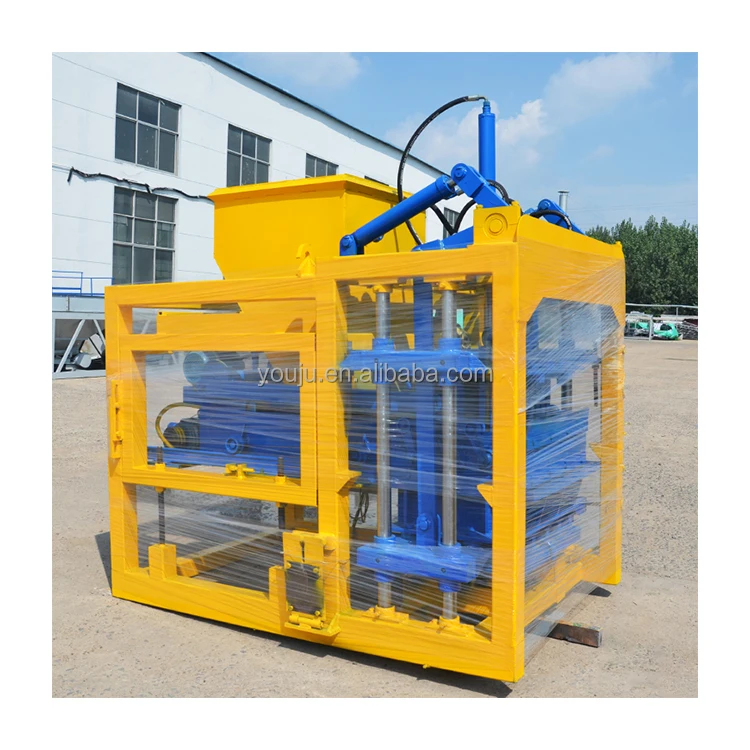
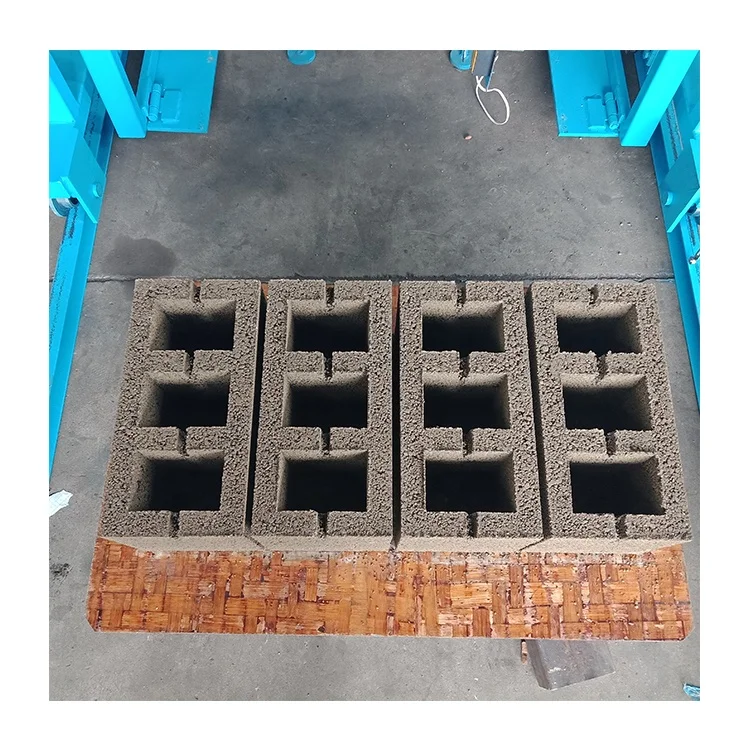
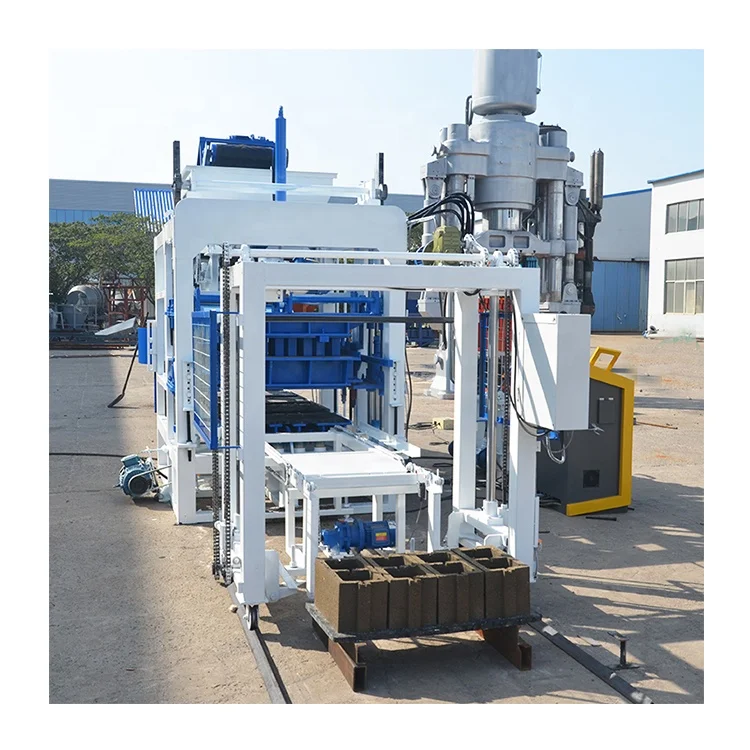
Mid-Tier Hydraulic Pressing — QT4-16 pairs 21 MPa hydraulic pressure with 40 kN platform vibration as a matched forming system, not an assembled collection of components from separate vendors.
Technical Specifications
| Parameter |
Value |
| Model |
QT4-16 |
| Product Type |
Automatic Hydraulic Concrete Block Making Machine |
| Overall Dimensions (L×W×H) |
7400×1950×2800 mm |
| Rated Pressure |
21 MPa |
| Main Vibration Form |
Platform Vibration |
| Vibration Frequency |
2800–4500 r/min |
| Vibration Force |
40 kN |
| Pallet Size |
900×550 mm |
| Molding Cycle |
15–20 s (basis not stated in source — confirm block format / material / thickness) |
| Demolding Method |
Hydraulic |
| Total Mass |
5 T |
| Factory Area |
600 m² |
| Machine Frame Material |
Manganese steel (China national standard) |
| Control System |
PLC intelligent control with man-machine interface, fault diagnosis, remote control function |
| Applied Products |
Hollow blocks, solid blocks, pavers, interlocking blocks, curbstone, colored pavers |
| Raw Materials |
Crushed stone, sand, cement, fly ash, gravel, slag |
| Voltage & Frequency |
To be confirmed before order |
| Rated Power |
To be confirmed |
Application Suitability
| Application |
Material or Output |
| Hollow block production for building walls |
Crushed stone, sand, cement with fly ash or slag as partial binder replacement |
| Solid block manufacturing for load-bearing structures |
Dense aggregate mixes requiring 21 MPa hydraulic compaction |
| Paving block and colored paver runs |
Fine aggregate and pigment blends on 900×550 mm pallets |
| Interlocking block and curbstone forming |
Specialty mould profiles matched to site drainage and road-edge specifications |
| On-site production for construction contractors |
Mobile plant setups where raw material sourcing is local and variable |
What "15-Second Cycle Time" Actually Means for Your Output
A cycle figure without a block format attached tells you nothing about daily production.
The QT4-16 block making machine manufacturer literature often quotes a 15–20 second molding cycle, but that window shifts depending on whether you are pressing a standard hollow block, a thin paver, or a tall interlocking unit. A buyer who sizes their plant around the fastest cycle only to find their primary product runs at the slower end of that range faces a daily shortfall that compounds across every shift [NEED_CITE: block format impact on cycle time and daily output calculation].
I have watched contractors order a machine based on a catalogue capacity number, then arrive at the site to discover the local sand gradation forces longer vibration hold times to reach target strength. The press itself is not at fault — the mismatch between quoted cycle assumptions and actual material behavior is where the gap opens. That is why a capacity calculation must name the exact block format, wall thickness, and mix design it assumes.

Positioning the QT4-16 Within the Shiyue Machine Range
The QT4-16 sits at the midpoint of the Shiyue lineup, bridging the gap between small semi-automatic workshop presses and high-capacity fully automatic lines. Buyers who have outgrown manual pallet handling but are not yet prepared to invest in a continuous cubing and stacking system find this tier practical. The 900×550 mm pallet format positions output volume between entry-level machines and large-scale production plants.
This QT4-16 block making machine manufacturer configuration is aimed at entrepreneurs launching a first block plant and contractors who need reliable on-site production without the footprint of an industrial-scale operation. The 600 m² factory area requirement keeps site preparation within reach for project-based setups where land allocation is limited.
Automation That Reduces Operator Dependency
PLC intelligent control with a man-machine interface means the press does not rely on a single experienced operator to manage vibration timing, hydraulic pressure sequencing, and demolding. The fault diagnosis system flags irregularities before they produce a batch of off-spec blocks, and the remote control function allows troubleshooting without waiting for a technician to travel to site [NEED_CITE: PLC fault diagnosis in concrete block production equipment].
For buyers comparing this tier against semi-automatic models in the Shiyue range, the automation difference shows up most clearly in batch-to-batch consistency. The PLC holds vibration frequency within the 2800–4500 r/min band and coordinates the hydraulic demolding stroke to the same timing every cycle, removing the variation that manual operation introduces over a long shift.
How Pressure, Vibration, and Pallet Size Shape Block Quality
The 21 MPa rated pressure and 40 kN vibration force on the QT4-16 work together during the forming stage. Hydraulic pressure compacts the mix from above while platform vibration settles aggregate particles into a dense matrix from below. If vibration force is too low for the aggregate size, voids remain inside the block and compressive strength drops. If pressure is applied without sufficient vibration, the surface finishes smooth but the core stays loose.
The 900×550 mm pallet size determines how many block units form per cycle and must align with the curing racks and forklifts already on site. A pallet chosen without regard to existing handling equipment creates a bottleneck at the stacking stage. The manganese steel frame, built to China national standard specifications, carries the repeated shock of platform vibration across the machine’s service life without the fatigue cracking that lighter frames develop under continuous production [NEED_CITE: manganese steel frame durability in vibration-intensive block presses].
When a Mismatched Configuration Costs More Than the Machine
A QT4-16 configured for an aggregate blend the buyer cannot source locally forces a material change that delays production and raises per-block cost. Voltage and frequency left unconfirmed until after shipment mean the machine sits idle while a transformer or motor swap is arranged. Pallet material selected without checking the curing environment leads to warping in high-humidity yards, throwing the molding surface out of flat and producing uneven blocks.
Mould change time is another hidden variable. If the included moulds do not cover the formats the local market actually buys, the buyer either runs a single product at reduced margins or pays for custom moulds after the fact — both outcomes erode the return the machine was supposed to deliver [NEED_CITE: mould compatibility and format flexibility in block machine procurement].
Why Buyers Source This Tier from Shiyue
Block machinery is the single focus at Shandong Shiyue Intelligent Machinery Co., Ltd, so the QT4-16 is specified as a matched system — press, mould, pallet, and handling — rather than assembled from separate suppliers who shift blame when output falls short.
Machine configuration starts from the buyer’s actual mix design and local aggregate, not a catalogue default, which means vibration time and pressure parameters are adjusted before the machine ships. Mould design covers the formats the buyer’s market sells, including custom drawings when standard profiles do not match local demand. The automation level is selectable, allowing a buyer to start at this mid-tier and move up within the range as production volume grows.
Installation support includes operator training so the crew understands PLC fault codes and mould change procedures from the first day of production.
Documentation & Verification
- Line layout drawing with capacity calculation stating the specific block format assumed for the QT4-16
- Mould drawing and format list showing which block profiles the supplied moulds produce
- Voltage, frequency, and PLC display language confirmation sheet signed before production begins
- Factory test record on the buyer’s target block format and mix design before dispatch
- Hydraulic and electrical schematic for on-site maintenance and troubleshooting
Installation, Commissioning & Support
- 600 m² factory area with level concrete floor and drainage provision for curing water runoff
- Voltage and frequency confirmed per local supply; dedicated circuit rated for the QT4-16 total power draw
- Machine ships partially assembled; on-site reassembly covers frame bolting, hydraulic line connection, and pallet feeder alignment
- First-run commissioning includes vibration frequency calibration across the 2800–4500 r/min range and hydraulic pressure verification at 21 MPa
- Operator training covers PLC interface navigation, fault diagnosis response, and mould change procedure
- Wear parts list identifies hydraulic seals and vibration mounts with recommended replacement intervals
What We Need to Configure the Right Setup
To move past a generic quotation and into a configuration that reflects your actual production conditions, share the block formats your market demands along with the daily volume you need to hit. Tell us what raw materials are available locally — sand type, aggregate gradation, whether fly ash or slag is accessible — so the mix design and vibration parameters can be set before the machine enters production. Confirm your site voltage, frequency, and preferred PLC display language so commissioning proceeds without electrical delays.
Frequently Asked Questions
Q: Where does the QT4-16 fit compared to semi-automatic and high-capacity automatic models in the Shiyue range?
A: The QT4-16 occupies the mid-tier position. It offers PLC-controlled hydraulic pressing and platform vibration for buyers who need higher output than semi-automatic workshop machines but are not yet ready for the investment and footprint of a fully automatic line with continuous stacking and cubing. The 600 m² factory area keeps it accessible for first-time plant setups.
Q: How do I verify realistic daily output instead of relying on a generic cycle time figure?
A: Request a capacity calculation that names the exact block format, wall thickness, and mix design it assumes. The 15–20 second molding cycle varies with product type and material, so a figure tied to your specific hollow block or paver gives you a number you can plan against rather than a catalogue range that may not match your production reality.
Q: What factory footprint does the QT4-16 require, and how does that compare to other tiers?
A: The QT4-16 requires approximately 600 m² of factory area including press placement, pallet circulation, and curing rack access. This is larger than a semi-automatic mobile unit that operates without a fixed plant, but considerably smaller than a high-capacity automatic line with full stacking and cubing infrastructure.
Q: Can I start with the QT4-16 and add automation later?
A: The Shiyue range supports automation upgrades. A buyer can begin with the QT4-16 at its standard PLC configuration and add automatic pallet feeding, stacking, or cubing modules as production volume justifies the investment. The machine frame and control platform are designed to accept these additions without a full press replacement.
Q: How is the correct voltage and frequency confirmed before shipment?
A: Voltage and frequency are confirmed during the quotation stage and documented on a signed specification sheet before production begins. The PLC display language is set at the same point so the operator interface matches the crew’s working language when the machine arrives on site.

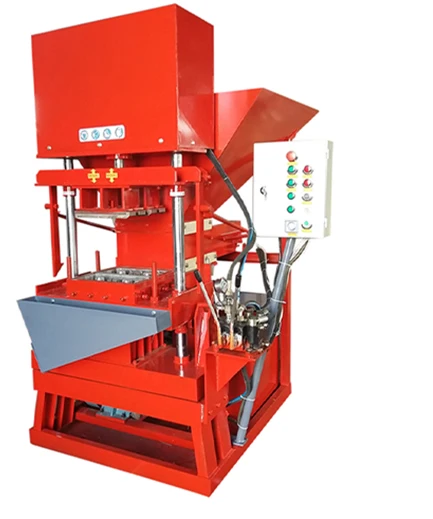 Semi automatic block