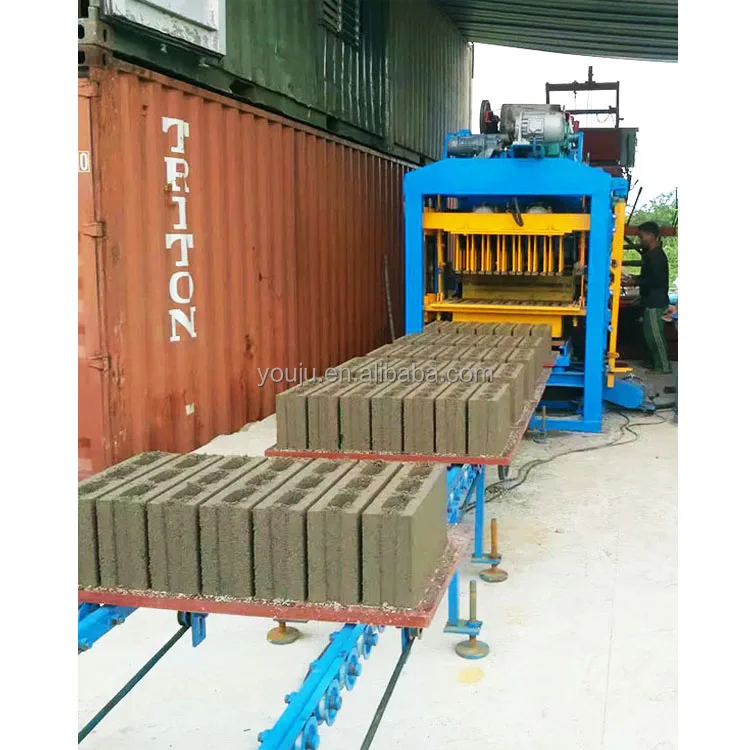
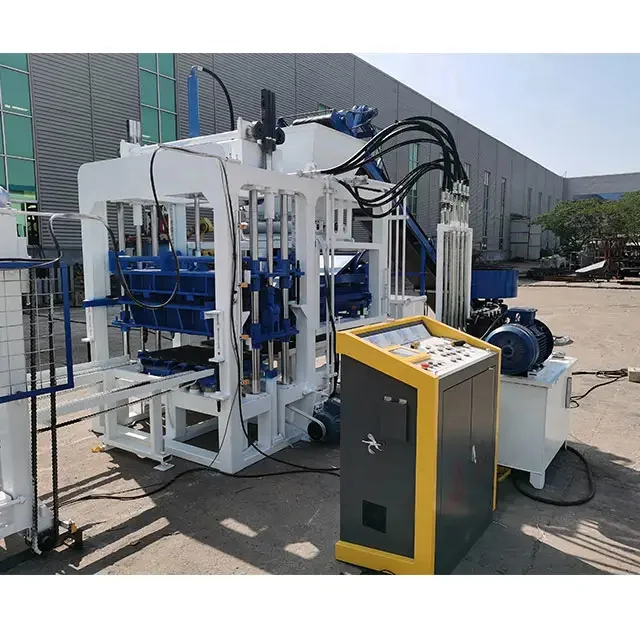
Positioning on the Range Before You Commit — the QT4-18 lets buyers evaluate mid-tier automatic operation, comparing its footprint and automation level against semi-automatic and high-capacity alternatives before locking in investment.
Technical Specifications
| Parameter |
Value |
| Model |
QT4-18 |
| Product Type |
Automatic Concrete Block Making Machine |
| Overall Dimensions |
2500 × 1750 × 2200 mm |
| Rated Hydraulic Pressure |
16 MPa |
| Vibration Form |
Platform Vibration |
| Pallet Size |
950 × 550 mm |
| Molding Cycle |
18–25 s (basis to be confirmed with block format) |
| Overall Power |
27.5 kW |
| Control System |
PLC with frequency converter |
| Electrical Components |
Schneider brand |
| Mould Lifting Mechanism |
Double-sided synchronous gears |
| Material Feeder |
Distribution belt hopper |
| Supporting Mixer |
JQ500 concrete pan mixer |
| Belt Conveyor |
8 m (6 m optional) |
| Stacking Method |
Stacker (layer-by-layer) + manual trolley |
| Block Conveyor |
Motor-driven with idler wheels |
| Mould Change |
Manual bolt-release system (M24 bolts) |
| Voltage & Frequency |
Configurable to buyer’s local grid (confirm before production) |
| PLC Display Language |
Configurable (confirm before commissioning) |
| Included Mould |
One free hollow mould; additional formats available at extra cost |
| Assembly State |
Requires on-site foundation preparation per foundation drawing |
Application Suitability
| Application |
Material or Output |
| Hollow block production |
Crushed stone, sand, cement blends |
| Solid block manufacturing |
Dense aggregate mixes with local sand |
| Paving block production |
High-strength concrete with fine aggregates |
| On-site contractor block making |
Locally sourced sand and gravel with Portland cement |
| First block plant setup |
Standard concrete masonry unit formats for regional markets |
What "Cycles per Hour" Leaves Out When Sizing an Automatic Concrete Block Making Machine Manufacturer
Cycle time only means something when you know which block format it was measured on.
Suppliers often quote the QT4-18 at an 18–25 second cycle without naming the block size behind that number. A 400 × 200 × 200 mm hollow block fills the pallet differently than an interlocking paver, and the vibration dwell changes accordingly. I have sat in project offices where the daily output projection was built on a cycle figure that assumed a format the plant never intended to produce [NEED_CITE: block format assumptions in capacity quotations]. The automatic concrete block making machine manufacturer should state the assumed format alongside every throughput number so your investment model reflects what you will actually sell.

Placing the QT4-18 on the Automation Spectrum
The QT4-18 occupies the middle of our range, bridging the gap between entry-level semi-automatic machines and fully automatic high-capacity lines. Buyers evaluating their first block plant often land here because the PLC-controlled cycle and automatic layer stacker remove the most labour-intensive steps while keeping the initial investment manageable. The automatic concrete block making machine manufacturer offers this tier so entrepreneurs can enter production without committing to the full cubing and rack-handling systems that higher tiers require.
Where This Tier Fits in a Growing Operation
Construction contractors who currently rely on mobile egg-laying machines find the QT4-18 introduces consistency they cannot achieve with portable equipment. The fixed-plant layout with a dedicated JQ500 pan mixer and belt conveyor means the mix arrives at the press on a predictable schedule rather than in batches wheeled over uneven ground. For existing producers running older manual machines, the platform vibration and frequency converter allow cycle parameters to be adjusted as new block formats enter the local market [NEED_CITE: automation upgrade paths in block production].
Reading the Specs That Actually Shape Output
The 16 MPa rated hydraulic pressure works in concert with platform vibration to compact the concrete mix inside the mould cavity. If your local aggregate is angular crushed limestone, higher pressure is necessary to achieve full densification — desert sand, by contrast, demands more vibration dwell than brute force. The 950 × 550 mm pallet size must match the curing racks and forklift tines you already own; a mismatch here means either replacing your handling fleet or watching pallets jam at the stacker. The double-sided synchronous gear system lifts the mould evenly, reducing edge damage on demoulding, which matters when producing thin-wall hollow blocks. Manual bolt-release mould change with M24 fasteners keeps the system simple but means format switches require a technician with a wrench rather than a push-button swap.
The Cost of Specifying Without Context
Choosing a pallet size without measuring the curing yard leads to pallets stacking in aisles because the racks do not fit. Skipping voltage confirmation before production results in a control panel that will not energize on arrival, delaying commissioning while transformers are sourced locally [NEED_CITE: voltage mismatch delays in imported industrial equipment]. Specifying the machine for a mix design you cannot source forces a material change that alters block weight, strength, and ultimately your selling price. These are not engineering failures — they are procurement gaps.
Why Buyers Source This Range Here
Block machinery is our single focus, so the QT4-18 press, mould, pallet, and handling equipment are specified as one matched system rather than assembled from separate suppliers. Configuration is set against your actual mix design and local aggregate, not a catalogue default. Mould design covers the formats your market sells, with custom drawings available for non-standard profiles. The automation level is selectable — you can start the QT4-18 in its current layer-stacker configuration and add full cubing later as volume grows. Installation and commissioning support includes operator training on the specific PLC interface and frequency converter settings your line will run.
Documentation & Verification
- Line layout showing QT4-18 stations with capacity stated per block format
- Machine specification sheet with confirmed voltage and frequency
- Mould drawing and format list for all purchased mould profiles
- Hydraulic and electrical schematic matching Schneider component layout
- Factory test record on your specified mix before dispatch
- Packing photographs and customs documentation for shipment
Installation, Commissioning & Support
- Foundation drawing provided for the 2500 × 1750 mm press footprint before concrete pour
- 27.5 kW total load requires a dedicated circuit with confirmed voltage and frequency
- Machine ships dismantled; on-site assembly aligns the platform vibration table and conveyor
- First-run commissioning sets PLC parameters and frequency converter curves for your mix
- Operator training covers mould change procedure using the M24 bolt-release system
- Wear parts list identifies hydraulic seals and vibration springs for local stocking
Before You Request a Quotation
Tell us which block formats your market actually buys and the daily volume you need to sustain. Share your local aggregate type — whether that is river sand, crushed limestone, or volcanic scoria — along with the curing yard dimensions and forklift you already operate. Confirm your site voltage and frequency, and let us know the PLC display language your operators need.
Frequently Asked Questions
Q: How is the QT4-18 capacity calculated and which block format does it assume?
A: The 18–25 second cycle range is measured with a specific block format on the 950 × 550 mm pallet. We calculate realistic daily output once you confirm the exact hollow, solid, or paving block dimensions your market requires, because fill volume and vibration dwell change with every format.
Q: Where does the QT4-18 sit compared to semi-automatic and high-capacity models?
A: It occupies the mid-tier position with PLC control and a layer stacker, sitting above manual pallet-handling machines and below fully automatic lines with rack systems and cubing. This makes it a common choice for first block plants or contractors replacing mobile equipment.
Q: What voltage and frequency options are available for the QT4-18?
A: The electrical system is configurable to match your local grid before production begins. Schneider components support standard industrial voltages, and the PLC display language is set during factory testing so operators see instructions in their working language on arrival.
Q: What foundation and plant footprint does the QT4-18 require?
A: The press measures 2500 × 1750 mm and requires a level concrete foundation built to our drawing. The full line including the JQ500 mixer and 8 m belt conveyor extends the footprint, so share your available floor area and ceiling height during inquiry.
Q: Can I start semi-automatic and upgrade the QT4-18 later?
A: Yes. The layer stacker and manual trolley configuration can be expanded with automatic cubing and curing rack handling as your production volume grows, without replacing the press itself.

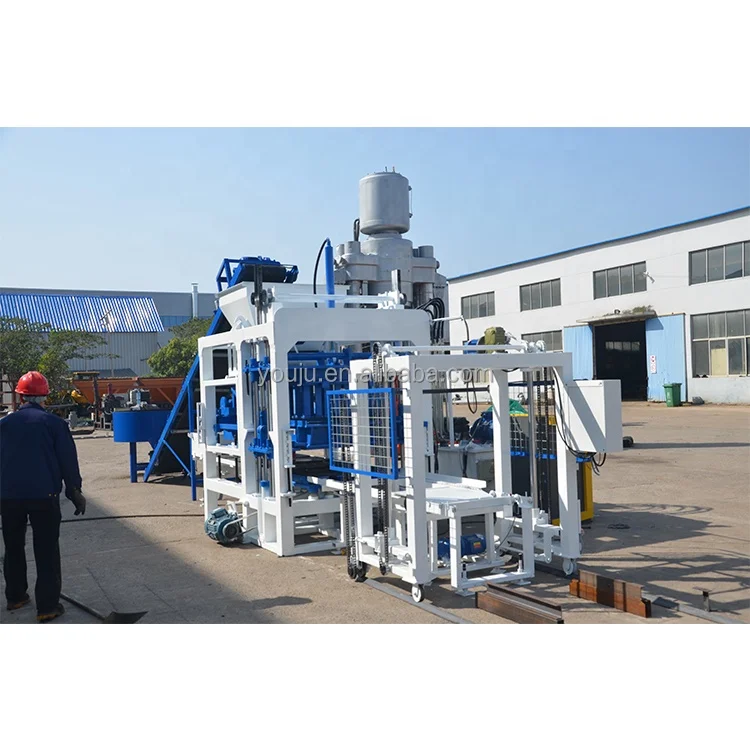 Semi automatic block