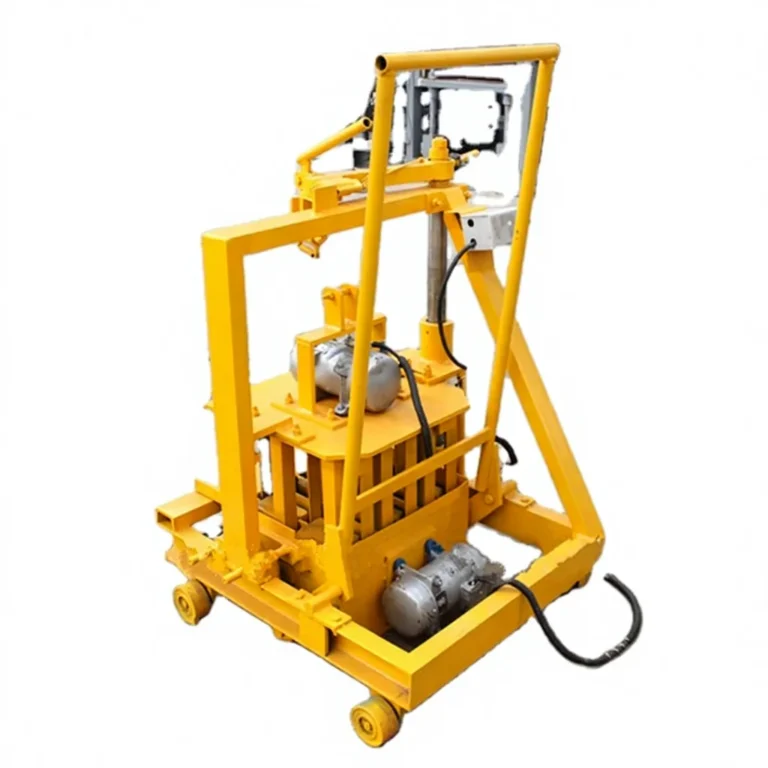
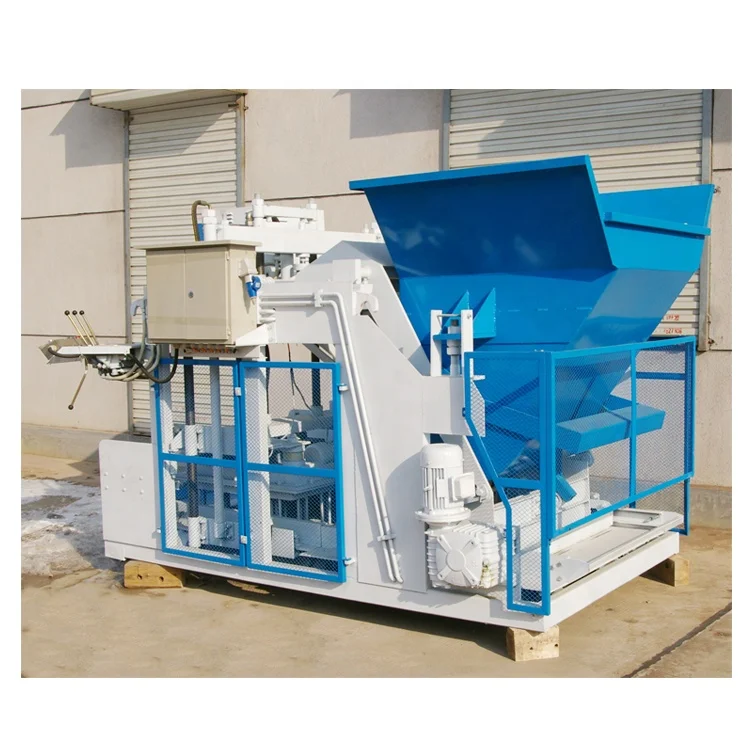
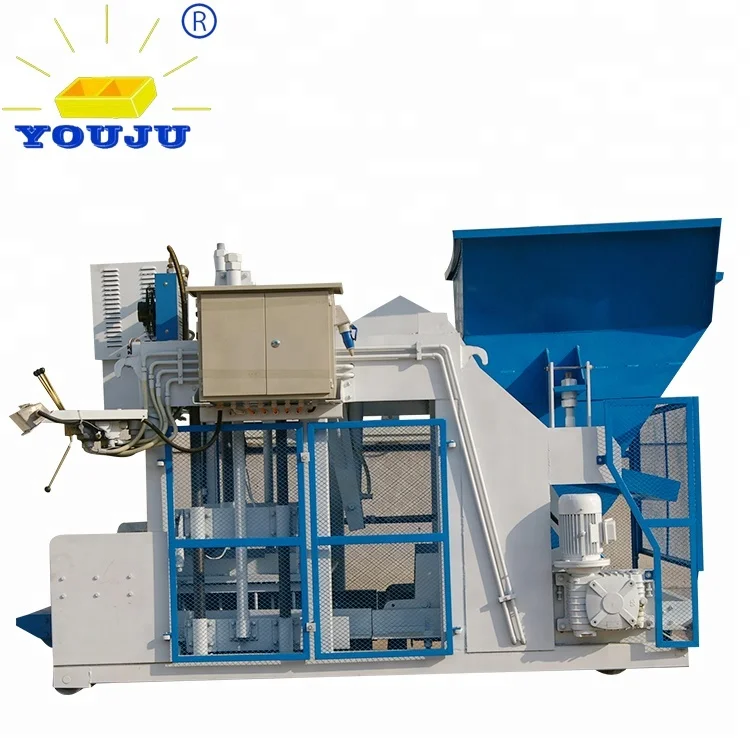
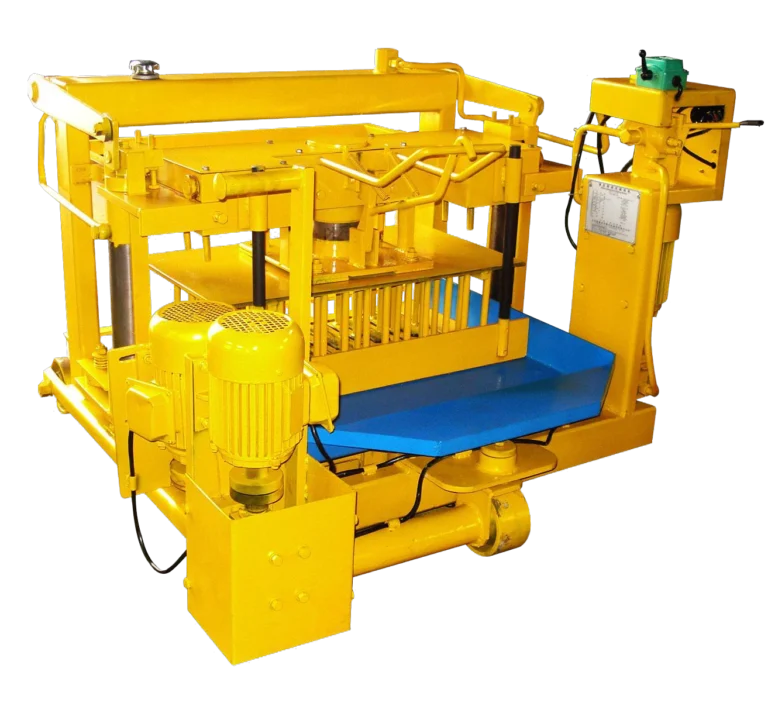
Matched System Supply — QMJ4-45 block machine, mould and power source specified as one coordinated unit, so capacity figures match the hollow block formats you actually produce on site.
Technical Specifications
| Parameter |
Value |
| Model |
QMJ4-45 |
| Product Type |
Mobile Egg Laying Block Making Machine |
| Molding Capacity |
4 pcs/mould (basis: 400×200×200mm hollow block) |
| Vibration Frequency |
2400 r/m |
| Daily Productivity |
3000 pcs/day (basis: 400×200×200mm hollow block, 8-hour shift) |
| Daily Productivity |
3500 pcs/day (basis: 400×150×200mm hollow block, 8-hour shift) |
| Daily Productivity |
4500 pcs/day (basis: 400×120×200mm hollow block, 8-hour shift) |
| Vibration Method |
Mold vibration |
| Molding Cycle |
40–45 s |
| Demold Method |
Manual |
| Turning Method |
Manual |
| Total Power |
6 KW |
| Power Source |
Diesel or petrol engine |
| Pallet Requirement |
None (egg-laying type, blocks laid directly on ground) |
| Automation Level |
Manual operation |
| Block Formats Supported |
Hollow block in multiple sizes via mould change |
| Certification |
CE |
Application Suitability
| Application |
Material or Output |
| On-site hollow block production for building contractors |
Crushed stone, sand, cement and water mix laid directly on prepared ground |
| Remote housing project block supply |
Diesel-powered production where grid electricity is unavailable |
| First-stage entrepreneur block plant |
Low-capital hollow block startup with no pallet or curing rack investment |
| Multi-format hollow block supply |
400×200×200mm, 400×150×200mm and 400×120×200mm formats via mould change |
Why "Daily Capacity" Means Nothing Without the Block Format Attached
A capacity number without its block format is a guess, not a guarantee.
I have watched buyers receive a mobile egg laying block machine for sale and discover on day one that the quoted output assumed a 120mm wall block while their market only buys 200mm. The daily tonnage drops the moment you switch to a heavier format. The QMJ4-45 produces 3000 pieces per shift on 400×200×200mm hollow blocks, 3500 on 400×150×200mm, and 4500 on 400×120×200mm. Those three figures sit on the same machine, same cycle time, same operator — only the mould and the resulting block weight change the count. Before any order is confirmed, the capacity calculation must state the exact format it assumes [NEED_CITE: block capacity calculation standards by format and cycle time].

Where Each Output Tier Sits in the Range
The QMJ4-45 fills the entry-level mobile tier. It sits below semi-automatic static machines that require pallets and a fixed curing area, and well below fully automatic lines with batching, stacking and cubing. For a contractor who needs hollow blocks at the construction site without building a plant, or an entrepreneur starting production on a cleared plot with minimal infrastructure, this mobile egg laying block machine for sale offers the lowest threshold to begin.
What the Egg-Laying Design Removes from Your Site Layout
An egg-laying machine lays each block directly on the ground and moves forward to the next position. There is no pallet circulation system, no pallet return conveyor, no curing rack handling. The trade-off is that your ground surface must be level, clean and firm enough to support freshly molded blocks through their initial set. For remote project sites where pallet logistics would double the material cost, this design eliminates that entire layer of infrastructure [NEED_CITE: egg-laying versus static block machine site requirements].
How Vibration, Power Source and Cycle Time Shape Real Output
The mold vibration at 2400 r/m is applied directly to the mould cavity rather than through a table, which suits the egg-laying method where the machine rests on freshly produced blocks. The 40–45 second molding cycle holds across all three listed hollow block formats because the mould cavity volume changes but the vibration and compaction sequence remains constant. The 6 KW total power requirement is met by a diesel or petrol engine, meaning the QMJ4-45 operates independently of grid connection — a critical factor for project sites in areas where power supply is unreliable or absent. Choosing between diesel and petrol depends on local fuel availability and the ambient temperature range at your site.
What Happens When the Power Source Is Decided After Arrival
I have seen machines arrive on site with a three-phase electric motor when the buyer’s location had no transformer capacity to support it. Commissioning stalls, a generator must be sourced, and the project schedule slips. With the QMJ4-45, specifying diesel or petrol engine before production starts avoids this entirely. The consequence of leaving the power source decision too late is not a technical failure but a site logistics failure [NEED_CITE: power source mismatch in exported machinery installations].
Why This Machine Is Supplied as a Matched Set
The QMJ4-45 is not sold as a standalone press with moulds sourced separately. The machine, the hollow block moulds for your target formats, and the engine are specified together so that vibration frequency, mould cavity geometry and power output align with the mix design and block strength your local market requires. Configuration is set against your actual aggregate and cement ratio rather than a default catalogue setting. Mould drawings are provided for confirmation before production, and custom mould design to buyer drawings is available for formats outside the standard range. The documentation package — including factory test record, operation manual, and wear parts list — travels with the machine so that your first mould change and first spare parts order are planned before the container is loaded.
Documentation & Verification
- Line layout showing egg-laying path and ground preparation area for your site dimensions
- Capacity calculation sheet stating output per hollow block format at 40–45 s cycle
- Mould drawing and format list confirming included hollow block sizes before production
- Voltage or engine type confirmation record signed off before dispatch
- Factory test record on your specified block format and mix proportion
- Operation and maintenance manual with wear parts and mould replacement schedule
Installation, Commissioning & Support
- Ground surface must be level concrete or compacted earth to support egg-laying block placement
- 6 KW diesel or petrol engine requires fuel supply and basic engine maintenance capability on site
- Machine arrives partially assembled; mould and engine mounting completed during commissioning
- Operator training covers manual demold technique and 40–45 s cycle rhythm across formats
- Wear parts list and mould inventory provided for first replacement planning before shipment
Before You Request a Quote
To size the QMJ4-45 correctly for your operation, share your target hollow block formats and the daily volume your market absorbs. Confirm whether your site has grid power available or whether a diesel or petrol engine is required. A photograph of your local aggregate and a basic cement-to-aggregate ratio helps align the mould configuration and vibration setting to your material before the machine enters production.
Frequently Asked Questions
Q: How is daily output calculated and which block format does each figure assume?
A: The QMJ4-45 output is stated per format: 3000 pcs/day on 400×200×200mm, 3500 on 400×150×200mm, and 4500 on 400×120×200mm hollow blocks, each based on an 8-hour shift at a 40–45 second molding cycle. These figures assume continuous operation with prepared mix available at the machine.
Q: Can this machine run on a diesel engine if my site has no reliable grid power?
A: Yes. The QMJ4-45 is configured with a diesel or petrol engine at 6 KW total power, operating entirely independent of grid electricity. Engine type is confirmed before production based on your local fuel availability and site conditions.
Q: What block formats can I produce and how is the mould changed?
A: The machine supports hollow blocks including 400×200×200mm, 400×150×200mm and 400×120×200mm via manual mould change. Mould drawings are supplied for confirmation, and custom formats can be designed to buyer drawings.
Q: What are the site preparation requirements for egg-laying production?
A: The ground must be level, firm and clean to support blocks during initial set. No pallets, curing racks or fixed plant infrastructure are needed. Adequate space for the machine to move forward along the production path must be cleared.
Q: How are moulds and wear parts supplied when the first replacement is due?
A: A complete wear parts and mould list is included with the machine documentation. Replacement moulds and parts are manufactured to the same drawings, and orders can be placed directly using the format list provided at commissioning.

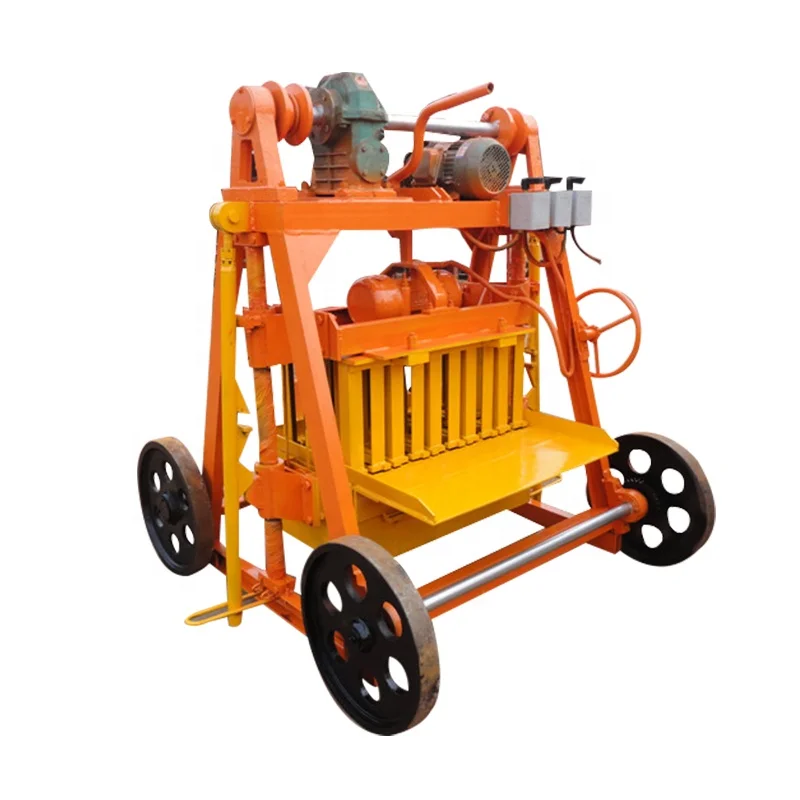
 Mobile block machine