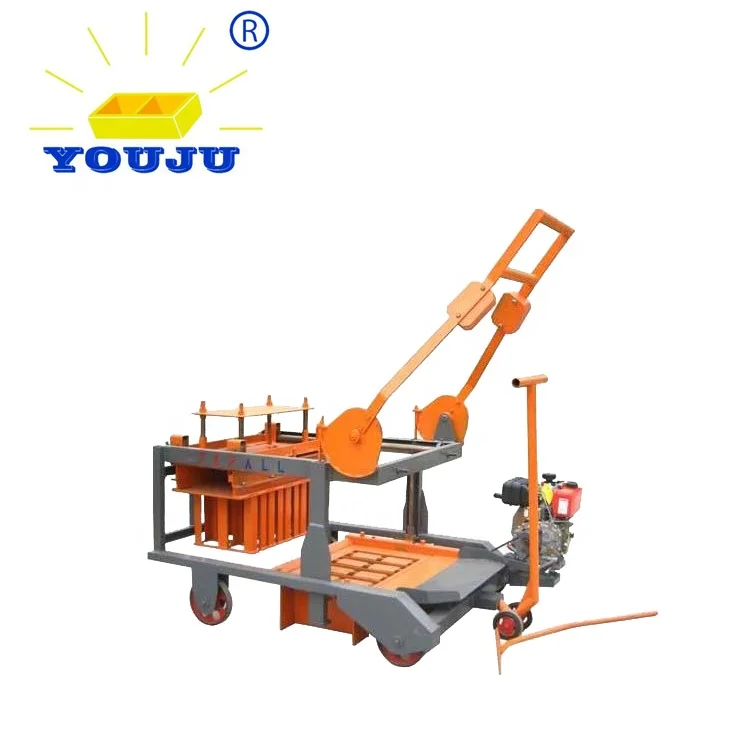
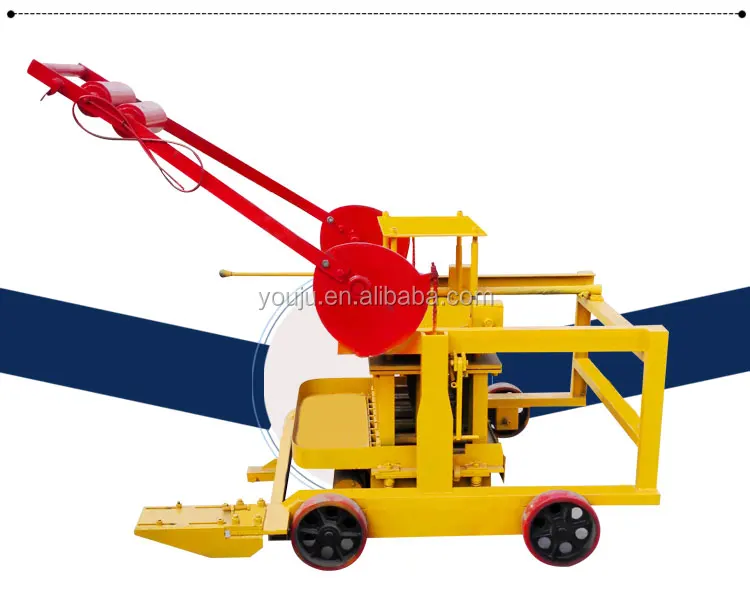
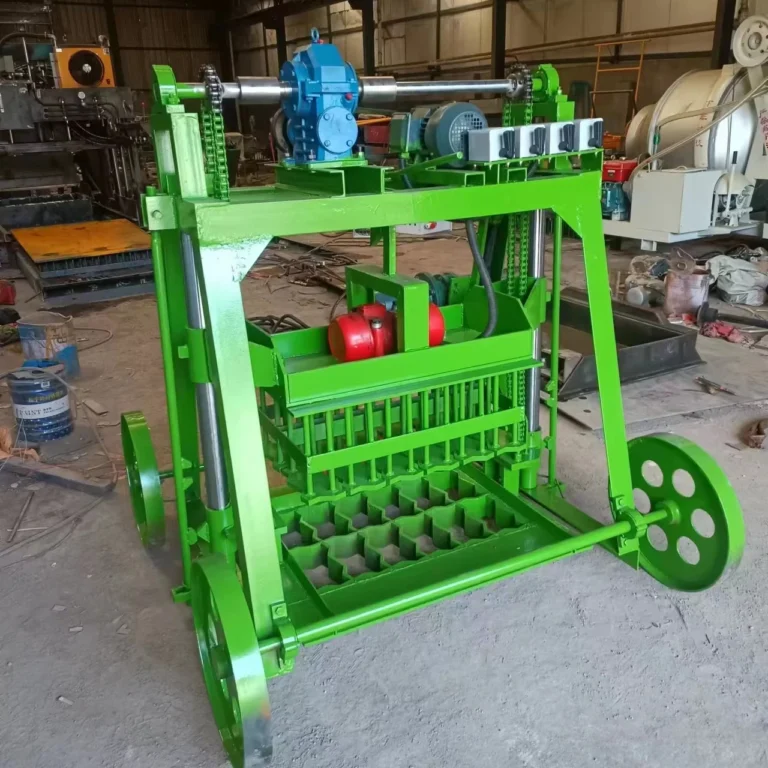
Single-Focus Machinery — the QMY4-30 mobile block machine range entry is specified as one matched unit, not assembled from separate suppliers.
Technical Specifications
| Parameter |
Value |
| Model |
QMY4-30 |
| Product Type |
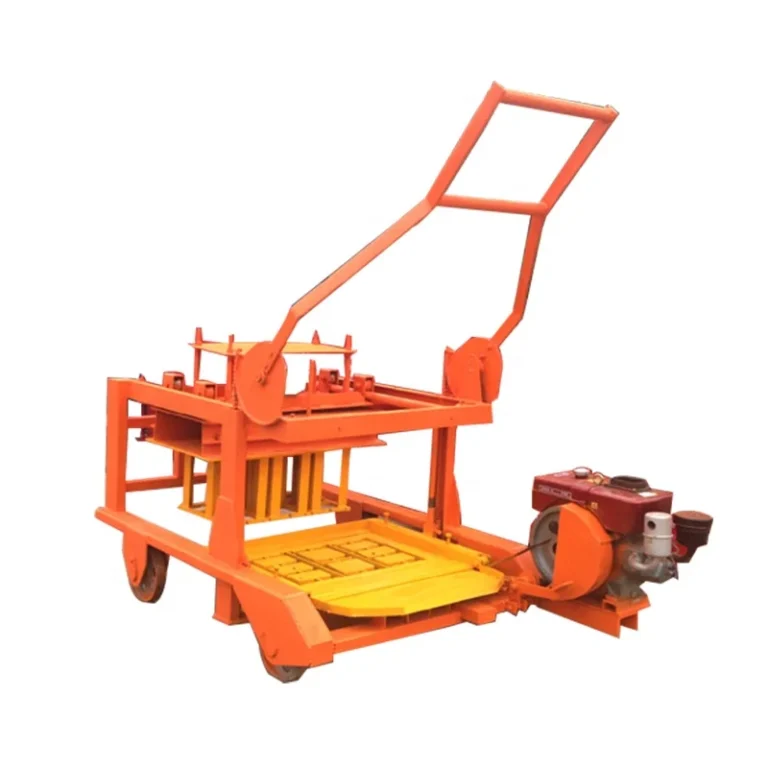
Mobile Egg-Laying Concrete Block Making Machine |
| Rated Power |
5 kW |
| Voltage & Frequency |
Configurable to buyer site standard (basis to be confirmed) |
| Control System |
Manual operation |
| Overall Dimensions (L×W×H) |
1200 × 1200 × 1100 mm |
| Net Weight |
950 kg |
| Cycle Time |
30 seconds |
| Output Capacity |
480 pcs/h (based on 400×200×200 mm hollow block, 4 pcs/mould) |
| Output Capacity |
600 pcs/h (based on 400×150×200 mm block, 5 pcs/mould) |
| Output Capacity |
840 pcs/h (based on 400×100×200 mm block, 7 pcs/mould) |
| Daily Output |
3,840 pcs/8h (based on 400×200×200 mm hollow block) |
| Daily Output |
4,800 pcs/8h (based on 400×150×200 mm block) |
| Daily Output |
6,720 pcs/8h (based on 400×100×200 mm block) |
| Mould Format |
Interchangeable moulds for hollow block and solid brick |
| Pallet Size |
Not applicable — egg-laying mobile machine lays blocks directly on ground |
| Automation Level |
Manual |
| Stacking Method |
Manual, blocks cured in place on ground |
| Raw Materials |
Cement, sand, crushed stones, slag |
| Assembly State |
Single compact unit, mobile with wheels |
Application Suitability
| Application |
Material or Output |
| Start-up entrepreneur block plant |
Hollow blocks and solid bricks from cement, sand, and crushed stone |
| On-site construction projects |
Hollow blocks produced directly at the building site without fixed infrastructure |
| Low-investment entry-level manufacturing |
Solid bricks and hollow blocks from locally sourced aggregate and slag |
| Remote or temporary job sites |
Mobile production following project phases, no fixed plant required |
What "Pieces per Hour" Actually Means for a Mobile Block Machine Range
Every capacity figure must name the block format it assumes — anything less is a guess.
Quoted output numbers on mobile egg-laying machines often omit the mould size behind the claim. A machine rated at several hundred pieces per hour might be assuming the smallest solid brick format, while the buyer actually needs 200 mm hollow blocks for their market. When I review site installations across Latin America, the most common disappointment traces back to this mismatch: the operator counts the first hour’s output and realizes the shift target is unreachable [NEED_CITE: common capacity misquotation in mobile block machine sales]. The QMY4-30 mobile block machine range addresses this by stating each output tier alongside its exact mould dimensions and pieces-per-cycle count, so daily planning starts from reality rather than catalogue optimism.

Where the QMY4-30 Sits Across the Full Range
The mobile block machine range spans from compact egg-laying units like this model through to higher-output mobile presses with larger mould boxes. The QMY4-30 occupies the entry tier: a single-operator machine producing blocks directly onto the ground without pallets or a fixed curing line. For a buyer surveying options before committing capital, this is the starting point — minimal footprint, no batching plant requirement, and the ability to relocate across a job site on its own wheels. When production volume outgrows what one operator can feed and move, the next tier introduces pallet-based semi-automatic machines with separate mixers and stacking stations.
Understanding the Egg-Laying Principle
An egg-laying machine forms the block inside the mould box, then lifts away while the freshly pressed block remains on the ground to cure in place. This eliminates the need for pallets, pallet return systems, and curing racks — the three cost layers that separate a fixed plant from a mobile operation. The trade-off is that output density depends entirely on available ground area and the operator’s pace in moving the unit forward after each cycle. In practice, the machine produces a continuous line of blocks across a prepared concrete floor, and the curing zone must be planned to match daily output so that blocks are not disturbed before initial set [NEED_CITE: ground curing requirements for egg-laying block machines].
How the Core Parameters Shape Daily Production
The 30-second cycle time applies across all listed mould formats, meaning output differences come entirely from how many cavities each mould carries — four for 200 mm hollow blocks, up to seven for 100 mm blocks. The 5 kW rated power is low enough to run from a small diesel generator, which matters on remote sites where grid connections are unstable or unavailable. At 950 kg net weight with a 1200 × 1200 mm footprint, the machine can be pushed manually on its wheels across a level site, but it cannot traverse soft or uneven ground without a prepared path. The manual control system means every action — feed, vibrate, lift, move — is operator-driven, so actual daily output also depends on crew fatigue and raw material staging distance. Mould changeability between hollow and solid formats gives flexibility, though change time depends on the fastening system fitted [NEED_CITE: mould change procedures on manual egg-laying machines].
The Cost of Skipping Configuration Checks
When voltage and frequency are not confirmed before shipment, a machine can sit idle at the destination port while a matching transformer or frequency converter is sourced locally. I have seen units wait several weeks for electrical adaptation that could have been resolved with a single pre-shipment document. On mobile machines running from generators, the mismatch is even more common because generator output fluctuates under load, and a motor rated for one frequency will overheat on another. Equally, when the raw material mix is assumed rather than tested against locally available sand and aggregate, block strength falls short of the buyer’s market standard and the mould wears prematurely [NEED_CITE: impact of aggregate grading on block compressive strength]. These are not machine defects — they are configuration oversights that surface only after arrival.
Why Source This Machine Through Shiyue
Block machinery is the sole product focus here, which means the QMY4-30 is specified as a complete working unit rather than a bare press paired with third-party accessories. The configuration is set against the buyer’s actual mix design and target block format, not a catalogue default. Moulds are designed and supplied for the specific formats the buyer’s market demands, including custom drawings when standard formats do not match local building codes. The automation level is selectable within the broader range, so a buyer who starts with this manual mobile unit can step up to semi-automatic or full-line operation later without changing suppliers. Documentation covers the full machine identity — specification sheet, mould drawing, electrical schematic, and factory test record — so there is no ambiguity about what was built and tested before dispatch.
Documentation & Verification
- Machine specification sheet listing confirmed voltage, frequency, and motor rating for your site
- Mould drawing and format list showing cavity count for each block size ordered
- Factory test record documenting cycle time and block dimensions before dispatch
- Electrical schematic with wiring diagram matching the confirmed control configuration
- Operation and maintenance manual covering daily checks and mould change procedure
- Wear parts and mould list identifying first-replacement items with part numbers
Installation, Commissioning & Support
- Prepared concrete floor area sized to accommodate daily output of up to 6,720 blocks for curing in place
- Dedicated power circuit matching confirmed voltage and frequency for the 5 kW motor load
- Machine arrives as a single compact unit on wheels, requiring no crane or heavy lifting equipment
- First-run commissioning verifies cycle timing, vibration consistency, and block dimensional accuracy
- Operator training covers feed technique, mould change procedure, and daily maintenance routines
- Wear parts list provided at handover identifying items for the first replacement cycle
Before You Request a Quote
To size this machine correctly for your project, share the block formats your market actually sells — dimensions, wall thickness, and whether hollow or solid. Specify your site’s electrical supply voltage and frequency, along with whether you plan to run from grid power or a generator. Describe the raw materials available locally, including sand type and aggregate grading, so the mix configuration matches what you can source. If you have a project deadline, state the required daily output and shift length so the capacity calculation reflects your actual production target.
Frequently Asked Questions
Q: How is the stated capacity calculated for the QMY4-30?
A: Each capacity figure is tied to a specific block format and mould cavity count. The 480 pieces per hour rating assumes a 400×200×200 mm hollow block with four cavities per mould at a 30-second cycle. Daily output figures assume an eight-hour shift. If your target format differs from those listed, a revised calculation based on your actual mould size will be provided before order confirmation.
Q: What voltage and frequency options are available for this machine?
A: The 5 kW motor can be configured to match different site standards, but the exact voltage and frequency must be confirmed before production begins. This is especially important when the machine will run from a diesel generator, as generator output may differ from grid specifications. Confirming this early prevents delays at commissioning.
Q: Can the mould format be changed, and are custom moulds available?
A: The QMY4-30 supports interchangeable moulds for hollow block and solid brick formats. Custom mould designs are available to buyer drawings when standard formats do not match local building requirements. Mould change time depends on the fastening arrangement fitted, and this should be confirmed during the specification stage.
Q: What raw material mix does the machine require?
A: The machine processes cement, sand, crushed stones, and slag. However, the mix proportions must be matched to your locally available aggregate grading and sand type to achieve consistent block strength. Providing a sample or description of your local materials during the inquiry stage allows the configuration to reflect what you can actually source.
Q: When should a buyer move beyond this mobile unit to the next tier?
A: The QMY4-30 suits start-up plants and on-site contractors needing low-investment production. When daily volume requirements exceed what a single operator can sustain, or when consistent block strength across high volumes becomes critical, stepping to a pallet-based semi-automatic machine with a dedicated mixer and stacking station becomes the logical progression within the mobile block machine range.

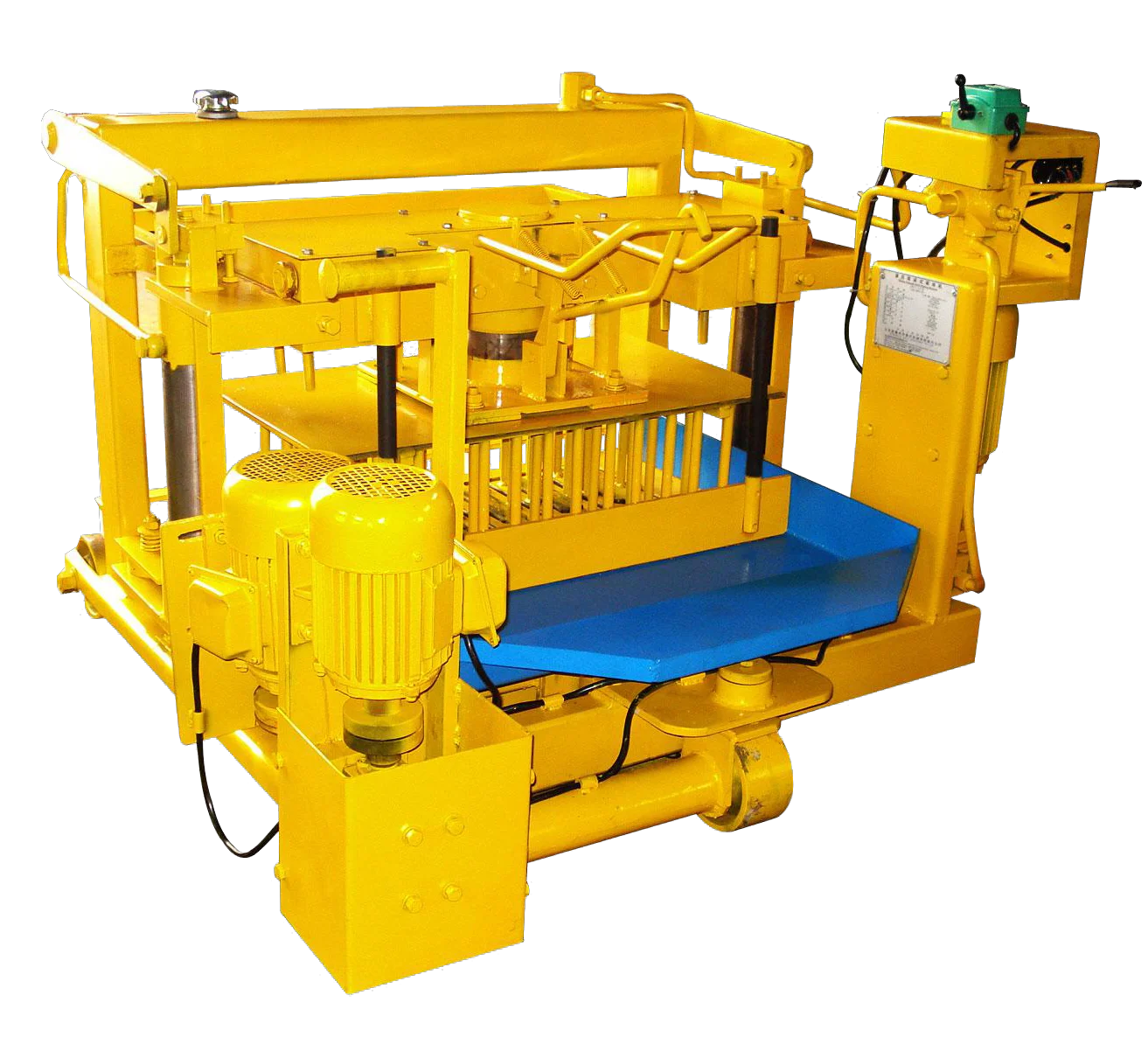
 Mobile block machine