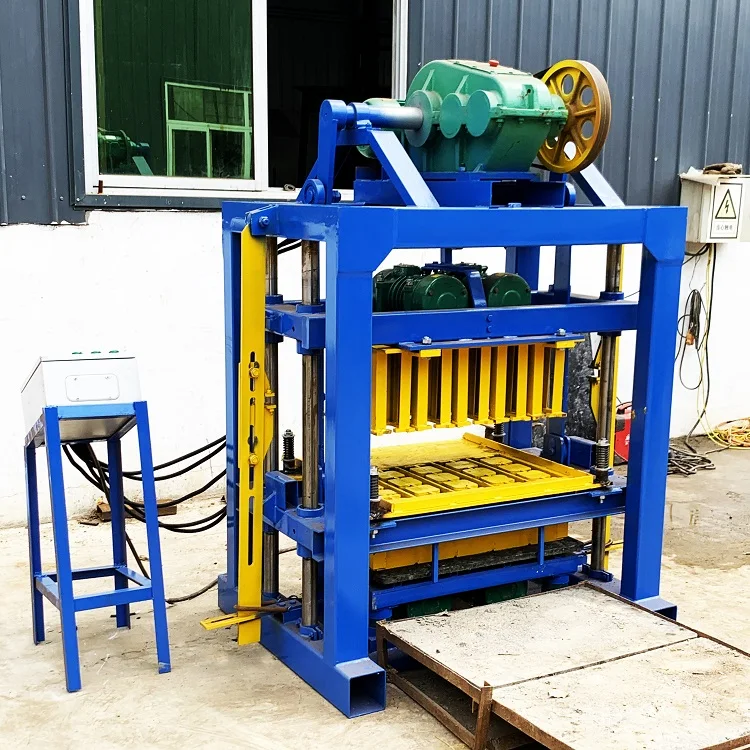
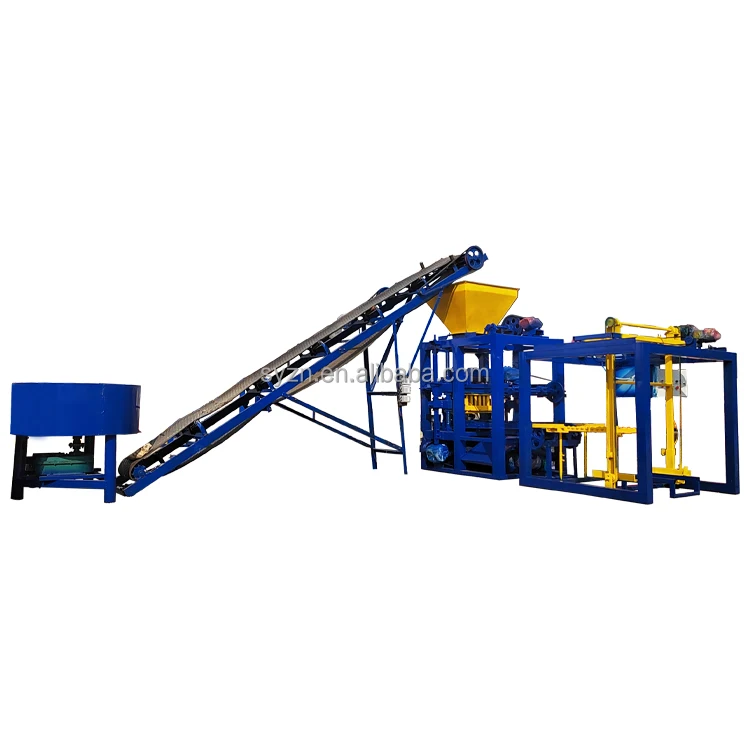
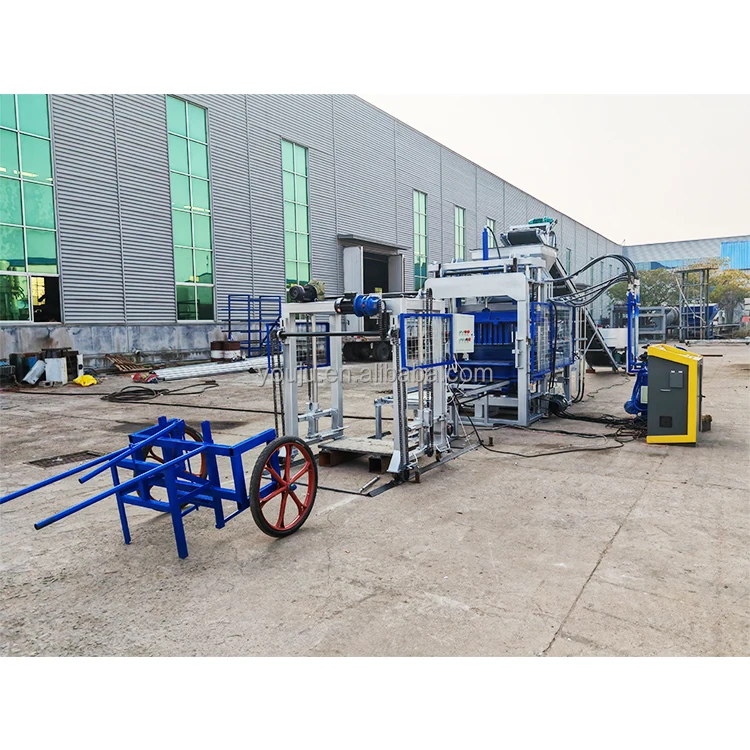
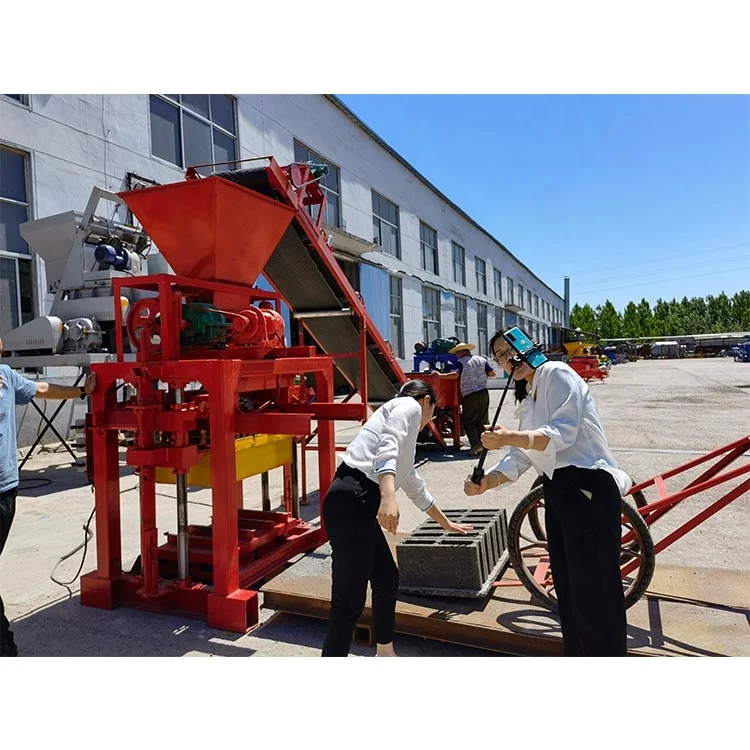
Matched system specification — the QTJ4-40 block machine, moulds, pallets and handling are defined together so the press output aligns with curing layout and daily volume targets.
Technical Specifications
| Parameter |
Value |
| Model |
QTJ4-40 |
| Product Type |
Hydraulic Semi-Automatic Block Making Machine |
| Overall Dimensions (L×W×H) |
1350 × 1460 × 1800 mm |
| Net Weight |
1.2 T |
| Rated Power |
10.4 kW |
| Voltage & Frequency |
Configurable to buyer’s local grid (basis to be confirmed before order) |
| Moulding Cycle |
40 s |
| Output Capacity |
2800 pcs/day (based on 400×200×200mm hollow block, 4 pcs/mould) |
| Output Capacity |
3600 pcs/day (based on 400×150×200mm hollow block, 5 pcs/mould) |
| Output Capacity |
6400 pcs/day (based on 225×112.5×60mm solid brick, 9 pcs/mould) |
| Pallet Size |
850 × 450 × 20 mm |
| Vibration Type |
Bed mould vertical vibration + upper mould compression vibration |
| Automation Level |
Semi-automatic |
| Stacking Method |
Manual pallet handling |
| Raw Materials |
Concrete, sand, cement, fly ash, lime, gypsum |
| Block Formats |
Hollow block (8", 6", 5", 4"), solid block, paver (basis to be confirmed) |
| Assembly State |
Host machine + block mould + pallets; mixer optional |
Application Suitability
| Application |
Material or Output |
| Small-scale hollow block plant |
Crushed stone, sand and cement producing 8", 6", 5" and 4" hollow blocks |
| On-site contractor production |
Local aggregate and cement for hollow and solid blocks at the building project |
| First plant for entrepreneurs |
Fly ash, sand and cement mix for entry-level daily volume |
| Adding paver formats |
Concrete and sand for interlocking paving blocks in an existing operation |
Why "Pieces per Day" Without Format Is Misleading
Capacity figures only mean something when tied to the exact block size being pressed.
Many quotations for a semi-automatic block making machine manufacturer list a single daily output number and leave out the mould it assumes. A buyer expecting 6000 hollow blocks a day will find the machine delivers less than half that when pressing a larger 8-inch format, because the cycle count and pieces per mould both shift. The QTJ4-40 states its output against three specific formats — 2800 pieces per day on a 400×200×200mm hollow block, 3600 on a 400×150×200mm hollow, and 6400 on a 225×112.5×60mm solid brick — so production planning starts from reality, not a catalogue peak. [NEED_CITE: common misrepresentation of block machine output without format reference]

Positioning Within the Full Machine Range
The QTJ4-40 sits at the entry tier of the stationary line, intended for buyers who need a defined starting point before moving to higher automation or larger output tiers. For a first-time plant owner, the semi-automatic tier keeps capital requirements low while still delivering hydraulic pressing and dual vibration — features often missing at this investment level. When daily volume requirements grow or labour costs rise, the range includes higher tiers with automatic pallet feeding, stacking and cubing, giving a clear upgrade path without replacing the entire production concept.
How the Entry Tier Serves the Buyer’s Real Constraints
A small plant rarely has the floor space or power supply for a high-capacity automatic line from day one. This semi-automatic block making machine manufacturer model works within a compact footprint of roughly 1350 × 1460 mm, fitting into a workshop that may later expand around it. The 10.4 kW rated power runs on a standard industrial circuit, avoiding the need for a dedicated transformer at the entry stage. [NEED_CITE: typical power infrastructure limitations at small block production sites]
Reading the Core Specifications
The dual vibration system — bed mould vertical vibration combined with upper mould compression vibration — addresses block density from two directions, which is especially important when local sand varies in moisture and fines content. The 850 × 450 × 20 mm pallet size is matched to the press output area and must align with the curing racks and forklift the buyer already has or plans to acquire. The 40-second moulding cycle sets the rhythm for the entire line: manual pallet handling must keep pace, or the press sits idle between cycles. Voltage and frequency are configured to the buyer’s grid, and confirming this before production avoids costly rewiring or inverter installation after the machine arrives on site.
The Cost of Skipping Configuration Checks
When a buyer orders without confirming local voltage and control language, the machine may arrive and sit unpowered for weeks while an electrician sources the right components. Moulds specified for a format the buyer’s market does not sell become dead weight, and the correct moulds must be ordered separately, doubling shipping costs. [NEED_CITE: commissioning delays caused by unconfirmed electrical specifications]
Why Source This Model From a Single-Focus Manufacturer
The machine, mould and pallet are specified as one matched system rather than assembled from separate suppliers, so the 850 × 450 mm pallet and mould cavity count are verified together before dispatch. Configuration is set against the buyer’s actual mix design and local aggregate, not a default catalogue setting. Mould design covers the formats the buyer’s market demands, with custom drawings available for non-standard sizes. The semi-automatic tier is a deliberate starting point, with higher automation levels selectable within the same range when volume grows. Installation support includes operator training so the crew can run the QTJ4-40 independently from the first shift.
Documentation & Verification
- Line layout stating pallet size and block format assumed for each capacity figure
- Machine specification sheet confirming hydraulic pressure and vibration force for your mix
- Mould drawing and format list showing every cavity size included in the quotation
- Voltage and frequency confirmation record signed before production starts
- Factory test record on your selected block format before dispatch
- Operation manual with maintenance intervals for the vibration and hydraulic systems
Installation, Commissioning & Support
- Foundation pad must bear 1.2 T static load across the 1350 × 1460 mm footprint
- Dedicated 10.4 kW circuit with confirmed voltage and frequency before connection
- Machine ships as host unit, mould and pallets; mixer connected on site if ordered
- Vibration force and hydraulic pressure adjusted during commissioning to match your aggregate
- Operator training covers 40-second cycle pacing and manual pallet handling rhythm
- Wear parts list provided with recommended replacement intervals for hydraulic seals and vibration mounts
Preparing Your Inquiry
To match the QTJ4-40 to your production plan, share the block formats your market actually sells, the daily volume you need per format, and the local raw materials available. Confirm your site’s voltage and frequency, the curing area dimensions you have allocated, and whether you need the mixer included in the scope.
Frequently Asked Questions
Q: How is the daily output calculated and which block format does each figure assume?
A: Each capacity figure is tied to a specific mould. The 2800 pieces per day assumes a 400×200×200mm hollow block at 4 pieces per mould, 3600 assumes a 400×150×200mm hollow at 5 per mould, and 6400 assumes a 225×112.5×60mm solid brick at 9 per mould. The 40-second cycle and working hours per day define the ceiling.
Q: Where does the QTJ4-40 sit in the full range and what does the next tier add?
A: It occupies the entry tier of the stationary line, offering hydraulic pressing and dual vibration at a compact footprint. The next tier adds automatic pallet feeding and stacking, reducing manual handling while increasing cycle throughput for buyers whose volume has outgrown semi-automatic operation.
Q: What voltage and frequency options are available?
A: Voltage and frequency are configured to match the buyer’s local grid. The exact values must be confirmed before production so the motor, control panel and any heating elements are wound and rated correctly, avoiding rewiring or transformer costs after arrival.
Q: Which raw materials and mix designs can the machine handle?
A: The QTJ4-40 processes concrete, sand, cement, fly ash, lime and gypsum. The vibration force and hydraulic pressure are adjusted during commissioning to suit the buyer’s specific aggregate grading and mix proportions, ensuring consistent block density.
Q: Is the 850×450 mm pallet compatible with my existing curing area?
A: The pallet size must match your curing rack spacing and forklift tine width. Share your current curing layout and handling equipment dimensions so we confirm compatibility before the pallets enter production.

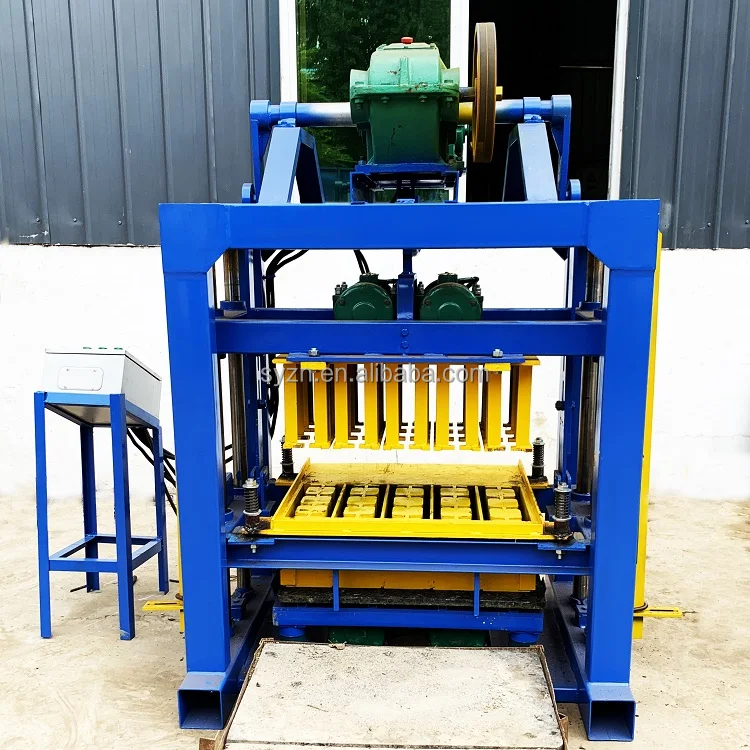
 Stationary block machine